A readers’ advisory for this collection of nine stories forecasts widely scattered ghosts with a chance of rain. Caution is urged at the following uncertain places: an abandoned mental hospital, the woods behind a pleasant subdivision, a small fishing village, a mountain lake, a long-closed theater undergoing restoration, a feared bridge over a swampy river, a historic district street at dusk, the bedroom of a girl who waited until the last minute to write her book report from an allegedly dead author, and the woods near a conjure woman’s house.
In effect from the words “light of the harvest moon was brilliant” until the last phrase “forever rest in peace,” this advisory includes—but may not be limited to—the Florida Panhandle, northwest Montana, central Illinois, and eastern Missouri.
Widely Scattered Ghosts is available in paperback and e-book at online booksellers and leading bookstores. (If your favorite store doesn’t have it, tell them they can order it from their Ingram catalogue.)
Before it was torn down some years ago, this old Florida building was a favorite of ghost hunters. I was in the building when it was a clean and functioning facility.
Robert Adams is a normal teenager who raises tropical fish, makes money shoveling snow off his neighbors’ sidewalks, gets stuck washing the breakfast dishes, dreads trying to ask girls out on dates and enjoys listening to his grandfather’s tall tales about magic and the western mountains. Yet, Robert is cursed by a raw talent his parents refuse to talk to him about: his dreams show him what others cannot see.
When the family plans a vacation to the Montana high country, Grandfather Elliott tells Robert there’s more to the trip than his parents’ suspect. The mountains hide a hidden world where people the ailing old man no longer remembers need help and dangerous tasks remain unfinished. Thinking that he and his grandfather will visit that world together, Robert promises to help.
On the shore of a mountain lake, Robert steps alone through a doorway into a world at war where magic runs deeper than the glacier-fed rivers. Grandfather Elliott meant to return to this world before his health failed him and now Robert must resurrect a long-suppressed gift to fulfill his promises, uncover old secrets, undo the deeds of his grandfather’s foul betrayer, subdue brutal enemy soldiers in battle, and survive the trip home.
Malcolm’s Comment:As a Florida boy, I was in awe of the mountains of Montana’s Glacier National Park when I worked there as a hotel bellman two summers. I’ve been back many times. I couldn’t think of a better place for my derring-do, hero’s journey novel. If you’ve been to Many Glacier Valley, you’ll recognize the settings.
Waking Plain
The exact opposite of “Sleeping Beauty,” this tale involves a dull-as-dishwater prince, a century-long sleeping enchantment, and beautiful queens who have the power to wake the rich sleeper with a kiss–if only he weren’t so plain.
He sleeps because the king and queen inadvertently slighted the eldest faerie on the prince’s naming day. She curses him with foul words that are mitigated from a quick death to a long sleep. Will any of the eligible queens wake a man so plain as he?
Malcolm’s Comment:One of my favorite parts of the old Rocky and Bullwinkle TV show was a segment called “Fractured Fairy Tales”. Let’s just say, they were twisted up and funny. In the same vein, I was also drawn to Richard Armour’s “Twisted Tales from Shakespeare” and the equally hilarious “It all Started With Columbus.” So, it was just a matter of time before I turned my sarcastic author’s eyes on “Sleeping Beauty” and thought, this story really needs to be twisted into the very opposite of what it is. I’m sure it was wrong to do this, but I couldn’t help it.
When I was a kid, I read every psychic book I could get my hands on. Some were secular, some were based on religions where mystics were still honored, and others were spiritual in a much different sense than what I saw at church. Somewhere I read that if a person read what I was reading, they’d open themselves up to ghosts and other spirits, precognitive dreams, and waking visions. Well, all that was true enough.
Early on, I noticed a big difference between real shamans, witches, psychics, and mystics and the way all of these folks were portrayed by the organized church all the way back to the inquisition and such purges as the Cathar Crusade (1209-1229). The church saw these folks as heretics and, strangely, as devil worshippers, even though Satan was, more or less, a Jewish/Christian concept and had nothing to do with the spiritual people in the church’s gunsights. Yet, it served the church’s needs to paint everyone who was different as evil incarnate, a point of view that got picked up by Hollywood’s occult movie producers and writers. I’m always on the warpath when it comes to books and movies that turn ghosts, mystics, shamans, and witches into whatever untrue nastiness the writer or producer can imagine and then proceed to kill them in order to save humanity.
In “real life,” it’s still somewhat dangerous to speak out against these lies. Yes, every once in a while, somebody will say so and so is a witch and then look at me awaiting a wink and a nod of agreement. My response is, “So what?” This throws people for a loop, but they usually will tell me that so and so and so worships the devil. “She doesn’t believe in the devil,” I say. “Well, maybe not,” they respond. Okay, that conversation never goes anywhere good and it tends to get me shunned by a lot of people who think maybe I need to be watched carefully.
Fortunately, most people who read ghost stories–or even that phony occult crap–don’t think the authors are practitioners. And, we’re not. I’m not a conjurer, witch, or shaman. I don’t have an altar in my house covered with herbs, candles, pictures, and other arcane supplies. That’s all in my imagination. What I believe an author should do is tell the stories truly. That is, we can tell stories that fit what actual conjurers, witches, and shamans say and do rather than giving them the powers of, say, Voldemort out of the Harry Potter series along a boatload of evil motives.
Magical realism has given me a genre that works because it shows readers the everyday reality they’re used to seeing and then adds conjurers, witches, and shamans in their “natural habitats” rather than in some highly charged occult setting. My “Florida Folk Magic” series of novels is an example of this. On Monday, my publisher Thomas-Jacob will release Widely Scattered Ghosts,” my new collection of ghost stories. Most of these have something in common with my personal experiences, though my imagination may have strayed a bit.
When compared to the ghosts of horror/occult authors, these stories are very gentle even though you will find sadness and confusion in them along with a bit of humor. They’re not for kids. No, it’s not because of devil worship and gore, but from the psychological themes. Above all, I wanted the stories to be as true as fiction allows, and those of you who’ve tolerated this blog for years will know that I believe fiction is allowed to portray realities that facts cannot touch.
“Improvement makes strait roads, but the crooked roads without Improvement, are roads of Genius.” ― William Blake
Praise the universe for crooked roads.
The misdirection of gods and storytellers.
The ancient spells and scrolls of wisdom hidden inside rocks, waiting.
The combined consciousness and will of liked, loving minds, cosmic valentines.
The stars of which we were made and those of future generations
Praise the universe for crooked roads.
The alternate universes of our salvation, just a glimpse away.
The new paths seekers have yet to create, bypassing old roads going nowhere.
The magnetic attraction of all that is good toward those who desire it.
The old mysteries that have retreated but are never lost.
Praise the universe for crooked roads.
Praise for the dreamers walking the Earth in cloaks of stars.
Praise for the children who see beyond the worlds of the crib and the classroom.
Praise for the wisdom that releases sons and daughters from the dogma of ancestors.
Praise for the special sight of all who see the souls of every rock and bird and horse.
And blessings for all who stumble and crawl along those crooked roads toward true heaven.
When I served aboard the U.S.S. Ranger (CVA-61) during the Vietnam War, I often “got selected” to work night shift as editor of the shipboard newspaper. In those days before WiFI and cell phones, there was no instant news other than this mimeographed, four-to-six page newspaper on legal size paper that I handed out to berthing areas, offices, the mess decks, and other compartments just before reveille every morning in 1968
Wikipedia photo
While my headline “Ho Chi Minh is Dead” probably got the most attention, my most popular headline–on a slow news day–was “A Modern Love Story.” Since we weren’t supposed to take those papers off the ship, I have no copies. So, I no longer know where this love story happened or when or even the details. It ran on the Associated Press wire and filled up a fair amount of the front page of “The Daily Shield.”
Basically, two lovers were separated from each other, perhaps by the war, perhaps by transfers to new jobs or colleges, or the random vicissitudes of fate. Like a tear-jerker movie, the young man and young woman spent many days months or years trying to find each other again. They went through hell and high water, never gave up, and finally–by the end up the story–were standing arm and arm, perhaps in the sunrise, filled with hope.
At a time when there was a long line of sailors who thought they had VD outside the sick bay door after every liberty call at a sailor town, that anyone on the ship would read “A Modern Love Story” seemed unlikely. After all, these are the tough sailors who said, as they went into town, “if you not in bed by nine o’clock, you might as well go back to the ship.”
Our cruises (as we called them) lasted about nine months. Being away from wives, fiancées, girlfriends, and parents for that long was more difficult than rough sailor talk about bar girls would lead one to believe. Even so, I was unprepared to walk through the mess decks at breakfast and find an unusual silence. The men weren’t talking, laughing, or complaining about the food. They were reading the story, some sharing the paper with others at the table. They cheered when they got to the end of it as the young lovers were reunited.
Pure schmaltz. The hard-boiled reporters and copyeditors back in the States would have relegated such a story to the features section, not page one. I didn’t run the story because I thought it would bring out the best in everyone, I ran it because I was desperate for enough copy to fill up the paper.
The Ranger was a flagship, and that meant the admiral and his staff we aboard. The following day when I arrived before the crack of dawn at the flag office, the admiral himself was standing there waiting for his papers. This wasn’t unusual. What was unusual was shaking his hand as he said, “If you find any more love stories, print them.” “Aye aye, sir.”
My good luck made me look like a genius, and that was unusual.
If your husband or wife or son or daughter or mother or dad is serving his or her country far away, remember them always, but especially on February 14th.
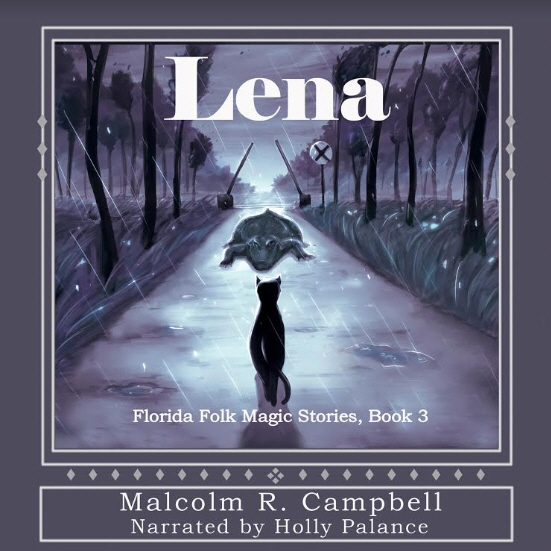
Holly Palance has done a wonderful job narrating this final novel in the Florida Folk Magic series. For those of you who like listening to a story, Holly will draw you into this one and you just might find yourself listening to the book in one sitting.
Description
When Police Chief Alton Gravely and Officer Carothers escalate the feud between “Torreya’s finest” and conjure woman Eulalie Jenkins by running her off the road into a North Florida swamp, the borrowed pickup truck is salvaged, but Eulalie is missing and presumed dead. Her cat, Lena, survives. Lena could provide an accurate account of the crime, but the county sheriff is unlikely to interview a pet. Lena doesn’t think Eulalie is dead, but the conjure woman’s family and friends don’t believe her.
Eulalie’s daughter, Adelaide, wants to stir things up, and the church deacon wants everyone to stay out of sight. There’s talk of an eyewitness, but either Adelaide made that up to worry the police or the witness is too scared to come forward.
When the feared black robes of the Klan attack the first-responder who believes the wreck might have been staged, Lena is the only one who can help him try to fight them off. After that, all hope seems lost, because if Eulalie is alive and finds her way back to Torreya, there are plenty of people waiting to kill her and make sure she stays dead.
“A psychiatrist friend once pointed out to me that one of the definitions of psychosis is a fixed belief in an imaginary world lasting months or years, which no one but the patient himself is able to perceive. He wondered aloud if this wasn’t also a decent definition of a novelist. Having recently emerged from five years of concentration on my own imaginary world of my latest book, I think he has a point. Which has left me considering the disposition that leads people to write in the first place, and the relationship between their actual and imaginary lives.”
Adam Haslett adds that in order to interact with others through our writing, we have to have periods of alone time first.
It’s odd, I think, that those who choose solitude are viewed as antisocial, perhaps nuts, by others until they publish a well-received book. It’s culture shock to come out of one’s cave and interact with others and those others, while they like saying they know those authors, react to their emergence from that cave with the same concern they do when a mental patient escapes.
This week’s thriller (my escapist reading) was The Terminal List by Jack Carr. It’s one of the most high-pitched novels I’ve read in a while. It’s hard to say anything about it without spoiling the story. Suffice it to say, when a SEAL team walks into an ambush, the bad guys turn out to be Americans out to make a buck rather than ISIS or the Taliban. The LCDR in charge of the team is more than ticked off about the loss of life and who’s responsible for it. Written by a SEAL, a few parts of the story are blacked out because the powers that be thought he gave away too much.
My editing changes for an upcoming book of short stories called Widely Scattered Ghosts have been sent to the publisher. Now we’re waiting for a proof copy to see if any fixes need to be made before the book is released. You can see what it’s about on my website’s Spotlight Page.
I’ve also been working on a rather dark story about a man who was put in a rest home because his kids thought he was spending all the money they “deserved” to inherit. This story has been sent off to a magazine that’s very hard to get into, but I always remain hopeful about these kinds of things.
I seldom unfriend people on Facebook. I did today because, in a thread about rape, she said it’s not up to women to fix the rape problem. I didn’t disagree but suggested that while we’re looking for ways to change the rape culture, more women could at least take advantage of defense courses. She said women shouldn’t have to. After more back and forth about that, she said I wasn’t a real man and needed to respect women. I finally lost my patience when she got into slamming me as a person rather than debating the issue.
Speaking of websites, I’ve spent some time lately trying to make my website more interesting. I see the visitor counts going up, so perhaps some of the new pictures and copy are luring people back for multiple visits. Now, we’ll see whether any of those people buy my books which, of course, is the point of having an author’s website.
For reasons unknown, my old post about fairy tale structure still gets more visits every week than most of my other posts combined. Those of you who like fairy tales might enjoy this new collection of re-imagined fairy tales by Dora Goss. I’m enjoying it. I’m a long-time fan of her writing, including The Strange Case of the Alchemist’s Daughter and its sequel European Travel for the Monstrous Gentlewoman.
I tend to post quotes on my Facebook profile at the end of the day. My current favorite comes from musician and poet Joy Harjo: “The creative act amazes me. Whether it’s poetry, whether it’s music, it’s an amazing process, and it has something to do with bringing forth the old out into the world to create and to bring forth that which will rejuvenate.” Frankly, I don’t know how the creative act works. That’s why I said in my last post that I get bored reading or talking about it with other authors. We all do what we do without the need for theories.
Now, I’m looking for a new story to tell. When an author finishes a story, s/he suddenly feels empty because all the characters have left. It’s like the end of a summer romance. You know it’s going to happen, but you’re never ready for it.
I subscribe to several writers’ magazines. I enjoy the articles and interviews. My eyes glaze over when I see ads for writer’s retreats. Many of these–some you pay for and some you compete for–feature cabins in the woods for writers who want to get away from it all and do nothing but write.
That’s supposed to be a writer’s ultimate dream, well, not counting having a bestseller, lunching with J. K. Rowling, or watching a blockbuster movie with your name in the credits.
The first thing that comes to mind about writing in the woods is that it’s not hard to live in the woods and that if a writer needs to live in the woods in order to write, then s/he would live in the woods all the time. The whole idea of traveling across country for 500 or 1000 miles (which is a lot of hassle) to stay in a special in-the-woods house seems like the worst thing I could possibly do because it would add pressure to the work.
Our family has rented vacation cabins in the woods. They’re often cheaper than hotels near tourist areas. We have a nice setting, plenty of space (especially when kids are around), and a place to use as our HQ for going on sight-seeing day trips. Plus, we can cook a lot of our meals there cheaper than restaurants, play games, and enjoy quality family time.
That’s relaxing. But to go to one of those same cabins, set up my computer, and say, “Okay, Malcolm, write something” pretty much guarantees that I won’t be able to write something. I don’t want to get away from it all to write because I really need “it all” to be able to write. That is, I write in my natural setting in between taking out the garbage, washing dishes, going to the grocery store, etc.
Sure, it’s harder to find time to write if one has to commute an hour to and from work, bring work projects home, or has a noisy family life in a small house. And, if that’s where a writer is and if s/he needs to escape for a week or a month to get any real creative work done, I’m okay with that.
It just doesn’t work for me. Neither does going to a college or a writer’s retreat where one has quiet time to write but is expected to meet other writers daily for specified amounts of time to talk about writing or to meet with students and give seminars about writing. Talking to other writers about writing bores me because I don’t care about everyone’s pet theories any more than they’re going to care about mine. I guess such discussions are supposed to help us grow. I’m overly cynical about those kinds of discussions because, well, I have no idea how I write because I just do it. So, I want to stay at home and not go someplace else where I have to talk about it in exchange for sitting in a cabin somewhere on the grounds of the retreat’s fields, woods, beach, or swamp.
On the flip side of the coin, what if I tried out the cabin in the woods or the writer’s retreat and got addicted to it? If that happened, I’d probably no longer be able to write at home. Well, there’s a built-in excuse for writer’s block as well as a justification for spending more money on renting cabins in the woods than my books can possibly earn.
It just seems easier to write where I am.
–Malcolm
Coming soon, “Widely Scattered Ghosts,” a collection of nine stories. To learn more, click on the cover picture.
If you’ve come here looking for editing help, all hope is lost.
I asked the question because I’ve been going through my collection of nine ghost stories, cleaning up the typos and spelling errors. I finally sent off the corrected manuscript this afternoon.
Evil Spirit
But here’s the thing. I know for a certainty that if I read through the manuscript again, I’ll find more typos. They (various gurus) say that a writer is the last person that ought to be proofreading his or her work. They are right. We get distracted by the story and start tinkering with the dialogue or the action and forget all about looking for mistakes.
I’ve decided that experienced editors are bionic in some way or (if you’re a Star Trek fan) part of an inhuman collective called the BORG. Otherwise, they couldn’t find all the mistakes the rest of us miss. The trouble is, these people charge $100 a minute, much more than the book will probably earn. So, we proofread our own stuff and hope we don’t get dinged by a reviewer who writes, “This story was pretty good except for a shitload of errors.”
I’m not sure I want to trust a reviewer who uses the word “shitload.”
But readers trust those reviewers and once they see the book is sinking like a stone on Amazon (due to the weight of that shitload), they (the readers) start looking for more mistakes. BobsYourUncle from Champaign Illinois comments that he has never seen a green cardinal except in a bad dream. RomanceGirl from South Florida comments that the sex was unrealistic and that she ought to know. FlyingNun from Rome says the book has too many pagan references in it and that the author and all the characters are going to hell.
The whole shebang starts because somewhere in the novel, the author accidentally used “your” instead of “you’re.” Once those comments get started on Amazon, they spread to Twitter where mobs of unwashed critics slam the book even though they haven’t read it. If you’ve read the news lately, you know this can happen, especially in the YA world.
There are days when an author thanks his or her lucky stars that the grammar Nazis and the worst of the general public haven’t heard of him or her because if you miss a typo, you have a target on your back. So does your book.
Let me suggest a solution. If you learn hoodoo or Voodoo, you can hide hexes within your books. When you do this, innocent-looking descriptions and inane dialogue passages contain groups of letters that summon evil spirits who don’t like people who go on Twitter, Amazon, or GoodReads and say nasty things about books. Readers who aren’t doing anything wrong have nothing to worry about (usually).
According to a recent poll, evil spirits charge less than editors. So, when it comes to choosing whether to pay $100 a minute for an editor or mixing up some graveyard dirt and rusty nails for evil spirits, what do you think most savvy authors are going to do?
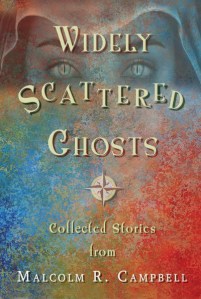 A readers’ advisory for this collection of nine stories forecasts widely scattered ghosts with a chance of rain. Caution is urged at the following uncertain places: an abandoned mental hospital, the woods behind a pleasant subdivision, a small fishing village, a mountain lake, a long-closed theater undergoing restoration, a feared bridge over a swampy river, a historic district street at dusk, the bedroom of a girl who waited until the last minute to write her book report from an allegedly dead author, and the woods near a conjure woman’s house.


 Praise the universe for crooked roads.
 nds, and parents for that long was more difficult than rough sailor talk about bar girls would lead one to believe. Even so, I was unprepared to walk through the mess decks at breakfast and find an unusual silence. The men weren’t talking, laughing, or complaining about the food. They were reading the story, some sharing the paper with others at the table. They cheered when they got to the end of it as the young lovers were reunited.

 Speaking of websites, I’ve spent some time lately trying to make my
 I subscribe to several writers’ magazines. I enjoy the articles and interviews. My eyes glaze over when I see ads for writer’s retreats. Many of these–some you pay for and some you compete for–feature cabins in the woods for writers who want to get away from it all and do nothing but write.

 Malcolm's Round Table