 You’ve probably heard the reason why eyewitness accounts of accidents are often wrong. Eyewitnesses may not see 100% of the accident: their view is obscured by other cars/objects, they glance away, etc. But when asked about the accident, they believe they saw the whole thing since the mind tends to fill in the gaps with what probably happened even though they don’t realize there are gaps to be filled in. So, what they saw was a mix of reality and possibility.
Many of us face the same patchy viewpoint of things that happened in our own pasts. Sure, sometimes we exaggerate and know that’s what we’re doing–perhaps for so many years we forget we ramped up the action and our role in it. Or, we flat don’t remember the whole thing and have pasted in what probably happened in the way an eyewitness unknowingly fills in what s/he thinks s/he saw.
According to the Innocence Project, “Eyewitness misidentification contributes to an overwhelming majority of wrongful convictions that have been overturned by post-conviction DNA testing.” With that in mind, can we even believe our own stories and memories?
While I believe we know when we’re exaggerating a personal yarn, I don’t think we know how often we do this when we’re telling others about college experiences, military events, or other things that happened long ago. We’re making a lot of it up. And yet, if we read a novel or short story with an unreliable narrator, we’re likely to get angry when we discover we’ve been lied to–unless there’s something in the story that tips us off.
According to MasterClass, “An unreliable narrator is an untrustworthy storyteller, most often used in narratives with a first-person point of view. The unreliable narrator is either deliberately deceptive or unintentionally misguided, forcing the reader to question their credibility as a storyteller.” This site suggests four types of unreliable narrators: (1) Picaro – the one who exaggerates, (2) Madman – the one who is detached from reality, (3) Naif – youthful ignorance, among other things, obscures his/her view of reality, (4) Liar – this person knows s/he is lying for one motivation or another.
 The Catcher in the Rye: Does Holden Caulfield, a troubled teen, see and understand what’s happening around him? Probably not. So we cannot trust him as as a wholly reliable narrator. According to Kylie Brant, “Holden Caulfield in The Catcher in the Rye is the ultimate unreliable narrator. Reeling from a personal trauma, his narrations provide a caustic take on the world around him. His observations of people and events are veiled in pessimism. He tells the reader he lies all the time, but the reader doesn’t necessarily believe that initially because he’s sympathetic and relatable. ”
 Gone Girl: According to Self-Publishing School, “Gone Girl” by Gillian Flynn presents an enthralling example of an unreliable narrator. As you follow Amy Dunne’s narration, you’ll find yourself constantly questioning her motives and intentions. Amy’s manipulative nature and hidden agenda create shocking plot twists, challenging your understanding of the characters and the events unfolding in the story. The strategic use of unreliable perspectives adds layers of complexity to the narrative, making “Gone Girl” a gripping and unforgettable psychological thriller.”
 Rebecca by Daphne du Maurier: CBR notes that “Mrs. de Winter, the narrator in the new adaptation of Rebecca from Ben Wheatly, is a voice of confusion who can’t keep the facts straight.” The new Mrs. deWinter cannot compete with the original, so readers/viewers cannot totally accept her perspective. A close look at the original film will show the same lacks of certainty.
Truth, it seems, in our lives and in our feature films and novels is always relative. We are the storytellers of our lives as authors are the storytellers of their novels and screenplays. At some point, most of us accept the fact that all of it is unreliable, intentionally or otherwise.
–Malclm
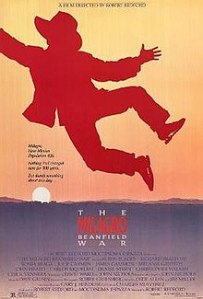 I’m thinking of this film today because I just learned that John Nichols died at 83 in November, and I’m rather embarrassed that I missed it at the time especially when such publications as The New York Times and

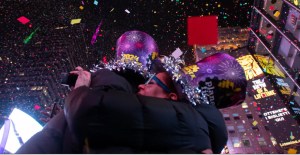 People are still shooting each other, having sex, drinking too much wine, getting married, watching bad TV, dying of old age (so long Glynis Johns at 100), and eating too much fast food. When will it end?
 We expect too much magic, it seems, with the changing of the year. Or maybe we don’t expect enough. Or, worse yet, we expect the same old, same old. Speeding tickets, DUIs, getting fired, getting hired, texting too much, running into a tree while texting, being shot by the cops while breaking into a store, finding the Oak Island Treasure. Yes, when will it end?




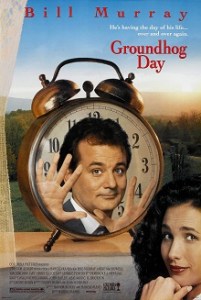 According to Sue Campbell, head of the National Institute of Standards and Technology, people are encouraged to report deja view experiences that suggest events from 2023 are repeating themselves. “Until we sort this out, many of us will be experiencing the movie ‘Groundhog Day.'”
 A bottle of Xifaxan costs $270. That means insurance doesn’t cover it. Well, if it works, it’s worth it. The only problem is that IBS really has no cure so I’ll probably need to manage it with meds until the cows come home.
 In my version of reality, what happens in the world is the total of what everyone in the population desires with enough fervor to be able to see it and taste it and experience it in their dreams and in their mind’s eyes. We can say, then, that each of us is responsible for what we get and all of us are responsible for what our city, our state, our country, and our world experience.
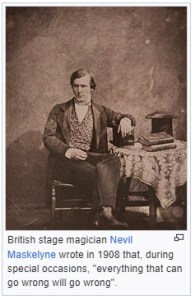 Each of us needs to put hope and energy into what we want. That’s how what happens, happens. In our personal lives, we must be positive and expect the outcomes we desire. And yet, many people begin each week with a pessimistic, Murphy’s law expectation about what will happen. They get what they focus their energy on, so if they think things will go wrong, then things will go wrong, confirming their beliefs about how the world works.


 Malcolm's Round Table