‘Journeys Out of the Body’ by Robert Monroe

“According to his own account, while experimenting with sleep-learning in 1958 Monroe experienced an unusual phenomenon, which he described as sensations of paralysis and vibration accompanied by a bright light that appeared to be shining on him from a shallow angle. Monroe went on to say that this occurred another nine times over the next six weeks, culminating in his first out-of-body experience (OBE). Monroe recorded his account in his 1971 book “Journeys Out of the Body” and went on to become a prominent researcher in the field of human consciousness. Monroe later authored two more books on his experiments with OBE, Far Journeys (1985) and Ultimate Journey (1994).” – Wikipedia  

(Learn More About Monroe in Ronald Russell’s book shown above with a link to its Amazon page)

From the Publisher
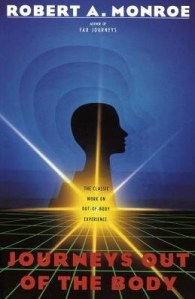
“The definitive work on the extraordinary phenomenon of out-of-body experiences, by the founder of the internationally known Monroe Institute.

“Robert Monroe, a Virginia businessman, began to have experiences that drastically altered his life. Unpredictably, and without his willing it, Monroe found himself leaving his physical body to travel via a “second body” to locales far removed from the physical and spiritual realities of his life. He was inhabiting a place unbound by time or death.

“Praise for Journeys Out of the Body

“Monroe’s account of his travels, Journeys Out of the Body, jam-packed with parasitic goblins and dead humans, astral sex, scary trips into mind-boggling other dimensions, and practical tips on how to get out of your body, all told with wry humor, quickly became a cult sensation with its publication in 1971, and has been through many printings. Whatever their ‘real’ explanation, Monroe’s trips made for splendid reading.” —Michael Hutchinson, author of Megabrain

“‘Robert Monroe’s experiences are probably the most intriguing of any person’s of our time, with the possible exception of Carlos Castaneda’s.’ —Joseph Chilton Pierce, author of Magical Child

“‘This book is by a person who’s clearly a sensible man and who’s trying to tell it like it is. No ego trips. Just a solid citizen who’s been ‘out’ a thousand times now and wants to pass his experiences to others.'” —The Last Whole Earth Catalog

Related Sources

The Monroe Institute – “Founded in 1971 by Robert A. Monroe, the Monroe Institute is widely recognized as a leading center for exploring and experiencing expanded states of consciousness. For over 50 years, our immersive programs have empowered participants to undergo profound transformations, gaining a fresh outlook on life and discovering a deep sense of purpose.”

HemiSync – “Combining rich atmospheric tones with ambient instrumentals and electronic accents, this peaceful composition leads you to a place of deep inner stillness. The Hemi-Sync® frequencies are designed to gently hold you in a state of “no time” — the perfect setting for escaping the rigors of the day, where you can relax and allow the tranquility to permeate your mind, body and soul. Length: 40 minutes.”

Malcolm

PEN AMERICA MOURNS THE DEATH OF ‘WRITER’S WRITER’ PAUL AUSTER

FOR IMMEDIATE RELEASE

MANHATTAN, NY, AUGUST 19, 2022 Paul Auster reads a passage from Salman Rushdie’s book at a PEN America rally at the New York Public Library in Manhattan, NY. Photo by ©Jennifer S. Altman All Rights Reserved

(NEW YORK) — PEN America mourns the death of prolific author and longtime friend of PEN Paul Auster, who died on Tuesday at age 77. Suzanne Nossel, CEO of PEN America, said the following:

“In addition to shaping the worldviews of generations of Americans through his bracing and beloved novels, Paul Auster was a writer’s writer, consistently standing in solidarity with authors in China, Iran, Russia and around the world who were persecuted for what he was able to do freely: exercise his imagination and tell stories.  A dean of New York City’s literary community, he was a friend and mentor to many and a treasured colleague and stalwart supporter of PEN America and writers in need everywhere.”

Auster, who once served as the Vice President and Secretary of PEN America, and his wife Siri Hustvedt have been active supporters of PEN America’s efforts on behalf of jailed writers worldwide. They joined other members of the literary community in PEN America’s event in support of Salman Rushdie after the horrific attempt on his life in 2022.

Auster participated in the PEN World Voices Festival and numerous other PEN events, including a 2009 event where he read a series of autopsy and death reports of detainees held in U.S. custody in Iraq and Afghanistan, and another where he read new poems from Liu Xiaobo, who received the 2009 PEN/ Barbara Goldsmith Freedom to Write Award.

Bad Plants – White Snakeroot

“Milk sickness, also known as tremetol vomiting or, in animals, as trembles, is a kind of poisoning, characterized by trembling, vomiting, and severe intestinal pain, that affects individuals who ingest milk, other dairy products, or meat from a cow that has fed on white snakeroot plant, which contains the poison tremetol.” – Wikipedia

White Snakeroot

Milk sickness, which likely killed Nancy Hanks, Abraham Lincoln’s mother, used to be prevalent in newly settled areas in the Middle West before farmers knew White Snakeroot (Ageratina altissima) with its charming and showy flowers was toxic and that when cattle rate it, they passed the poison along to humans.

Anna Pierce Hobbs Bixby is credited with discovering the plant’s toxicity of the plant to livestock and humans with the help of a Shawnee medicine woman.  She died about 1870, but her research about white snakeroot wasn’t published until the 1920s.

Amy Stewart, in Wicked Plants, writes that Bixby campaigned to eradicate the plant but that  “her attempts to notify authorities fell on deaf ears, perhaps because women doctors were not taken seriously.”

Like other poisonous, but beautiful, wildflowers, white snakeroot is often used in gardens featuring other dangerous ornamentals such as moonflowers and foxglove.

–Malcolm

Malcolm R. Campbell is the author of folk magic novels set in Florida.

Thank goodness I didn’t see ‘Night Watch’ when it first came out in 1973

I would have been ticked off paying for the tickets.

My wife and I were looking through the movies on DISH for something but didn’t really find it. The night before, we watched “Elvis” (2022 with Austin Butler and Tom Hanks) which we liked, so we took a chance on “Night Watch.”

What a mess. I liked Elizabeth Taylor and Laurence Harvey in “Butterfield 8,” but I didn’t think the same kind of chemistry was there in this mystery/thriller. Very different roles to be sure, but even so, I think the most patient viewers would have gotten tired of Taylor’s repeated claims that there were dead people in the boarded-up house next door. Frankly, Taylor–whose character was recovering from a nervous breakdown–was over the top manic about the dead people which nobody else saw, including the viewers and the police.

The reviews were mixed, “Time Out called it a “tired, old-fashioned thriller”; whereas The New York Times wrote, “Elizabeth Taylor, and about time, has got herself a good picture and a whodunit at that”; and Variety opined, “Lucille Fletcher’s Night Watch isn’t the first average stage play to be turned into a better than average film. Astute direction and an improved cast more than help”. – Wikipedia

“Tired” and “old-fashioned” summed up my reaction. But then, I never liked Laurence Harvey, merely tolerating him in “Butterfield 8.” How many of you have seen this film, either at the theater when it came out or years later on a satellite or cable channel? Did it seem tired to you? Would you have gone nuts if you ever saw bodies in your neighbor’s house on a dark and stormy night?

–Malcolm

Blinken must raise Tibet, Panchen Lama on China trip

April 23, 2024

by International Campaign for Tibet

US Secretary of State Antony J. Blinken must raise the “deteriorating” situation in Tibet both privately and publicly during his trip this week to China, the International Campaign for Tibet said today.

ICT, an advocacy group that promotes human rights and democratic freedoms for the Tibetan people, sent a letter to Blinken today, 22 April, 2024, on behalf of its roughly 50,000 members in the United States. Blinken is scheduled to visit China 24-26 April.

In the letter, ICT President Tencho Gyatso urges Blinken to “raise the issue of Tibet during your meetings with Chinese leaders later this week as well as publicly in front of the press.”

The topics for Blinken to address include China’s kidnapping of the Panchen Lama, the high-ranking Tibetan Buddhist leader who will turn 35 during Blinken’s trip; China’s attempts to interfere in the succession of the Dalai Lama, who is now 88; and China’s responsibility to resume negotiations with Tibetan leaders to resolve Tibet’s status.

China has occupied Tibet, a neighboring country in the Himalayas, for over 65 years, turning it into one of the worst human rights crises in the world. Under China’s iron rule, Tibet now has a global freedom score of 0 out of 100, according to the watchdog group Freedom House. Click here to read more.

Kissing Gates

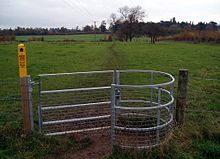
A kissing gate is a traditional way of allowing access, but not security, between a pasture or other open area used for livestock, and the grounds of an estate where animals are not permitted. In a modern farm, one would probably place a latching gate there with or without a padlock as needed.
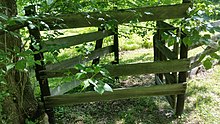
Today a kissing gate might be built to accommodate a wheelchair.

wood kissing gate

For people wearing good clothes, the kissing gate–which has no latch and doesn’t have to be dragged open and closed–allows people to easily step into a small enclosure, frequently circular, and then push the hinged gate and step through into the other side of the enclosure one at a time. The enclosure is too small for a cow or horse, so the gate effectively keeps out livestock.

The kissing gate was an easy solution where many people might come and go in a setting where a stile (more or less a set of steps built into a fence) doesn’t serve for people wearing formal clothes or for the elderly or infirm where climbing up and over the fence is unwise or ungainly. The kissing gate was frequently used to keep livestock out of rural cemeteries built within or next to a pasture.

The name which has been in use since the 1870s refers to the gate touching the metal or wood enclosure and not to the gate being a place where people meet for trysts.

–Malcolm

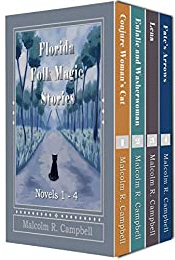
The four novels in the Florida Folk Magic Series can be bought together in one Kindle volume. The series features a conjure woman and her friends battling the KKK in the Florida Panhandle in the 1950s.

Good Plants: Yarrow

“I always keep yarrow in my medicine bag, as it has many uses. It is also called nosebleed plant, squirrel’s tale, plumajillo, and soldier’s woundwort. I recognize it by its leathery leaf shape, texture, and scent. It’s in the Aster/Daisy family. It is found in temperate zones throughout the world.” – Nicole Apelian in ‘The Lost Book of Herbal Remedies.'”

According to Wikipedia, “Achillea  is a genus of flowering plants in the family Asteraceae, known colloquially as yarrows. The plants typically have frilly leaves. The common name “yarrow” usually refers to A. millefolium. The genus was named after the Greek mythological character Achilles, whose soldiers were said to have used yarrow to treat their wounds; this is reflected by common names such as allheal and bloodwort. The genus is native primarily to Eurasia and North America.”

As always, consult with a doctor and/or an herbalist before using this plant for medical purposes, especially any involving internal use.

Web MD says that “Yarrow contains chemicals that might help to stop stomach cramps and fight infections. People commonly use yarrow for eczema, irritable bowel syndrome (IBS), wound healing, and many other conditions, but there is no good scientific evidence to support these uses.”

According to VeryWell Health, “In test tube studies, yarrow’s active ingredients have been shown to work as antibiotics, antioxidantsantiproliferatives (slowing cell growth), and more. These properties make yarrow a supplement of interest for almost everything from multiple sclerosis to cancer.”

Following that introduction, the site lists specific uses, including wounds, skin inflamation, menstrual paint, IBS (irritual bowel syndrome), and ailments for which its use has been studied. Check the site for site effects and precautions.

It can be purchased over the Internet (Caring Sunshine  and others) in addition to herbal shops.

My go-to reference is The Lost Book of Herbal Remedies, however I also like to check the Mayo Clinic and Web MD sites for additional information. You can also find sites/posts by herbalists that focus on one herb or ailment.

–Malcolm

Malcolm writes novels about conjure including “Conjure Woman’s Cat”  set in the Florida Panhandle.

Coming soon, ‘Ditch Weed,’ a novel by Rhett Devane

If Rhett wrote it, I read it. Ditch Weed will be released on June 15. I won’t be first in line because I need plenty of beauty sleep and/or time to sleep off the moonshine or Scotch I drank the night before for medical purposes. But, I can worry about that line later by pre-ordering from Twisted Road Publications here.

From the Publisher

“Eighteen-year-old Danae Gray hasn’t seen her older sister in eleven years. But there she is, just across the street, in this small North Florida town where Danae has only just arrived. Has fate finally brought them back together? Is it really even her?

“Mevlyn Jenson, the feisty octogenarian owner of the Wash-Away Laundromat, can see Danae is lost, alone, and troubled. But Mevlyn needs help as much as Danae does, and the two quickly form an alliance. In exchange for room, board, and Mevlyn’s freely bestowed advice, Danae begins to help Mevlyn care for her terminally ill husband.

“As Danae unravels the tragic secret surrounding her older sister’s disappearance, and Mevlyn comes to terms with the losses in her own life, Danae and Mevlyn create a new heart family, filled with love and renewed hope.”

“Ditch Weed” usually refers to wild marijuana. You’ll have to read the book to see whether Rhett is using the term literally or figuratively.

About the Author

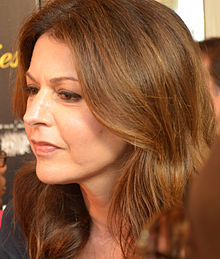
Website Photo

Rhett DeVane is the author of seven published mainstream fiction novels, two coauthored novels, short stories, flash fiction, middle-grade chapter books, and poetry. Her short fiction pieces have appeared in five anthologies. She has won numerous awards for her fiction from the Tallahassee Writers Association, Florida Authors and Publishers Association, and the Florida Writers Association.

“For the past forty-plus years, Rhett has made her home in Tallahassee, located in Florida’s Big Bend area, where she splits her time between writing and thinking about writing. She is currently working on the next novel in line, as well as a series of middle-grade and young-adult fiction because her muses refuse to contain her in a single box.”

Malcolm

Yes, Actress Jane Leeves is still busy

One of our DISH channels is re-running episodes from the original “Fraiser.” This made me remember that while the cast was great, my favorite characters were Daphne and Niles. They just seemed to end up with the runniest bits. David Hyde Pierce has been in the news lately because fans wanted to know why he isn’t on the new “Fraiser.” (Been there, done that.)

British actress Jane Leeves is probably best known for her role as Daphne Moon in the original “Fraiser” (1993-2004).  She’s been quite busy since then, most recently on “The Resident” (2018-2023). She’s also made guest appearances on “Murder She Wrote,” “Murphy Brown,” and “Desperate Housewives,” along with a primary role on “Host in Cleveland.”
It’s odd that quite often I don’t recognize the actors and actresses who appear as guest stars until half the episode is over. Then: Hey, isn’t that what’s her face from “Fraiser”?

She expressed some interest in the new “Fraiser” but didn’t want to leave “The Resident.” But who knows, maybe she’ll show up.

–Malcolm

Parks Group Applauds Landmark Collaborative Tribal Management Plan to Protect Bears Ears National Monument

NPCA News Release

March 13, 2024

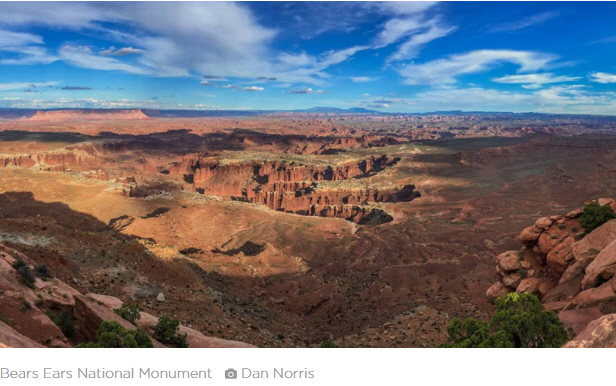
Washington DC – The Biden administration in collaboration with five Native American Tribes released a historic draft management plan for Bears Ears National Monument in Utah. Through this plan, the lands and resources of Bears Ears will be managed in collaboration with Tribes, utilizing Indigenous knowledge and Tribal input, as was intended in President Obama’s proclamation that established the monument and President Biden’s proclamation that restored the monument.

This management plan was the result of a two-year collaboration among five Tribes of the Bears Ears Commission – Ute Indian Tribe, Ute Mountain Ute Tribe, Zuni Tribe, Hopi Tribe and the Navajo Nation – along with federal partners at the Bureau of Land Management and the U.S. Forest Service. Once finalized the plan will inform resource policies and procedures for the protection of Bears Ears National Monument, connecting one of America’s most diverse national park landscapes, for years to come.

Statement by Theresa Pierno, President and CEO for the National Parks Conservation Association (NPCA):

“This landmark management plan is proof that through collaboration and elevation of voices traditionally underrepresented in public lands management, our country can preserve culturally important places and ecosystems while also balancing recreational opportunities. It’s clear the Biden administration understands that true Tribal consultation in the management of our public lands benefit all of us, as well as the future of our national parks and public lands.

“Bears Ears connects and protects one of America’s most iconic national park landscapes. It is a sacred place that provides healing and sustains life for so many. This historic collaborative management plan safeguards those values. It commits to long-term Tribal consultation and ensures that the management of this landscape honors traditional Indigenous knowledge and cultural wisdom. Once realized, this plan will create a future where visitors learn about the full history of Bears Ears and the people who have understood and cared for these lands for thousands of years.

“For years, NPCA worked alongside Tribal Nations, local communities and businesses, and countless people across the country to protect the Bears Ears landscape. But this plan would not have become a reality without the leadership of Ute Indian, Ute Mountain Ute, Zuni, and Hopi Tribes and the Navajo Nation. We are proud to stand with them, together as partners, in the fight to protect Bears Ears, and all our national monuments, for generations to come.”

***