What It Felt Like When ‘Cat Person’ Went Viral

“So what was it like to have a story go viral? For a few hours, before I came to my senses and shut down my computer, I got to live the dream and the nightmare of knowing exactly what people thought when they read what I’d written, as well as what they thought about me. A torrent of unvarnished, unpolished opinion was delivered directly to my eyes and my brain. That thousands—and, eventually, millions—of readers had liked the story, identified with it, been affected by it, exhorted others to read it, didn’t make this any easier to take. The story was not autobiographical, but it was, nonetheless, personal—everything I write is personal—and here were all these strangers dissecting it, dismissing it, judging it, fighting about it, joking about it, and moving on.”

Source: What It Felt Like When “Cat Person” Went Viral | The New Yorker

Most authors hope this will happen to one of their articles, short stories, or blog posts because they have been working for years as a virtual unknown writing what reviewers and friends tell them is good stuff even though none of that good stuff sells well on Kindle or anywhere else.

We don’t think about the flip side. Do we really want the world peering through our online windows asking who the hell we are, why the hell we wrote what we wrote, and what exactly was the whole point of it?

When a writer’s novel suddenly becomes a bestseller, the old joke is that s/he is an overnight sensation that was years in the making. That his to say, the public discovered the writer today even though s/he has a resume full of books written over a decade or more that few people noticed.

The dangers of things going viral are, I think, greater with a magazine article or a short story because even if the primary version appears in print, the online version will have a link that makes it easy to access and read quickly in its entirety–as opposed to a 400-page novel. Suddenly, everything about the author and his/her piece is all over the Internet and people are saying this sucks or this is great. Yes, writers dream about becoming known, seeing their work sell, and actually earning a living off their efforts.

I’m not sure going viral as Kristen Roupenian describes in her article is the way I’d want to go. How about you? If you write a short story that does viral, you’ll probably be able to get an agent and a publisher for your book. Yet, are you sure the intrusion of the universe into your writing room is worth it?

Malcolm

A Few Creative Book Marketing Ideas

“I was talking with a class that I was teaching this past week about marketing strategies and realized we haven’t had a marketing post in a while. Twitter and Facebook are what I think of as old marketing standbys, but there are other, more creative ways to market. Of course, as the kids say, YMMV (your mileage may vary) with all of them. Below is a summary of what we discussed.”

Source: Creative Book Marketing Ideas – Indies Unlimited

As an author, I like reading posts about book marketing because there’s usually something new to me in each one. Plus, times change, and what worked five years ago may not be quite as effective now. Melinda Clayton is a publisher and a university teacher, so she sees more of what works and what doesn’t work than most of us.

She also includes links to other articles for writers at Indies Unlimited.

–Malcolm

Malcolm R. Campbell is the author of “Conjure Woman’s Cat,” “Eulalie and Washerwoman,” and “Lena.”

‘Technique alone is just an embroidered potholder’

“Technique alone is never enough. You have to have passion. Technique alone is just an embroidered potholder.” 
― Raymond Chandler

I just finished a novel (see picture) that was 99% technique and 1% nonsense. The author used a technique that’s so ubiquitous these days, it’s got to be more than a fad. It’s an epidemic.

It works like this. You’re reading a high-stakes chapter, probably a thriller, and at the end of the chapter something untoward happens such as, “Bob kicked open the door and noticed 25 men pointing their guns at him.”
You turn the page wondering, more than idly, how the hero’s going to get out of this mess. Do you find out? No. What you see is the beginning of a new section of the book called SIX MONTHS EARLIER and most of that section seems completely irrelevant or, in writer talk: a very intrusive backstory.

There’s no passion in this, and I’m not talking about the kind of passion Raymond Chandler was referring to when he wrote, “It was a blonde. A blonde to make a bishop kick a hole in a stained-glass window.” The story would have been more interesting if it had been a house of cards rather than a house of gimmicks.

The story lacked passion because when it came down to it the story and the characters didn’t really matter. Instead, they were cheap tricks strung together like the kind of necklace you can buy at a pawn shop for a couple of bucks. Unfortunately, the book cost more than that and didn’t have the gumption to acknowledge that, when compared to cheap hookers, it was more false.

The novel, written by an author whom the blurbs said was the next Stephen King or the next Michael Crichton, had an inventive beginning in which a passenger jet arrives at a small airport where the flight pilot and copilot discover that everyone on the ground is apparently dead. Unfortunately, the main characters immediately out themselves as dysfunctional. Suddenly, the novel reminds me of Chandler’s line, “From 30 feet away she looked like a lot of class. From 10 feet away she looked like something made up to be seen from 30 feet away.”

At a distance, the story has possibilities worthy of King and Chrichton. Up close, it’s dysfunctional characters and a lot of technique. The author has chosen a distasteful stew of technique, characters who are too broken to even speak to each other, and techno-speak with which to engineer this costume jewelry of a story.

Here’s a spoiler: Google, we learn, might be developing products that aren’t good for us even though they have plenty of technique in them and look like they are good for us. Well, that’s hardly a new idea. Nonetheless, it’s the driving force behind why the ground crew at the airport seem to be dead.

In the final analysis, there’s nothing to see here or, as Chandler says, “The moment a man begins to talk about technique that’s proof that he is fresh out of ideas.”

It takes guts, I think, to tell a story straight rather than relying on stale smoke and cloudy mirrors. Dead on Arrival is dead on arrival.

Malcolm


Getting rich writing? Some are, most aren’t!

“The world’s 11 highest-paid authors sold 24.5 million print books combined in the U.S. during our scoring period, logging $283 million. The prolific James Patterson takes first place, earning $86 million and selling 4.8 million books in the U.S. alone, according to NPD BookScan, which tracks 85% of the domestic print market.” – Hayley C. Cuccinello, Forbes

Most authors pay little to no attention to this list. We don’t expect or aspire to be on it because we don’t need that kind of money, don’t want to be public figures, write because it’s what inspires us and drives us, and really don’t want to be busy picking out red leaf lettuce in Kroger when somebody comes up and says, “Hey, aren’t you what’s his face?”

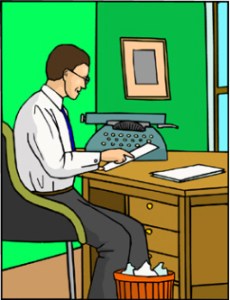
I don’t know why clip artists think we still use typewriters.

The worst thing about this list is that it gives many readers the idea that all authors make more than we do and are probably charging too much for our books. But otherwise, hearing that James Patterson, J. K. Rowling, Stephen King, and John Grisham are the top four authors on this year’s list isn’t surprising or exciting, nor does it provoke feelings of jealousy.

Every once in a while, I look at the advertising for book promotional sites to see what they’re pushing. All too often, I see that they provide studies and algorithms that will tell me what topics and plots authors should choose in order to make the most money. When I see that, I click on the X in the upper right corner of my screen and the site goes away. I have no interest in a list of hot themes and hot character types that the public is currently excited about. This is not to say that authors should pick ideas that nobody cares about and stubbornly write about them.

Most of us have our comfort areas, themes that interest us, character types that we love writing about, and locations that lend themselves to the kinds of plots we prefer. Most of us do our best work within our comfort areas and probably would fail miserably if we tried to write a novel that sounded like something any of the top writers on the list are writing. That truth has more to do with who we are than the fact we’d be in competition with a well-known author.

Some of my readers might think that I wrote the Florida Folk Magic trilogy of novels about racism in Florida during the 1950s because racism has become a hot topic again.  But I didn’t. The racism I saw when I was growing up in the Florida Panhandle had been on my mind for a long time. While working on the first book in the series, Conjure Woman’s Cat, I had no idea that the topic was “trending.” I’m pretty sure that when Michael Wolff wrote Fire and Fury, he knew his topic was trending. Did he think his book would catapult him into the list of top-earning authors? I doubt it. I think his book did better than he expected. At the same time, my trilogy didn’t capture the attention I expected.

According to Forbes, Wolff’s book has sold over a million copies in the U.S. Most writers don’t think about sales figures like that. We do think about selling a few thousand copies of each of our books per year. That’s not easy to do for self-published or small-press authors. For one thing, we’re too dependent on Amazon though they certainly can’t be faulted for focusing their efforts on the books that bring in the most bang for the buck, that is to say, the top writers on the Forbes list. For another, reviewers tend to focus on books from large presses that everyone is talking about. That’s simple economics: what brings readers to your publication or website: reviews of books nobody’s ever heard of or reviews of books everybody’s talking about? Not a hard question to answer.

Most readers don’t have enough time to read everything they want to read. I sure don’t. So we all make choices: what books are the most likely to be worth an investment of our time? I read books from many authors on the top of the book selling lists because I like their books and they aren’t likely to disappoint me. But still, I don’t think it’s that hard to add a few self-published or small-press authors to my reading list for the year. Many of them surprise me: wow, these books are great. When I feel that way, I try to post positive reviews and tell my friends about them. I know those authors face the same barriers that I do when it comes to people finding out about their books.

Goodness knows, my opinion isn’t going to send an author’s book into the the James Patterson/Jo Rowling stratosphere of book sales. Yet, if we talk about the self-published and small-press books we like, more people will purchase them and keep those authors busy writing and finding readers who enjoy their work.

Malcolm


Going to the library

“The library is a whispering post. You don’t need to take a book off a shelf to know there is a voice inside that is waiting to speak to you, and behind that was someone who truly believed that if he or she spoke, someone would listen. It was that affirmation that always amazed me. Even the oddest, most peculiar book was written with that kind of courage — the writer’s belief that someone would find his or her book important to read. I was struck by how precious and foolish and brave that belief is, and how necessary, and how full of hope it is to collect these books and manuscripts and preserve them. It declares that stories matter, and so does every effort to create something that connects us to one another, and to our past, and to what is still to come.”

― Susan Orlean, The Library Book

The library was my favorite place in my grade school, junior high school, and high school. Early on, some of my teachers would take their classes to the libraries the introduce them to what was there, how you found it, and how you borrowed it. I went back many times. My parents were active in the group that started my county’s public library. Once the doors opened for the first time, I found a new place to explore. University libraries, where I worked throughout college, had the same allure, though it was more mysterious with multiple floors and sections and sometimes old stairways and badly lighted stacks.

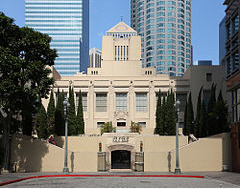
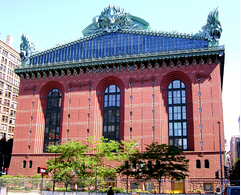
Los Angeles Library – Wikipedia Photo

Some of my classmates seemed lost, generally speaking, about who they were, where they were going, how they fit into the scheme of things, and what might be missing from their lives. I wanted to say, “Walk into the library and you’ll find everything you’ll ever need.” I didn’t say it, of course, because saying it would quickly put a student on the bullying list of everyone else in the school from class thugs to class leaders.

“A book feels like a thing alive in this moment, and also alive in a continuum, from the moment the thoughts about it first percolated in the writer’s mind to the moment it sprang from the printing press — a lifeline that continues as someone sits with it and marvels over it, and it continues on, …”
― Susan Orlean, The Library Book

I wonder about the future of libraries. Where will they end up in a world that is sliding into the morass of digital art that can be read on a screen without having to drive to that old building in the middle of town where the physical books not only take up a lot of expensive space, but can’t keep up with the deluge of each year’s new books. Frankly, I don’t think libraries will survive no matter how many new perks and services they add. I would like to be wrong about this. I would like to see viable ways to keep libraries up, running, and vital.

Chicago Public Library – Wikipedia Photo

The answer to “how do we keep libraries alive?” probably requires a look at ourselves first because since many of us didn’t walk into libraries when we were in school, we never figured out who we were and why knowledge and stories and rooms filled with books are important. So now, here we are. We don’t value what’s inside those buildings, so we don’t pay to keep the buildings and their contents alive: even our silly texts about mundane matters of the moment seem more important. The world often seems to have shrunk down to the mundane and endless cell phone texting between two people, each of whom thinks “It’s all about me.”

Meanwhile, the larger world, including books in libraries, awaits out attention if we dare to look at matters larger than ourselves and what we’re having for dinner tonight.

Malcolm

If you can’t find my novels in your library, ask the librarian to get them. If s/he can’t, perhaps you can donate your copies when you’re done reading them.


Your writing strengths, weaknesses, opportunities and threats

Do you ever feel like you’re swimming against the tide in your creative life?As authors, we have a vast array of ways to spend our time. Time is our only non-renewable resource. Given how precious it is, are you truly making the most of yours? Without a properly calibrated creative compass, it’s easy to spend time on urgent, rather than important, activities. One way to regain control and peace of mind as an author is the SWOT framework.

Source: Take Charge of Your Creative Life: The SWOT Analysis | Jane Friedman


As writers, we’re often not very realistic about our time. NYT bestselling authors who keep churning out multiple books a year while scheduling readings/signings, speech, conventions, and other appearances probably have to be realistic because they have schedules to keep and their writing contracts often have deadlines.

But, will SWOT (strengths, weaknesses, opportunities, threats) help? It annoys my sense of comfortable chaos and living off of intuition to even consider it. But, I present it here as something that might well help others.

Malcolm

Amazon Kindle cover.

Malcolm R. Campbell is the author of magical realism, fantasy, and paranormal stories and novels, including “Florida Folk Magic Stories.”

I have no idea why I can’t proofread worth a darn

“Nothing can affect my voice, it’s so bad.” – Bob Dylan

Likewise, nothing will help my proofreading because it’s so bad. Fortunately, an Internet program called Grammarly has weeded out most of the typos from my Facebook posts. But, I’m cheap and have a free version. That one doesn’t seem to help much with Word files.

So, today I’m going through the manuscript for an upcoming short story collection for the 5th time looking for typos. I keep finding them. After I go through the manuscript, I always think, “Finally, it’s now error free.”
Except it isn’t. If I go through it again, I find more typos. I don’t know I miss them. My publisher sends my books to an editor and she always finds more.

I feel slightly better about the situation when I read that many experts think the worst person to proofread a manuscript is the person who wrote it. S/he always starts reading for a sense of the story and misses the same errors that got missed the first time.  Typos are a big problem with many self-published books because authors try to proofread them and miss a lot of mistakes. They’re advised to hire editors, but many editors charge more than the authors think the books will earn.

My editor has been doing her job for a long time, so I’m pleased to say that she catches what I miss. Thank goodness. My publisher relies on our editor as well. When I send her a new story, she’s reading it to see what happens in the story and whether that story will be a reasonable addition to the catalogue. So, she misses some of the same stuff I miss. She grumbles at this because she’s also a writer and thinks, as I do, that at some point our proofreading will be worth a darn.

Some authors have a team of beta readers who go through manuscripts in progress and make suggestions. Naturally, these readers will catch a lot of the errors. However, I dislike the concept. I never know where my stories are going when I start writing them, so the last thing I want is a committee making suggestions about what’s happening and what ought to happen next. That would totally screw up my chaotic writing process.

My wife is a big help, though. She worked for a daily newspaper and has also done a lot of writing. She finds many of the errors in my work that I don’t see. Sometimes she catches continuity problems such as “Hey, didn’t Bart die in chapter three? If so, what’s he doing sneaking around in chapter eight?” Oops.

In my Florida Folk Magic trilogy, my conjure woman Eulalie claims she’s older than dirt. I’m not that old yet, but I’m getting close. That means that I’ve been writing long enough to have figured out how to be a better proofreader. What I think happened is this: James Patterson and Nora Roberts started worrying that I’d knock their books off the bestseller list. So they put a hex on me. That’s the only reasonable excuse I can think of.

–Malcolm

Malcolm R. Campbell is the author of “At Sea” which is free on Kindle for a few more hours.


Writing Advice from Isabel Allende

“So how do writers make sense of it all? Observe. Take notes. Question your own assumptions. Recognize the struggles of people around you, acknowledge your struggles, and be generous to both. In Allende’s words, “If we listen to another person’s story, if we tell our own story … we realize that the similarities that bring us together are many more than the differences that separate us.”

Source: Isabel Allende’s National Book Awards Speech: Writing Advice – The Atlantic

Isabel Allende has become the first Spanish-language writer to receive an honorary National Book Award medal. In her acceptance speech, which you’ll find covered in “The Atlantic” at the link above, she talks about how being constantly uprooted has not only impacted the themes in much of her fiction but her approach to writing itself.

“As a stranger … I observe and listen carefully. I ask questions, and I question everything. For my writing, I don’t need to invent much; I look around and take notes. I’m a collector of experiences,” she said.

That’s how writers–and perhaps almost everyone–make sense of moving to new towns, travel experiences, and the political and cultural upheavals of the times in which they live.  As the author of “The Atlantic” article, Rosa Inocencio Smith puts it, Allende’s speech “functions almost as a step-by-step guide for responding to such existential uncertainties. Surrounded by people with infinitely varied lives, writers, she advised, need not feel the pressure of making up stories from scratch. Confronted with problems in their plots or psyches, they can use their skills of observation to gain understanding.”

I like the advice, the article, and the speech itself (which you’ll find linked to the article).

Malcolm

Reading seems to become hereditary in practice

My parents’ parents read to them. My parents read to me. I read to my daughter. She reads to my granddaughters. I’m pleased to see the tradition continue. It’s almost as though it becomes part of our family’s DNA and the process is continued generation after generation.

When my brothers and I cleaned out our parents’ house after they died, among the memories we found were boxes and boxes of our childhood books. Our parents’ generation inscribed books they gave as gifts, so the dates told us when the books first came into our consciousness. At one point, I thought my granddaughters might like them.
It’s a bit disappointing to discover that the books I enjoyed when I was a kid no longer hold much appeal now. Today’s children’s books are linked to the children’s shows they watch on TV or at the movies. These grab their attention, whereas something I liked 3/4 of a century ago elicits a yawn.

But that’s okay. On the way back from a day trip to Lake Tahoe, my oldest granddaughter was goofing around with stories about imaginary beings, some she made up on the spot, others that might have been prompted from some of the books her parents read to her. We joked about portals between our car and the car with the rest of the family in it as though such portals were a part of our everyday reality.

I doubt that she remembers that conversation any more than I would remember a similar conversation with either of my parents from (give or take) the time of my 5th birthday. But the conversation told me her parents had been reading to her and that she had developed a wonderful imagination. I’m so proud of her for figuring out at her young age that there’s more to see that she can see with her physical eyes.

As a writer, I suppose I have a stake in the tradition of kids being read to by their parents and then discovering the joy of reading as they grow older. But it’s not because I hope they’ll buy my books. It’s because I have felt the power of my imagination in my life and can’t imagine living in the world without it. Reading is a powerful catalyst to thinking outside the box and outside the brainwashing of the political forces of one’s time.

Those with a powerful imagination may not have an easy time of it because they can see what others cannot see. They may grow up and find themselves out of step with the fads of the time. I know I did. But I wouldn’t trade understanding for conformity in spite of the temptations.

When my parents read to me, I doubt they thought the reading would have an impact on my life. They did it because it was fun and because I enjoyed the stories. The same is true when I read to my daughter. These days, we know there are studies that show that kids who are read to by their parents have a better shot at life. Maybe some parents know about those studies and read to their kids as a duty. I can’t say that I approve of that. Reading is such a wonderful way of sharing a story with one’s children, that there’s no other reason to do it. They like the stories. So do we.

Everything else in icing on the cake.

–Malcolm

Malcolm R. Campbell is the author of the Florida Folk Magic Series of three magical novels now available as an e-book in mutlipe formats.


Rainy days and/or Mondays

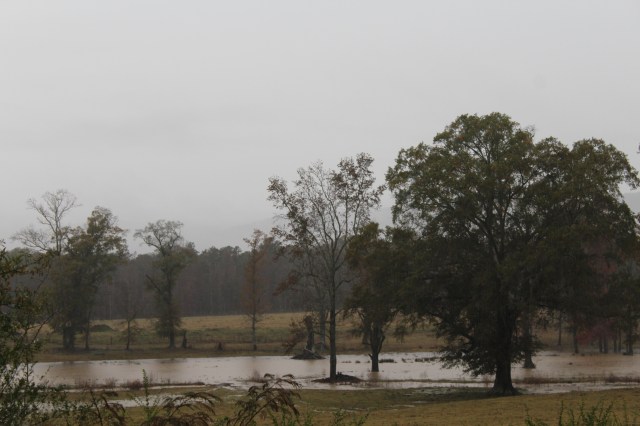
Very heavy rain all day today, starting our week off with a flash flood watch. This “lake” in the pasture below the house is normally a narrow creek. Now it’s probably up over the road. I already got wet doing grocery shopping this morning, so I’m not going to walk down there and see what the road looks like.

Lena

Thank you to the 800+ entrants in my GoodReads giveaway for the third novel in my Florida Folk Magic series. I wish I could afford to send all of you a copy. Alas, only one copy is available and it will go out in tomorrow morning’s mail to the winner who lives in Kansas.

Cancer Scare #2

Those of you who’ve read this blog for a while, know that I had successful surgery for kidney cancer several years ago. The cancer was caught by a fluke, an ultrasound taken when I went into the hospital or an appendectomy. It was caught early enough for the surgery to work. The scary thing about kidney cancer is that there are no symptoms until it’s too late to do anything about it. My surgeron told me that the inflamed appendix was the bellyache that saved my life.

Several weeks ago, one of the seemingly endless tests I keep having suggested that I might have cancer again–or, an inflammation. I was optimistic–with random periods of worry and depression–because this cancer has early symptoms. Fortunately, the antibiotic is working and the test numbers are looking better. I’m one of these people who doesn’t get along with antibiotics, but they beat the alternative.

Upcoming Ghost Story Collection

In finished another story for my upcoming collection of ghost stories–coming soon from Thomas-Jacob Publishing. This one takes place in an old opera house that was about twenty miles away from where I grew up in the Florida Panhandle. I drove by it many times and, since it was closed down, always thought it was an abandoned factory. The people in the state’s ghost hunter business claimed the old theater was haunted.

Fortunately, it was saved from the wrecking ball by a string of preservation grants and is now being used to stage regional theater productions. What a perfect place for a story on a dark and stormy night. The story helped distract me from Cancer Scare #2. My wife’s going to proofread the story before I send the collection off to the publisher. There are one or two books in the queue ahead of this one, so I have no idea when it will be released. (I’ll let you know.)

As Thanksgiving approaches, I’m looking forward to seeing my daughter and her family, including my two granddaughters next week. We’re all doing a little sightseeing as well. The last time we went to their house, we were all snowed in and did well to walk as far as the sledding hill. We’re going earlier in the winter months this time!

Malcolm