Write what you know: but I’ve never been a bag lady

“BAG LADY: A poor woman, often homeless, who uses bags or shopping carts to transport her possessions and collect things that might be of use or traded for money.” – Urban Dictionary

Authors often joke about the feds tracking them down after they (the writers) use the Internet to learn how to kill people in various ways, break into banks, and commit other nefarious deeds for use in upcoming novels.
Yesterday, I looked at dozens of sites to learn more about bullet and arrow wounds. I found a wealth of information. So far, the police haven’t knocked on my door to talk to me about cold cases involving arrows in the ass.

Years ago, I asked a vet on a pet forum how much chocolate it would take to kill a large dog. Figured I’d get turned in ASPCA. I was surprised that we actually had a good discussion about it: he knew I was an author and not a nasty pet killer.

And then there the time I asked a forensic scientist what a dead lady would look like after she’d been buried for three months. He told me and asked for a copy of my book in which I gave him credit in the acknowledgements. Apparently, I didn’t sound crazy enough for him to suspect I was a grave robber.

It just goes to show, authors not only write what they know but write what they don’t.

So now the novel in progress has a bag lady in it. Needless to say, I’ve never been a bag lady. I once knew a lady that people in town thought was a bag lady. She looked like she was 150 years old (she wasn’t) and had the dried out look old people get who’ve smoked ten packs of cigarettes a week for 80 years. She was the cashier at a small grocery store. One time when the credit card reader was taking a long time, she asked that the screen was saying.
“Waiting for bag lady,” I said (because she bagged the groceries as she scanned them). “Most people around here think I’m a bag lady because I walk everywhere when my car won’t run which is near about always.” After that, she got ticked off if I didn’t come to her register or take her advice on my grocery buying habits. Seems like I saw her everywhere in town and about every time we’d stop to chat, somebody would ask me a few days later why I was talking to “that old bag lady.”  I told people she was giving me brokerage tips.

She’s long gone now, but I think of her as I try to come up with what the bag lady in my new novel will look like and act like. Whenever I have a female character in a novel, I have to ask my wife what kind of clothes she’d wear. I’m aware that women wear clothes, but I have no idea what any of the clothes are called or what for what occasions they’d be appropriate. My wife can’t help me as much this time out because my 1950s bag lady is wearing clothes from the mid-1940s.

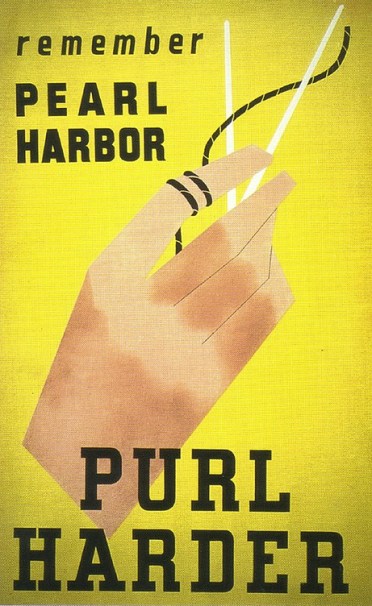
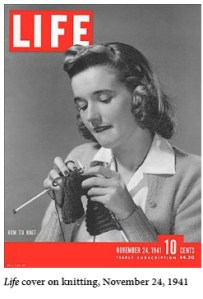
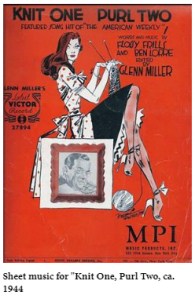
Government restrictions seriously impacted the clothing people could buy. My wife wasn’t around then, so I’me learning about color and fabric restrictions, knitting socks for troops, and the no-nonsense styles men and women wore then on line. Even Mrs. Roosevelt was purportedly knitting socks for the war effort. Needless to say, my bag lady doesn’t look like the lady on the cover of that sheet music.

If there’s a crime spree in your neighborhood targeting bag ladies, I have an alibi–enough browser history to prove I’m here in my den doing research.

–Malcolm

Malcolm R. Campbell is the author of the recently released short story collection “Widely Scattered Ghosts.”




National Poetry Month: ‘Sharks in the Rivers’

If Ada Limón stopped writing poetry today–hard to imagine as that is–she would probably be remembered for Bright Dead Things and her most recent collection The Carrying. However, I want to mention her 2010 collection sharks in the rivers because–as with many singers, for example–a writer’s earlier words are often created and executed through raw, wild power that, in time, often becomes more polished as the years go by. I think this searching, magical volume will always stand out as a primal voice that time will always be trying to tame.

Review

In his review in The Brooklyn Rail, Jeffrey Cyphers Wright wrote,

“Rivers and sharks are grand metaphors in these ruminative soliloquies—as much about going with the flow as facing down your demons. Bravery and fear, like opposing eyes peering through the murk, inform Ada Limón’s vision. Not one to be obsessively reductive, minnows, angelfish, and barracudas round out “the City of Sharks” she navigates.

“Limón allegorizes other creatures as well: owls, sparrows, cormorants, and butterflies. ‘Every one of us with a bear inside.’ This penchant for mixed metaphors could be disastrous in a more rigid, less expansive treatment, but here it is compelling. Candor and artifice intertwine with (human) nature and Surrealism—think Sharon Olds (her teacher) dancing with Pablo Neruda.”

Publisher’s Description

“The speaker in this extraordinary collection finds herself multiply dislocated: from her childhood in California, from her family’s roots in Mexico, from a dying parent, from her prior self. The world is always in motion — both toward and away from us—and it is also full of risk: from sharks unexpectedly lurking beneath estuarial rivers to the dangers of New York City, where, as Limón reminds us, even rats find themselves trapped by the garbage cans they’ve crawled into. In such a world, how should one proceed? Throughout Sharks in the Rivers, Limón suggests that we must cleave to the world as it ‘keep[s] opening before us,’ for, if we pay attention, we can be one with its complex, ephemeral, and beautiful strangeness. Loss is perpetual, and each person’s mouth ‘is the same / mouth as everyone’s, all trying to say the same thing.’ For Limón, it’s the saying—individual and collective — that transforms each of us into ‘a wound overcome by wonder,’ that allows ‘the wind itself’ to be our ‘own wild whisper.'”

As you read these poems, you might not always be sure whether the lines are magical realism or metaphor. Or both. Or, just how the speaker has seemingly merged with that about which she speaks.

“I saw myself by the Rio Grande watching
a crane swoops down over the collection pond.

I was the fish in the drainage ditch,
you, the crane’s scissoring shadow.”

“Every one of us has a sparrow
underneath her tongue,
bouncing and burrowing.”

“(Sharks are listening right now, I’m sending out signals.)

I’m dreaming of them. I’m wrapping my arms
around their cold, gray, magnificent bodies.

We’re both sleeping
with our shark-eyes open”

The object (or critter) and the observer become one and the same.

Malcolm

Blogging, what’s it all about?

Writers are usually advised to have websites and blogs. There are lots of reasons even though blogs aren’t as popular as they were, say, back in the 1990s when the concept began. Blogs become, so say the experts, part of your platform or presence on the Internet.

Nonfiction

No, I don’t look anything like this clip art.

Not counting widely known writers, blogs seem almost mandatory for those writing nonfiction because they help establish subject-matter credibility. Such blogs have a built-in niche and tend to draw readers who are interested in beekeeping, home repair, investing, or whatever the author’s subject matter is. If the author is busy, s/he may have announcements of upcoming events related to that niche along with links to his/her articles along with resources links to sites and articles written by others. So the blog becomes another clearinghouse of information and (so the author hopes) will be a way of publicizing the books.

Fiction

Widely known fiction writers have a built-in audience of readers who are looking for them; they want to know the latest news about new books, presentations, panels, signings, etc. Unknown writers don’t have people looking for them. So, they are often told to blog about the subject-matter and locations of their books more than their books. If they write several posts a week about their books, that’s often considered SPAM. On the other hand, after maintaining this blog for a number of years filled with posts about Montana, Florida, mountains, swamps, hero’s journey, hoodoo, the environment and related subjects that relate to my novels, I can say that after a while, the writer runs out of book-related subject matter to talk about.

And, as far as I can see, there’s little correlation between those who read my posts about hoodoo, for example, and the sales of my books in which the main character is a conjure woman. Of course, most of the people who read this blog aren’t fans of hoodoo and related subjects, so I can’t establish a “hoodoo niche” and write about that all the time. But even if I did, I suspect that readers searching on hoodoo and conjure are looking for how-to more than fiction.

This brings me to the point that some writers make: blogging takes time away from writing the novels one is supposed to be writing. Yes, it does, and while I appreciate all of you who follow this blog greatly, I’m wondering if the blog is “earning its keep.”

Politics

J. K. Rowling, Stephen King, and other well-known and wealthy writers can make political comments on Twitter all the time without harming their authors’ reputations. They may lose a few readers, but I’m sure they don’t care. I wrote a political post on this blog yesterday and deleted it today. Why? I guess I wish I hadn’t written it even though writers–among others–are being urged to speak out more and more about political matters. The thing is, politics has become so polarized these days, one can hardly say anything that doesn’t bring down the wrath of the multitudes. Suffice it to say, I’m a political moderate, yet the polarization in venues such as Facebook is so extreme that moderates get beat up by both conservatives and liberals. I don’t see a lot of real dialogue on Facebook. Just a lot of nastiness from people who wouldn’t dare say the things they say at a backyard barbecue or a bar or a party. I don’t think I want to bring that nastiness into this blog even though my political views are just as real as everyone else’s views.

So, What’s Left to Say?

My first thought is “not a lot.” I’ve been blogging for a long time on many platforms over the years. I’ve met a lot of cool people, found interesting discussions, been lured into exciting blogs of others, and had fun shooting off my mouth. But after 25 years of that, I’m not sure I know what I’m doing here on WordPress. As people reach my age (I’m not telling you what it is) they often find they’re out of sync with the world. That is to say, it becomes more and more obvious with each passing year that they are part of the older generation which is variously considered to be: (a) responsible for what’s wrong with the world, (b) out of touch with the major thrusts of culture and popular culture, (c) trapped in the past.

The days are long gone when old people were venerated for their wisdom.  (Hell, my generation grew up with the admonition not to trust anyone over 30.) Not that I have any wisdom. When I was a kid, I thought I would know lots of stuff by the time I was a grandfather. Boy, was I fooled!

This is almost goodbye, I think.

Malcolm


An infinite number of writing prompts

I try to stay away from badly written books and totally worthless movies. Yet, they might be goldmines! A writing professor of mine once said that he finds a lot of value in both because he used them as writing prompts. How? The challenge he saw in them was figuring out how to fix them.

Wikipedia photo

In the world of major publishers and agents, this is one of the editor’s jobs, though they don’t intentionally begin with something worthless. They begin with something that has promise but needs a lot of work. They help the author turn the work into something much better.

You can practice your writing skills in a similar way by taking badly written books or movies and figuring out what makes them badly written and how you would fix them if you happened to work for a major publisher as the author’s editor. If you like writing prompts, fixing bad books–or scenes out of bad books–gives you an infinite number of exercises.

Think of the kinds of complaints you read in one-star Amazon reviews: thin or unbelievable plot, one-dimensional characters, skimpy information about the novel’s setting, storyline padded out with too much description or lengthy and inane conversations that don’t move the plot forward, etc.

Pick one scene and make it work. Make sure it’s a scene that requires better writing and not a scene you would cut altogether. For example, if there’s a section of lengthy description, try to re-write it at half the length. If the dialogue is inane, what can the characters say to each other at that point in the story that makes more sense? You can give yourself a bigger challenge by writing within the original author’s voice and style rather than your own.

My professor thought that one way of learning how to diagnose and fix weaknesses in our own work was by diagnosing and correcting problems in the works of other writers. It’s an interesting exercise and, goodness knows, there are hundreds of books out there we can use for raw material.

Malcolm

Malcolm R. Campbell is the author of the recently release short story collection “Widely Scattered Ghosts.”
Having fun with my research

Now that I’ve finally promised my publisher a new novel and floated the general premise past her (she liked it), it’s time to do some research.

Typical poster used to get the public to do their own knitting and donate a lot of it to the cause.

Like the Florida Folk Magic Stories, this novel will be set in the Florida Panhandle, so I already know the area. This is one of the benefits of writing a series, or doing a standalone novel that uses the series as a starting point: you have a lot of location information on file that wasn’t used in the previous novels.

Since my main character is a bag lady in 1955, I’ve been looking at clothing manufactured during the 1940s. Needless to say, a bag lady isn’t going to be wearing the latest thing from Paris or even from Sears Roebuck. There’s a lot of material available about 1940s women’s clothing inasmuch as it was greatly influenced by rationing and shortages.  A lot of people were mending old clothes, making do with fewer fabric selections, and knitting socks for the troops (and themselves).  So, I think I know what my bag lady’s going to wear.

While the novel isn’t historical, I want the cultural references to be right. So, what was happening in Florida in 1955? I already know that the KKK was strong in those years. And I know that educator and activist Mary McLeod Bethune died in 1955 in Daytona Beach. My bag lady would know that because even though 1955 is part of the Jim Crow era, the story would be covered by the press.

My bag lady is–for reasons I won’t divulge now–an expert bow hunter. This means checking on the kinds of bows and arrows used by hunters in those days. I had good luck with this. I found information about the most widely known brand of bow at the time along with a selection of arrows.

Now, since this novel starts where the series ends, I have to make sure that I don’t contradict anything that happened in the series. So, I’m researching my own stuff to make sure there aren’t any continuity problems. For example, if a bad guy was killed in the series, I don’t want him showing up in the new book fit as a fiddle. By the way, “fit as a fiddle” is the kind of thing my bag lady would say–checking the slang of an era is part of the process. I’m surprised at the number of TV series that have characters from years ago using modern slang such as “whoa!” (meaning “wow!”) and other phrases that nobody said twenty or thirty years ago.

When Diana Gabaldon (Outlander) and I were both in an ancient CompuServe literary forum, we found that we had one thing in common that a lot of writers weren’t understanding. The research has an impact on the story the writer is about to tell because it tips him/her off to things s/he didn’t know and is responsible for altering the plot of a novel in ways the writer wouldn’t have considered before the research phase began.

I didn’t care for research projects in school–often for the purpose of writing “themes” as they were called in those days–but I enjoy them now. I once read that writers like Nora Roberts have a staff that includes researchers. While there are times when I wish I could pick up the phone and ask an assistant a question and get an immediate answer, I feel much more in touch with my characters and my story when I have to look up all the stuff myself.

Malcolm


Briefly Noted: ‘Writing Contests with Hope’

C. Hope Clark has been advising authors through her weekly newsletter “Funds for Writers” for twenty years. I’m a long-time subscriber and look forward to Fridays and the arrival of the newsletter in my in-basket because it contains nuts and bolts tips, writing ideas and inspiration presented with a positive can-do attitude, and lists of upcoming writing opportunities.

Clark, who is also a novelist (The Carolina Slade Mysteries and The Edisto Island Mysteries) brings the best contest-related ideas from her newsletter to Writing Contests with Hope that was released in paperback and e-book in February. “This book has been a long time coming, “said Clark. “It speaks of the myths of contests, and shows how amazing contests can be for your career.”

From the Publisher

Everyone loves winning, but nobody enjoys losing. Writers are no exception. Contests in the writing profession offer opportunity in many forms, but so many writers fear entering. Whether they fear scans, rejection, or being judged, they hold back. On the other hand, others throw caution to the wind and enter every contest in sight, likewise winning nothing. Contests are a serious venture. They can catapult a career if entered thoughtfully with serious intent. Yes, intent. Contests aren’t a whimsical endeavor. With planning, practice, and research, writers can enter contests and genuinely improve their odds of success. 

A lot of writers I know don’t enter contests. That makes sense in they’re busy finishing their latest novel or meeting a deadline for a magazine article. Otherwise, I don’t understand why they don’t do it. Hope understands: in the book, she discusses some of the usual reasons writers don’t enter any of the dozens of competitions available each year. If you have concerns about contests, take a look at the What’s Inside feature on the book’s Amazon listing. The point of view there may change your mind. If it does, this book will increase your odds of success.

–Malcolm

There is nothing that’s not God

“In philosophy, panpsychism is the view that consciousness, mind, or soul (psyche) is a universal and primordial feature of all things. Panpsychists see themselves as minds in a world of mind.” – Wikipedia

Yes, I believe everything has consciousness from the tree behind my house, to the hummingbird sitting in the tree, to the rocks lying at the base of the tree. Nothing else makes sense to me. Long before I heard the Huna phrase “there is nothing that is not God,” I saw the view outside my window as “God’s thoughts.”

Rather than focus here on a philosophical discussion for which nobody that I know of can prove one way or the other, I’ll just say that my view of the world has played hell (figuratively speaking) with the placement of my books and stories into one genre or another.

So, I tend to say that I write magical realism because that covers just about everything I want to do without having to argue about whether or not a thinking rock is a fantasy or realism. I consider thinking rocks to be real, but the publisher usually doesn’t. But magical realism, well, that’s another kettle of fish, isn’t it? I believe the landscape is, in fact, magical. So, if I place my books in the magical realism genre, I can say what realism won’t allow me to say.

Someday down the road, all of us will probably have to re-define what’s real and what isn’t real. As of now, in spite of what Quantum physics is telling us, we’re still trapped in a nuts and bolts version of reality insofar as publishers, governments, and news organizations are concerned. Basically, saying that I write magical realism has kept me out of the asylum because people who think trees are conscious are usually placed on the shortlist for shock treatments and straight jackets.

Since I think we create our own reality, it’s natural for my characters to have the same belief. My beliefs about this are quite literal. Most people see the matter as figurative, having more to do with attitudes about what’s happening rather than causing what’s happening. Here’s the good news. If I say all this in a story, I’m not picked up by the Feds and put in a home. Call it my artistic license.

I say what I’m writing is true. Publishers and most of my readers think it’s fantasy or magic. I’m okay with that because I know that once a reader reads it, s/he can’t unread it (so to speak). There will always be that nagging idea in readers’ minds that just maybe the stuff is real. Yes, it is. But there’s no rush to believe it. One day you will.

Malcolm


Are emerging writers desperate or acting desperate?

Every week on Facebook and in my e-mail in-basket, I see the following:

  • Podcasts and videos that promise to show me how my next book can be a bestseller.
  • Free PDF downloads that promise to show me how to get better coverage on Amazon and in Google searches by changing the keywords I use in my promotion copy–and even in my book title.
  • Publicists who want me to gamble, say, $5,000 to hire them to get more reviews, articles, TV appearances, and other promotional exposure for my novels.
No, you can’t create a bestseller by paying a publicist a few hundred dollars.

Some of these people mean well. Perhaps most of them mean well.

But I’m tired of all the offers because: (a) There are so many of them, (b) A large number see books as a value-added extra for people whose real business is doing something else, (c) They’re focused on non-fiction, (d) Use videos that are not closed-captioned, meaning that they are of little value to those of us who are hard of hearing, (e) Use podcasts that, while very popular, present information in a linear fashion that means–even if I could hear–I’d have to wade through the whole thing to get information I could see on a webpage in a fraction of the time.

There’s an old joke that people selling shovels made more money than those heading out as part of the gold rush. This seems similar to those promoting writers’ tools. People wanted to strike it rich in the goldfields. Apparently, writers want to strike it rich–or, at least all these sellers of so-called helpful information think we want to strike it rich.

Many of us on Facebook joke about the fact that whenever we go out on a website to buy gifts or check on prices for something we need, our Facebook screen is filled with advertisements for that very thing the following day. Maybe that’s why writers see all these promotions. The promoters find out we’re writers, so they display “how to write” advertisements in our e-mail in-baskets and Facebook timelines.

Frankly, I think a lot of these promotions are looking for writers with a short attention span, the writer who don’t want to “pay their dues” working their way up, and so we’re offered promises of instant riches. The whole thing would be amusing if it weren’t for the possibility that a lot of writers are paying money for “all this help” that probably won’t get them anywhere.

I wonder, how naïve can a person be who has just graduated from high school, self-publishes a book, and thinks that with a small investment of, say, $5,000 s/he will suddenly be in the stratosphere of writers by listening to a podcast? Yes, it could happen. But for most people, it won’t. The lottery probably has better odds of success.

My publisher and I joke about when Oprah will select one of my books for her book club and when Viola Davis wil read Conjure Woman’s Cat and want to play the role of Eulalie. Sure, these are nice dreams, but I can’t base my writing career on waiting for them to happen. Or, on thinking I can pay somebody to make them happen.
Writers everywhere are asking what it takes to get more reader reviews on Amazon, reviews in prestigious review sites like Publishers Weekly and Booklist, how does one build a platform that major publishers and major critics and the book-buying public notice, what does it take for a word-of-mouth campaign to bring in sales, and similar questions. When all of this is discussed online, it brings you a host of ads and purported deals that claim to help you get those things.

In most cases, they won’t. And, I think that the majority of people who spend money on such services are spending more than their books are likely to earn.

Yes, I think you can build a platform. I think you can do yourself a lot of good submitting short stories and essays to carefully chosen contests and magazines, I think you can make comments on the Facebook status updates of other writers as well as their blogs, I think you can develop a niche for your own blog and website that sooner or later captures the attention of readers, editors, and agents. But, there’s nothing certain about this process. Keep your day job and keep at it, and look at all those people selling shovels with a sceptical eye.

Malcolm


Etc – a mix of stuff

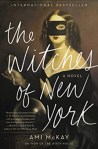
  • Enjoyed reading The Witches of New York by Ami McKay. One nice take-away quote from that novel is this infuriating information: “There was a definite double standard when it came to ‘occult practices’ in the Puritan communities of the day. If a woman practiced folk healing or Bible dipping or oomancy (a form of divination that employs pouring egg whites in water) then she was a witch. If a clergyman studied alchemy, then he was a learned scholar. As Stacy Schiff wrote: ‘Plenty of clergymen dabbled in alchemy. While inveighing against the occult popular magic was one thing, elite magic was another.'”
  • After my post asking where the hell my muse is, I got a telegram from her: “Calum, chan eil thu ag èisteachd!” For those of you who don’t speak Scots Gàidhlig, she said that I haven’t been listening. Okay, she’s right. I have had a story idea in mind, but I thought it was too close to my Florida Folk Magic Series which I had intended to wrap up with the recently released Lena.  Basically, a character whom readers meet in Lena goes on a rampage against the KKK. More later when I figure how just what that means.
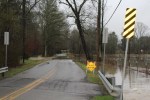
  • One of the two roads into town.

    Today’s Facebook status update: It’s still raining. In fact, we’ve had monsoons all winter. By the time things dry out enough for me to cut the grass, I’ll have to borrow my neighbor’s tractor and bushhog because it (the grass) will be too high for my riding mower. (Okay, what’s the deal with the new type face for this paragraph?)

  • Thank you to all the fine folks who received my publisher’s (Thomas-Jacob) newsletter and downloaded copies of Conjure Woman’s Cat. The first book in the trilogy seems to be everyone’s favorite. (I’m rather partial to it myself.)
  • There’s an ongoing Amazon giveaway here for my collection of short stories Widely Scattered Ghosts. Many of these stories are set in Florida, though they’re also from Montana, Missouri, and Illinois. You don’t have to do anything for a chance at a free copy other than follow me on Amazon.
  • Curiosity question: why is Grammarly trying to change all the spellings in this post to British spellings?
  • If you have a Facebook account, I invite you to LIKE my author’s page called Star Gazer. It’s mostly filled with links to reviews, authors, and book news.

Malcolm

Siobhan, cá bhfuil tú?

I’m searching for my muse. She’s a Scot, so I’m saying in Gaelic, “where are you?” If you’re not Scottish, I should tell you that that name “Siobhan” is pronounced “Shihvon,” not “See ohb han.”

Having gotten that out of the way, if you see a potentially drunk muse wandering through your neighborhood, tell her to come home and help me get started with a new story. Ever since sending the last short story out to a magazine, I haven’t come up with anything.

One reason I need a new story is because I need money. Siobhan taught me to drink the most expensive brands of single malt Scotch out there, but when I’m broke, all I can afford is swill. That’s like being stuck with Bourbon which I don’t like at all unless it’s hidden in a mixed drink.

Frankly, if a writer doesn’t have a badass muse, he’s pretty much out of business, a hopeless drunk who wakes up in bordellos and/or jail cells and wonders how he got there. Writing is more dangerous than most people think. Not writing is either more dangerous. Trust me on this because without Siobhan’s help, I have no way to explain it.

Siobhan lives in Hawai’i and sends me story ideas via telepathy because (obviously) I don’t have enough dough to travel to Oahu. Plus, if I told my wife I was traveling to Oahu to meet a woman, her reaction probably wouldn’t me all that great. “Wouldn’t a sat phone be cheaper than a plane ticket?” she would ask. “But it’s for literature,” I would protest.

“Hah!”

So there it is.

If you see Siobhan on the beach at Kailua, tell her to give me a call. My fans are calling me every day screaming for new stories and they’re turning to James Patterson and Tom Clancy (even though he’s dead) in desperation.

–Malcolm