At least he died with his boots on.

Any writer who starts to write “At least he died with his boots on” has got to know it’s an old cliché and doesn’t belong in his/her story unless s/he is writing a spoof. Assuming it’s not a spoof and assuming it’s important to say something that begins with the words “At least,” the author needs to take a breath and come up with something new to say.

And no, it’s not “At least he died doing what he loved” or “At least he took out ten bad guys with him.” I’m pretty sure “At least he died with his pants down” isn’t going to work either because that’s not new either.

Maybe it’s best not to have a character say, “At least he died. . .” like anything that smacks of that old cliché can possibly excuse or minimize what happened.

Moments ago, I came across the following: “The .44 was crap for long-range shooting, but Ramon liked. . .”

Where do you think that sentence is going? I knew before I turned the page because such sentences always end with “but Ramon”–or whoever–“liked working up close and personal.” Yawn.
Wikipedia graphic

Now here’s something that’s almost a cliché, though the exact words vary, “Detective Smith walked into the house where he three bodies that all looked like they’d been fed through the wood chipper in ‘Fargo.'” No, that’s not the cliché even though it sounds like one. What detective Smith actually said to his partner, Detective Jones, was “Jones, this looks like a home invasion gone bad.”

I’m really tired of that line. In the first place, it makes no sense. How can a home invasion go bad when it’s already bad from the beginning? Okay okay, maybe the invaders didn’t expect the homeowners to be waiting in the front hall with enough AK-47s to sink a battleship. Hmm, I think I’ve read that line before. Anyhow, so instead of killing the homeowners and grabbing the priceless Picasso (the painting, not the artist) off the wall, the invaders get smoked. Right, we’ve seen the word “smoked” before in this context.

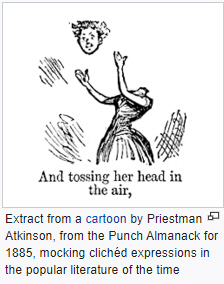
Once upon a time, a reviewer (who wrote a wonderful review of one of my books) said, “I was just about to ding Campbell for using an ancient cliché when he said, ‘She shook loose her long hair…’ but I can’t because he took a sharp turn here and wrote ‘that mixed with the stuff of clouds.'” There are a million clichés that begin with a woman shaking loose her hair. I don’t know why they’re always going that. But if they have to do it in your book, they don’t have to do it in the same old way we’ve seen a thousand times before.

Fresh and knew just isn’t that hard to say.  So if you really need to say, “At least he died with,” then forget the boots and doing what he loved, and say “at least he died with a raspberry popsicle in his mouth” or “with a spare coral snake in his back pocket.”

See, those lines sound factory fresh and I’m willing to bet you’ve never seen either of them before.

Malcolm

Click on my name to check out my Amazon page.
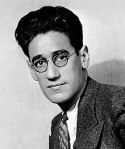
Remembering two of the best: Moss Hart and George S. Kaufman

George Simon Kaufman (November 16, 1889 – June 2, 1961) was an American playwright, theatre director and producer, humorist, and drama critic. In addition to comedies and political satire, he wrote several musicals for the Marx Brothers and others. He won the Pulitzer Prize for Drama for the musical Of Thee I Sing (with Morrie Ryskind and Ira Gershwin) in 1932, and won again in 1937 for the play You Can’t Take It with You (with Moss Hart). He also won the Tony Award for Best Director in 1951 for the musical Guys and Dolls. – Wikipedia

After working several years as a director of amateur theatrical groups and an entertainment director at summer resorts, he scored his first Broadway hit with Once in a Lifetime (1930), a farce about the arrival of the sound era in Hollywood. The play was written in collaboration with Broadway veteran George S. Kaufman, who regularly wrote with others, notably Marc Connelly and Edna Ferber. (Kaufman also performed in the play’s original Broadway cast in the role of a frustrated playwright hired by Hollywood.) During the next decade, Kaufman and Hart teamed on a string of successes, including You Can’t Take It with You (1936) and The Man Who Came to Dinner (1939). Though Kaufman had hits with others, Hart is generally conceded to be his most important collaborator. – Wikipedia
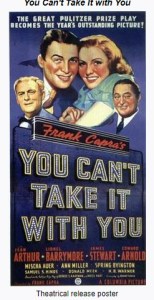
As my wife and I watched Frank Capra’s “You Can’t Take it With You,” based on the Pulitzer Prize-winning play by Kaufman and Hart, I thought back to how insular we were before the Internet and Satellite TV networks. Now we can watch all the old movies and research where they came from.

Growing up, I knew nothing of Kaufman and Hart even though they “owned” broadway for years and had worked on projects from the Marx brothers comedies to Camelot. I happened to hear of them in 1961, the same year they both died.

I went to a high school journalism institute at Indiana University in 1961, and one of our special trips was to the famous Brown County Playhouse, owned at the time by a foundation association with IU. On stage, that night was “Light Up the Sky” by Kaufman and Hart. What a hoot. And I wondered then, just who are these people that can write such wonderful (and humorous) dialog?

When I got home, I raced out and bought a copy of Hart’s autobiography Act One. For a Florida boy who knew nothing about Broadway and the world of plays, it was an eye-opener. It would be years before channels like Turner Classic Movies came along and allowed me to see the work of Kaufman and Hart. Somehow, it’s had an impact on me, my sense of how writers write, and produce what we go to the theater to enjoy.

Somehow, I have a feeling that in this fast-paced world when the Internet and satellite TV make so much available, that most people have never heard of either of these playwrights. What a shame. For me, learning about them was part of growing up and becoming a writer–and one who can finally enjoy what they wrote.

–Malcolm

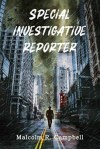
Malcolm R. Campbell is the author of the comedy/satire “Special Investigative Reporter” which, he hopes, might remind some people of the dialogue of Kaufman and Hart.


Book is done: should I throw a wrap party?

Authors react in a variety of ways to the completion of a book.

Some are at loose ends because their days and nights have been filled up with time spent working on the manuscript. Others feel empty: the plot and characters have been on their mind for so long, and now poof, they’re en route to the publisher. Multitasking authors already have a new book in mind and can jump right into it, staying busy rather than fretting about the book’s completion.

I started work on Fate’s Arrows two years ago, then got derailed for a year of cancer treatments, followed up by feeling bogged down by the virus and the nightly riots. I’m a bit of an empath and I write intuitively, so all kinds of stuff can become disruptive before a manuscript if complete.

Typical wrap party

When the production of a film is complete, cast and crew often attend a wrap party to celebrate reaching the finish line. Pat Conroy once said that a team of fifteen or more people helped with his books: editors, cover artists, book designers, fact-checkers, permissions people, publicists, etc. But, here it’s just me. Well, there is my publisher, but she lives in central Florida and probably isn’t going to meet me at the Rome, Georgia Applebee’s for a wrap party with our spouses. (I’ve urged her to buy a company jet to make traveling faster than the family car.)

I can’t very well invite the characters over since they exist in my mind and on paper. There’s probably a state law against having a party with imaginary people. In his novel The Outsider, Stephen King mentioned author Harlan Coben a number of times. Maybe Harlan came over for drinks when the book was done. Sadly, I didn’t mention either Stephen or Harlan in Fate’s Arrows. If I had, I’m sure they’d meet me at the Rome, Georgia Applebee’s. (They probably have their own planes.)

So, I’ll probably boil some water in the Dutch oven, toss in some macaroni, and fix Kraft Mac & Cheese for dinner, and tell my wife and cats, “well folks, that’s a wrap.”

Malcolm


Awash in dangerous nostalgia

When an author’s novels are set in the world of his childhood, the nostalgia of those old days might come out of the woodwork and turn his writing into melodrama. That’s the last thing I want.

St.-John Perse

One of my favorite poets, St.-John Perse, wrote in “To Celebrate a Childhood,” (which most of today’s critics would consider overly dramatic), “Other than childhood, what is there in those days that is not here today?”

Wikipedia Graphic

Depending on how you see the question, the answer can be either “everything” or “very little.” I have this paradoxical view of my own childhood in the Florida Panhandle. Every once in a while, somebody posts a photograph of an old appliance on Facebook and asks “who knows what this is?” My generation knows; younger people seldom know.

Pork Chop Gang

The same is true with the news that was common during my childhood years: themes and practices, and people that I often reference in my books such as “Wop Salad” and Florida’s notorious “Pork Chop Gang.” (I feel no nostalgia for these two things, by the way.)

My nostalgia arises when I think of Boy Scout camping trips, all the hours spent sailing, scuba diving, and water skiing down at the coast, delivering telegrams and newspapers, and exploring the panhandle’s backroads–many not paved–in my old car. And, too, I recall old friends, many of whom taught me how to love the panhandle–something I thought I would never do. (As a California native, I was always considered an outsider.)

KKK

If I learned anything scary in those days (except during the Cuban missile crisis), it was to fear the KKK because they were everywhere, and I wonder now–as I did then–how many family friends and acquaintances were members.  I’m surprised we never had a cross burnt in our front yard because my folks were liberal, we went to a liberal church, and people we knew well had experienced the wrath of the Klan. (No nostalgia here, by the way.)

My novel Mountain Song and my trilogy of novels in the Florida Folk Magic series have scenes set in the Florida Panhandle. Since these novels overlap the world of my childhood, I worked hard to keep the melodrama out of them. It’s often a fight because memories ofter bring back times when one was hurt or frightened or disrespected.

Keeping melodramatic personal memories out of the stories is part of an author’s work. That’s not always easy to do because, as I think of them, I’m as pissed off now as I was then. (The Campbell motto is “Forget Not.”) But I think we have to draw a line between our personal histories and our stories when we write novels. If we don’t, the novels can easily turn into rants rather than compelling fiction.

If you write, and if you set your stories and novels into the past you experienced, do you have trouble keeping your personal feelings out of it?

Malcolm 

Eye strain tends to bring writing to an abrupt halt

Oh no, eye strain again

Several times a year, I end up with eye strain. This time it happened because I’ve been staring at the doc file for Dark Arrows, my novel in progress, for days as I work my way through it again and again.

When this happens, my eyes feel the way they would if I were riding a motorcycle with no helmet or goggles and had wind blowing into them for days; in other ways, it’s a bit like being on the verge of snowblindness. I find that some eye drops named Soothe really help with this.

Hunting arrow from the Bear Archery catalogue of 1954. The novel has an archer who never misses a shot.

Dark Arrows

Like all of my novels, Dark Arrows (set in early 1955) didn’t turn out like I thought it would. For one thing, I never know how my novels will turn out because I don’t outline or plan ahead. The first surprise was that Eulalie, Willie, Lena, and others from my Florida Folk Magic Series of three novels showed up in the story. (Saying “shoo, shoo”) didn’t work. And, the story turned out to be more of a mystery because there are not only bad guys and good guys, but the major characters all have secrets.

For months, I had problems getting the plot, style, and point of view to work properly. But now that I think I have all that ironed out, I’m excited about finishing the novel and sending it to Thomas-Jacob Publishing–as soon as the eye strain clears up and I can see it on the screen.

–Malcolm

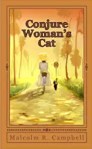
Malcolm R. Campbell is the author of the Florida Folk Magic trilogy that includes Conjure Woman’s Cat, Eulalie and Washerwoman, and Lena. You can save money on the Kindle version with the three-in-one set shown here.

Out, out damn trope

“A literary trope is the use of figurative language, via word, phrase or an image, for artistic effect such as using a figure of speech. The word trope has also come to be used for describing commonly recurring literary and rhetorical devices, motifs or clichés in creative works.” – Wikipedia

Siskel and Ebert

On Siskel and Ebert’s long-ago TV show of movie reviews, whenever they showed a clip of a movie with a car chase along narrow streets in an Asian city, they would often shout “FRUIT CART” when (inevitably) one or both cars would plough into a vendor’s cart or tent, sending chickens, fruits and vegetables and everything else sky high. This is a trope, often used (variations of it probably show up in the Bond films) and always a lame groaner.

Dark and Stormy Night

“It was a dark and stormy night” is a cliche, one used so often that it’s often pointed at with laugher and derision whenever it shows up. Stormy nights are often included in a series of tropes that used to appear in old movies:

  • A young woman is alone in a rambling mansion on a dark and stormy night, sitting at a dressing table with an open window behind her.
  • The musical program on the radio is interrupted with the breaking news that two dangerous men have just escaped from a nearby prison or asylum.
  • The power goes out. She finds a candle (which will blow out numerous times) and uses it to go through the house shutting windows where curtains are flying up toward the ceiling creating eerie shadows.
  • She hears a crash somewhere off in the house and wonders whether an old tree has fallen through the glass doors that lead to the garden or the escapees have broken into the house.
  • There’s a gun in the house and, while searching for it, she will open a closet door out of which an ironing board will fall (scaring her and the audience), make her way down into the seldom-used basement where we know a gruesome murder once occurred, or up into the attic where mannikins and other objects that look like ghosts or deranged people are stored.

Each of these tropes increases the audience’s fear, not only because they’ve seen them before, but because something in our human conditioning or nature makes us fearful of such moments.

Don’t Use The Damn Tropes

Stay away from such tropes unless you’re writing a comedy or satire that pokes fun at hackneyed set pieces. You can play on the readers’ knowledge of such tropes by coming close to using them, but then veering away, or by constructing a scene that’s the exact opposite, e.g., rather than a dark and stormy night, use a bright, sunny afternoon. Instead of sitting at a vanity, the woman alone can be cooking, vacuuming the floor, or using the Internet to do office work at home.

If you go to websites that list novel and film tropes, you’ll probably be surprised at how many there are. Gosh, there’s a lot of stuff out there a good writer has to avoid.

Malcolm


A daughter’s questions

My daughter was born in 1976, is married, and lives with her husband and two children in Maryland. My wife and I planned to visit them this spring, but the pandemic nixed our travel plans.

On Father’s Day, she sent me a Facebook message with a series of “Questions for Dads” that read as follows:

  1. Can you tell me about your best friend when you were a kid and one of your adventures?
  2. What is the oldest story you know about our ancestors?
  3. Can you describe a favorite memory of a family member? Do you have a favorite snack, song, television show, recipe, comedy?
  4. What is your first memory?
  5. Did you ever get in trouble as a kid? What happened?
  6. If there were a biography of you, how would you want to be described?
  7. What is the best advice you remember from your father?
  8. Is there anything you wish you had said to someone but didn’t have a chance?
  9. What do you wish you had spent less time worrying about?
  10. What is the best part of your day?
  11. What is the last thing you changed your mind about?
  12. What things helped you get through a difficult time in your life?
  13. What trip or place is most special to you and why?
  14. What would you like to re-experience again because you did not appreciate it the first time?
  15. Can you tell me something about yourself that I don’t know that you think would surprise me?
  16. What habits served you the most through life?
  17. What is the best mistake you made and why?

Typically, when asked questions like these, I respond with flippant answers. But, as I told my wife, I didn’t want to do that because these questions were a gift that–if I answered truthfully–would bring us closer together. So, I poured a glass of red wine and started typing.

I did the best I could. I suspect most of my answers were things she didn’t know. When I printed them out, they became four single-spaced pages that I mailed to her via the USPS this morning.

When I was in college, my father sent me a series of letters about his life during high school and college. It was the kind of stuff that didn’t come up in conversations around the dinner table. I was happy to get it because it shed new light on just who my father was. I hope my daughter will feel the same way.

Most of my life is a mystery to my daughter because it happened before she was born, and even before I met her mother. I don’t know where she found the questions, but it made my day to see them. Will my answers surprise her? Yes, I think they will.

Malcolm


Pet phrases ultimately distract readers.

I’m reading a bestselling novel that uses one word and one phrase multiple times, and my first thought is: “Why didn’t the author or the publisher’s editor catch this?” When I write, I sometimes think up a cool bit of dialogue or an apt bit of description. Funny thing is, the first few times I use them, these bits and pieces of language seem fresh and new.

But then my intuition starts nagging at me: “Malcolm, you’ve seen these words before.” There are probably fancy applications that will ferret out suspected words and phrases that have been overused. I have no idea what they are, so I use the “find” feature in Word.
If I think I might have used a word or phrase too often, I type in a phrase such as “passel of popes.” Sometimes I’m shocked at how often I used it. The repetition of phrases, especially slang or a character’s often-used cliché can help define that character and make him/her different from the others in the cast. This fails when multiple characters are using the same cliché

That’s not only unlikely but kills the differentiation between characters the author was trying to achieve. One phrase that’s been overused in the novel I’m reading is “If you say so, Sir.”

I’ll give the author some slack by suggesting that phrase might have been popular in the 1950s where the novel is set. In today’s usage, that phrase is considered sarcastically cutting, meaning, “I think that’s really stupid but you’re entitled to your opinion”–not something I’d want to say to an officer who outranks me. The phase fails to have any impact when dozens of characters are saying it. The publisher should have caught this.

The word the author used over and over is “precious,” in this case, referring to something hard to find and yet essential, as in “The soldiers found a supply depot filled with precious rations.”  Or precious fuel. Or precious ammo. Maybe the author sees this as a stylistic device. I don’t.

I wish he’d used a different word about 95% of the time. It’s easy to miss overused words and phrases in our own work. A good beta reader and/or a good editor might catch most of them. Otherwise, if you think you said “passel of popes” too often, let Word tell you how often that was. —Malcolm

Hiding your main character’s thoughts from the reader

The first question might be: why would I want to hide my protagonist’s thoughts from the reader? This usually happens when the protagonist knows something that would spoil the climax of the book if it were divulged too soon.

Let’s say your protagonist is a police detective (Joe) who’s the lead investigator in the department’s attempts to discover and stop a serial killer. If you’re writing from the detective’s point of view, let’s say, third-person limited, then the reader knows only what Joe knows, sees, experiences, thinks about, or learns through conversations with other characters.

If the reader thinks your writing process looks like this, s/he might not finish the book.

However, the author of this story has a surprising climax in store for readers when it’s divulged in the last chapter of the novel: the detective is, in fact, the killer, and one aspect of Joe’s warped motive is the “fun” of misleading fellow police officers (Bob, Sam, and Bill) without appearing to do so.

So you see the problems here?

First, how do we account for the Joe’s time when he’s killing somebody and getting rid of the evidence. One way to try and do that is to tell the story through multiple points of view, say–one per chapter. We have a Joe chapter, followed by a Bob chapter, followed by a Sam chapter, etc. If, none of the killings takes place during a “Joe chapter,” does that solve our problem of hiding what Joe is doing?

No, because when we do come to a Joe chapter–whether it depicts Joe and others searching a crime scene and/or Joe talking about the evidence and the suspects–it’s unrealistic (I say impossible) for Joe to do any of these things without thinking about the fact he committed the crimes and, perhaps, even wondering whether he hid the evidence or the bodies well enough.

The minute he does the natural thing and thinks about any of that, the big surprising ending has been spoiled. If he never thinks about it (and doesn’t have a split personality), the readers are going to feel cheated when they finally learn Joe’s the killer.

I’ve been thinking about this lately because one of the main characters in my novel in progress has some secrets I don’t want the reader to know until late in the book. My solution is to avoid writing from that character’s point of view.  Will it work? I don’t yet know. Suffice it to say, it was obvious to me from the beginning that I couldn’t let the reader know directly what this character was thinking.

Maybe you can think of other ways of hiding the main character’s thoughts from the reader. My solution might crash and burn. It’s hard to know how these kinds of things will turn out.

Malcolm


Writers: How to know when you’ve got your groove back

Some manuscripts have a meh quality to them. That’s not good. If you’re bored with it, the publisher will also be bored along with prospective readers. Take two aspirin or a double Scotch and go back to it in a few days. If it’s still meh, get rid of it, at least let it set for a while and go on to something else.

But some manuscripts sing. That’s the first clue about getting your groove back. Then more stuff begins to happen:

  • You’re reading a compelling novel like Cormac McCarthy’s Cities of the Plain and here come your characters right in the middle of it, talking the dialogue right out of the book (You got a girl? Shit no. You sound like you’ve had some bad experiences. Who aint? You fool with them and that’s the kind you’ll have.)
  • You’re watching one of the final episodes of “How to Get Away with Murder” and after Annalise Keating says, “Prayers are for the weak–I’ll stick to beating your ass in court,” one of your characters blurts out “Say which?” and you find yourself writing dialogue for your book while people on the show are getting away with murder.
  • Taylor Swift is singing “The Man” and you get it mixed up with Burl Ives’ “The Big Rock Candy Mountain because your story is pushing on your hand like the dog that’s not getting petted.
  • You’re ready for a good night’s sleep, turn out the lights, the cat snuggles in close and purs outs a lullaby, and ten minutes later you realize your seeing scenes from your story rolling through your mind’s eye like big trucks on a long-haul highway.”
  • Your spouse and/or significant other says, “Do you want sex,” and you say, “No, I’m busy, but thanks for asking.”

Storywise, you got it bad and that ain’t good because you won’t have your life back until you finish your book. The groove’s got you.

–Malcolm