In recent years, authors have written memoirs or memoir-style novels based on the crimes and conditions the authors suffered while growing up. I think of Natasha Trethewey’s 2020 book Memorial Drive: A Daughter’s Memoir, for example. The country needs to hear these words, especially from marginalized people.
 I have no such words, nothing personal to say that impacts the national discourse en route to the equality of all people. I’ve thought about writing a novel about my uncle who was murdered in Fort Collins in 1919. But the moment is at once too close and too far away.
And in the end, assuming I could ever research it, I would probably see another inept police force that made assumptions about what happened and let the case go cold. (I contacted that police force years ago and they have no records of anything.) Usually, these kinds of cases are handled by having the courthouse burned down, providing plausible deniability for everyone.
And, I certainly wasn’t going to interview my father and his two remaining siblings to learn, as reporters ask, “how did it feel to hear your older brother had been shot to death while walking to church?” I was trained as a journalist, but that’s one unforgivable question I don’t ask anyone.
I may have, over the years, allowed a bit of spite to get into some of my books, things said with the names changed about people who wronged me in various ways. They wronged me in such creative ways, I couldn’t resist including what they said and did. If I had James Patterson’s readership, those people might have found themselves in my work. I don’t, so they didn’t. There’s an old joke: “Don’t mess with me or I’ll put you in my next book.” That’s true enough, though libel laws force us to cover up the perpetrators so they don’t even recognize themselves in the plotlines.
Most authors, who have personal stories less interesting and important than Natasha Trethewey’s are tempted to “speak out” in print. But are stories, while often universal, are often “too usual” (spurned lovers, schoolhouse bullying, the ills of military service, etc.) to make a compelling novel. So, there’s much we cannot share. To this day, I don’t know if that’s good or bad.
Yet, our lives become tangled with our novels in many ways, so discerning readers can probably find us if they read between the lines. Who we are is “large in our works” as Virginia Woolf wrote in Orlando. We can’t hide even though we think we can hide because the truth will out. As we grow older, we accumulate a lot of memories that are bitter-sweet. To write about them or to keep quiet, that is the question.
Will it serve a purpose if we write about ourselves under the guise of fiction? I think most writers are doing that without realizing it. But intentionally, like a tell-all story sold at grocery stores. That seems kind of sordid and probably has no overarching redeeming value.
–Malcolm
 Malcolm R. Campbell
Publisher: Thomas-Jacob Publishing

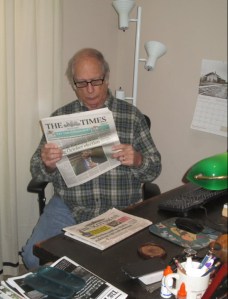

 The Prince of Tides is my living Bible of how to write well from well-formed characters to well-formed locations. I keep the book close at hand on my desk next to my copy of Donald Maass’ Writing the Breakout Novel which–if read carefully– teaches prospective writers how to write on the edge or, perhaps, over it.



 Don’t you just hate it when a police detective asks you a question like that? My first thought would probably be, “Uh oh. I need an alibi for something, probably something bad.” In “real life,” I wouldn’t have a clue even though suspect characters in police dramas seem to have a clock inside their heads that remembers, “No, yeah, I was drinking sidecars with Bill Smith and Bob’s bar on 79th street.”
 Nonetheless, as I think of this now, I remember a shouting match–via snail mail–I had with a widely a known writers magazine many years ago. The magazine purported to offer everything a prospective writer might need, from learning the craft to the techniques necessary for finding a magazine editor or a book publisher. They did a reasonable job of covering the basics of creating a salable work and understanding how and when to pitch it to the right place at the right time.
 When I was a college English department instructor, my “Bible” was The End of Intelligent Writing: Literary Politics in America (1974) by Richard Kostelanetz. My colleagues thought it was overly grim, though they didn’t worry about literary politics because they weren’t teaching their students how to become writers. Their students were simply supposed to enjoy literature and then if they enjoyed it enough, teach it to others.
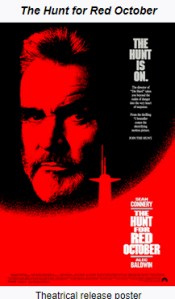 I’ve seen this film multiple times and always enjoyed it for the story, special effects, and acting. Fortunately, by the time Connery made this film, the public was getting used to him playing roles other than James Bond even though his last Bond film was made in 1983 “Never Say Never Again.” He was convincing as the aging captain of the Russian submarine Red October. The film did well, including a good review from Roger Ebert.
 I still have the second book that appeared about the time the movie “Gypsy” was released in 1962. When I didn’t return it to the tall shelf, nobody mentioned it. It appeared after the book about how to have sex, though I didn’t need a set of instructions to enjoy Gypsy Rose Lee’s 1941 detective novel
 Malcolm's Round Table