I’d A Rather Not See Ida

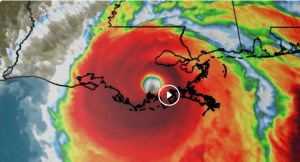
“Ida’s catastrophic crawl inland has left at least four people dead and millions of people without power for what the Louisiana governor said Tuesday could be more than a month.” – Weather Channel

Growing up on the Gulf Coast, I’m used to stories like this focusing near where I live. At 18 miles inland, we saw a lot of damage, though nothing to compare with what Katrina and Ida brought New Orleans and neighboring cities. I must confess, as a kid, I found storms exciting; as a lot of neighbors said, “Sure, they were exciting when they got everyone worried and charged up and then veered off and hit somebody else.”

Perhaps I’ve matured, for that old childish excitement about stormy weather has disappeared. Maybe part of becoming an adult is seeing the death, destruction, disruption, and expense for what it is. As Afganistan comes to a horrible conclusion, I think a lot of people see wars the way children see storms: exciting and glorious and made for heroes and heroic acts. What a shame, for unlike Katrina and Ida, we have more control over such storms as Iraq and Afghanistan.

Meanwhile in northwest Georgia, we’re getting more rain than we need with a potential for flash floods. I hestitate to mention it because a soaking rain is a tempest in a teacup compared with the weather on the Gulf coast.

I feel sad for the people who couldn’t get out of the way or the “brave” and foolish people who chose to ride it out while having a hurricane party. If they live long enough, maybe some of those people will grow up.

Malcolm


Sunday: this and that

  • I’m highly attuned to prospective signs and omens–or, supidly superstitious. So, I think it’s a bad sign that Ida ploughed into Louisiana on the anniversary of Katrina. Ida’s going to cause a mess; that’s from the Weather Channel. Somebody saw Jim Cantore. That can’t be good. We may get some rain from the storm here in North Georgia on Tuesday.
  • I was happy to see in the news that that multiple countries have reached an agreement with the Taliban to continue flying people out of Kabul past the original August 31 deadline. I hope the agreement is kept in spite of the attacks by ISIS-K. I’m amazed at the news that a plane full of refugees leaves the airport roughly every 45 minutes
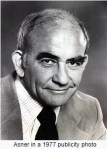
  • Sad to see that Ed Asner died. He was my favorite character on the “Mary Tyler Moore Show.” The series had a great ensemble cast and some very good writers.
  • It’s not even 4 p.m. and I’m already drinking a glass of cheap wine. Our dying kitty, Marlo, is still fighting her cancer. The sedatives (for Marlo) are helping but not as much as we hoped. Best we can tell, is that she’s 18 years old as is our calico, Katy. My wife and I could use some sedatives: hence, the wine. Pets play a very large role in their families’ lives, it’s hard to have it suddenly end.
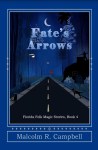
  • COVID has found numerous ways to mess up publishing. Ingram has announced that there will be delays and shortages in the fourth quarter. We rely on them for our hardcover copies. Also, places that normally would have reviewed Fate’s Arrows by now, still haven’t done it. So, naturally, sales are down; many writers have seen this during the pandemic.
  • Today’s quotation: “A committee is a group of people who individually can do nothing, but who, as a group, can meet and decide that nothing can be done.” Fred Allen (1894-1956) We’ve been watching some of the “What’s My Line” episodes on YouTube. Allen was a frequent member of the panel, so, we’ve gotten used to his humor.
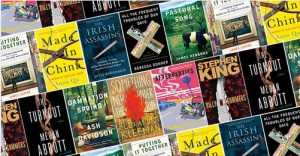
  • NPR Poll: We Asked, You Answered: Your 50 Favorite Sci-Fi And Fantasy Books Of The Past Decade “The question at the heart of science fiction and fantasy is “what if?” What if gods were real, but you could kill them? What if humans finally made it out among the stars — only to discover we’re the shabby newcomers in a grand galactic alliance? What if an asteroid destroyed the East Coast in 1952 and jump-started the space race years early?”

I hope all of you are having a great weekend and that those of you in Louisiana are staying safe.

Malcolm

How writers cope with ‘interesting times’

The daily news is out of control. Whether one keeps up online or on TV, there is little there except alternating tragedies: the pandemic, of course; the mess in Afghanistan; riots and hate crimes; the storm in the northweast; the immigration problems along the U.S./Mexican border; polarized politics complete with lies and coverups.

Writer Illustrations and Clipart. 560,558 Writer royalty free  illustrations, and drawings available to search from thousands of stock  vector EPS clip art graphic designers.Many writers cope with the continuing uproar by writing. In her latest Funds for Writers newletter, author Hope Clark said writing is cathartic for her. That is, it tends to purge negative emotions and, in doing so, creates a new attitude–or, let us say, a better or more hopeful attitude.

Writing, of course, changes one’s focus from the worst of reality to the task of stringing words together, to the subject matter of the work, or the locations and characters in the story. Whether the work is fiction or nonfiction, it usually involves research that’s a change of pace from the news. Writing takes us away, but it’s not like burying one’s head in the sand and becoming ignorant or uncaring about the issues.

Some people get away from it all by going to vacation, spending a day on the lake, camping or hiking in the mountains, or catching up on household chores. Some people repaint their houses every time there’s a national crisis. Others weed the garden.

And writers (often, but not always) spend their time in imaginary places of their own creation. It’s not always easy. As Hope Clark said, “If writing is a part of you, you crave and yearn to write. If you struggle with it, all the more reason to sit down and do it. If you write ten words in an hour, you do so. Chances are that prying those words loose might let the waters flow. Maybe only trickle, but the point is you are moving forward with getting words, any words, any amount of words, on the page.”

We aren’t writing to change the world but to stay sane in the world as it is.

Malcolm

Writing in the rain

Rain is considered a sign of good luck. As rain symbolizes positive things such as change, renewal and life in general, it can be taken as a sign that good things are about to come your way. Rain is the symbolic announcement of a new beginning within a specific area of your life. – Calming Cosmos.

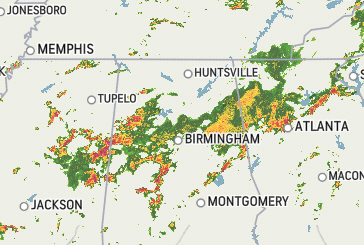
North Georgia has had more than it’s fair share of rain, much of it coming from tropical storm Fred, with more last night and today.

I live in the middle of that yellow stuff. Contrary to the title of this post, I don’t go outside and write in the rain. But when there’s rain outside, I write better. When I write, I always wing it. That is, I rely on inspiration and intuition. Never do this. All the experts say it’s wrong, and that accounts for why I’m not selling as well as James Patterson or Clive Cusler.

Intuition is like drugs. Once you’re addicted to it, that’s all she wrote. As far as I know, there aren’t any 12-step programs that will lead me back to reality. If there were, they wouldn’t help because I don’t want to come back to consual “real life”. I prefer dreams, magic, and everything that isn’t logic. That explains why my novels are in the genres of magical realism, paranormal, and contemporary fantasy.

I was having a bit of a problem with writer’s block (aka, too many sunny days) until Fred (the storm) came through town. I probably wrote more words in my novel in progress in a few days than I had in weeks. Since it’s still raining, I know what happens next in the story–a rare thing for me. (I almost never know.)

There are plenty of writing rules in the books on my shelf and more on the Internet. I ignore most of them. If you want to be Steven King or John Grisham and turn out salable bestsellers several times a year, you should probably write down those rules and follow them like a seaman recruit in navy bootcamp. Otherwise, do what you want without apology because doing what you want is who you are.

Being who you are is, as my grandparents used to say, that cat’s pajamas. There’s nothing better. You may not be either rich or famous–or even 100% happy. But, you’ll be you instead of somebody else. And that’s what matters.

Malcolm

Malcolm R. Campbell is the author of the four-book Florida Folk Magic Series, beginning with “Conjure Woman’s Cat” and ending with “Fate’s Arrows.”

Writers, variant D, and booster shots

When my hearing more or less went away, I stopped doing readings, signings, and panels. But a lot of writers count on them as part of their marketing strategies and/or as a reward for coping with many months of self-imposed isolation while working on each novel.

Pandemic - WikipediaJust when we thought things might return to normal (whatever that is) the whole COVID mess is turning into a new or continued mess. Mask regulations keep changing. So are rules about gatherings. And, the administration is actively talking about booster shots. Needless to say, my writer friends who “need” to go on the road with each new book are having a lot of hard decisions to make about when/if they can schedule anything.

I haven’t seen my granddaughters for over a year, and still have to keep a trip on hold because the youngest isn’t old enough to be vaccinated. That might change, but who knows when. And for all we know, once she’s vaccinated, travel restrictions might tighten up again. These disruptions continue for many of us, and it’s no picnic–especially if you get it, and some of my friends did.

As far as writers are concerned, I see nothing for it but to use a lot of Skype and Zoom, keep the newsletter exciting and current, and start work on the next novel. Or, get out of your office and take a walk in the woods and (perhaps) read though some of the accounts of how earlier generations coped with the depression, dust bowl, influenza epidemic, and the intrusions of WWI and WWII. How they coped speaks to the resilience of the human spirit and shows us that no matter how badly life is treating the country now, there are ways to survive and come out of the experience without becoming totally bitter.

After all, those of us who write are used to concocting alternative endings to the crises we create for our characters. We need to create happy endings for ourselves and our families from the dark years of 2020 and 2021.

–Malcolm

Malcolm R. Campbell is the author of magical realism, paranormal, and contemporary fantasy novels and stories. “Conjure Woman’s Cat” was the first in his four-part Florida Folk magic series.

Olympic Athletes: a lifetime of work

I enjoy watching the Olympics in spite of all the reasons people have for not watching the Olympics.  As a so-called “winter person,” I liked the winter Olympics best, though I’m a fan of the swimming, diving, and gymnastics in the summer games. One thing I noticed during reporters’ brief talks with the medalists is the athletes’ coments that they’ve been working all their lives to reach–and triumph in–the Olympic games.

I think all but the most avid sports enthusiasts are unaware of most of that work. We may hear about the hours of training, but we don’t see (or know about) the meets and competitions that lead up to a place on a country’s Olympic team.
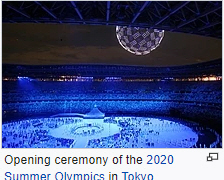
While sports is quite different that the careers most of us choose, I think those of us in many areas can say we’ve been working a lifetime to move up the chain of command (instructor to full professor, line supervior to middle manager, resident to fellow to attending physician). I see this, of course, as a writer sees it as s/he “moves up” from a staff writer, to a paid freelance, to a successful novelist or nonfiction author. Other than reaching bestseller lists or winning prizes, the “best” authors appear at convocations and panels, serve as faculty in MFA programs, and/or teach upper level college writing courses.

When comparing a writer’s version of working for a lifetime with an Olympian’s version of working for a lifetime, most people in both groups are those who either don’t make the team or–if they do–don’t medal. For writers, we at least don’t have careers that can be cut short so quickly by physical injury of age. (You don’t know how much it raises my level of hope to see that Clint Eastwood, at 91, is coming out with yet another movie.)

Needless to say, there aren’t a lot of Olympic sports that have 91-year old competitors. It’s sad that whether it’s the Olympics or other sports, the window in which competing is possible is so short. Writers and actors and directors and doctors have more time. Yet time is always mving fasters than it appears: what seems like forever to a young writer (for example) suddenly becomes a time crunch with age.

So, we keep at it, happy that we don’t have to hang up our skiis or gloves or rackets (not counting the Williams sisters) when we’re only forty. The snare, of course, is always thinking tou have plenty of time. Ha! You might write your best book when you’re reach Eastwood’s age, only it doesn’t take off, only nobody believes in it enough to nominate it for a Pulitzer, only when the book fades from the scene, you feel no closer to your goals than you did when you were 18,

Time runs on so many continuums: sports figures probably have the shortest, college teachers don’t have forever to advance in rank; neither to officers in the military where the phrase is you either move up or you move out. Perhaps writers have it easy: we “get” to keep working on our lifetime dreams long after people our ages have already retired in other disciplines.

But we know what it means when an Olympic athlete a third of our age says, “I’ve been working a lifetime to get here.” I watch the Olympics partly because I enjoy the compeditors’ success. And, I feel sad then they come in .002 seconds behind the bronze medalists. “All glory is fleeting,” General Patton supposedly said. Yes it is. But experiencing it for a moment is a special honor whether you write or direct or care for the sick or swim 1,500 meters into the history books.

–Malcolm

Malcolm R. Campbell

Publisher: Thomas-Jacob Publishing

Website

Facebook Author’s Page

Amazon Author’s Page

Book discussion groups: heaven or hell?

They should he heaven, but somehow, many of them just don’t quite work. Publishers pretend that they work because they (the publishers) often include discussion questions in the back of he books.  Nothing starts an argument faster that choosing what the club will read during the year. Some want all Nora Roberts. Some want all Tom Clancy. Some want a mix of mainstream bestsellers. Others want prize winners.

How do you choose?

Logistics are a problem. Some people want the latest books off the press while others can’t afford to buy them until they’re finally issued in mass market paperback a year later. The public library may or may not have enough copies for everyone in the club.

The best clubs seem to be focused on a specific genre, one that’s decided upon at the begining of the year. That way, the members know what they’re getting into and nobody has to feel put-upon when it comes time to read and discuss books they don’t like or care about.

Staying on the plan is difficult when–as often happens–most of the people in the club are behind on their reading. Sometimes they skip meetings because they’re embarrassed and sometimes they skip because if they’re on chapter 3 and most of the club is on chapter 7, the discussion will be filled with spoilers. And then, too, those who keep up with their reading often get ticked off at those who can’t keep up due to numerous real and imagined excuses.

Discusssing the books one likes sounds like fun, like a good way so spend the evening, but then when it’s time to start talking, it turns out that reading really isny a priority in people’s lives. After all, the statistics are pretty grim when portraying reading habits. Trying to make it a priority seems like having to go back to school and being saddled with homework.

What’s your experierience? Have you been a member of a club that really worked? If so, what did the moderator do to make it work?

–Malcolm

Malcolm R. Campbell is the author of contemporary fantasy and magical realism stories and novels.

Don’t Let Politics Ruin Your Novel

I’m reading a novel by a well-known author that is supposedly his best yet, but 1/3 of the way through I’m finding it really slow in spite on an inventive plot. So, I went over to Amazon to see what the readers were saying and they were saying that it was pretty good. What I noticed, though, was the large number of negative reviews that criticized the author for injecting his political ideas into the novel when they had nothing to do with the story line.

When I write novels set in the 1950s, I often mention the politics and products of the time because, in addition to ambiance, they show what the characters are dealing with. I wouldn’t do this with a novel set in current times unless it was a political thriller. Doing so will alienate readers from other political parties for no reason. I see this a lot in current TV shows where, inasmuch as Hollywood in generally liberal, I believe the writers and actors are playing to their colleages rather than making a better story by saying something nasty about, let’s say, Donald Trump.

I no longer watch the Academy Awards because they are filled with snarky, “we know better” political comments. They apply only if a movie is a political movie. Otherwise, they’re a bunch of rich actors and actresses giving us their unsolicted political opions as though that’s what we tuned in to hear.

Doing this not only spoils the Oscars, but contaminates TV series and many of today’s novels. It’s the author or the producer grabbing a bully pulpet where none exists. If I’m reading a police procedural novel, I don’t want the characters loading up their comments with policial BS favoring any party.  I see authors doing this in their work and imagine that they think–as they write–“look how savvy I am.”

No, you’re making cheap jokes and juvenile banter at the expense of your work. Readers want a great story and your politics is stealing that story away from them.

–Malcolm

We used to play this game

Where we’d form a line and the person at the beginning would be told about an event, and then would whisper the details to the next person, and so on down the line until the last person repeated the story The only rule was, you had to try to get it right. Nonetheless, the person at the end of the line almost always got it wrong.

When I wrote yesterday’s blog about the 1964 Gulf of Tonkin resolution being based on a fabricated story, I wan’t thinking of this game. I was thinking of something that began as a lie. That’s one thing. But when a story goes wrong after it goes through dozens of reports and sources, that’s quite another.

We keep paraphrasing the paraphrases we hear until the end result is fake news even though that wasn’t the intention. Granted, their are networks and reporters who put their own particular spin on stories so that in the end it’s hard to tell how much is opinion and how much is fact.

We all have our bully pulpets, I guess. Even major media outlets are scattering he comments of people on twitter througout their stories as though those knee-jerk opinions can really make a story more truthful and unbiased. These unfounded opinions can only muddy the waters when those cited have no dog in the hunt.

The purpose of the original game as to show how rumors distort the truth. That’s not the purpose of journalism, though too many reporters and networks think their spin is more important than the facts. Reporting is often a bridge over troubled waters–or perhaps muddy waters.

As always, checking multiple news venues is likely to help us find the truth.

–Malcolm

Malcolm R. Campbell

Publisher: Thomas-Jacob Publishing

Website

Facebook Author’s Page

Amazon Author’s Page

This novel is a satire about the news business.

This week in fabricated history

Maddox

“On August 4, 22 illusory torpedoes were launched by North Vietnamese patrol boats against the U. S. destroyers Maddox and C. Turner Joy in the Gulf of Tonkin. Born a world away from the lotus falling into a sea of fire, the sweet fictions of credibility gap sustained them long enough for the prescribed protocols to ensure the hardship of 58,175 deaths, the price of 153,303 wounded, and the burden of a national psyche forever scarred.” The Seeker, Malcolm R. Campbell, 2013

Stemming from this was the Gulf of Tonkin Resolution that gave the President the authority to use “all necessary measures to repel an armed attack against the forces of the United States and to prevent further aggression.”

Until the last one of us who served in Vietnam is dead, the war will continue to be a blemish, not because we lost it, but because we were there at all–based on a provocation that never happened.

–Malcolm