I had to mow the yard because I couldn’t find the house–or the cat

I think we’ve had rain for 10000000 days. When it’s not raining, the grass is too wet to mow, and/or the flu we’ve been fighting has kept us inside. I finally cut the grass after supper last night because I wasn’t sure whether I was coming home to my house or a neighbor’s house. Plus, when the cat went outside, he disappeared into the pasture primeaeval.

The grass was not only higher than the cat, it was higher than the mower. Dark clouds were rolling in. Vicious lightning owned the horizon off to the east. I had to move quickly or darkness would swallow the world and I’d run into the black Angus cattle in the adjoining pasture. (Before the farmer put in a new fence, the cattle got out on numerous occasions at night. I could hear them in the yard, but couldn’t see them. When cattle get out, the whole community comes out to round them up.)

The riding mower really wasn’t built for grass this high. Seriously, tall fescue needs a tractor with a bush hog. We used to have one, but the bush hog was shot and the tractor was old, so we sold it off. The mower stalled out numerous times and gulped gas faster than a sailor swigs beer on liberty. So, I ran out of gas before I got done and had to tow the mower back to the garage with my Buick about the time the rain hit.

In the light of day this morning, the yard looks like the cut grass is piled up and ready to bale. At least the house is visible from the road and doesn’t look like an abandoned homestead. I’m getting too old for this kind of crap. At least I had the presence of mind to put the cat in the house and to use the mower’s headlights in case any cows got in the yard. None did, but they raised a ruckus on the other side of the fence.

Frankly, I think it’s about time to hire a landscaping company and hope they show up for work.

–Malcolm

Malcolm R. Campbell grew up in the Florida Panhandle and sets his stories there.

“Wanda J. Dixon’s warmth and gorgeous singing voice are superb in this story about Conjure Woman Eulalie, which is told through the voice of her cat and spirit companion, Lena. Dixon zestfully portrays Eulalie, who is “older than dirt” and is kept busy casting spells, mixing potions, and advising people–that is, when the “sleeping” sign is removed from her door. Most distinctive is Eulalie’s recurring sigh, which conveys her frustration with Florida in the 1950s, when Jim Crow laws and “Colored Only” signs were routine. Dixon’s Lena is fully believable when she spies around town and reports to Eulalie that rednecks have raped and murdered a young woman. They almost escape until Eulalie persuades a witness to come forward. Listeners will marvel at the magical realism in this story and benefit from the helpful glossary of the charming local dialect. S.G.B. Winner of AudioFile Earphones Award © AudioFile 2016″
Sunday’s potpourri

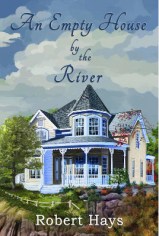
  • Coming soon from Robert Hays and Thomas-Jacob Publishing, An Empty House by the River: “Lacy, who sees beauty wherever she looks and expects others to be as good as she is, can no longer count on her big brother to protect her from an abusive husband, and the family learns a hard truth: No one is immune to the quirks of fate, be they blessings or tragedies, and the river takes more than it gives.” Hays is also the author of A Shallow River of Mercy.
  • I have a good case of the flu or the flue (not sure which) that isn’t being made better by the daily rain storms.
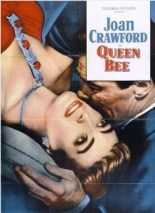
  • Best I can tell, this typical Joan Crawford film that we watched last night didn’t improve my health either. Where are all the happy movies when you need them, stuff like The Exorcist or Juliet of the Spirits or Cape Fear?
  • Plus, the cats chose last night to squabble over which of them got to lie where in the bed. Chances are good that if you’re waked up at 4 a.m. with those kinds of shenanigans, you’re not going to get a good night’s sleep. And I didn’t! Got up at 6 a.m., had two sausage biscuits, and fell asleep on the couch for two hours. When I woke up, one of the cats was lying on top of me.
  • We watch a few programs on HGTV. (Don’t quote me on this.) Everyone wants an open concept floorplan these days, you know, where the main floor’s about the size of a gymnasium that’s bigger than our house–including the yard. People want stuff to “flow.” Those who do the family’s cooking want to be able to see what their children and/or guests are doing while they (the cooks) are burning stuff in the oven. Ten years from now, homeowners will be hiring contractors to add a few walls and a little privacy. I guess if you can afford a house that costs $2 million, you can waste that money however you want.
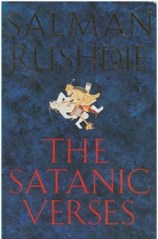
  • I read The Satanic Verses as soon as I could get my hands on a copy. I thought it was a hoot. The book’s in the news again after the cowardly attack on Rushdie. A lot of commentators say it’s dangerous. Is it? I don’t think so even if it offends some people. But if it is dangerous, that’s good because people need to be shaken up enough to question why they believe what they believe and why they’re angry when others don’t agree with them.
Malcolm

Has anyone tried this new age experiment?

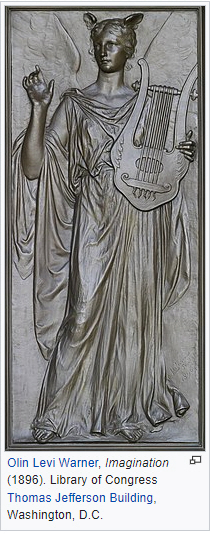
Systems of new age and/or old wisdom often include exercises designed to enhance one’s imagination, “see” things at a distance and determine diseases and other problems others may be suffering.
These experiments always represent a practical application of the day’s lesson inasmuch as true understanding and mastery require more than reading about a technique or method.

I’ve seen a lot of these experiments over the years and have enjoyed both the successes and failures of following the recipes. However, I balked at one of them, one in a book I read in junior high school with a title I no longer remember. I started out several times and always stopped, not because I thought it wouldn’t work, but because I thought it would. I’ve never had the courage to go back to it.

Basically, you’re supposed to sit in a chair in a room at one end of your house, calm yourself, and then get up and walk to the other end of your house, turn around, and go back to the chair.

Next, you imagine doing that, thinking of everything–doors, shelves, furniture–you see en route. Pretend to walk from one end of the house to the other and return to the chair.

Then do it physically. Then do it in your imagination. If you do this long enough, you will supposedly return to the chair and find yourself already sitting there.

It’s a good experiment, I think, but I never could face the possibility that it might work. Something just bothered me about that. What about you? Have you seen this experiment? If so, have you tried it.

I’ll be curious to hear your results.

Malcolm

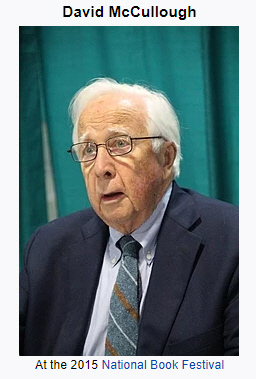
So long, David McCullough, and thanks for all the books

“David McCullough, a towering force in American literature and biography, winner of the President’s Medal of Freedom, two Pulitzer Prizes and two National Book Awards, died on August 7. He was 89 years old.

“He died of natural causes at home in Hingham, the family confirmed, where he had lived for the past few years, with all five children by his side.

“Mr. McCullough devoted his writing life to telling the American story, beginning with his first book about the Johnstown Flood, published in 1968, and continuing to chronicle events, politicians and structures that made up the American experience. He followed up his debut with a book about building the Brooklyn Bridge, then headed to the creation of the Panama Canal (his first National Book Award). A book about Teddy Roosevelt followed (his second National Book Award) and then books on Harry S. Truman and John Adams, both of which won the Pulitzer Prize.” – Bill Eville in The Vineyard Gazette

In his story, Eville notes that everything McCullough wrote began on a 1940 Royal Typewriter that he bought second-hand in 1965 for $25. It works fine after all those words. In a 2011 interview, McCullough said that sometimes he thought that Royal was writing the books.

The subhead in the New York Times story said, “His research — on Adams, Truman and so much more — was deep, his writing was lively, and his narrator’s voice in documentary films was familiar to millions.”

The books found large audiences and spent weeks on the bestseller lists in part because readers who seldom read history read what McCullough and/or that old Royal typewriter wrote. My wife and I have most of his books, not because they look good on our shelves, but because we like them and respect his approach.

It’s hard to pick a favorite, but my long-time fascination with Teddy Roosevelt prompts me to say I like Mornings on Horseback, the 1981 biography of Roosevelt, the best. Kirkus began its review, “The biographer of the Brooklyn Bridge and the Panama Canal has written a marvelous book, now, about the making of an exceptional being—and nothing that has appeared before, including Edmund Morris’ recent The Rise of Theodore Roosevelt, diminishes its interest or freshness or emotional force.”

The New York Times wrote, “Mr. McCullough tells his busy, interlocking story without ever losing track of his hero. Always at the center of things is T.R., evolving from a shrill semi-invalid into the robust warrior who would become the dominant figure of turn-of-the-century America. But though he writes with a novelist’s skill, Mr. McCullough never resorts to the novelist’s license to invent, never draws a conclusion not backed by hard facts. The result brings us as close as anyone will ever get to understanding the unique alchemy of the Roosevelt family – and its power to help and hinder Theodore in his rise.”

McCullough’s books on the Johnstown flood, the Brooklyn Bridge, Presidents Truman and Adams, and 1776 (among others) drew similar praise. McCullough’s narrations include the 2003 film “Seabiscuit” and multiple films by Ken Burns including “The Civil War” (1990).

I think it’s fair to say that McCullough’s words will be with us forever, if not longer.

Malcolm

Sunday’s Mixed Stuff

  • I like everything John Hart has written except this debut novel. It has everything in it but the kitchen sink and the main character is an unsympathetic sad sack. I’m glad he got this approach out of his system before he started writing novels where the nasty stuff is within limits and the protagonists are the kind of people readers can get behind.
  • We’ve had a lot of rain in North Georgia lately including a nasty thunderstorm after midnight two days ago that killed the power and scared the cats into piling into our bed.
  • I liked The Seekers a lot for their pure, sweet voices. So I felt sad seeing this news: “Judith Durham, singer of the Australian pop band The Seekers, has died at age 79. According to Universal Music Australia, Durham’s cause of death was chronic lung disease.” Wikipedia notes that the group had Top 10 hits in the 1960s with “I’ll Never Find Another You”, “A World of Our Own”, “Morningtown Ride”, “Someday, One Day” (written by Paul Simon), “Georgy Girl” (the title song of the film of the same name) and “The Carnival Is Over” by Tom Springfield, the last being an adaptation of the Russian folk song “Stenka Razin”.
  • As a writer and a reader, I wonder why so many authors speak of train whistles in their novels when whistles on trains have been gone for years. Other than tourist steam engines, American diesel-electric locomotives all have horns.
  • This book of short stories has been more interesting than I expected. I bought it for the English translation of Hayashi Fumiko’s (1903-1951″ autobiographical story “The Accordion and the Fish Town” which I mention in my novel in progress. But, I’ve found more to like in this selection of works that show how the Japanese short story has developed over time. The book was released in 1997. While the novel has been king in the West, the Japanese focused on shorter works.
  • Two days ago, Lesa was trying to catch up on the yard mowing, ploughing through grass that was almost too high for the mower due to daily rain showers. She stopped mowing at dusk when she ran over a hidden yellow jacket nest and got stung twice. Ouch. We seem to have more of our share of yellow jackets and wasps in this neighborhood, and that includes white Anglo-Saxon Protestants.
  • Long-time friend Keith Willis has released the latest novel (#4) in his Knights of Kilbourne Series, Stolen Knight. If you love snappy writing, hijinks, and dragons, this fantasy/romance should be on your nightstand.  Or, as Willis says on his website when he introduces the series, “If you like swashbuckling adventure served up with a helping of romance and a dollop of humor (and topped with a dragon) then these books are for you.”

Malcolm

New ‘Freedom to Learn’ op-ed series to appear in Washington Post’s ‘Made in History’ Section

Pen America – FOR IMMEDIATE RELEASE

Amid an unparalleled wave of attacks on academic freedom and public education nationwide – including the introduction of nearly 200 educational gag orders and the adoption of gag order policies in 19 states – PEN America, in partnership with the Washington Post’s Made by History section, is launching a new Freedom to Learn op-ed series.

Made by History is an independent editorial section of the Post featuring content from academic historians on current events. Edited and published by the Made by History editorial team and sponsored by PEN America, the Freedom to Learn series will provide historical context for the current assault on public education in the United States and elsewhere.

The Freedom to Learn series will consist of ten articles to be published in the summer and fall of 2022, beginning on August 15. The series will culminate with a public virtual event, sponsored by Lumina Foundation, featuring several contributors to the series.

“We’re excited to partner with the Washington Post’s Made by History to support high-quality, well-researched analysis by professional historians on the unprecedented threats to our education system,” said Jeremy C. Young, senior manager of free expression and education at PEN America. “Over the past five years, the Made By History team has developed a consistent track record of excellence in publishing insightful historical analysis of current trends. PEN America is thrilled to support their work and to help educate readers about the extraordinary challenges teachers are confronting today.”

“Made By History is dedicated to publishing rigorous historical analysis of U.S. current events and public debates to help the public understand the current events,” said Diana D’Amico Pawlewicz, a historian of education and an editor at Made By History. “Recent attacks on the classroom curriculum have historical roots, and we are excited to work with PEN America to bring rigorous scholarship by professional historians to shed light on the origins, implications, and consequences of the hyper-politicization of education.”

I support this action and hope it helps end attacks on learning my misguided citizens and groups. Perhaps the series should become a permanent part of the newspaper.

–Malcolm

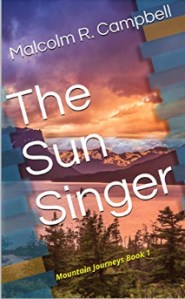
Malcolm R. Campbell’s contemporary fantasy e-book is free on Amazon between 8/4 and 8/8.

If the U.S. were overrun, how many of us would join a resistance movement?–

When I read books about the resistance movements in Europe during World War II, I am impressed by the bravery of those who sheltered Jews, led downed allied pilots to safety, and fought in a guerilla warfare style against the Nazi occupation.

I hope that if the U.S. were conquered by an invading army that chose to occupy the country while expanding its reach toward Canada and Mexico, that Americans would be just as brave and just as persistent. Those who are the strongest supporters of the Second Amendment and lax gun control laws often say that one reason citizens should be armed is the possibility of an invasion.

While armed civilians probably could not stop a non-nuclear conventional attack, it’s probable that they could make things very uncomfortable for an occupying force. While I don’t agree with the laws that permit mass ownership of guns, especially those designed for combat troops, I think the suggestion that armed civilians could fight against an occupying force is bogus when it comes to the country’s failure to clamp down on gun crimes. And yet, I still wonder if our proposed bravery would equal that of, say, the French resistance.

I have my doubts. Even so, I don’t want to be around to see these doubts tested under real conditions. Many in the resistance were willing to carry out missions that–even if they succeeded–might mean the loss of everyone in the resistance cell.

I wonder about this because I sense that a fair number of people are unwilling to give up anything–time, money, benefits–in order to support issues that are clearly in the national interest. That is, what would an individual give up to help end racism, mass shootings, climate change, etc? Since progress on these issues is slim to nonexistent, I can only conclude that the answer to such questions is “not much.” I fear the same might be true if a neighbor asked for help in blowing up a bridge used by an occupying army.

Do you ever speculate about such things when you read a nonfiction book or a novel about World War II resistance movements? Perhaps I speculate because, as a writer, I’m used to asking “what if?” about all kinds of things.

–Malcolm

Celebrating Leo

Leo (♌︎) (Greek: Λέων, Leōn), Latin for Lion, is the fifth sign of the zodiac. It corresponds to the constellation Leo and comes after Cancer and before Virgo. The traditional Western zodiac associates Leo with the period between July 23 and August 22, and the sign spans the 120th to 150th degree of celestial longitude.

Leo is associated with fire, accompanied by Aries and Sagittarius, and its modality is fixed. Under the tropical zodiac, the Sun transits this area on average between July 23 and August 22 each year, and under the sidereal zodiac, the Sun currently transits this area from approximately August 16 to September 16. The constellation Leo is associated with the mythological Nemean lion. The lion is a very important and prominent symbol in Greek mythology. Its opposite sign is Aquarius. – Wikipedia

As a Leo, I am required by law to remind everyone during my month that saying bad things about a Leo is a criminal offense.
As King of the Jungle, Leos are practically perfect in every way (like Mary Poppins) but less smarmy.

If you’ve heard the legend of the “nine old men” who actually run the universe, I’m here to say that it’s all true and that every man (or woman) in the group is a Leo. Please don’t mix us up with Disney’s Nine Old Men. In short, the real nine old men and women run the whole shebang and couldn’t possibly be one of the lesser sun signs. (I’m not old enough to be one of them, so don’t blame me if stuff does wrong.)

We’re usually described like this: “Roll out the red carpet because Leo has arrived. Passionate, loyal, and infamously dramatic, Leo is represented by the lion and these spirited fire signs are the kings and queens of the celestial jungle. They’re delighted to embrace their royal status: Vivacious, theatrical, and fiery, Leos love to bask in the spotlight and celebrate… well, themselves.” – Allure

The trouble with descriptions like this one is they make us sound like we’re so vain we think every song is about us. We’re not vain, we’re honest. If you’ve got it, flaunt it. Or at least admit it.

I hope you enjoy your dog days of August.

Malcolm

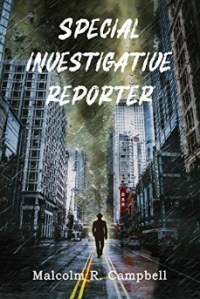
Malcolm R. Campbell is the author of “Special Investigative Reporter.” Purchase it during Leo’s month and the nine old men and women will give you a LIKE next to your name in the Akashic records.

‘Trailed: One Woman’s Quest to Solve the Shenandoah Murders’ by Kathryn Miles

In an interview in “National Parks Magazine” (Summer 2022) Miles was asked what drew her to research and write about the 1996 unsolved murder case of Julie Williams, 24, and Lollie Winans, 26, near the Shenandoah National Park’s Bridle Trail.

Miles said that she was a contemporary of the victims and a sexual assault survivor who relied upon and felt safe in the backcountry. That two experienced outdoor guides were attacked in an environment that was supposedly safe, “shattered my sense of wilderness and who I was there.”

Jurisdictional and experience issues between the Park Police and the FBI bogged down the investigation, Miles thought. “There was a cultural divide, and there was a procedural divide, between how those rangers did their work, how the FBI did their work, and who was in charge. The FBI didn’t have experience investigating backcountry and wilderness crimes.” You can find the interview and an excerpt here.

From the Publisher

“They must have been followed. That’s the thought I return to after all these years . . .

“In May 1996, two skilled backcountry leaders, Lollie Winans and Julie Williams, entered Virginia’s Shenandoah National Park for a week-long backcountry camping trip. The free-spirited and remarkable young couple had met and fallen in love the previous summer while working at a world-renowned outdoor program for women. During their final days in the park, they descended the narrow remnants of a trail and pitched their tent in a hidden spot. After the pair didn’t return home as planned, park rangers found a scene of horror at their campsite, their tent slashed open, their beloved dog missing, and both women dead in their sleeping bags. The unsolved murders of Winans and Williams continue to haunt all who had encountered them or knew their story.

“When award-winning journalist and outdoors expert Kathryn Miles begins looking into the case, she discovers conflicting evidence, mismatched timelines, and details that just don’t add up. With unprecedented access to crucial crime-scene forensics and key witnesses—and with a growing sense of both mission and obsession—she begins to uncover the truth. An innocent man, Miles is convinced, has been under suspicion for decades, while the true culprit is a known serial killer, if only authorities would take a closer look.

“Intimate, page-turning, and brilliantly reported, Trailed is a love story and a call to justice—and a searching and urgent plea to make wilderness a safe space for women—destined to become a true crime classic.”

From Kirkus Reviews

What makes this story so chilling is not just that the author had to “police law enforcement” in order to determine their investigative errors. She also shows how “every year there is demonstrable evidence that women, African Americans, and nonbinary and LGBT people have good reason to wonder if they are safe in the wilderness, which in many ways is still considered a white male domain.” Gripping and thoughtful, this book will appeal to those with an interest in true-crime stories and unsettling truths about places deemed safe for all.

Disturbing and provocative.

Malcolm

Small press and self-published authors often ask, ‘What’s the point?’

The tales of woe are the same.

A writer works for a year or two on a novel, a small press that’s published his/her earlier work praises and publishes it, Midwest Book Review has kind words for it, his/her followers on Facebook and blog say positive things and click “like” whenever the book is mentioned.

Unlike mainstream authors’ books, the Kindle version of the novel is for sale at 99¢ rather than at a price that’s often higher (initially) than the hardcover edition. The author calls attention to the book’s release by paying Facebook to “boost” posts about it and displays the cover and the plot on his/her blog and website along with notices of any editorial reviews.

After a month or so, the initial hullabaloo of praise from his online friends tapers off. The author is happy none of them asked about sales because they’re in the slim-to-none column of the spreadsheet.

So the author begins to ask “What’s the point?”

His/her disillusionment begins when the hoard of online friends to reacted positively to the book’s cover and the plot never buy a copy. The reader reviews they might have written on Amazon never appear,  so the book sits there with only 2-3 reviews months after the release date.

This guy looks crazy. That’s why he writes.

These online friends aren’t broke. They talk about buying mainstream books at ten times the price, going out to dinner at expensive restaurants, drinking wine at $25-per 750 ml bottle, and taking trips to high-cost venues. The writer wonders what to expect from strangers when his friends won’t even spend 99¢ for a copy. S/he begins to get angry because s/he has purchased their books and written reviews about them on Amazon and his/her blog.

It’s not surprising that s/he asks those of us who’ve been doing this for a while, “What’s the point?”

They complain that in addition to the absolute apathy from prospective readers, they’re losing money. Boosting Facebook posts, maintaining a website, and posting on a blog cost money. So do research materials purchased while writing the book. Some point at this irony: If a person opens a bicycle shop and runs at a loss for months, most people support a decision to close the shop since it’s not a charity. And yet, under the same conditions, the author is expected to keep on writing and losing money.

“Why is that?” I’m asked. I don’t know. I do know that many of those who say an author has some kind of sacred duty to keep writing at a spiritual and financial loss aren’t depending on writing novels for their incomes. Some have a vested interest because they teach creative writing, edit manuscripts, or work for magazines like “Writer’s Digest” that need prospective authors to stay addicted to hope and words and online courses and subscriptions to the magazine.

Years ago, I wrote a letter to “Writer’s Digest,” asking why every single success story it published in the last several years did not result from the prospective writer learning how to write a better synopsis, an awesome query letter, or from a dedicated approach to markets and their submission criteria. Instead, the successes occurred when an agent moved into the house next door or when a creative writing teacher became a bestselling author. That is, the novice got unexpected help that had more impact than everything the magazine had to offer.

The magazine did not reply, much less publish my letter.

So when I’m asked, “What’s the point?” all I can say is that the gurus say you gotta love it while it bankrupts you and steals your soul. 

Most people don’t like that answer. I don’t like it either. If you have a better answer, please send me a telegramme because I want a meaningful response for those asking, “What’s the point?”

As for me, I’m retired and keep writing to avoid being bored.

Malcolm

Malcolm R. Campbell is the author of the dark and sarcastic novel “Special Investigative Reporter.”