President Biden establishes Chuckwalla National Monument, expanding the largest protected landscape in the lower 48 states

NPCA News Release

January 7, 2025
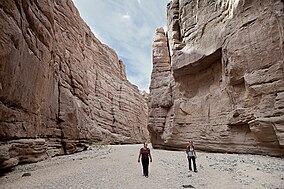
Mecca Hills, part of the Chuckwalla Natl. Monument

WASHINGTON– Today, President Biden established Chuckwalla National Monument, protecting over 600,000 acres of public lands in the California desert. The National Parks Conservation Association (NPCA) joins the Protect California Deserts coalition and partners in celebrating this historic designation, decades-in-the-making.

Named after the iconic Chuckwalla lizard, this remarkable landscape bridges the gap between Joshua Tree National Park and the Colorado River, protecting critical wildlife habitat, connecting migration corridors and preserving centuries of cultural history.

“Chuckwalla National Monument is a cornerstone in a vast network of protected landscapes across the Southwest. Stretching from Joshua Tree to the Grand Canyon to Bears Ears, this corridor forms the largest swath of protected lands in the continental U.S.,” said Theresa Pierno, President and CEO for the National Parks Conservation Association. “This designation protects an extraordinary stretch of the California desert, preserving a landscape shaped by millennia for those who find inspiration in the timeless beauty of our national parks.”
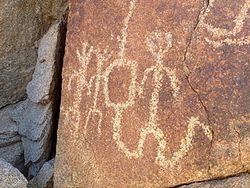
Petroglyphs at Corn Springs

Chuckwalla National Monument is part of the Biden administration’s legacy of landscape conservation. By connecting protected lands from Southern California to Utah, the monument becomes a keystone in the largest connected and protected landscape in the lower 48 states, covering nearly 18 million acres.

This corridor connects national parks, monuments, and protected public lands, including Joshua Tree, Grand Canyon, Capitol Reef, and Mojave National Preserve.

“This 18-million-acre corridor links the Mojave Desert to the Colorado Plateau, providing safe migration routes for wildlife like the iconic desert bighorn sheep and ensuring clean water flows through the Colorado River and its tributaries. It protects sacred sites central to Tribal nations for countless generations, and welcomes millions of visitors each year, inspiring exploration and bringing lasting economic strength to surrounding communities,” said Theresa Pierno. “NPCA has been proud to work locally and nationally for decades to preserve the extraordinary landscapes in the California desert and beyond.”

Designating Chuckwalla National Monument would honor Tribal sovereignty and protect a cultural landscape, boost the economy, and ensure access to nature for local residents.

A proposed Chuckwalla National Monument near Joshua Tree National Park would protect the threatened Mojave Desert tortoise and help many other species thrive, including people.

Chuckwalla is home to the desert’s most iconic and vulnerable species, including the Mojave Desert Tortoise, which relies on roughly 400,000 acres of protected habitat within the boundaries of the new national monument. The designation also ensures connectivity for wildlife migration, supporting desert bighorn sheep, golden eagles, burrowing owls, and more.

Luke Basulto, NPCA’s Ruth Hammett California desert program manager, has dedicated his career to desert conservation, working with local communities to protect the delicate desert landscapes.

“Growing up as a desert kid shaped me into the California desert advocate I am today, and I couldn’t be prouder to see Chuckwalla National Monument become a reality,” said Luke Basulto. “This landmark designation expands one largest desert preserves in the world, teeming with wildlife like the Mojave Desert Tortoise and bighorn sheep and is home to multiple plant species found nowhere else on the planet.”

Beloved destinations like Painted Canyon and the historic Bradshaw Trail will now be permanently protected, offering opportunities for hiking, camping, backcountry exploration, and stargazing. For nearby communities, where extreme heat and pollution pose daily challenges, the monument provides equitable access to the beauty and solace of the California desert.

Audubon Map

“For communities in the East Coachella Valley, Chuckwalla offers a place to visit, to connect with the desert landscape, and to find respite. Experiences like this are what build a passion for these special places,” said Luke Basulto. “Protecting this landscape isn’t just about today; it’s about creating a legacy of conservation that future generations can experience and connect with, just as I did.”

The area within Chuckwalla National Monument is sacred to several Tribes, including the Iviatim, Nüwü, Pipa Aha Macav, Kwatsáan, and Maara’yam peoples. These lands hold centuries of cultural and historical significance, preserving sacred sites, traditional practices, and historic trade routes.

While the designation of Chuckwalla National Monument is a monumental victory, the work to protect the California desert continues. Expanding Joshua Tree National Park to restore a key piece that was historically a part of the park area remains a vital next step for a more connected and resilient desert landscape. Congress now has an opportunity to ensure that Joshua Tree National Park is made whole once again.

Malcolm

Four novels in one Kindle volume

Blue Spruce – My Favorite Christmas Tree

My parents favored spruce for their Christmas trees. Perhaps this came from my father’s family living for many years in Colorado where spruce trees grow. My wife and I have carried on the tradition. The branches and needles easily lend themselves to lights to strings of lights, ornaments, and icicles. Their scent fills the room and, as I think I wrote elsewhere, conjures up a near-living presence from the tree in the living room.
One year, my wife and I bought a live blue spruce with the seemingly one-ton root ball for our Georgia home. When we took down our decorations on January 6th, we planted the tree in a shady spot in the yard. To our surprise, it flourished there perhaps because I often sprayed it with water or because conditions were accidentally right many miles from its high country range.

When we moved away, the tree was taller than the house. I’ve often wondered if subsequent residents have wondered how a spruce was growing in a Georgia yard.

Now we use an artificial tree to save money. It’s a Spruce, of course.

–Malcolm

New National Monument Will Commemorate Dark Legacy of Native American Boarding Schools

NPCA News Release

December 10, 2024

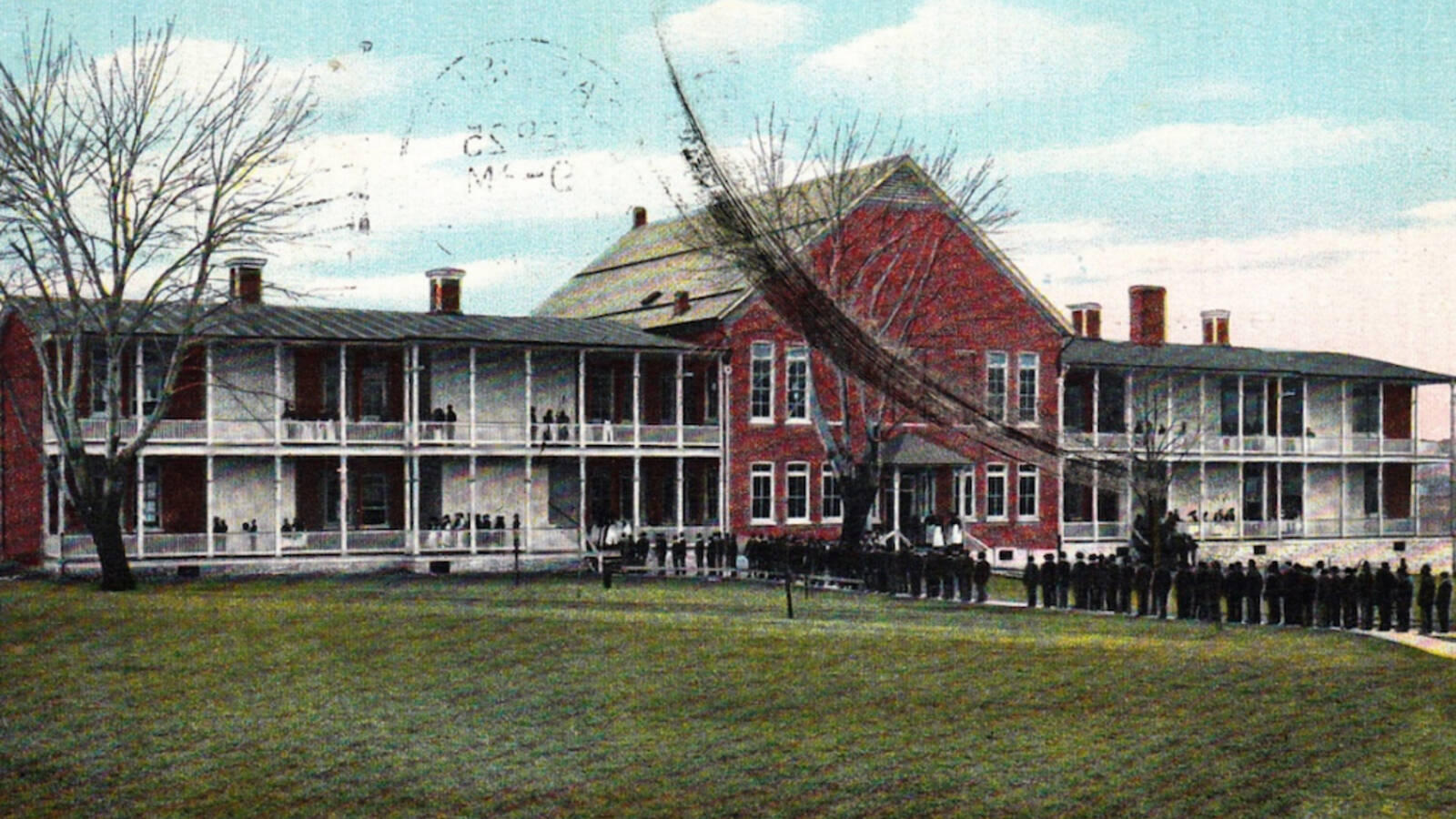
The Carlisle School

WASHINGTON – Yesterday, President Joe Biden designated the Carlisle Federal Indian Boarding School National Monument, a new national park site that tells the story of traumatic family separation and abuse at Native American boarding schools across the country.

President Biden’s proclamation states that this new national monument will be managed by the National Park Service in close consultation with Tribal Nations, so that Indian Country leaders will have the opportunity to shape planning processes, interpretation, and other critical factors in park management.

As the flagship Native American boarding school, the Carlisle School held thousands of Native children separated from their families, yet it represents just a small fraction of these stories.

The Biden administration’s hard work and careful collaboration with Tribal leaders on this sensitive issue recently culminated in a formal apology from the United States government regarding Native American boarding schools.

Statement of Theresa Pierno, National Parks Conservation Association President and CEO:

“Under the leadership of Secretary Deb Haaland, the Department of the Interior has made remarkable efforts to recognize the generational pain and trauma that Native American boarding schools inflicted on Indigenous people in the United States. Now, by designating the Carlisle Federal Indian Boarding School National Monument, the Biden administration is taking the next powerful step towards ensuring this painful history will never be erased from our collective memory. President Biden and Secretary Haaland are tasking the National Park Service with a new mission to commemorate this history and help generations to come learn from the mistakes of generations past. Crucially, NPS and Tribal communities will work in collaboration to ensure this monument will help heal these wounds.
“We are grateful for Secretary Haaland, whose sensitivity and grace in navigating the dark legacy of these schools has helped chart a path forward to properly acknowledge their toll. As a country, we are deeply indebted to the many Native people who came forward to share the heavy emotional burden of stories of their communities’ experiences at these boarding schools.

“To protect and tell these painful stories will not be easy. The Carlisle School and other Native American boarding schools are rife with trauma, broken promises, and stolen families from hundreds of Tribal Nations. To properly interpret these stories will require deference and respect to Indian Country, including boarding school descendants, who will deservedly play a primary role in managing and interpreting their history. Their leadership is deeply needed to ensure that the stories at this park are handled with sensitivity and care. We believe this national park site is an excellent opportunity for the federal government to honor Tribal self-determination.

“We know that the hardworking staff of the National Park Service have proven themselves capable of telling complex, heartbreaking history with the dignity it deserves. The National Park Service has a chance to work hand in hand with Native people impacted by the horrors of these boarding schools, creating a lasting monument of learning and remembrance for all of us.”

Wikipedia Note

The United States Indian Industrial School in Carlisle, Pennsylvania, generally known as Carlisle Indian Industrial School, was the flagship Indian boarding school in the United States from its founding in 1879 through 1918. It was based in the historic Carlisle Barracks, which was transferred to the Department of Interior from the War Department for the purpose of establishing the school. More than 7,800 children from 140 Indian tribes were separated from their communities and sent to the school.

–Malcolm


Why is Picoult’s 2008 Novel the Most Banned Book in the Country?

Having the most banned book in the country is not a badge of honor – it’s a call for alarm,” Picoult said. “Nineteen Minutes is banned not because it’s about a school shooting, but because of a single page that depicts a date rape and uses anatomically correct words for the human body.” – PEN America

According to PEN, the novel about a shooting in a small New Hampshire town is among the most frequently banned books in the U.S. It has been banned in thirty-five states.

In a BBC article, “She said the reason Nineteen Minutes, which is about a US school shooting, was banned, was not because of the shooting scenes: “They have no problem with that. The problem is that on page 313, I use the term ‘erection’.”

From the Amazon listing.

Jodi Picoult, bestselling author of My Sister’s Keeper and Small Great Things pens her most riveting book yet, with a startling and poignant story about the devastating aftermath of a small-town tragedy.

Sterling is an ordinary New Hampshire town where nothing ever happens–until the day its complacency is shattered by a school shooting. Josie Cormier, the daughter of the judge sitting on the case, should be the state’s best witness, but she can’t remember what happened before her very own eyes–or can she? As the trial progresses, fault lines between the high school and the adult community begin to show–destroying the closest of friendships and families. Nineteen Minutes asks what it means to be different in our society, who has the right to judge someone else, and whether anyone is ever really who they seem to be.
 

From Publishers Weekly

“Bestseller Picoult (My Sister’s Keeper ) takes on another contemporary hot-button issue in her brilliantly told new thriller, about a high school shooting. . .The author’s insights into her characters’ deep-seated emotions brings this ripped-from-the-headlines read chillingly alive.”

According to a November Associated Press story, NEW YORK (AP) — “Jodi Picoult remembers when everyone seemed to praise her novel “Nineteen Minutes,” a 2007 bestseller about a school shooting that now tops a list compiled by PEN America of the books most banned in schools. ‘Not only was it recommended for young adults to read, but it was on the curriculum in schools where it’s now banned,’ the author said during a recent telephone interview.”

–Malcolm

Malcolm R. Campbell is the author of magical realism novels and stories.

When a cousin we hardly knew died without a will, the State of Oregon tracked us down

Mostly, she ignored our side of the family. Old family films and photographs show us playing together during our preschool years.  Afterward, little or nothing.

I’ll refer to her as G.

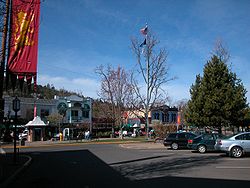
G probably shopped in this plaza

I never knew where G was or what she was doing. She wanted it this way for reasons I’ll never know. Now the State of Oregon has found my two brothers and me while looking for relatives, notably one who lives in or near Ashland who could handle the estate. Fortunately, an Oregon relative turned up and agreed to handle an estate that consists mainly of household items and a car.

I have no idea what happened to G’s husband.

I feel like a voyeur. I don’t want to know about her now because when G was alive, she didn’t want me to know her then. In a sporadic letter to one of my brothers, she once informed us that our favorite aunt had passed away months before. To me, this kind of slap-dash approach to family was unconscionable.

So, when I did know something, I was usually ticked off.

Now I’m suddenly an heir and that ticks me off, too.  I want to remain just as anonymous as she was.  I don’t want to see an accounting of the personal items in her house or the loose change in the glove compartment of her car.

Or maybe there will be a 1960s letter from my mother in a box in the attic. If so, it will be friendly and chatty, ending with “Why don’t you ever write?”

G never answered that question. If the answer lurks within the confines of G’s estate, I don’t want to hear it now.  Hearing that G died was more than I wanted to know. Is that cold? If so, I’m slow to forgive.

–Malcolm

New Fiction from the author of ‘Special Topics in Calamity Physics’

Marisha Pessl made quite a splash in 2006 with the release of Special Topics on Calamity Physics, a novel of which Publishers Weekly said, ” Pessl’s stunning debut is an elaborate construction modeled after the syllabus of a college literature course—36 chapters are named after everything from Othello to Paradise Lost to The Big Sleep—that culminates with a final exam. ” I’ve read it multiple times, followed by Neverworld Wake and Night Film.

And now we have Darkly about a game-making empire.

From the Publisher

Arcadia “Dia” Gannon has been obsessed with Louisiana Veda, the game designer whose obsessive creations and company, Darkly, have gained a cultlike following. Dia is shocked when she’s chosen for a highly-coveted internship, along with six other teenagers from around the world. Why her? Dia has never won anything in her life.

Darkly, once a game-making empire renowned for its ingenious and utterly terrifying toys and games, now lies dormant after Veda’s mysterious death. The remaining games are priced like rare works of art, with some fetching millions of dollars at auction.

As Dia and her fellow interns delve into the heart of Darkly, they discover hidden symbols, buried clues, and a web of intrigue. Who are these other teens, and what secrets do they keep? Why were any of them really chosen? The answers lie within the twisted labyrinth of Darkly–a chilling and addictive read by Marisha Pessl.

This summer will be the most twisted Darkly game of all.

From Publishers Weekly

“Fearless and whip-smart Dia, as well as the rest of the intersectionally diverse cast, will have readers cheering them on from page one. Assorted letters, news stories, and other ephemera depicting the events add visual interest throughout.”

–Malcolm R. Campbell

Malcolm R. Campbell is the author of the four-novel Florida Folk Magic Series.

Spoilt Turkey

“USDA recommends using cooked turkey within 3 to 4 days, kept refrigerated (40°F or less). Refrigeration slows but does not stop bacterial growth. Turkey can be frozen for 3 to 4 months. Although safe indefinitely, frozen leftovers can lose moisture and flavor when stored for longer times in the freezer.” – USDA
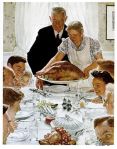
As far as I know, the USDA guidelines don’t include the presence of toxic friends or relatives.

I’ve been lucky. Most of my Thanksgiving holidays have been in the good to great range.

However, some people think Groucho Marx was more on target when he said, “I’ve had a perfectly wonderful evening. Unfortunately, this wasn’t it.”

(There may be wisdom in the belief there’s a reason we don’t see these people more than once a year.)

We visualize this Norman Rockwell picture as the Thanksgiving we expect (from a 1943 Saturday Evening Post article.) He called the painting “Freedom from Want.” That freedom is among the blessings we celebrate when we gather with friends and relatives around our Thanksgiving tables.

Unfortunately, the turkey may be spoilt before the cook has time to pick up his/her fork (to signify the meal can begin) when one or more people think the feast is a site for open warfare. Today, in our polarized country, the subject is often politics.  This plays out when an arrogant know-it-wall castigates those at the table who don’t share his/her views.  This kind of “chewing out” has no place at the table set for blessings and fellowship. But it happens and often tears families apart.

To what end?

–Malcolm

Haunted by a 1949 auto accident

I was born in the San Francisco Bay area where we had countless relatives and lived there until the family moved to Eugene, Oregon. We drove back and forth between the two places in our bulky 1949 Nash similar to the one in the picture.
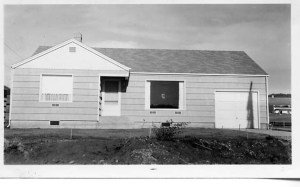

On one of these trips, we were almost hit by a flatbed truck while passing on a two-lane road in Oregon. My brothers and I were in the backseat, though both of them were too young to remember the near miss that might have proved fatal to the truck driver. At the time, I didn’t understand the potential consequences to the truck driver.  Years later, I searched news reports and accident listings without finding anything about the wreck

Mother honked the horn twice, typical in those days, as we pulled out into the other lane and began passing. We were halfway around the truck when it suddenly began pulling over to pass a smaller car in front of it. I thought the truck was going to hit us, but Mother honked the horn again, the truck driver pulled away, over-correcting so that the truck ran off the right-hand side of the road so sharply that it rolled over multiple times before coming to a stop.

I remember sitting in the hot car for ages on the roadside. Police came and went. My folks talked to them outside the car. I don’t remember if there were witnesses. Probably. Finally, an officer leaned inside and said, “There’s no reason to punish the children by sitting here any longer.” And so we were allowed to leave.

Our house on Alder Street in Eugene before the porch was built.

Afterward, my parents never spoke about the accident in my presence, though I’m sure they called people from elsewhere in the house. At the time, I was too young to understand why the truck rolled or to imagine the consequences to the occupants of the cab in a pre-seatbelt era. So I didn’t ask. The matter was too far outside my realm of understanding. However, the memory of that truck rolling endlessly across a field has never left me.

On Alder Street, I saw my first snowstorm and built a snow fort in the front yard. Life went on without nightmares or answers. We soon moved to Florida as Dad’s university job positions kept changing. We drove to Florida in the Nash. En route, I never liked passing trucks. I still don’t.

I’m still looking for closure.

–Malcolm

2024 Election–a strong mandate against women

We sold her down the river.

In a strong anti-abortion state, your wife or daughter can be jailed for having a miscarriage. I wonder how any man or woman can vote Republican when it can lead to such consequences. If she becomes pregnant from rape or incest, she will most likely be forced to carry the child to term–a cancer she is not allowed to treat. Men for the most part are responsible for such inhumane laws even though they are in the minority.

That religion or misguided masculinity can lead to these results in a strong mandate against women.

Michelle Obama spoke of the consequences of strong anti-abortion laws for women who have never considered having an abortion:

We will see more doctors hesitating or shying away from providing lifesaving treatments because they are worried about being arrested; more medical students reconsidering even pursuing women’s health at all; more OB-GYN clinics without enough doctors to meet demand, closing their doors, leaving untold numbers of women in communities throughout this country without a place to go for basic gynecological care, which in turn will leave millions of us at risk of undiagnosed medical issues like cervical and uterine cancers. This is real. – Michigan Speech

And yet, this is what we voted for, and there’s nothing but shame in doing so.

–Malcolm


Bears Ears Makes History with Release of Proposed Management Plan in Collaboration with Five Tribes

NPCA News Release

This plan marks historic progress, incorporating Tribal collaboration into the care and stewardship of this critical landscape–Theresa Pierno, NPCA’s President and CEO

© Arlene Hochman Waller/Dreamstime

The plan aims to manage the lands and resources of Bears Ears in collaboration with Tribes, to fulfill the vision of President Obama’s proclamation that established the monument and President Biden’s proclamation that restored its boundaries.

The proposed resource management plan will guide resource policies and procedures for the monument’s 1.36 million acres of public lands. It is the result of a multi-year collaboration with the Bears Ears Commission – the Ute Indian Tribe, Ute Mountain Ute Tribe, Zuni Tribe, Hopi Tribe and the Navajo Nation – and federal partners at the Bureau of Land Management and the U.S. Forest Service.

NPCA is carefully reviewing the final plan which is expected to shape policies that protect Bears Ears National Monument for years to come and help connect one of America’s most diverse national park landscapes from Glen Canyon to Canyonlands National Park.

Statement by Theresa Pierno, President and CEO for the National Parks Conservation Association (NPCA):

“Since time immemorial, Bear Ears has been a place of healing and refuge, connecting many Tribal communities to their ancestors across centuries. By placing Tribal collaboration at the forefront, we all benefit along with our national parks and public lands.

“Years of determination and hard work by Tribal Nations, local communities, businesses, and people across the country have led to this moment. This plan marks historic progress, incorporating Tribal collaboration into the care and stewardship of this critical landscape.

“This would not have been possible without the unwavering leadership of the Ute Indian, Ute Mountain Ute, Zuni, and Hopi Tribes and the Navajo Nation. NPCA is proud to have worked alongside the Tribes, whose leadership reinforces the integral role of Traditional Ecological and Indigenous Knowledge in shaping the future of our public lands.”

–Malcolm

Malcolm R. Campbell is  a long-time member of NPCA.