Anything can happen in the dark wood

“Fantasy is a different approach to reality, an alternative technique for apprehending and coping with existence. It is not antirational, but pararational; not realistic but surrealistic, a heightening of reality.  In Freud’s terminology, it employs primary, not secondary process thinking. It employs archetypes, which, as Jung warned us, are dangerous things. Fantasy is nearer to poetry, to mysticism, and to insanity than naturalistic fiction is. It is a wilderness, and those who go there should not feel too safe.”   – Ursula K. Le Guin

Worrying about safety holds us back from the truth about ourselves and the world. In fact, it’s a hindrance that, among other things, makes us fear walking into the dark wood.

We’re familiar with the Divine Comedy‘s lines, “In the middle of the journey of our life, I came to myself, in a dark wood, where the direct way was lost. It is a hard thing to speak of, how wild, harsh and impenetrable that wood was, so that thinking of it recreates the fear. It is scarcely less bitter than death: but, in order to tell of the good that I found there, I must tell of the other things I saw there.”

I suggest that this dark wood, like so-called “hell” itself, is not a place but a state of mind fed by the unconscious where, as Jung says, the shadow awaits us, that is to say everything we generally perceive as negative. Folklore and fantasy (among other things) lead us there, into this wilderness that comprises the parts of ourselves that we fear to meet.

We find clues in faerie tales, fantasy, and folklore and, as Le Guin notes, in archetypes that many of us see in the Tarot, the KabalisticTree of Life, and our dreams. To some extent, we fear the deeper, dark-wood part of ourselves because confronting it might change us, might lead to death or–worse yet–insanity. But confronting that dark wood might also lead to the wonderment of discovering the true power and knowledge from which we are built.

Helen Luke and others have shown us how to survive the dark wood–how to survive ourselves–with such wisdom as, “The true light never hides the darkness but is born out of the very center of it, transforming and redeeming. So to the darkness, we must return, each of us individually accepting his ignorance and loneliness, his sin and weakness, and, most difficult of all, consenting to wait in the dark and even to love the waiting”

Instead of fear of the dark wood, our stories urge us to confront it with excitement and a sense of adventure. This is one reason I like mythic literature, including folklore and fairie: it’s scary but positive.

–Malcolm

Malcolm R. Campbell is the author of contemporary fantasy, magical realism, and paranormal stories and novels all of which are set in the dark wood.

Sharon Heath (‘The Mysterious Composition of Tears’) at VROMAN’S in Pasadena August 27

Sharon Heath will be reading and signing The Mysterious Composition of Tears at Vroman’s Bookstore at 695 E Colorado Blvd, Pasadena, CA on August 27th.

Since Sharon and I are both published by Thomas-Jacob Publishing in Florida, I can’t write a review and tell you how great I think this novel is. But I can provide a description of what it’s about:

Heath

“After a series of climate calamities, physicist Fleur Robins takes off for deep space in a desperate attempt to save the species from extinction. During her mysteriously prolonged absence, the internet has crashed, fire and flood have devastated whole countries, and End of Times cults have proliferated. There have been some intriguingly hopeful changes, too-nanoparticle holograms have replaced electronic devices, young people are witnessing exquisitely colorful “Shimmers,” and the most gifted of them converse regularly with animals and trees.

“While Fleur’s distraught husband Adam leads their Caltech physics team in frantic efforts to pinpoint her whereabouts, and Fleur herself plots her return home, their teenaged children Callay and Wolf fall in love with surprising partners. But when the charming son of an End of Times pastor crosses Wolf’s path during a particularly vibrant Shimmer, events are set in motion that will upend everyone’s life and transform planet Earth itself.

“This latest installment of Sharon Heath’s saga of the quirky Nobelist Fleur is simultaneously a vision of what awaits us in a post-Covid world, a wild romp through quantum reality, and a deep sea dive into the dark and light vagaries of the human heart.”

I’ve gotta ask, who doesn’t enjoy a wild romp through quantum reality? The Mysterious Composition of Tears follows The History of My Body, Tizita, and Return of the Butterfly. You can learn more about these books on Sharon’s website.

–Malcolm

Malcolm R. Campbell, who is a quantum mechanic at all Exxon stations, writes contemporary fantasy, magical realism, and paranormal stories and novels in his spare time. That is to say, reality as we know it.

Okay, I’ve ordered the latest installment in Diana Gabaldon’s ‘Outlander Series’

Go Tell the Bees That I Am Gone was released in 2021 and now that the prices have come down, I can afford to order the book that (due to its length) costs more than my house when it’s new.
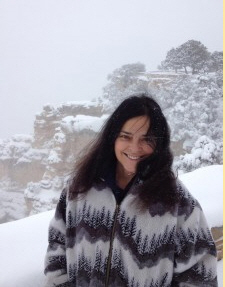
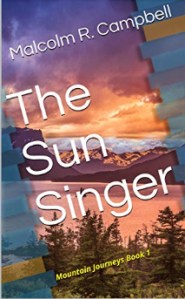
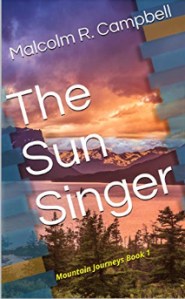
I “knew” Diana online on the old CompuServe Litforum when Outlander, the first book in the series, was released in 1991. She was very helpful to those of us who were early on in our writing careers. She wrote a blurb for my novel The Sun Singer, and my wife and I met her once when she was in Atlanta for a book signing. The series, of which “Bees” is the 9th book, has been airing on Starz. I watched a few of the early episodes but took issue with the production and didn’t stay with it. However, I did approve of the series’ use of Scots Gaelic.

On her website, Diana writes, “Where did the title for this book come from? Talking to your bees is a very old Celtic custom (known in other parts of Europe, too) that made it to the Appalachians. You always tell the bees when someone is born, dies, comes or goes—because if you don’t keep them informed, they’ll fly away.”

The first three books in the series came out fairly close together, so I hoped that would continue. Then the books got longer, took more time to write, and have been released slowly. So I debated whether I want to stay with the series inasmuch as each installment represents quite an investment in time. But, once I get into the story, I won’t leave it,

From the Publisher

War leaves nobody alone. Neither the past, the present, nor the future offers true safety, and the only refuge is what you can protect: your family, your friends, your home.
Jamie Fraser and Claire Randall were torn apart by the Jacobite Rising in 1746, and it took them twenty years of loss and heartbreak to find each other again. Now it’s 1779, and Claire and Jamie are finally reunited with their daughter, Brianna, her husband, Roger, and their children, and are rebuilding their home on Fraser’s Ridge—a fortress that may shelter them against the winds of war as well as weather.

But tensions in the Colonies are great: Battles rage from New York to Georgia and, even in the mountains of the backcountry, feelings run hot enough to boil Hell’s teakettle. Jamie knows that loyalties among his tenants are split and it won’t be long before the war is on his doorstep.

Brianna and Roger have their own worry: that the dangers that provoked their escape from the twentieth century might catch up to them. Sometimes they question whether risking the perils of the 1700s—among them disease, starvation, and an impending war—was indeed the safer choice for their family.

Not so far away, young William Ransom is coming to terms with the mysteries of his identity, his future, and the family he’s never known. His erstwhile father, Lord John Grey, has reconciliations to make and dangers to meet on his son’s behalf and on his own, and far to the north, Young Ian Murray fights his own battle between past and future, and the two women he’s loved.

Meanwhile, the Revolutionary War creeps ever closer to Fraser’s Ridge. Jamie sharpens his sword, while Claire whets her surgeon’s blade: It is a time for steel.

While I’m reading, I know I will feel it’s time well spent.

–Malcolm

“The Sun Singer is gloriously convoluted, with threads that turn on themselves and lyrical prose on which you can float down the mysterious, sun-shaded channels of this charmingly liquid story” – Diana Gabaldon

Changing our world without knowing it

“Beware of the stories you read or tell; subtly, at night, beneath the waters of consciousness, they are altering your world.” — Ben Okri
Ben Okri, who won the 1991 Booker Prize for this novel The Famished Road, is quoted often and in many places when it comes to words of wisdom about storytelling.

When we think of storytelling, whether from oral traditions of centuries past or the novels we peruse on Amazon, we tend to think of stories as tales intended to be read or otherwise passed along to others. What we overlook, out of habit, are the stories we tell ourselves.

Even things said over and over in jest/sarcasm such as “My feet our killing me.”  I suggest that if you say that or think that often enough, your feet will ultimately kill you because the idea has become part of our world view about yourself.

Those who teach meditation often ask us to get rid of the on-going interior monologue that runs like an endless podcast inside our heads. First, it’s uncensored and often negative in some way. Second, it fills our thoughts with dribble, shutting down our ability to hear the stories we need to hear. Third, that monlogue is a barrier to the songs of the universe, knowledge we might get through intuition or other communication with higher powers and totem animals.

And then I guess we might say that if the only person we’re listening to is that podcast from ourselves, we won’t hear much else. What a pity, in a world built on stories, thousands of voices are trying to get our attention.

–Malcolm

Keep Notes at All Times. You Never Know When You’ll Need Them

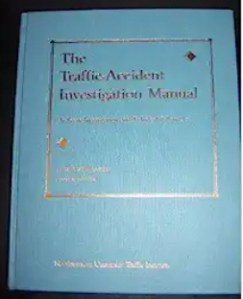
When I worked as a course developer at the Northwestern University Center for Public Safety (then called The Traffic Institute) in the 1970s, I had no idea anything I did there would ever be relevant to a future novel. The center’s focus is police management and also accident investigation. While I worked more closely with the police management and supervision courses, I also wrote exams and handouts for the accident investigation curriculum.

The center’s courses were based in large measure on the work of J. Stannard Baker whom I consider the father of modern accident investigation. If the name sounds familiar it’s because his father was Ray Stannard Baker (aka David Grayson), a Pulitzer Prize-winning muckraking journalist in the late 1800s. While I had studied the muckrakers in college, I never asked Mr. Baker about his family because I was sure he was tired of questions about them.

I was rather in awe of him and his accomplishments in accident investigation, one of which was detailing a way to tell whether a car’s headlights were on or off at the time of an accident. I found him to be a low-key individual who was easy for a young course developer to work with. He treated me as an equal, a status I didn’t think I really deserved.

I remember the courses and, in fact, have a copy of one of his books that will very much help me write competent accident investigation scenes in my novel in progress.

I didn’t include an accident investigation in the novel because I worked with Mr. Baker, but because it was central to the story’s plot. Old memories and old employment just happened to be a research gift.

–Malcolm

Malcolm R. Campbell is the author of contemporary fantasy, paranormal, and magical realism short stories and novels.

This and That for Sunday June 25

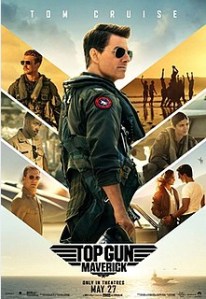
  • Some say this movie was better than the original. Possibly so, for it provided a lot of action, an imposible mission, and an over-the-top look at sort of real navial aviation. While it didn’t make me miss my days aboard an aircraft carrier, I’ll give it five stars and call it a “hoot,” and kudos to Tom Cruise for his acting. The movie was filmed on the U.S.S. Abraham Lincoln and the navy earned a pack of doughfor sequences involving F/A-18 fighters. Without providing a real spoiler, I can mention there was an F-14 in the movie; the one used was in a museum since the navy doesn’t have any and borrowing from Iran seemed like a catastrophee waiting to happen.
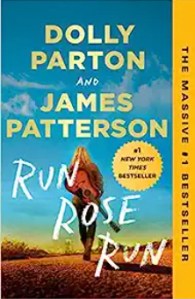
  • I like the series of Cross novels by James Patterson, but took a detour to read the novel he co-authored with Dolly Parton, Run Rose Run. The book reads well and is a special treat for those who want to know how a potential country singer breaks into the business, especially one with bad guys chasing her.
  • For those of you keeping score, I have chili simering in the Dutch over for tonight’s supper. 
  • Here’s an interesting article from Literary Hub: “Against the Cynicism Cycle: Why TV Could Do with Less Moral Grayness.” Noah Ciubotaru writes, “We’ve celebrated moral grayness, deemed it to be indicative of clever writing, a sign of art’s ability to twist and stump our moral intuitions. But maybe our praise has been misplaced; maybe grayness has become an empty affectation, doing nothing for us, and asking nothing of us but to drift through unfeeling stories.” I tend to agree with him.
  • I think I mentioned a couple of weeks ago that my GP said my symptons indicated a prospective bleeding ulcer and that he was referring me to a specialist. So far, no word from a specialist. I remember the old days whe one’s GP treated the whole shebang rather than sending you off to somebody with higher fees.
  • I read the Velveteen Rabbit years ago. So I was drawn to this story:  “More Than A Children’s Story: The Velveteen Rabbit At 100.”   No, I did not read it on the day it came out. I’m not that old. Lisa Rowe Fraustino writes, “Margery Williams was born in London on July 22, 1881, and died September 4, 1944, in New York City. Though she published twenty-seven books, including five translations of works from French and Norwegian, and though she won the John Newbery Honor Medal for her novel Winterbound (1936) in 1937, she is primarily known today as the author of The Velveteen Rabbit.”
–Malcolm

I really don’t want to clean up nice

There’s a scene in the Dolly Parton/James Patterson novel Run Rose Run when an emerging singer with a raw and powerful voice is being styled into clothes, makeup, and a hairdo prior to a publicity shot. When she sees the result, she leaves the room for a few minutes only to return wearing  her comfortable clothes, minimal makeup, and her hair simply brushed out into its natural way of being. The stylists are shocked. She doesn’t care. Even though she looked like a diva, looking like a diva wasn’t for her. It didn’t feel right. That meant it was all wrong.

At this point in her introduction to Nashville and the country music business, AnnieLee Keyes is still learning “how things are done.” However, she’s defiant in a lot of ways and wants her voice and her songs to carry a career in which she can ignore how things are done.

I can identify with that because, as an author, I’ve always felt my words should be what people care about, not the clothes I’m wearing. I like blue jeans and tee-shirts with a denim or a flannel “jacket” depending on the weather. If it still ran, I’d drive up to any gathering in my old Jeep Universal or possibly an ancient 3.2-liter Jaguar Sedan. The cars would never be washed or waxed and I’d look like I hadn’t either.

In the old days, Sunday afternoons were the times when people dropped by each other’s houses unannounced, and that meant that my two brothers and I had to wear church clothes until supper. What a drag. Did anyone really think that was how we dressed day to day? In fact, I kept asking why I had to wear church clothes to go to church. That’s how things are done, I was told.

The only way to live, I always thought, was to ignore “how things were done” I always liked the song “My Way” because what other way was there? But, as many have learnt, that way is a rough way to go. The thing is, cleaning up nice feels like selling out–like how I look and how I act is just being a marionette controlled by the strings of tradition.

One has to be true to himself/herself, I think, and that means not dressing up like somebody you are not just because the wedding planner or the funeral director is claustrophobically traditional.

Good luck to you, AnnieLee Keyes.

–Malcolm

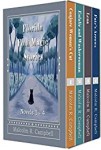
Malcolm R. Campbell is the author of the Florida Folk Magic Series which can be purchased at a savings in this four-in-one Kindle set. Folk magic means hoodoo. And hoodoo means having a weapon for fighting the KKK in 1950s Florida.

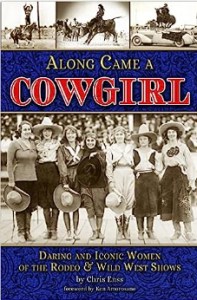
‘Along Came a Cowgirl’ by Chris Enss

Prolific Western author Chris Enss released this book last September via Montana’s Farcountry Press. She has been writing about women of the old west for over 20 years. She’s the author of forty published books and the recipient of multiple awards for her work.

From the Publisher

Enss

In Along Came a Cowgirl: Daring and Iconic Women of the Rodeos and Wild West Shows, New York Times best-selling author Chris Enss introduces readers to the world of the early rodeo – and to the stories of the women whose names resounded in rodeo arenas across the nation in the early twentieth century. These cowgirls dared to break society’s traditional roles in the male-dominated rodeo and trick-riding world. Some of the iconic cowgirls included in the book are Prairie Rose Henderson, Fox Hastings, Lucille Mulhall, and Ruth Roach. With the desire to entertain crowds and armed with grit and determination, these talented bronc riders, trick ropers, and steer wrestlers were able to saddle up and follow their dreams. Along Came a Cowgirl includes a foreword by Cowgirl magazine editor and publisher Ken Amorosano.”

Farcountry Press

“For more than 40 years, Farcountry Press has been a leader in regional publishing, specializing in stunning photography books, fun educational books for children, adventure guidebooks, and thought-provoking history titles. Farcountry’s award-winning books celebrate our nation’s cities, states, and national parks, and explore our shared heritage.

“Farcountry publishes more than 50 books annually; the backlist has grown to more than 300 titles.”

I follow Farcountry Press because I like Montana and other western states’ history. I’m never disappointed.

–Malcolm

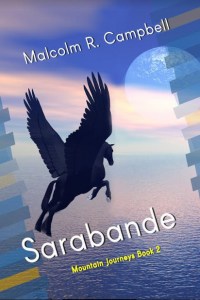
Malcolm R. Campbell’s two contemporary fantasies, “The Sun Singer” and “Sarabande” are set in Montana where he is a long-time member of the Montana Historical Society.

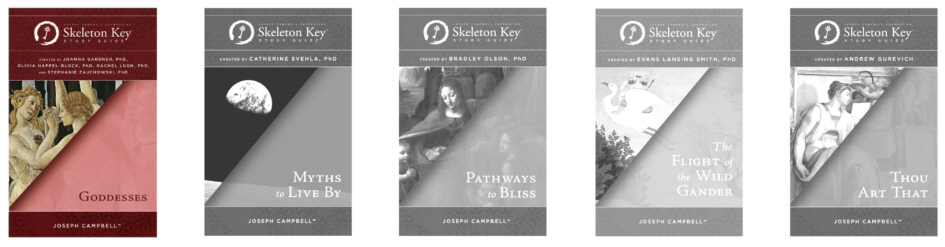
Joseph Campbell Study Guides

“We are excited to announce the launch of a new series of study guides for books by Joseph Campbell. Written by a team of today’s experts in myth, these guides help readers experience and apply Campbell’s visionary ideas. The first book in the series, Goddesses: A Skeleton Key Study Guide is available now.” – Joseph Campbell Foundation

Some years ago, Campbell had a series of televised conversations with Bill Moyers about comparative mythology that brought his ideas to a large audience. I’m happy to see this study guide project and hope it will facilitate a deeper understanding of Campbell’s work.

Amazon Listing Description

“In this Skeleton Key Study Guide to Joseph Campbell’s Goddesses: Mysteries of the Feminine Divine, you’ll find summaries of Campbell’s views about many different goddesses, as well as quotes, reading suggestions, discussion topics, and prompts for essays and creative projects.”

If you’re a fan of Campbell’s work, you can find a lot to explore on the Joseph Campbell Foundation website. Otherwise, these guides will help you with the basics.

–Malcolm

Malcolm R. Campbell followed Joseph Campbell’s “Hero’s Journey” motif in writing the contemporary fantasy novels, “The Sun Singer” and its sequel “Sarabande.” The basis for the hero’s journey comes from Campbell’s “The Hero With a Thousand Faces.”

Remembering ‘I’m OK – You’re OK’

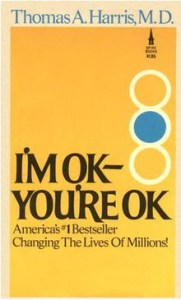
Eric Berne (Games People Play) and Thomas A. Harris (I’m OK – You’re OK) were both popular for their books that were widely considered “self-help” books that focused on the theories of transactional analysis (TA) and script theory. While the value of TA was debated by experts who, like Berne, were trained psychoanalysts, I found the concept to be very workable in industry courses in supervision and management in the 1970s.

The concepts were easy to understand and helped explain why “messed up” (to use that technical term again) interactions between supervisors and subordinates led to trouble. Script theory and games were outside the parameters of the courses we wrote, so Harris’ book suited our needs best because it worked so well showing how a  “crossed transaction” could occur and tangle up relationships in the workplace.

I have no idea whether or not clinical psychologists used any of these theories in private practice or not. In my work for the Illinois Department of Mental Health, we used–and were successful with– behavioral conditioning. Many of our patients were developmentally disabled and often nonverbal, so the concepts of TA would have been impossible to apply in most cases.

There’s a lot of nostalgia looking back on TA, Games, and Scripts because they were part of my work at two organizations where those in the courses provided positive feedback about the concepts. Personally, I think Harris’ book would still provide help to many individuals today who find they’re constantly getting into arguments with family and friends over issues arising out of their communication with each other.

–Malcolm