“John Dee (13 July 1527 – 1608 or 1609) was an English mathematician,  astronomer, astrologer, teacher, occultist, and alchemist. He was the court astronomer for, and advisor to, Elizabeth I, and spent much of his time on alchemy, divination, and Hermetic philosophy. As an antiquarian, he had one of the largest libraries in England at the time. As a political advisor, he advocated the foundation of English colonies in the New World to form a ‘British Empire’, a term he is credited with coining. . . His goal was to help bring forth a unified world religion through the healing of the breach of the Roman Catholic and Protestant churches and the recapture of the pure theology of the ancients.” – Wikipedia
If you read about the hermetic philosophy and its impact on religion in non-fiction and fiction, or the Reign of Queen Elizabeth I, you will sooner or later come across John Dee. His influene extended into multiple areas, one being his belief in the value of communicating with angels. Louv’s book is a well-written exploration of Dee’s life.
From the Publisher
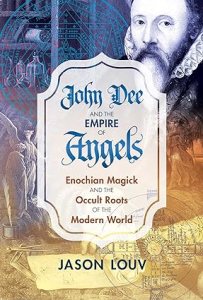 “A comprehensive look at the life and continuing influence of 16th-century scientific genius and occultist Dr. John Dee
“• Presents an overview of Dee’s scientific achievements, intelligence and spy work, imperial strategizing, and his work developing methods to communicate with angels
“• Pieces together Dee’s fragmentary Spirit Diaries and examines Enochian in precise detail and the angels’ plan to establish a New World Order
“• Explores Dee’s influence on Sir Francis Bacon, modern science, Rosicrucianism, and 20th-century occultists such as Jack Parsons, Aleister Crowley, and Anton LaVey
“Dr. John Dee (1527-1608), Queen Elizabeth I’s court advisor and astrologer, was the foremost scientific genius of the 16th century. Laying the foundation for modern science, he actively promoted mathematics and astronomy as well as made advances in navigation and optics that helped elevate England to the foremost imperial power in the world. Centuries ahead of his time, his theoretical work included the concept of light speed and prototypes for telescopes and solar panels. Dee, the original “007” (his crown-given moniker), even invented the idea of a “British Empire,” envisioning fledgling America as the new Atlantis, himself as Merlin, and Elizabeth as Arthur.
“But, as Jason Louv explains, Dee was suppressed from mainstream history because he spent the second half of his career developing a method for contacting angels. After a brilliant ascent from star student at Cambridge to scientific advisor to the Queen, Dee, with the help of a disreputable, criminal psychic named Edward Kelley, devoted ten years to communing with the angels and archangels of God. These spirit communications gave him the keys to Enochian, the language that mankind spoke before the fall from Eden. Piecing together Dee’s fragmentary Spirit Diaries and scrying sessions, the author examines Enochian in precise detail and explains how the angels used Dee and Kelley as agents to establish a New World Order that they hoped would unify all monotheistic religions and eventually dominate the entire globe.
“Presenting a comprehensive overview of Dee’s life and work, Louv examines his scientific achievements, intelligence and spy work, imperial strategizing, and Enochian magick, establishing a psychohistory of John Dee as a singular force and fundamental driver of Western history. Exploring Dee’s influence on Sir Francis Bacon, the development of modern science, 17th-century Rosicrucianism, the 19th-century occult revival, and 20th-century occultists such as Jack Parsons, Aleister Crowley, and Anton LaVey, Louv shows how John Dee continues to impact science and the occult to this day.”
Publishers Weekly Review
 “Louv (Hyperworlds, Underworlds) delivers an overwhelming amount of information in this sweeping attempt to reconcile two schools of thought about Elizabethan scientist John Dee (1527–1608). Historians concerned with Dee generally fall into two camps, writes Louv: the political historians embarrassed by Dee’s late-in-life angelic obsessions, and the occultists indifferent to Dee’s involvement in the development of British intellectualism and politics. By elucidating the “direct intersection between the forces of magic and the machinery of empire,” Louv, with moderate success, argues for the importance of Dee’s ideas throughout the last 500 years of Western history. ” (Click on PW logo for complete review.)
 Malcolm R. Campbell is the author of magical realism novels set in the Florida Panhandle.
 What I got, is Irritable Bowel Syndrome (IBS). Everyone seems to agree that the bowels are irritated one way or another, but opinions are mixed about what causes it and what (if anything) gets rid of it.
 “Low FODMAP is a three-step elimination diet:
 You’ve probably heard the reason why eyewitness accounts of accidents are often wrong. Eyewitnesses may not see 100% of the accident: their view is obscured by other cars/objects, they glance away, etc. But when asked about the accident, they believe they saw the whole thing since the mind tends to fill in the gaps with what probably happened even though they don’t realize there are gaps to be filled in. So, what they saw was a mix of reality and possibility.
 The Catcher in the Rye: Does Holden Caulfield, a troubled teen, see and understand what’s happening around him? Probably not. So we cannot trust him as as a wholly reliable narrator. According to
  Gone Girl: According to
  Rebecca by Daphne du Maurier: CBR notes that “Mrs. de Winter, the narrator in the new adaptation of Rebecca from Ben Wheatly, is a voice of confusion who can’t keep the facts straight.” The new Mrs. deWinter cannot compete with the original, so readers/viewers cannot totally accept her perspective. A close look at the original film will show the same lacks of certainty.
 I’m thinking of this film today because I just learned that John Nichols died at 83 in November, and I’m rather embarrassed that I missed it at the time especially when such publications as The New York Times and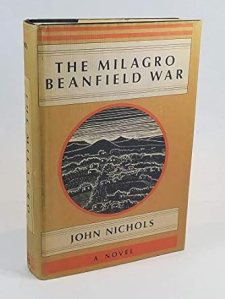
 People are still shooting each other, having sex, drinking too much wine, getting married, watching bad TV, dying of old age (so long Glynis Johns at 100), and eating too much fast food. When will it end?
 We expect too much magic, it seems, with the changing of the year. Or maybe we don’t expect enough. Or, worse yet, we expect the same old, same old. Speeding tickets, DUIs, getting fired, getting hired, texting too much, running into a tree while texting, being shot by the cops while breaking into a store, finding the Oak Island Treasure. Yes, when will it end?




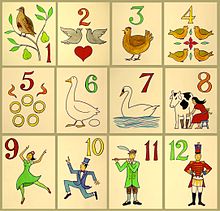 Actually, if that happened they (the partridge in a pear tree) would probably end up in the garage where they would never be seen again. That’s fine. I detest pears. The cats would probably eat the partridge or vice versa.
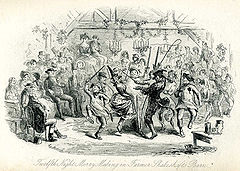 Our decorations usually go up late and stay up through Twelfth Night when my wife is supposed to give me twelve drummers drumming. Well, more for the garage. Of course, it’s bad luck to leave the decorations up after Twelfth Night. Personally, I think it shows a lack of taste to throw the Christmas tree out for the trash truck late on December 25th.
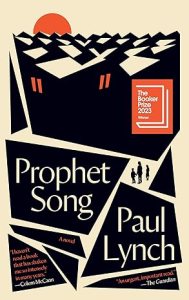 ock at the door, Prophet Song forces us out of our complacency as we follow the terrifying plight of a woman seeking to protect her family in an Ireland descending into totalitarianism. We felt unsettled from the start, submerged in – and haunted by – the sustained claustrophobia of Lynch’s powerfully constructed world. He flinches from nothing, depicting the reality of state violence and displacement and offering no easy consolations. Here the sentence is stretched to its limits – Lynch pulls off feats of language that are stunning to witness. He has the heart of a poet, using repetition and recurring motifs to create a visceral reading experience. This is a triumph of emotional storytelling, bracing and brave. With great vividness, Prophet Song captures the social and political anxieties of our current moment. Readers will find it soul-shattering and true, and will not soon forget its warnings.’ – Esi Edugyan, Chair, Booker Prize.
 When Kirkus Reviews praises a book by saying, “An exceptionally gifted writer, Lynch brings a compelling lyricism to her fears and despair while he marshals the details marking the collapse of democracy and the norms of daily life. His tonal control, psychological acuity, empathy, and bleakness recall Cormac McCarthy’s The Road (2006). And Eilish, his strong, resourceful, complete heroine, recalls the title character of Lynch’s excellent Irish-famine novel, Grace (2017)” it’s certainly worth a look. Those of us who remember “The Troubles” (1960s-1990s) will feel an eerie sense of Deja Vu to the violent world of the Irish Republican Army.
 Those of you who’ve read this blog for a while know that I drive out in the middle of the night to a nearby QuikTip, Exxon, BP, or other nearby gas station with a mini-mart and stock up on last-minute bargains such as Pork Rinds, Tee shirts with various logos, a case of oil, and other treats that help make opening gifts a festive occasion each year.
 Neither of us has been well lately, so the indoor and outdoor decorations aren’t as lavish as usual. But they suffice. We used to send out a Christmas (Yule) letter but stopped that several years ago. We still send out a few cards, but now they’re always late if we get around to them.
 Malcolm's Round Table