Haunted by old memory

When I was five years old, the family nearly got into a car accident on the way home to Oregon from a trip to the California Bay area to see family. We are in our bulky 1949 Nash and nearly got run off the road by the flatbed truck we were passing.

In those days, it was common to honk several times before passing. Mother did this. However, the truck driver apparently didn’t hear us and came over into our lane, almost hitting us before we got his attention. When he finally saw us, he overcorrected and swerved off the road into a field where the truck rolled over multiple times.

The police came. We ended up sitting in a hot car on the shoulder for a long time. Conversations between the officers and my parents happened outside the car, to my two brothers and I had no idea what was said. In fact, my brothers are too young to remember it.

My parents never spoke of it, so I never heard what happened to the people in the truck. Seatbelts were unheard of then, so they probably were injured. I guess I’ll never know. I never thought to ask my folks. By the time I started wondering, they had both passed away.

I’ve searched online, but never found any report of the accident. I still wonder, though after all these years.

–Malcolm

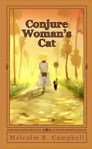
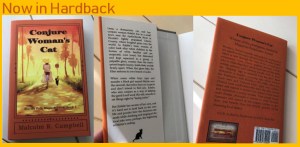
Malcolm R. Campbell is the author of Conjure Woman’s Cat.
Facebook’s unfair suspension policy

My tame Facebook account has been suspended. I have no idea why. Most of the people on my friends list who get suspended are either saying risque things or proposing unpopular political ideas. You won’t see such things from me.

I’m offended that Facebook is acting as police, judge, and jury to kick me off the platform with no recourse (since they are asking me for a video selfie for the appeal process; I have no hardware or software for doing that.)

Most people can easily provide an acceptable selfie–or even a video–with their cell phones. I’m deaf: I don’t have a cell phone.

So, I will end up losing my account simply because Facebook apparently didn’t like a joke I posted.

Shame on you, Meta, for treating your customers like this.

–Malcolm

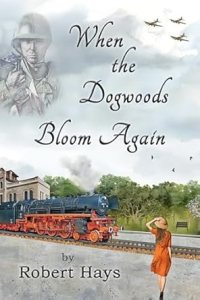
‘When the Dogwoods Bloom Again’ by Robert Hays from Thomas-Jacob Publishing

“When young Gil Bennett is drafted into military service in mid-World War II, he knows his life will be different. But one thing that won’t change is his love for Annie, who accepts his marriage proposal and vows to be waiting when he comes home. While Gil endures the horrors and suffers the wounds of war in Europe, Annie must bear the challenges faced by a lonely young woman yearning for companionship. If they are to be together again, can things be as they were before?”

Available in paperback and Kindle.

–Malcolm

‘This Plade The Gods Touched Earth’, Montana Arts Council

The beauty of this place we now call Montana inspires such awe that words frequently fail us. And that’s when we call for the poets. The book in your hands is a campfire of sorts, around which eleven poets laureate have gathered. Their legacy joins thousands of years of voices speaking across this landscape.

Twenty years is a blip in the reckoning of this place, but in that time Montana’s poets laureate have chronicled the scale and shape of its grandeur and its grace, and the hardships and hopes of the people who call it home. This collection is a glimpse into their work and the importance of the spoken word to this best of places.

Published by the Montana Arts Council in collaboration with the Montana Historical Society, This Place the Gods Touched Earth collects work from Montana’s eleven poets laureate to date, celebrating their responses in words to the people and places of the Big Sky, and commemorating their two decades of service to Montana’s literary landscape so far.

This Place the Gods Touched Earth is the first poetry anthology to come out of the Montana Historical Society Press. But it’s much more than that—speaking as the historian that I am, this anthology is the bottled zeitgeist of Montana over the past two decades of the Poet Laureate program,” says Jeff Bartos, editor, Montana Historical Society Press. “It’s a primary source for the language arts in Montana in the twenty-first century, compiling—by discretion of the individual poets—their most meaningful writings and profound observations into one volume.’

The anthology is a collection of Montana’s Poets Laureate, 2005 – 2025.

–Malcolm

This and That for March 21st

  • This Spring, Mother Nature presented us with a blustery day and a freeze warning.
  • That pod of dolphins visiting the SpaceX capsule splashdown site made a lot of people happy. I guess we needed something fun and innocent.
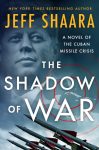
  • Jeff Shaara’s latest novel “The Shadow of War” is transporting me back to the days of the 1960s Cuban missile crisis when Floridians thought they were about to have a front-row seat to nuclear war.
  • We learned today about a young New Zealander who broke the four-minute mile. Reminds me of the 1950s when I ran up and down our street trying to break the five-minute mile.
  • The current Campbell’s ad for cheddar cheese soup has brought back the old “mmm mmm good” slogan. That also takes me back to the 1950s when pranksters called our phone number, sang “mmm mmm good” and hung up. That joke got old fast.
  • I’m not going to claim that our recent septic tank problems have been fixed because that would jinx the plumbing.

–Malcolm

Satire Used to be Easy To Write

Satire is a genre of the visual, literary, and performing arts, usually in the form of fiction and less frequently non-fiction, in which vices, follies, abuses, and shortcomings are held up to ridicule, often with the intent of exposing or shaming the perceived flaws of individuals, corporations, government, or society itself into improvement.[1] Although satire is usually meant to be humorous, its greater purpose is often constructive social criticism, using wit to draw attention to both particular and wider issues in society. – Wikipedia

Used to be all it took to write satire was a good imagination and a love of dark humor. Now, those days are gone with the wind–and grieved, as Thomas Wolfe might say. I loved finding absurd government actions and making up stories that were much worse and more humorous.

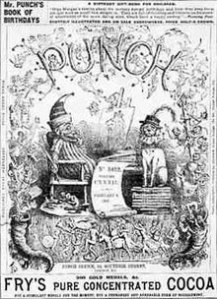
I was trained by the writers of Mad Magazine and Punch.

Now, the government has become much worse, and making it worse in a satirical news story is already too close to the truth to make people laugh. (Not counting crazy people who, actually, are running the county.)

In the old days, I might write a headline like this:

Pacifists kill people to draw attention to horror of killing people.

Now protests often come with violence, and it’s hard to make a joke of it.

Or:

Feds pave road to hell with mob concrete.

Now hell is right here on our doorsteps, compliments of both sides of the aisle. (As a Libertarian, I can poke fun at everyone.)

Today, I might write:

Foreign aid now headed for blue states.

And yet, with the calamity that’s befallen USAID, I can’t make myself write that kind of satirical story because–as it turns out–“Mad Magazine” has become the Feds’ policy manual. Think of the money that’s being saved by reading the magazine rather than drafting policies from scratch. Yeah, that’ll work until DOGE kills off the magazine.
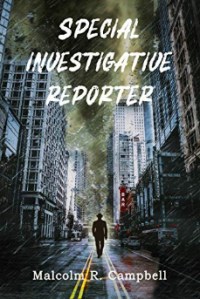
I’d rather write a story with this headline:

DOGE Pulls Plug on Itself

Maybe my satirical story will become a prophecy. I can only hope.

–Malcolm

Relief of National Park Seasonal Hiring Overshadowed by Reckless Staff Cuts

National Parks and Conservation Association

News Release – February 2025

WASHINGTON – The National Parks Conservation Association (NPCA) and park advocates across the country are demanding the Trump administration put an end to devastating staffing cuts that will wreak havoc on the National Park System. The Department of the Interior will exempt 5,000 seasonal positions under the current hiring freeze, while simultaneously terminating 1,000 National Park Service employees, just as visitors are planning their spring break and summer vacations to national parks.

Unfortunately, today’s cuts will leave parks understaffed, facing tough decisions about operating hours, public safety and resource protection.

Statement by Theresa Pierno, President and CEO for the National Parks Conservation Association (NPCA):

“Allowing parks to hire seasonal staff is essential, but staffing cuts of this magnitude will have devastating consequences for parks and communities. We are concerned about smaller parks closing visitor center doors and larger parks losing key staff including wastewater treatment operators.

“Exempting National Park Service seasonal staff from the federal hiring freeze means parks can fill some visitor services positions. But with peak season just weeks away, the decision to slash 1,000 permanent, full-time jobs from national parks is reckless and could have serious public safety and health consequences.“

“Years of budget cuts are already weakening the agency’s ability to protect and preserve these incredible places.

“National parks fuel local economies across the country, generating billions of dollars for area businesses and supporting hundreds of thousands of jobs. Slashing staff could have a ripple effect on gateway businesses and communities that depend on parks for survival.

“Park staff work tirelessly to protect our nation’s most treasured places, from Yosemite to Gettysburg. They educate visitors, safeguard history and preserve what makes our country special. This isn’t how we treat the places we cherish or those who protect them. We’re calling on our leaders to prioritize our parks and the staff who keep them safe and running.”

Unfortunately, today’s cuts will leave parks understaffed, facing tough decisions about operating hours, public safety and resource protection.

Malcolm


On getting older

When I was young,  nobody told me what getting older was like.

My grandparents had the usual complaints. Lumbago. Failing eyesight. Being ignored. Awake all night.

Some said our elders were all-wise and all-knowing.

I never thought I would feel l wise like Dumbledore or that, instead, age brings as many regrets as it does. But I look back and see what I shouldn’t have done or could have done–and that I should have learned to forgive.

FDR was President when I was born. Did you suspect that? Most people don’t because they’ve forgotten FDR and history in general. At the time, I didn’t know he was President or that Truman dropped the bombs. I never forgave Truman. My first knowledge of world events came during the Korean War. I never forgave anybody for that mess–or Vietnam, either.

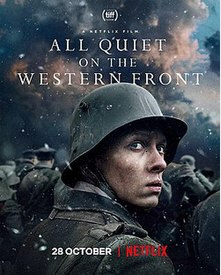
Looking back takes time because it’s a long trip. I do remember reading All Quiet on the Western Front and knowing–even as I read it–I would carry the scars of that story forever. That book is one reason I became a pacifist. I’m not sure about everything I think I see while looking back because I’ve used so many of my personal stories in my fiction. So I wonder, did that really happen or did I make it up. Most of the people who could answer that question are gone or, perhaps, fictional. In my youth, the KKK was real and my first real fear. They were everywhere. They burnt a cross on my minister’s lawn. All that was too evil to make up so it made its way into my books. I changed the names of the people I knew who were members of the very visible invisible empire. The same goes for the real people in my Navy experience.

My writing output has slowed down with age. I didn’t see that coming. In some ways, I’m just too tired to slog through the real and imagined memories anymore. I think that happens to a lot of people who were born when FDR was President. Hmm, I might be making that up.

–Malcolm

You can’t go home again

“You can’t go back home to your family, back home to your childhood … back home to a young man’s dreams of glory and of fame … back home to places in the country, back home to the old forms and systems of things which once seemed everlasting, but which are changing all the time – back home to the escapes of Time and Memory.”- Thomas Wolfe

Fans of the Hallmark series “The Way Home” see time-traveling characters talking about whether they can change the past and whether going there is an addiction that keeps them from living in the present. I like the series and the fact that it suggests to some of us that we can’t go home again and need to stop trying to do so.

Our family lived in this Tallahassee, Florida house from the 1950s through the 1980s. The first thing I notice when I Google the address is the ugly driveway that takes up a fair amount of the front yard. From pictures posted by a subsequent owner, I notice that the kitchen and dining room have been combined in an attempt to make the home modern; one of the kitchen windows has been covered over.

A look at neighborhood maps confirms what I worried about when I was young: the wonderful woods behind the house have been turned into an upscale neighborhood. The homes look expensive and less desirable than the woods where we played.

All of our former neighbors have moved away. My 1954 Chevy no longer sits in front of the garage door. In fact, the room is no longer a garage, but an office. The memories remain even though the changes to the house obscure the past to those of us who once lived there. I resent the changes to the house because they don’t fit a late 1940s home.

Now you see why I can’t go home again: home is no longer there. Even the huge azalea and camelia bushes have been torn out.

Malcolm

When I was a kid, people often asked what I’d wish for if a genie said he’d grant three wishes

If wishes were horses, beggars would ride.

Even as children, we knew being and/or appearing greedy was unseemly. This meant that the first of those three wishes had to be:

I wish for world peace.

Next, we’d add something everyone else in the neighborhood had gotten for Christmas or a birthday. Like:

I wish for a new Schwinn Sting-Ray bike in flamboyant lime

Since the powers that be said it was illegal to use the third wish to ask for three more wishes, a lot of us tacked on something to help the family:

I wish Grandpa would get off the sauce.

Those of us who read fantasy fiction were careful about the kind of genie we’d ask to meet our wants and needs. Otherwise, even the most carefully worded wish would contain a hideous catch. Hence the pastime of making up and spreading genie jokes.

Here are several from James Martin’s page:

  • During a first date a man and a woman were telling each other about their pasts. The man said “A genie once gave me the option of becoming more attractive to women, or having an exceptional memory.” “Which one did you choose?” the woman asked. He replied, “I don’t remember.”
  • A representative said, “I wish I was on an island surrounded by beautiful women.” Poof. He was on an island with gorgeous women fawning all over him. “This is the life,” the congressman sighed. “I wish I would never have to work again.” And poof, he was back in his government office.
  • A man was walking down the beach and picked up a very old bottle. As he rubbed it to remove the sand a genie popped out and said, “You can have one wish.” The man thought for a minute and said, “Make it so all women will love me.” Poof, in an instant the man was changed into a bar of chocolate.

And those are the sanitized examples.

We usually heard the beggars would ride quote when parents, ministers, stand-up comics, and other authority figures hear us wishing for things they thought we should work for: (e.g., I wish I had good grades). Work for it? How lame is that?

Long before “The Secret” was published, I read a bunch of magic books that said I could manifest stuff with my thoughts. There there are two catches. (1) You have to truly believe the mainfestation will happen. (2) If you manifested  $10000000 into your bank account or a new Rolls Royce into your garage, you’d have to explain to the IRS where you got it.

Working for it is easier than wishing for it, or so it seems.

–Malcolm