Review: ‘The Divine Comics’ by Philip Lee Williams

“In a great comedy, we are always made aware of the darkness in life, but the ending must be happy or it’s not a comedy. A man’s journey to wholeness is therefore most rightly named ‘The Comedy,’ for the end is the final awareness of that love which is the joy of the universe.” – Helen M. Luke in “Dark Wood to White Rose: Journey and Transformation in Dante’s ‘Divine Comedy’”
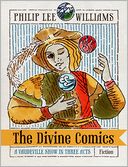
Philip Lee Williams’ magnificent “The Divine Comics: a Vaudeville Show in Three Acts” begins and ends with Whitman Bentley, a young man with gangly legs who’s been dreaming again, perhaps to escape the fact that among the eccentrics at The School of Music, he “may be the weakest, torn with every phobia in the catalogue.”

Since the novel’s back-cover informs readers that Williams’ novel reimagines and updates Dante’s “The Divine Comedy,” we know going in that Whitman Bentley will, to put it crudely, go to hell and back, after—as Dante might put it—the eccentric second-string symphony conductor awakes to find himself in a dark wood where the right road is wholly lost and gone.

En route to the ending of “The Divine Comics,” (which is pure poetry and white rose wonderment) the reader—as well as Williams’ huge cast of dysfunctional characters—may sense that that there is no right road and that the trickster gods (known as the Divine Comics, aka “The Lords of the Inner Kingdom”) are plagued with every manner of dark joke in the catalogue. Ah, but the chapters in “The Divine Comics” are called skits for a reason.

The novel’s three sections, “Fire,” “Earth” and “Air,” match Dante’s “Inferno,” “Purgatorio,” and “Paradiso.” “Fire” focuses on a school of music, “Earth” on the followers of a lady who takes her friends on a cruise to France where they will be well paid to treat her as their queen, and “Air” on a mixed group of artists, politicians and scientists who have been assembled as honored fellows at a rich man’s Rocky Mountain retreat.

Each troop of trekkers has its own farcical road of trials, puns, groaners, riffs, improvisations on every imaginable subject under heaven, and assorted terrors to follow, complete with a guide, until all the skits merge into one with the novel’s almost-overpowering crescendo of an ending. Like “The Divine Comedy,” Williams’ “The Divine Comics” has four levels of meaning: literal, allegorical, moral and mystical. While the novel has great depth and a near-infinite number of overt and covert references to music, popular culture, history and religion, it is a very readable and entertaining story.

At this point in the review, Dante purists may be wondering if any of the groups in the story is guided by Virgil. No, but there’s a good reason for that. Former used car salesman Al Carswell, who hosts Whitman Bentley’s group in the vestibule of hell, says that “the Big V” isn’t around much. “Last people he brought through was a bunch of Jaycees who died of ptomaine in Butte, Montana. After that, he turned sort of sour on things, don’t you know?”

Williams has done one hell of a job updating hell, purgatory and paradise for today’s savvy seekers of a great story and/or the white rose. Observers—such as the readers of this novel—left standing  in the dark wood for eternity will sooner or later shout, as James Joyce might put it, “Here Comes Everybody,” for Dante’s epic poem and Williams’ update some 690 years later are both masterpieces describing the human condition. This is not to say everybody must use “The Divine Comics” as a personal heaven and hell travel guide. After all, how will we know at any moment whether we’re in or out of Whitman Bentley’s dream? As Williams says many times in the novel as an author commenting on the story he’s telling, “It’s a question well worth our attention.”

“The Divine Comics” is, indeed a comedy. But rest assured that before you reach that happy ending, The Lords of the Inner Kingdom, will capture your attention and then leave you breathlessly rolling in the aisles at a Vaudeville show filled with enough black humor to last a lifetime, and then some.

Malcolm

Malcolm R. Campbell is the author of four novels, including the satire “Jock Stewart and the Missing Sea of Fire”
Review: ‘Should I Not Return’ by Jeffrey T. Babcock

“Denali, that Great Grail Castle in the Clouds continues to thrill and kill with each passing year. As of the fall of 2011, 133 climbers have perished on Denali, ever since Allen Carpe and Theodore Koven became the first to die on its icy slopes in 1932.” – Jeffrey T. Babcock in the dedication to “Should I Not Return”

When Jeffrey T. Babcock and his older brother Bill set out to climb the highest mountain in North America, Alaska’s 20,320-foot Denali (Mt. McKinley) in 1967, they knew before they reached “The Great One” that they would be tested in a dangerous world of rock, ice, snow and wind where every climber is at risk and may not return. They did stand on top of the continent on a cold and windy day that July, but en route to the summit, their Mountaineering Club of Alaska (MCA) team stared into the eyes of tragedy from an unexpected combination of events.

The MCA team was several days behind the twelve-person Wilcox-Snyder Expedition. A class-6 storm suddenly raged over Denali, separating the members into those who were able to retreat and those who were stranded high up on the mountain in the bitter cold blizzard conditions. Injured and greatly worried about the other members of their group, the descending Wilcox-Snyder team members met the advancing MCA team, made radio contact with the National Park Service to report their status, and then made their way off Denali. Due to its position on the mountain, the MCA team became the primary rescue group. Jeffrey and Bill Babcock found two of the dead; the others were never found.

The death of seven members of the Wilcox-Snyder group in one day has been called North America’s worst mountaineering tragedy. It has also generated a fair amount of controversy as the actions of leaders Joe Wilcox and Howard Snyder and the National Park Service have been scrutinized under multiple microscopes leading to multiple accusations of blame. Jeffrey T. Babcock, who went on to lead other climbing expeditions including another successful summiting of Denali, has spent a lifetime pondering whether or not the MCA team could have accomplished the impossible and saved any of the Wilcox-Snyder climbers. Now, most experts think not.  But nobody knew this during the summer of 1967.

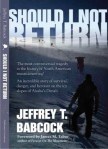
Babcock has, to the extent it’s possible, come to terms with Denali in 1967 via his “non-fiction novel” Should I Not Return. While the novelization combines real life events from two climbs into protagonist Henry Locke’s coming-of-age climb of Denali on a team led by his brother Johnny, the book’s account of the tragedy and the rescue attempt is based on facts. The result is a compelling and accessible adventure story for a general audience as well as a riveting true-to-life account of a widely known mountaineering event for climbers familiar with techniques, routes and high-altitude weather conditions.

West Buttress of Denali – NPS Photo

Should I Not Return is richly illustrated with photographs from the MCA and other teams as well as sidebars containing historical information about earlier Denali ascents and the climbers involved. While the sidebars are nice time capsules for climbers and others interested in Alaska and its mountains, they can be skipped by those who prefer to stick with Henry and Johnny’s trial by wind and ice.

The emotional and practical need for young Henry—whom some of the other characters view as “Johnny’s baby brother”—to prove himself adds impact to the story. While Johnny and the other MCA team members know each other well, Henry is viewed as a neophyte easterner who will more than likely them back or put them at risk. The terror of the story is amplified because readers see events unfold through the eyes of the youngest team member rather than a veteran climber.

In addition to their geographical and historical value, the photographs serve the same purpose as the illustrations in adventure novels of an earlier era. For example, when Johnny falls through a snow bridge into a crevasse, an accompanying photograph of a Lower Ice Fall snow bridge on Muldrow Glacier demonstrates for non-climbing readers how precarious Johnny’s situation was. The inhospitable conditions Henry and the others face on that glacier is illustrated by a bleak photograph  (by the author) showing just how tiny a man is when he stands next to the sheer walls of Pioneer Ridge. While Babcock’s prose is strong enough to stand on its own, the pictures add greatly to the reading experience.

If Should I Not Return were the product of Jeffrey T. Babcock’s imagination, I would recommend it to everyone who loves compelling adventure stories. For mountaineers, the book adds immeasurably to the historical record of Denali from a very capable writer who was first on the scene of a controversial climbing tragedy.

Malcolm R. Campbell

Malcolm R.  Campbell is the author of four novels, including the 2011 contemporary fantasy adventure “Sarabande”

Upcoming Reviews: Williams, Babcock, Saxena, Slattery, Flieger and Nichols

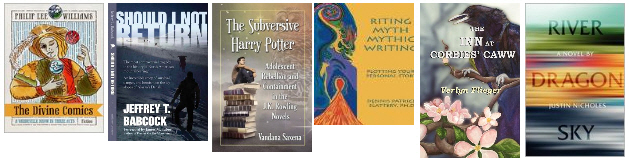
I have a great list of books here on my desk to review, starting with The Divine Comics by Philip Lee Williams. Mr. Williams is somewhat responsible for the fact my reviews are running late, for his novel is a thousand pages long and, in spite of the fact it’s very readable, it’s taken me a while to finish. You’ll see a review of it next week after a break for a long holiday weekend.

JeffreyT. Babcock’s book based on the true story of a 1967 mountain climbing tragedy on Mt. McKinley will follow closely. I mentioned Should I Not Return in this morning’s post on Magic Moments, The Range of Light.

The Subversive Harry Potter: Adolescent Rebellion and Containment in the J.K. Rowling Novels by Vandana Saxena takes a look at teens, rebellion and the kinds of books that tend to support the rite of passage between childhood and adulthood as viewed through the lens of J. K. Rowling.

A fan of fantasy and folktales, I’m looking forward to reading Verlyn Flieger’s The Inn at Corbies’ Caww. A long-time Tolkien scholar, Flieger knows the territory and proves it with fine writing and a wonderful story. (I know this because I peeked into the book when it arrived.)

After mentioning Riting Myth, Mythic Writing: Plotting Your Personal Story by Dennis Patrick Slattery here on this blog on May 22, I decided that there was much more to be said. So, you’ll be seeing a review in the near future.

River Dragon Sky, Justin Nichols’ novel about a Taoist “street seer” in China has a noir feeling about it along with a lot of secrets. Nichols is also the author of Ash Dogs.

You May Also LikeMain Street Stories, by Phyllis LaPlante, reviewed by Smoky Zeidel on Smoky Talks Books. The author of The Cabin and On the Choptank Shores, Zeidel’s new novel The Storyteller’s Bracelet is coming out in June.

Malcolm

Briefly Noted: ‘Buffy and the Heroine’s Journey’ by Valerie Estelle Frankel

In February 20121, McFarland released a new book for authors and readers interested in the heroine’s journey in fiction and myth and for fans of the Buffy the Vampire Slayer movie (1992) and the subsequent television series (1997 – 2003).  A well-researched book, Buffy and the Heroine’s Journey is a natural extension of Valerie Frankel’s work in From Girl to Goddess: The Heroine’s Journey through Myth (McFarland, 2010).

On her website, Frankel writes that “Though scholars often place heroine tales on Campbell’s hero’s journey point by point, the girl has always had a notably different journey than the boy. She quests to rescue her loved ones, not destroy the tyrant as Harry Potter or Luke Skywalker does. The heroine’s friends augment her natural feminine insight with masculine rationality and order, while her lover is a shapeshifting monster of the magical world—a frog prince or beast-husband (or two-faced vampire!). The epic heroine wields a magic charm or prophetic mirror, not a sword. And she destroys murderers and their undead servants as the champion of life. As she struggles against the Patriarchy—the distant or unloving father—she grows into someone who creates her own destiny.”

A new era in film and fiction for three-dimensional female action characters?

Frankel’s new book appears at a time when readers, authors and reviewers are discussing whether or not Lisbeth Salander (in Stieg Larsson’s Millennium series) and Katniss (in Suzanne Collins’ The Hunger Games series) represent a positive trend in the development of female protagonists that are more than male-gaze eye candy. That is, can authors and film makers step away from the patriarchal idea that women—whether they kick ass or not—are little more than sex objects?

Unfortunately, Frankel—along with author Maureen Murdock (The Heroine’s Journey)—appear to represent a minority view. Most film makers are still trotting out female characters in mini-skirts and bikinis fighting alongside male counterparts who are dressed in normal uniforms or SWAT team gear, while many authors and screenwriters are arguing that the heroine’s journey is no more than a female character following Joseph Campbell’s hero’s journey sequence.

As the author of a contemporary fantasy novel featuring the hero’s journey (The Sun Singer) and another that features the heroine’s journey (Sarabande), I find it refreshing to find another author/researcher who sees a difference between solar and lunar journeys. While I think my heroine’s journey story would make a great film, I don’t want Hollywood to turn my title character into a male-gaze Lara Croft-style protagonist transported to the mountains and plains of Montana in a tight and/or skimpy outfit.

Publisher’s Description: The worlds of Percy Jackson, Harry Potter, and other modern epics feature the Chosen One–an adolescent boy who defeats the Dark Lord and battles the sorrows of the world. Television’s Buffy the Vampire Slayer represents a different kind of epic–the heroine’s journey, not the hero’s. This provocative study explores how Buffy blends 1990s girl power and the path of the warrior woman with the oldest of mythic traditions. It chronicles her descent into death and subsequent return like the great goddesses of antiquity. As she sacrifices her life for the helpless, Buffy experiences the classic heroine’s quest, ascending to protector and queen in this timeless metaphor for growing into adulthood.

The paperback edition, for reasons that are not readily apparent, is priced considerably higher ($35.00) than other paperbacks of a similar length (226 pages ). However, at $9.99, the Kindle edition is more in line with today’s prices.

I bought the Kindle edition even though I didn’t see the Buffy the Vampire Slayer television series or feature film. I liked From Girl to Goddess: The Heroine’s Journey through Myth and am finding Buffy and the Heroine’s Journey to be another very readable and credible look at the heroine’s journey.

Malcolm

contemporary fantasy on Kindle at $4.99

Review: ‘Cathead Crazy’ by Rhett Devane

“All she wanted in this life was a small slice of peace. Maybe add in some attention from her husband. Respect from her kids. A clean house. But she’d settle for peace.” – Rhett DeVane in “Cathead Crazy.”

Hannah Olsen wears multiple hats, and their combined weight is well-known to any woman who has done a portion of her life as a member of the sandwich generation stuck like thin cheese between an aging parent and demanding children. She has a full-time job, a household with a husband and kids to look after, and an ever-changeable mother called Ma-Mae at a nearby nursing home who needs and expects her dutiful daughter to be present around the clock.

In “Cathead Crazy,” Rhett DeVane tells Hannah’s story with grace, sweet-and-sour reality, humor during hard times, and a heaping helping of the down-home Florida Panhandle lifestyle. Immensely readable, this novel is about a family caught in the crosshairs of the difficult choices everyone with aging parents will ultimately face. Even so, there are still good days, laughter and memories that will serve well for a lifetime.

Rhett DeVane knows the territory, and she has made of it a moving story with realistic, multidimensional characters with universal cares and needs who try their best to navigate life without going “cathead crazy.”

The eight recipes, including “Ma-Mae’s Buttermilk Cathead Biscuits,” are a mouthwatering extra treat. Would you like sweet tea with your lunch, hon?

Malcolm

Author of four novels, Malcolm R. Campbell grew up in the Florida Panhandle where this novel is set, and thoroughly enjoyed seeing it again through Rhett DeVane’s wide-angle lens even though he never learned to like sugar in his iced tea. His novel, “Garden of Heaven: an Odyssey” is partially set in Tallahassee, Carrabelle, Tate’s Hell and other areas very close to Hannah Olsen’s neck of the piney woods.

Review: ‘The Comrades’ by Lynne Sears Williams

Lynne Sears Williams’ beautifully told historical romance “The Comrades,” carries readers back into Medieval Wales when the post-Roman Kingdoms of Powys and Gwynedd were at odds with each other while contending with ongoing threats from the English and the Norse.

In Williams’ 9th century tale, Evan, King of Powys, responds to a nasty cross-border raid from Gwynedd by ordering his commanders to kidnap Gwynedd’s princess Morleyna to use as leverage in negotiations with the neighboring kingdom. Carefully planned and boldly implemented, the successful abduction brings consequences the king and his warbrothers aren’t prepared for: a shrewd, highly intelligent “guest” at the castle who is also blessed with The Sight.

“The Comrades” is a stirring romance, graced with memorable characters, historically accurate place settings and customs, a first-rate writing style, and a rousing good plot. The interplay between Evan and his men, his aunt, his concubine and the princess is believable and flows easily between humor, statecraft and crisis. The story unfolds as the kingdom waits for a response from Morleyna’s brothers. Will they bring an army, a ransom or both?

Williams’ decision to tell the story from multiple points of view was a wise one. Readers see castle life and the world of Powys from the from the perspectives of Evan, Morlenya and other principal characters. While that world is long ago and far away, it shines clearly and brightly in “The Comrades.”

The story is supported by a helpful map and glossary.

–Malcolm

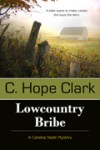
Review: ‘Lowcountry Bribe’ by C. Hope Clark

Authors often ask “What if” when they have an idea for a plot. When C. Hope Clark first thought about a civil servant at the Department of Agriculture reporting an attempted bribe by a farmer, she must have asked “what’s the worst that can possibly happen?”

Carolina Slade (and you don’t call her “Carolina” unless you’re her mother) is a USDA official who plays by the rules. While others might have overlooked hog farmer Jesse Rawlings’ offer of a bribe in hopes he would never bring up the matter again, Slade tells her superiors. After that, the dust never settles.

C. Hope Clark’s protagonist in the dazzling debut mystery/thriller “Lowcountry Bribe,” is a Charleston County manager who coordinates federal loans and their repayment by farmers. When she leaves her desk, it’s to inspect a farm, not to carry a gun and catch bad guys. Yet, as a Cooperating Individual (CI) she has no choice but to help agents Wayne Largo and Eddie Childress prove Rawlings tried to bribe her.

The case is getting a lot of attention from Atlanta. Slade wonders why. Perhaps there’s more to the bribe than she knows, a greater level of fraud that might implicate her former boss who disappeared last year or a co-worker who shot himself in the office last week. Slade can’t even be sure Largo and Childress aren’t investigating her. A supposedly easy “Get Jesse to repeat what he said Friday” turns into a dangerous crash course in crisis management where the stakes are much higher than missed loan payment or a reprimand from the boss.

Some publishers would have categorized “Lowcountry Bribe” as a mystery/thriller/romance because the novel includes romantic elements as well as Slade’s feelings of approach/avoid, trust/distrust insofar as agent Largo and his motives are concerned. Regardless of the book’s official genre(s), the danger and intrigue Slade is drawn into are industrial strength, requiring a CI who is tough enough to view blood on an office wall as “O-positive primer,” savvy enough to think a like federal agent and experienced enough to apply humor and sarcasm to methods and practices that don’t measure up to her high standards.

Clark knows the territory. She lives in South Carolina, has a degree in agriculture, has worked with the USDA for 25 years, and is married to a former federal agent. This information appears on the novel’s back cover. By the time readers finish the novel and find out the worst that can possibly happen, they will have discovered that Clark also knows the territory of deftly plotted fiction, realistic dialogue and place settings, and how to tell a story that burns like a stiff drink with a touch of sugar.

Clark is now writing the next novel in the Carolina Slade Mystery Series. For readers who like great storytelling, that’s the best that can possibly happen.

Malcolm R. Campbell is the author of contemporary fantasy, magical realism, and paranormal stories and novels, including “Conjure Woman’s Cat” and “Eulalie and Washerwoman.”

Review: ‘An Uncertain Age’ by Ulrica Hume

At the beginning of Ulrica Hume’s metaphysical and spiritual novel An Uncertain Age, Justine meets Miles Peabody on the Eurostar en route from London to Paris. While they appear to meet by chance, it’s more likely destiny is involved. An aspiring artist, Justine is looking for certainty and stability after losing her job and her fiancé. A retired librarian, Miles is focused on twilight of life issues. They are drawn together despite their differences of age and lifestyle and end up site seeing together while Miles considers making the traditional Santiago de Compostela pilgrimage. He wants Justine to accompany him; before she can decide what to do, Miles disappears on a routine errand in Chartres.

Miles is fascinated to the point of obsession with the tragic love story of the 12th century French philosopher Peter Abelard and his student Héloïse d’Argenteuil. In fact, it’s nearly impossible for Justine to converse with him about anything without hearing what Abelard and Héloïse thought or did under similar circumstances. Abelard founded a monastery called the Oratory of the Paraclete. Some years after the powers that be forced Abelard and Héloïse into separate lives (both in religious orders) after their illicit affair was discovered, she ended up at the Paraclete as its abbess. In their honor, Miles’ house in London is named The Paraclete.

The relationship between Justine and Miles takes on some of the overtones of Abelard and Héloïse’s relationship. Inasmuch as destiny seldom presents its happenings with a definitive guidebook, it’s impossible to say whether Miles and Justine are drawn together and then separated from each other because Miles wants to mimic Abelard’s life as part of his own search for meaning or because their spiritual quests cannot move forward on the same path.

While much of Abelard’s work was considered heresy by the church, he did convince the Pope to accept his doctrine of limbo. The irony here is that Miles’ Abelard-like disappearance casts Justine into an ongoing temporal limbo. First, the nature and direction of their relationship could not be pinned down to Justine’s satisfaction. When Miles disappears, the French police won’t allow Justine to leave town until they are satisfied she is innocent of potential crimes that might explain his absence. When Miles isn’t found and she is free to leave Chartres, Justine is uncertain what to do next because other than working on her art, her specific plans aren’t well defined.

Wherever Justine is, she knows she will be waiting for Miles to return, perhaps as Héloïse longed for Abelard. Drawn to spiritual ideas, she seeks out a safe haven where she can ponder religious writings, work on her art and share her days with others of like mind. Those she ultimately meets on are missing something and are on their own quests based on the tenets of their diverse faiths.

The strengths of An Uncertain Age include the many layers of meaning flowing through the steps Justine, Miles and the other rather eccentric characters take while seamlessly sharing prospective routes to fulfillment that are traditionally at odds with each other. Hume’s novel is well plotted, well crafted and well researched. Some readers may be turned away at Hume’s characters’ heavy reliance on quoting and pondering scholars and religious leaders. To some extent, the philosophy delays the story.

At the same time, the philosophy drives the story. An Uncertain Age has the depth and power to inspire readers to ponder their own choices while waiting for the moment when each of Hume’s characters moves forward in faith or certainty instead of doing what Abelard and Héloïse would do. Hume’s prose makes this journey a rewarding trip.

Malcolm R. Campbell is the author of four novels, including the contemporary fantasy “Sarabande.”

contemporary fantasy for your Nook

Review: ’99 Girdles on the Wall,’ by Elena Louise Richmond

For her estate sale, I nailed my mother’s twenty seven girdles to the wall of her bedroom. Girdles, instruments of torture that impede the breath, and imprison joy were emblematic of her repressive influence. Even when she lay dying, she had the energy to tell me to put my knees together.

In Elena Louise Richmond’s candid and well-written memoir, 99 Girdles on the Wall, her mother’s girdles symbolized everything that was constraining in a childhood governed by an alcoholic father, an emotionally disturbed mother, and an infinite number of Christian fundamentalist imperatives. Early in life, Richmond found refuge in her music, but it would take her 35 years to escape from the prison of clinical depression.

Readers who have coped with the slings and arrows of an outrageous childhood will appreciate the dark humor and sharp edge of Richmond’s prose:

My mother’s prayers always ended with “Guide and direct us in all they ways.” She also went in for a lot of sighing. She wanted God to know what a heavy burden she was carrying down here and but for her recalcitrant family, she could do better.

The book is also a positive journey of hope, for Richmond—who was a prime candidate for simply giving up—found ways to hang on to and develop a career in music while learning how to fall in love with her own life.

I loved teaching. I had an intuitive way of working with the children who came for lessons. I had never forgotten what it felt like to be a child: the wonder and curiosity; also the confusion, the fear of adults, and the feelings of powerlessness.

Her journey included a strong reliance on music teachers, therapists, Christian groups and her “pilot light,” as she called her inviolate spirit, until she was strong enough to make her own rules for living outside the confines of a constricting childhood.

Those who do not suffer from clinical depression often equate it with the garden variety depression of having a bad day. Richmond’s memoir is a powerful antidote to that myth, a road map for others wearing their own figurative girdles, and a story of triumph in a world where one feels out of place.

Malcolm

Malcolm R. Campbell is the author of four novels, including the contemporary fantasy “Sarabande.”

Review: ‘Identity: Lost’ a legal thriller by Pascal Marco

When I review a book, I check the publisher’s description online and on the back cover to make sure I don’t inadvertently divulge plot twists and other surprises that readers won’t know when they start reading. I was a bit surprised to find a blurb on Pascal Marco’s Identity: Lost from an author claiming that this “electrifying debut puts him firmly in the hunt to succeed John Grisham.”  Really?

By the time I finished reading this intricate and heartbreaking legal thriller, I decided that blurb might be right.

After twelve-year-old James Overstreet witnesses a 1975 murder in a lakefront Chicago park in a dangerous neighborhood, his life changes dramatically because police and prosecutors botch the trial. James identifies the black gang members who killed the 85-year-old white man in Burnham Park. But once the judge says, “I have no choice but to find the defendants not guilty of murder,” James and his family know their lives are at risk if they ever go home again.

Readers know going into this book that thirty years later James Overstreet will no longer be James Overstreet, but a man named Stan Kobe who has gone to law school, learned his craft well, and become a successful prosecutor in Maricopa County,  Arizona. Savvy readers will guess that even though James has been reincarnated as Stan 1,400 miles away from the scene of the crime, one way or another, “Ice Pick” and the Oakwood Rangers will cross his path again.

Crime shows on TV often imply that once a person goes into the Witness Protection Program, life is safe and good. Pascal Marco does a wonderful job of counteracting that myth. When James becomes Stan, nobody can know. All ties to his past, and his parents’ past are cut. Even if Stan is good at pretending he didn’t come from Chicago and knows little or nothing about the town, there are a hundred ways a chance statement or a chance meeting will bring the Oakwood Rangers to his front door. While James/Stan might be a bit more paranoid about such things than most, his fears are not without cause.

Marco’s plot is complex, for any future encounters between the young man who was torn away from his favorite lakefront park and plunked down in the Southwest must be handled carefully. If not, the novel would appear to rest on a string of unlikely coincidences. While the novel slows down a little while James is going to law school and turning into Maricopa County’s “most ruthless prosecutor,” Identity: Lost moves forward at flank speed through a labyrinth of thrills and chills en route to a surprising and satisfying ending.

Electrifying is a reasonable superlative for this novel. Marco, a native Chicagoan and current Arizona resident, uses his streetwise knowledge of both locations to great advantage in bringing this story to life. The characters are richly and realistically created from James/Stan to Chicago detectives “Stick” and “Timbo” to Ice Pick and his Rangers to Manny Fleischman (the victim) who once played for James/Stan’s beloved White Sox. Identity: Lost is a well-told tale with a fine mix of courtroom, Chicagoland and baseball ambiance and many dangerous moments.

–Malcolm

Malcolm R. Campbell is the author of four novels, including the 2011 contemporary fantasy “Sarabande.”