 Quite likely, most readers know Alice Hoffman through her “Practical Magic” series as well as The Dove Keepers. There’s such a variety in her work, that one might wonder if there are multiple Alice Hoffmans out there crafting her thirty novels. If so, her latest book The Invisible Hour, released on August 15th, which may or may not come from yet “another” Hoffman is a tempting treat.
From the Publisher
“From the beloved New York Times bestselling author of The Marriage of Opposites and the Practical Magic series comes an enchanting novel about love, heartbreak, self-discovery, and the enduring magic of books.
“One brilliant June day when Mia Jacob can no longer see a way to survive, the power of words saves her. The Scarlet Letter was written almost two hundred years earlier, but it seems to tell the story of Mia’s mother, Ivy, and their life inside the Community—an oppressive cult in western Massachusetts where contact with the outside world is forbidden, and books are considered evil. But how could this be? How could Nathaniel Hawthorne have so perfectly captured the pain and loss that Mia carries inside her?
“Through a journey of heartbreak, love, and time, Mia must abandon the rules she was raised with at the Community. As she does, she realizes that reading can transport you to other worlds or bring them to you, and that readers and writers affect one another in mysterious ways. She learns that time is more fluid than she can imagine, and that love is stronger than any chains that bind you.
“As a girl Mia fell in love with a book. Now as a young woman she falls in love with a brilliant writer as she makes her way back in time. But what if Nathaniel Hawthorne never wrote The Scarlet Letter? And what if Mia Jacob never found it on the day she planned to die?
“Nathaniel Hawthorne wrote: “A single dream is more powerful than a thousand realities.”
“This is the story of one woman’s dream. For a little while it came true.”
Reviews
Kirkus says that it’s “Not one of Hoffman’s best, but it may spark a desire to reread Hawthorne.” The Washington Post writes, “Alice Hoffman’s ‘The Invisible Hour’ is the latest fervent tribute to the power of literature and libraries.” The New York Journal of Books says, “With a truly imaginative structure, Alice Hoffman delves into what has become her trademark theme of magic. The Invisible Hour asks a grand ‘What if?’ Not so much the question posed on the book’s jacket: What if Mia Jacob never found the library or The Scarlet Letter by Nathaniel Hawthorne? The larger question the novel contemplates is whether a young woman can escape so deeply into a book, and fall so deeply in love with its author that she time travels to 1837 to be with him? “
Even though the reviews are a bit mixed, Hoffman fans care what they think, not what the critics think. Having read most of her work, that’s my approach to The Invisible Hour.
–Malcolm
 On Christmas night, 1951, a bomb exploded in Mims, Florida, under the home of civil rights activist and educator Harry T. Moore.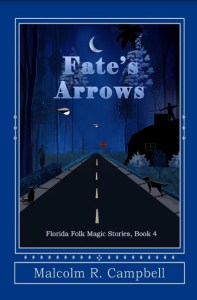



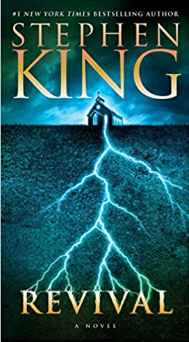 The new minister came to Harlow, Maine, when Jamie Morton was a boy doing battle with his toy army men on the front lawn. The young Reverend Charles Jacobs and his beautiful wife brought new life to the local church and captivated their congregation. But with Jamie, he shares a secret obsession—a draw so powerful, it would have profound consequences five decades after the shattering tragedy that turned the preacher against God, and long after his final, scathing sermon. Now Jamie, a nomadic rock guitarist hooked on heroin, meets Charles Jacobs again. And when their bond becomes a pact beyond even the Devil’s devising, Jamie discovers that the word
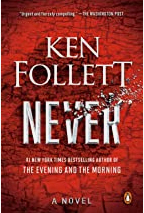 Today, I see a lot of novels in which the culprit is climate change, and that’s to be expected. Early on, I read Hiroshima (1946) by John Hersey, On the Beach (1957) by Nevil Shute, and countless nuclear war-related novels since. Those books probably influenced my belief that Truman was wrong when he dropped atomic bombs on Hiroshima and Nagasaki.
  I’m amazed by the ability of some authors to blend the history of difficult times with accurate detail and fully realized fictional characters and create a story that puts the reader into the mix. While I have yet to read Sepetys’ I must Betray You, I’ve read all of her other novels and believe she’s at the top of the authors’ pinacle with gripping historical fiction.
 Malcolm's Round Table