HOUSE PASSES FIRST FEDERAL BILL SHIELDING JOURNALISTS FROM REVEALING SOURCES

Under the so-called PRESS Act Journalists Won’t be Compelled to Reveal Confidential Sources

FOR IMMEDIATE RELEASE

(WASHINGTON)— PEN America applauds passage in the U.S. House of a bill that will protect a fundamental press freedom and would be the first of its kind at the federal level.

House bill, H.R.4250, known as the PRESS Act (for Protect Reporters from Excessive Suppression Act) is “integral to protect journalists in reporting freely without fear of retaliation or court-ordered disclosure of information,” said Laura Schroeder, Congressional Affairs lead at PEN America, which has advocated with partner organizations for the legislation for several years.

“We thank Congressman Kiley and Congressman Raskin for their work to shepherd this bill forward successfully in the House and we urge an expeditious passage in the Senate,” said Schroeder.

While many states already have such protections, there is no federal law. The bill passed this past Thursday in the House would create a federal shield for journalists so they will not be compelled to reveal their confidential sources at the behest of the government.

About PEN America

PEN America stands at the intersection of literature and human rights to protect open expression in the United States and worldwide. We champion the freedom to write, recognizing the power of the word to transform the world. Our mission is to unite writers and their allies to celebrate creative expression and defend the liberties that make it possible.

Committee to Protect Journalists recognizes distinguished media advocates

New York, June 29, 2023—The Committee to Protect Journalists will celebrate four extraordinary journalists from Georgia, India, Mexico, and Togo with its 2023 International Press Freedom Awards.

In the face of a stark decline in press freedom worldwide, this year’s awardees have continued to report the news amid government crackdowns, kidnapping, exile, and the rising criminalization of their work, championing the importance of independent reporting at this critical juncture.

“Attacks on the press are rising, yet journalists continue to step up and report on the vital issues that empower us all,” said CPJ President Jodie Ginsberg. “It is our honor to recognize this year’s awardees: formidable reporters working tirelessly to expose corruption, abuse, and wrongdoing despite considerable efforts to silence them.”

CPJ will also honor Alberto Ibargüen, president of the John S. and James L. Knight Foundation with the 2023 Gwen Ifill Press Freedom Award, an award presented annually by CPJ’s board of directors in recognition of an individual’s extraordinary and sustained commitment to press freedom.
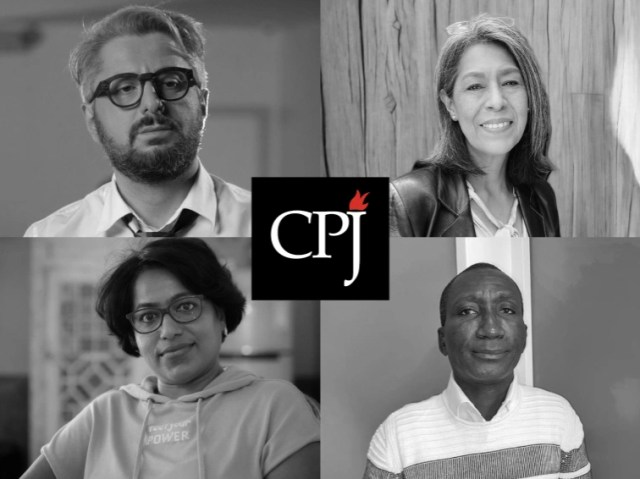
CPJ’s 2023 awardees are:

Ferdinand Ayité (Togo):

Ayité leads L’Alternative, one of Togo’s top investigative outlets, known for its fearless coverage of alleged corruption and protests against the rule of President Faure Gnassingbé. Facing persistent legal harassment and threats, Ayité and L’Alternative editor-in-chief Isidore Kouwonou fled Togo in March 2023, days before they were sentenced to three years in prison on charges of insulting authorities and false news. Ayité is a member of the Organized Crime and Corruption Reporting Project and collaborated on the Panama Papers investigation in 2016, focusing on tax avoidance schemes by Indian companies based in Togo. His phone number also appeared on the Pegasus Project’s list of journalists allegedly selected for potential spyware surveillance.

Shahina K.K. (India):

A senior editor for Outlook magazine, Shahina is a veteran Indian journalist, covering gender, human rights, and marginalized communities. She was one of the country’s first journalists to be charged under a draconian anti-terror law weaponized against journalists in the country for over a decade. Shahina has continued her reporting, despite awaiting trial for a case opened in 2010, when local government officials sought to criminalize her reporting on a questionable police investigation. As of June 2023, Shahina is on bail pending trial, where she faces a maximum of three years in prison and a fine if convicted. A Muslim by birth, Shahina has been subjected to extensive harassment by Indian right-wing groups seeking to silence her reporting on religious minorities and vulnerable caste groups.

Nika Gvaramia (Georgia):

Gvaramia is the founder and director of independent broadcaster, Mtavari Arkhi (Main Channel), founded in 2019. Gvaramia, who has worked in journalism since 2012, previously held government positions and served on the legal team representing opposition leader and former President Mikheil Saakashvili. As a TV presenter, Gvaramia was known for exposing alleged government corruption and abuses. He served more than a year of a 3.5-year sentence for alleged abuse of office—charges that were widely denounced as politically motivated—before receiving a presidential pardon in June 2023. Gvaramia is the only journalist in Georgia to receive a prison sentence in retaliation for their work since CPJ started keeping records of jailed journalists in 1992.

María Teresa Montaño (Mexico):

Montaño is a prominent investigative reporter and founder and editor of The Observer, an investigative outlet. Her journalism features investigations of corruption, transparency, gender violence, and accountability. Her reporting has led to threats, surveillance, and harassment from state and local authorities. In 2021, in retaliation for her reporting, she was abducted by three men who held her at gunpoint and stole her files on a corruption investigation involving state officials. The kidnappers, whose identities are still unknown, threatened to kill her if she reported the crime. After leaving Mexico for a short period following her abduction, Montaño has since resumed reporting in the country, despite the increasingly dangerous environment for journalists.

Now in its 33rd year, CPJ’s annual International Press Freedom Awards and benefit dinner honor courageous journalists from around the world. The event, to be held on November 16, 2023, in New York City, will be chaired by Meredith Kopit Levien, president and CEO of The New York Times Company.

For more information on attending or sponsoring CPJ’s International Press Freedom Awards, please call Buckley Hall Events at (+1) 914-579-1000 or CPJ’s Development Office at (+1) 212- 300-9021, or email CPJIPFA@buckleyhallevents.com.

Interview with special investigative reporter, Jock Stewart

Round Table: You’re known as a special investigative reporter. What are your areas of expertise?

Stewart: Politicians and hookers.

Round Table: Interesting combination.

Stewart: Most people can’t tell them apart. If you study history–and I doubt you do–you’ll find that government is indistinguishable from a whore house. Of course, CNN and FOX don’t see it that way.

Round Table:  How so?

Stewart

Stewart: CNN thinks Republicans are evil and FOX thinks Democrats are evil.

Round Table: I see.

Stewart: Only on a clear day. Otherwise, most folks are too preoccupied with their online image to look into the promises being made on both sides of the aisle.

Round Table: You’ve been around long enough to know better.

Stewart: You got that right. Basically, my premise when I start working on a news story is, “Don’t trust anybody.” That was especially true during the Nixon administration. The thing is, people think that when Nixon quit, everything was pure as the driven snow. So, they’ve gotten lazy and listen to or watch only one news source and think they’re all-knowing when they’re dumb as a post.

Round Table: Those people are easily led.

Stewart: That’s right as rain. Of course, they don’t know they’re being led. The irony is, they think people like them are the leaders when, in fact, they’re the lemmings at the front of the stampede to the cliff.

Round Table: So how do you get to the truth?

Stewart: I find it best to get in bed with the worst people on the planet–figuratively speaking. Once you’re in bed with them, they tell you everything.  That’s how an investigative reporter works. It’s not much different than the CIA’s approach to the truth and who’s telling it.

Round Table: I don’t trust the CIA.

Stewart: You’re not supposed to. If we thought they were choir boys, they couldn’t do what they do.

Round Table:  Do you alienate people on purpose?

Stewart: I try to.  When people are angry, they say things they wouldn’t normally say. Nothing beats an angry news source for providing true facts.

Round Table: I’ve found that drunks are the same.

Stewart: They are, but buying them drinks costs a lot more than pissing them off.

Round Table: Thanks for stopping by for this interview,

Stewart: Yeah, right.

–Malcolm

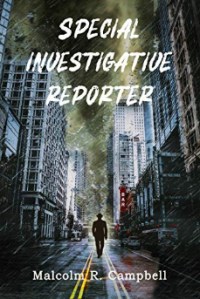
Malcolm R. Campbell is the author of the satirical novel Special Investigative Reporter.

Why stuff is worse than it seems

If you follow objective news sources–and that takes a lot of looking–you’ll know more than most people about the issues you’re passionate about. But that would be a 24/7/365 job, and who can spare the time? So whenever I click on a website like Pen America or the National Parks and Conservation Association after a long absence, I always find that the issues these sites track are in worse condition than they seem. I blame Schrödinger for this because stuff getting worse is too scary for me to take 100% responsibility for its status.

Of course, if you don’t look at the websites or read the news, there aren’t any issues. Schrödinger and his cat taught us that. Most the people arguing about issues on Facebook and never checked out the websites, much less read/watched objective news. Experience teaches us that.

Truth be told, I think we can be passionate about a lot of issues, but need pragmatic restraint in choosing which ones to study in depth. I gravitate toward conservation groups and press freedom groups. This morning, I realized that I hadn’t been out to read anything on the Freedom of the Press Foundation site for a while. As the home page says, “Freedom of the Press Foundation protects, defends, and empowers public-interest journalism in the 21st century.”

I come from a family of journalists and followed in their footsteps. But even if I hadn’t, I would still support strong, neutral, and comprehensive journalism. Without it, we’ll have trouble maintaining our democracy because the only thing people would know would be the propaganda that comes from their political party of choice–and the “news” sites that support it blindly.

There’s been a lot in the news lately about the erosion of our freedoms of speech and press. Obviously, I’m aware of that. But when I looked at the foundation’s site, I discovered that stuff is worse than it seems.

  • Outrageous social media laws await Supreme Court
  • In its quest to censor war reporting, the Russian government has dismantled all semblance of press freedom
  • Newsworthy leaks under attack in LA
  • Congress has a historic chance to protect journalists and whistleblowers in this year’s defense authorization bill
  • Supreme Court ruling limits paths for journalists to hold federal officers accountable
  • The extradition of Julian Assange must be condemned by all who believe in press freedom
  • Exploiting tragedy: Police in Uvalde and Buffalo clamp down on free press
  • Why press protections need legislative teeth, in DOJ’s own words

We take our freedom of speech and press as a given. So I don’t think it occurs to us that powerful groups, state and local governments, and federal agencies and individuals are constantly nibbling away at them. Most of us are aware of a lot of this, but cannot always cite specific examples. I look at this list and hope that I can make time to check the website at least once a week.

If things are getting worse, we can only speak out if we’re aware of them and how/why they are getting worse.

Malcolm

PEN AMERICA CONDEMNS KILLING OF PALESTINIAN-AMERICAN JOURNALIST SHIREEN ABU AKLEH, SHOT TO DEATH WHILE REPORTING ON THE WEST BANK

FOR IMMEDIATE RELEASE

PEN America has issued the following statement from Liesl Gerntholtz, Director of the PEN/Barbey Freedom To Write Center, on the killing of Palestinian-American journalist Shireen Abu Akleh:  

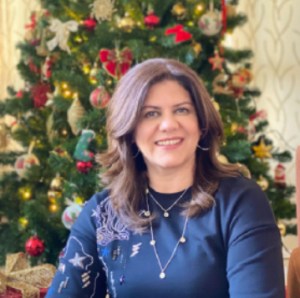
“PEN America condemns the killing of Palestinian-American journalist Shireen Abu Akleh today while reporting from the West Bank. For a journalist with a vest that clearly designated her as a member of the press to be shot in the head while reporting a story is a shocking affront. We call for an urgent, credible, and comprehensive investigation into the circumstances surrounding the shooting—including allegations that the Israeli military deliberately targeted her. Her killing illustrates the dangers faced by journalists all over the world as they do their jobs.”

Shireen Abu Akleh, 51, had worked for the Al Jazeera network for 25 years.

See also:  CPJ calls for international probe into Shireen Abu Akleh’s killing in West Bank

“Israeli and Palestinian authorities should ensure that the investigation into the killing of Palestinian American journalist Shireen Abu Akleh is swift and transparent, that all evidence is shared with international investigators, and that those responsible are brought to justice, the Committee to Protect Journalists said Thursday.”

We used to play this game

Where we’d form a line and the person at the beginning would be told about an event, and then would whisper the details to the next person, and so on down the line until the last person repeated the story The only rule was, you had to try to get it right. Nonetheless, the person at the end of the line almost always got it wrong.

When I wrote yesterday’s blog about the 1964 Gulf of Tonkin resolution being based on a fabricated story, I wan’t thinking of this game. I was thinking of something that began as a lie. That’s one thing. But when a story goes wrong after it goes through dozens of reports and sources, that’s quite another.

We keep paraphrasing the paraphrases we hear until the end result is fake news even though that wasn’t the intention. Granted, their are networks and reporters who put their own particular spin on stories so that in the end it’s hard to tell how much is opinion and how much is fact.
We all have our bully pulpets, I guess. Even major media outlets are scattering he comments of people on twitter througout their stories as though those knee-jerk opinions can really make a story more truthful and unbiased. These unfounded opinions can only muddy the waters when those cited have no dog in the hunt.

The purpose of the original game as to show how rumors distort the truth. That’s not the purpose of journalism, though too many reporters and networks think their spin is more important than the facts. Reporting is often a bridge over troubled waters–or perhaps muddy waters.

As always, checking multiple news venues is likely to help us find the truth.

–Malcolm

Malcolm R. Campbell

Publisher: Thomas-Jacob Publishing

Website

Facebook Author’s Page

Amazon Author’s Page

This novel is a satire about the news business.

Have you stopped beating your wife, senator?

That question is so old and so lame that it’s become a dark humor method of describing bad reporters, usually those who are full of themselves and/or have a nasty agenda.

If you answer “yes” or “no” to that question, you’re screwed. If you aren’t thinking and say, “Who told you I’m beating my wife?” then of course it looks like it’s true and you want to know who ratted you out.

大坂 なおみ

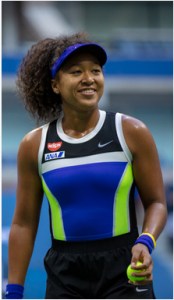
I’ve been thinking about bad reporters and bad questions ever since Naomi Osaka pulled out of the French Open rather than face another typical barrage of lame post-match questions or continue to be fined for refusing to talk to the press.

Osaka said those questions are often like “kicking people when they’re down.” One news story said that “Rafael Nadal himself criticized a journalist in 2019 for asking him if his form on the court had been affected by getting married.” Huh?

Even long-time stars like Serena Williams have said that these pressers, as they’re called, cause a lot of anxiety. And yet, the tennis establishment forces them on the players purportedly because those Q&A sessions help sell tickets. Perhaps, but I doubt it. After being asked why she wasn’t smiling after beating her sister Venus, Serena said, “To be perfectly honest with you, I don’t want to be here.”

A reporter once asked Coco Gauff if she was being compared to the Williams sisters because she’s black. If I were Coco, I’d simply say “no” and wait for the next stupid question.

One problem here comes from reporters, officials, and the public who think they should have been told years ago that Osaka suffers from clinical depression. It’s none of their business. If that had been on the table, she would have been asked every time she had trouble with a match whether it was depression or bad hand/eye co-ordination.

We–those who support sports stars and movie stars and others in the public eye–somehow feel that because of our support, we own them and have a right to know their every thought and their every private moment. The reporters know this, and since they do, they can keep asking “When did you stop beating your wife?” and other inane and/or trick questions.

–Malcolm

Malcolm R. Campbell

Publisher: Thomas-Jacob Publishing

Website

Facebook Author’s Page

Amazon Author’s Page

This novel is a satire about bad newspapers, bad reporters, and bad city officials.

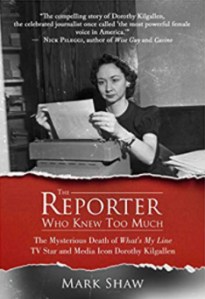
‘The Reporter Who Knew Too Much,’ by Mark Shaw

Those who knew her work, including Ernest Hemingway, said that Dorothy Kilgallen was the best female reporter in the business, perhaps the best of either sex and one of the most powerful people in the country when her life suddenly ended on November 8, 1965.

She was known for her “Voice of Broadway” column that appeared in Hearst’s New York Journal American and was syndicated to newspapers across the country, she was a popular panelist on “What’s My Line” for many years, and she covered major news stories including the Sam Sheppard murder trial (“The Fugitive”) and the Kennedy Assassination. She was the only reporter allowed to interview Jack Ruby.

Many said that she broke the “glass ceiling” that allowed women reporters to take their rightful place in the press corps.

Newspapers reported her death as an accidental drug/alcohol overdose. However, the tox screen showed two drugs in her system (in addition to the prescribed Seconal for sleep) that were not prescribed and not even in the house. The M.E. report was a horrible mess, the death scene (her house) got no forensic workup, and there was no police investigation. Those who know these details and the fact she was receiving death threats believe she was murdered, most like due to her determined investigation of the Kennedy/Oswald deaths that she was apparently close to solving.

The book presents a brief biography of Kilgallen and then focuses on her investigative work, the people she came in contact with as a reporter, a list of those with motives to silence her, and the perplexing details of her final hours and who might have spiked her drink and possibly gotten into her house to arrange the crime scene. There were two glasses on the nightstand. One included the residue of a narcotic she did not take, yet neither glass nor the surrounding area was checked for fingerprints.

While the writing and organization of the book are a bit uneven, it presents useful information for those who followed Kilgallen’s career. Shaw hopes that the information he has uncovered will prompt officials to re-open the case. Sadly, the family is not co-operating.

On a personal note, I was stunned when she died and always thought there was something fishy about it and the fact that–in spite of the tox screen–no police investigation followed. I liked her work as a journalist and saw her every week on “What’s My Line” (still available on YouTube) where she asked questions the way a reporter would. Some said panelist Arlene Francis was the good cop and Kilgallen was the bad cop. Francis was a regular on the show for 25 years, Kilgallen for 15 years. 

The FBI (including director Hoover) did not like her. The mob did not like her. Her husband did not like her. That’s not an easy place to be.

–Malcolm

Malcolm R. Campbell

Publisher: Thomas-Jacob Publishing

Website

Facebook Author’s Page

Amazon Author’s Page


The Sacrifice

In 1959 when I was a high school student in Tallahassee, Florida and my father was the dean of the Florida State University School of journalism, the state’s board of regents (then called the board of control) decreed that FSU’s journalism school would close. The reason, which was never spelt out, was probably politics. Purportedly, the state thought it was spending too much money duplicating degrees at Florida State and the University of Florida in Gainesville.
  • Needless to say, both universities provided similar degree programs in a multitude of subjects. So, there was a duplication in many areas.
  • Of the two schools, the one at the University of Florida was weaker in terms of faculty and equipment.
  • My father was the most widely known journalism educator in the state. One wonders if he unknowingly stepped on somebody’s toes.

FSU teaches media courses under the auspices of a School of Communication. However, I think it is missing many courses that should be taken by anyone planning to be a reporter. 

The professors in the school of journalism were spun off into other departments, English among other things, or–like my father–received offers from other universities. My father had taught at many of them already as he followed his career prior to FSU. He chose to stay at FSU after the journalism school was destroyed and became a professor of English Education.

In 1959, I resented this. My father seldom spoke of the politics of higher education. While he was vocal in the press about the closing of the FSU journalism school, he never exactly told my two brothers and me why he wasn’t taking a position at another journalism school. My mother told me that he was making a sacrifice on behalf of the family because he felt we were so invested in Tallahassee (school, church, scouting, friends) that it would be unfair to us to force us to return to California or New York or Oregon where he had previously taught.

I told her that my dad’s career was more important than the hassles of moving to a new town and finding our way in new schools. She told me never to tell him that.  I didn’t.

The Scottish Clan Campbell’s motto is “forget not.” I do not forget and I often do not forgive. So the alumni association of Florida State University hasn’t made any headway getting me to join, nor have they received a dime of my money. When they ask for my reasons, I tell them and they say that was long ago and I say so what?

In 1959, I wanted a family meeting about living in Tallahassee or moving away. If we had one, I have no memory of it. It saddens me, though, this long after the fact, that I still do not agree with the sacrifice my father made for the family 62 years ago. And it angers me that FSU was too frightened of its own shadow to stand up strongly in support of its journalism school.

It was, I think, lose-lose for everyone in 1959, but there are times on long summer nights when I remember it like it happened yesterday, and think that it was all so unnecessary.

–Malcolm

Malcolm R. Campbell

Publisher: Thomas-Jacob Publishing

Website

Facebook Author’s Page

Amazon Author’s Page


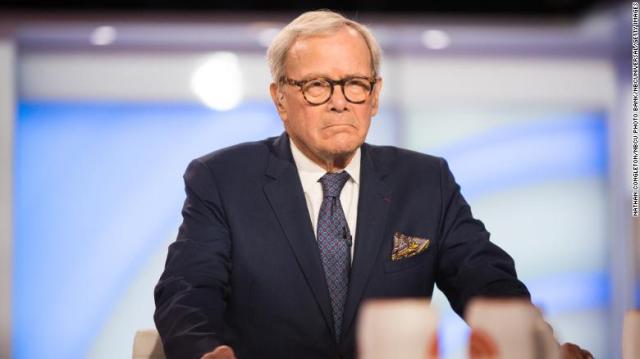
Tom Brokaw retires from NBC after 55 years with the network

Tom Brokaw is formally retiring from NBC News after an extraordinary 55 years with the network. Brokaw, 80, is best known for anchoring the “NBC Nightly News” from 1982 through 2004. He has been the network’s senior correspondent in recent years, enjoying a form of semi-retirement while contributing essays to NBC and MSNBC programs.

Source: Tom Brokaw retiring from NBC News after 55 years with the network – CNN

In many ways, Brokaw continued the traditions of traditional TV journalism established by Murrow, Cronkite, and others who by and large tried to fairly report the facts regardless of any political agenda of a network.

As he leaves, we witness the end of an era when reporters left their beliefs outside the newsroom and studio door.

–Malcolm