The value of parks

While serving as the chairman of my town’s Historic Preservation Commission (HPC), I heard more than my share of gripes about the taxpayer costs of city budget items that were often labeled as “fluff” during difficult economic times. City parks, historic districts, entry-road signs, green space and related tree canopy programs,  and National Register of Historic Places districts were on most people’s hit lists.

The City Parks Alliance, for example, says on its home page that “Urban parks are dynamic institutions that play a vital, but not fully appreciated or understood role in the social, economic and physical well-being of America’s urban areas and its residents.” This is a good place to start. But, when taxes, city/federal budgets and the not-so-deep pockets of residents come together, it helps to have some dollar values to assign to the catch phrases.

Even though my love of parks includes environmental concerns, habitat protection, fresh air and recreation, such “fuzzy aesthetics” as these don’t wash during a confrontational city council budget meeting. Looking at the skimpy budgetary support of our National Parks system coming out of Washington, things that are good to do for their own sake don’t get much attention in Congress either.

Economic Value  – real estate, jobs, tourism

Locally, the HPC tried to stress the economic value of city parks, a value that typically exceeded the cost of maintaining the parks when viewed separately from recreational programs. In promoting economic returns, we were on the same page as the Chamber of Commerce, a group that knows the importance of such things as parks, green space, and historic preservation to corporations and individuals contemplating a move to a new city.

Historic districts, like museums and other cultural tourism attractions not only attract people (who make purchases throughout a city), but also create a level of interest that—according to studies—is higher than other vacation/business travel. While national parks and other wilderness areas with a lot to see tend to draw people who stay longer, the same is true for sites and attractions focusing on culture and history. Visitors to such sites stay longer and spend more than the average tourist.

Likewise, many studies have shown that the value of houses near city parks tends to be higher than the value of similar homes in other neighborhoods. While it’s easy to point fingers at the costs of maintaining a city park, their impact on real estate values is often overlooked when budgets and taxes are under scrutiny.

While city parks rated as excellent can increase the property values of nearby homes as much as 15%, the Trust for Public Land, in “Measuring the Economic Value of a City Park System” (PDF link) takes a more conservative approach to account for those parks rated as problematic: “Once determined, the total assessed value of properties near parks is multiplied by 5 percent and then by the tax rate, yielding the increase in tax dollars attributable to park proximity.”

Regional Impact of a National Park

Last month, Glacier National Park released information that demonstrates the economic importance of a major tourist attraction. According to an NPS report for 2010, two million visitors came to the park, spending $10 million and supporting 1,695 local jobs.

“Glacier National Park has historically been an economic driver in the state,” said Glacier National Park Superintendent Chas Cartwright. “This report shows the value that the many goods and services provided by local businesses are to the park visitor, as well as employment opportunities for the area.” Click on economic benefits here to download the report itself.

Personally, the value of parks to me cannot be expressed in economic terms. Yet I’m realistic enough to know that people coping with stretched-to-the-limit household budgets need to see some real dollar values attached to local and national governmental expenses before they “buy in” to the value of parks.

The Trust of Public Land, City Parks Alliance, National Park Service, and your state’s Department of Natural Resources are good places to track down information that may help win over the homeowner next door who sees nothing  but red in city, state and national green spaces.

This free 48-page PDF about Glacier’s history, personalities, facilities, plants and animals can be downloaded from the Vanilla Heart Publishing page at Payloadz.
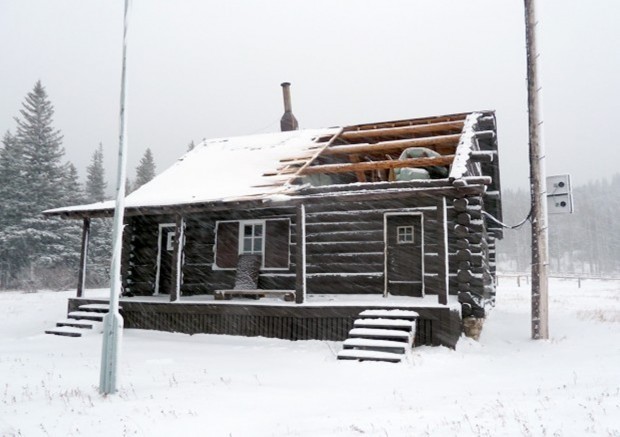
Glacier’s Belly River Ranger Station Receives Temporary Roofing Repair

NPS photo

from NPS Glacier National Park

WEST GLACIER, MONT. -Park employees recently completed a challenging task to make emergency repairs and construct temporary roofing on the historic back-country cabin at the Belly River Ranger Station

The cabin was severely damaged during a winter storm in late December or early January. More than half of the roof shingles and a quarter of the roof were blown off by high winds, leaving the cabin directly exposed to rain and snow. A significant amount of snow accumulated inside the structure resulting in water and ice damage to the flooring, interior finishes, furnishings, and equipment. The storm also damaged a jack-leg fence at the site.

The damage was discovered by a resource management crew conducting work in the area during the second week of January. The crew surveyed the site, removed some of the accumulated snow inside the structure and moved materials and furnishings for better protection from the weather.

In anticipation of additional damage to the historic and culturally significant structure, including loss of the entire roof, and destruction of furnishings and equipment inside the cabin, an emergency response plan was created. A four-person crew and materials were flown to the site via helicopter. The crew removed snow from the building, constructed a temporary roof, heated the cabin with the wood stove to dry out the building and furnishings, and inventoried the site to help prepare for final repairs this summer. After four days of intense work, the crew skied out.

Anyone that may be in the surrounding area of the cabin is encouraged to use caution and be on the lookout for debris materials. Nails, ripped shingle pieces and wood debris are scattered about the area. Some of the debris was picked up, but some of the debris is buried in snow and may be a potential hazard, especially as the snow melts.

The Belly River Ranger Station was built in 1925 and is a significant cultural resource listed in the National Register of Historic Places. The station has been in use since it was built, housing rangers, trail crews and others. It is an integral part of Glacier’s cultural legacy, and contributes to the unique character of the park’s back-country landscape. The Belly River Ranger Station complex retains the classic configuration of structures (combination residence and office, barn, woodshed and fire cache) with few intrusions and excellent physical integrity. The local legendary Joe Cosley, the first Belly River District Ranger, lived at this site in the early years.

Support from the Glacier National Park Fund helped with the emergency response plan. The Fund assists the park with preservation of historic structures within the park, and is an official partner of the park. The Fund’s mission is to support the preservation of the outstanding natural beauty and cultural heritage of Glacier National Park for the use and enjoyment of present and future generations by fostering public awareness and encouraging private philanthropy. For more information about the Glacier National Park Fund visit www.glacierfund.org.

On a personal note, I took refuge in this ranger station on a very rainy night in the summer of 1963 when another hiker and I got caught by a sudden storm on a hike from Many Glacier Hotel to Canada via the Ptarmigan Tunnel and Lake Elizabeth.

Malcolm

Learn more about Joe Cosley in “Glacier’s First Ranger” in my free, PDF e-book Celebrate Glacier National Park that you can download from Payloadz.

“Hikers in the Northern Lewis Range area of Glacier National Park following the trail above Lake Elizabeth northeast along the Belly River are walking in a world once favored by the park’s first ranger Joe Cosley (1870-1944). To the west of Lake Elizabeth is Cosley Ridge (shown as Crossley on some maps), one of several landforms Cosley named after himself.”

Free e-Book: Celebrate Glacier National Park

During Glacier National Park’s 2010 centennial, I wrote quite a few posts about the history, personalities, facilities and environment of Montana’s shining mountains for this weblog. Now, Vanilla Heart Publishing has compiled a selection of those posts into a free PDF e-book that you can download from PayLoadz.

Highlights of the 49-page e-book

  • Fast Facts and Photographs
  • All Aboard for Glacier National Park
  • Glacier by the Grace of God and the Great Northern
  • Mountains and Rock
  • Remembering James Willard Schultz
  • Glacier’s Long-Ago Mining Town
  • Remembering George Bird Grinnell
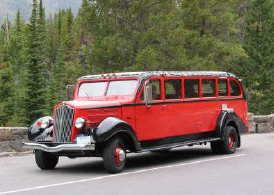
  • Those Historic Red Tour Buses
  • Kinnikinnick
  • Glacier’s First Ranger
  • Heavens Peak Fire Lookout
  • Mary Roberts Rinehart

The Scenery Behind My Stories

While working as a bellman at a Glacier Park hotel, I fell in love with the park. I’ve been back several times, but it’s too far from northeast Georgia for easy commuting. I returned in my imagination, though, while setting three novels in the park: The Sun Singer (contemporary fantasy, 2004), Garden of Heaven: an Odyssey (magical realism, 2010) and Sarabande (contemporary fantasy, 2011). If you’ve visited Many Glacier Hotel on the east side of the park, you’ll recognize many of the settings in all three books from Swiftcurrent Lake to Grinnell Glacier

I hope you will enjoy Celebrate Glacier National Park and the scenery behind my stories with a bit of the history of how Glacier came to be and who took part in developing it as both a park and a playground. Of course, you need to do more than read about “backbone of the world” in northwestern Montana.

How about a trip? You’ll need to stay for a couple of days so you have time to see both sides of the park, experience Going-to-the-Sun Road, hike to Sperry or Grinnell Glacier, take a launch trip on Lake McDonald, Swiftcurrent Lake or Lake Josephine, and ride in one of those ancient red buses with the top down so you can enjoy the mountain air.

–Malcolm

Kindle edition

Summit Sets Course for Protecting America’s National Parks, Connecting to People

from the National Parks and Conservation Association

Historic gathering of leading national park champions shapes outline for supporting National Park Service’s mission for 2016 centennial and the century to follow

Recognizing a growing need to unite the advocates, partners and supporters of national parks in advance of the upcoming 2016 National Park Service (NPS) centennial and beyond, the most diverse group of national park leaders ever convened gathered last week in Washington, D.C. to attend America’s Summit on National Parks. The Summit was a first of its kind event established in coordination with the NPS through a partnership of the National Park Foundation (NPF), the National Parks Conservation Association (NPCA), and the National Park Hospitality Association (NPHA).

The two-day Summit, which took place January 24-26, was inspired by NPS’ recent Call to Action report [PDF download] and was designed to create unifying, clear objectives that will ensure the protection, enhancement, and support America’s iconic landmarks for centuries to come. The Summit inspired thought-provoking dialogue on some of the greatest challenges and opportunities facing national parks currently. The Summit produced a working document outlining the participants’ shared “Statement of Principles” and “Action Items” to ensure that the seeds of progress begun from the passionate and inspired conversations will take root, leading to growth, change, increased accessibility and ultimate strengthening of the national park system and national park programs. The Summit drew prominent members of Congress, Interior Secretary Ken Salazar, major political advisors and top conservation, tourism and communication leaders.

In a joint statement regarding the Summit, Tom Kiernan, president of NPCA; Neil Mulholland, president of NPF; and Derrick Crandall, counselor of NPHA said:

“Our parks need to evolve with us. The passionate leaders and advocates who attended this Summit are committed to a united vision for the national parks to thrive in the next century. We understand that appropriate funding, diverse outreach, natural resource protection and conservation, updated facilities, and adequate staff are necessary to make sure our national parks remain attractive, healthy places for people to visit and enjoy. And, though there are many challenges, we are confident that this newly unified focus, support and dedication by the park community will make these goals obtainable.”

Yosemite - Call to Action Report

Among the most notable directives coming out of the Summit were to increase outreach to youth and other diverse populations; to make units within the NPS system more representative of the diverse makeup of the nation; to use technology, such as social media, smart phone applications, video games and other electronic technologies to attract visitors and improve park experiences; to highlight healthy food and opportunities for safe, active fun during park visits; to increase public awareness of the 2016 centennial; to create an endowment to provide the NPS with secure funding for the future; to encourage supporters and lovers of national parks to become more engaged with their members of Congress and other decision makers, and to grow the base of support for national parks, particularly among the health, education and tourism communities.

Leading up to the 2016 centennial, the current stewards of our national parks will take up the gauntlet thrown by this Summit. Through their work, these original goals will be enhanced and the shared vision will become action.

For more information about the Call to Action, click here.

Malcolm

Malcolm R. Campbell is the author of three novels set in Glacier National Park, “Sarabande,” “Garden of Heaven: an Odyssey,” and “The Sun Singer.”

New Logo and Blog for the National Parks and Conservation Association

When I joined the National Parks and Conservation Association (NPCA) in the 1960s after working in and taking trips to many of the parks, the group had a oval-chaped logo with the silhouettes of three bears. That logo was around for 50 years.

Now NPCA has decided it’s time for a change: “After about a year and a half of research, focus-group testing, surveys, and outreach, NPCA finally unveiled a modernized logo yesterday.” Naturally, some people wanted to keep the old logo. I support the changes, the logic of which is explained here.

Even before setting three of my novels in Glacier National Park, I was a “friend” of the parks. Since I live in the southeast, I’ve been to Smoky Mountain National Park more than any other. When I joined the NPCA, the Internet as we now know it did not exist. I depended on the print magazines from the Sierra Club and the NPCA for parks and conservation information.

Now, I’m happy that with the logo, the NPCA has also updated its online presence with a new blog called the Park Advocate. As NPCA suggested to members in this morning’s e-mail message, “Check out the blog for regular news on the parks, read about NPCA’s latest work in the field, enjoy photos and videos from around the country, and share your ideas and opinions on issues affecting our national parks.”

What a great way to keep up! Even if you’re not at NPCA member, the blog and its RSS feed will help you keep up with the latest news about the National Parks.  If you’re a Facebook member, you’ll find the NPCA is there, too.

Malcolm

If you’re a fan of Montana’s Glacier National Park and/or are planning a visit to Many Glacier Hotel, you might enjoy my e-book about the history of Swiftcurrent Valley: “Bears, Where They Fought.”

The 15-page booklet is available on your Kindle for only 99 cents. (Click on the cover to learn more.) You’ll also find it included in Vanilla Heart Publishing’s anthology of fiction, nonfiction and poetry “Nature’s Gifts.”

Time to pick up a 2012 Montana Calendar

I look forward to my yearly calendars from the Montana Historical Society that come as part of my membership. They are filled with western scenes from the society’s photographic collection. Calendars are 8.5 x 11 inches and feature black and white photography.

The front of the 2012 calendar features a historic photo of Mt. Wilbur and Swiftcurrent Lake from Glacier National Park. If you love western history, you can join the MHS by calling 406-444-2918 or heading out to their website at www.montanahistoricalsociety.0rg. Memberships are $55 per year and include a subscription to the quarterly Montana The Magazine of Western History. Or, you can buy the calendar alone for $8.50, order from the museum store.

Maybe the 2012 calendar will inspire me to get started on my next novel set in Glacier National Park. Maybe it will inspire you to think of wild places in the Rocky Mountains.

Ledger Art by Curly, Crow - MHS

New Museum Exhibits: Two exhibits open tonight (December 1, 2011)  from 6-8 p.m. at the Montana Historical Society’s museum at 225 North Roberts in Helena, The Art of Story Telling: Plains Indian Perspectives and Mapping Montana: Two Centuries of Cartography. Wish I could be there.

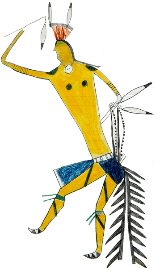
The drawing pictured here is an example of “ledger art,” a transitional approach to recording stories and events by plains Indian nations between 1860 and 1900 as artists switched from the traditional paints and hides to ledger paper with crayon, colored pencils and water colors. The new exhibit will include the Walter Bone Shirt ledger book, on loan to the society.

According to the Plains Indian Ledger art Project, “Changes in the content of pictographic art, the rapid adjustment of Plains artists to the relatively small size of a sheet of ledger paper, and the wealth of detail possible with new coloring materials, marks Plains ledger drawings as a new form of Native American art.”  For more information about ledger art, click here.

Malcolm

Malcolm R. Campbell’s contemporary fantasies “Sarabande” (new) and “The Sun Singer” are set in the Swiftcurrent Valley of Glacier National Park.

a young woman's harrowing story

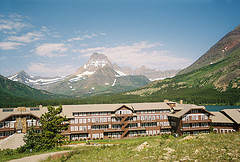
Many Glacier Hotel, 1964

Bridge at West Glacier - Photo by Mel Ruder, who later won a Pulitzer Prize for his coverage of the flood. See also his book "Pictures, a Park & a Pulitzer"

“When torrential rains poured on top of a heavy mountain snowpack on June 8-9, 1964, it caused, by some measures, one of the most powerful flash floods in the United States during the 20th century.” — Daily Inter Lake

When I returned to Many Glacier Hotel in late May of 1964 for another summer of work as a bellman, porter and houseman, I looked forward to meeting returning friends from the 1963 season, adding to my growing list of hikes taken and mountains climbed, and simply enjoying three and a half months in the land known as The Shining Mountains.

Those of us who arrived before the seaon began were there to clean, unpack, set-up and get the hotel ready for the new season after it had been dormant during the fall, winter and spring months.

Flooded Valley

Mother Nature had other ideas: the Montana Flood of 1964. While Glacier Park was cut off from the rest of the world, Many Glacier Hotel was cut off from the rest of the park: the only road into Swiftcurrent Valley was washed out. As we raced to save the furniture in the lake level rooms and then began cleaning up the mess when the water receded back into Swiftcurrent Lake, we didn’t know at the outset just how widespread the flood was.

According to the Daily Inter Lake, “More than 20 miles of U.S. 2 were damaged or destroyed, along with six miles of Great Northern track. A section of Blankenship Bridge collapsed Monday night and the bridge at West Glacier buckled. The eastern half of the Old Red Bridge in Columbia Falls also washed away, together with three homes; another 50 homes south and east of town were flooded.” Damages were estimated at $63 million ($438 million in today’s dollars) as “At least 28 people died and more than 2,200 homes and buildings were damaged or destroyed in seven counties and a dozen communities in Montana.”

I wrote about the flood in an essay that appeared in the National Park Service’s Glacier Park Centennial book, 100 YEARS – 100 STORIES. That essay is a short, factual account that focuses on the hotel itself. While I changed the names for my account of the flood in Garden of Heaven: an Odyssey, the true details in my novel present a larger account of the flood, as shown in this excerpt:

“They follow him down through the rain into the lobby. Jed and James, the professional staff, are in the lobby already, haggard automatons, barely recognizable in old clothes, bathed in the unreal glow of flames from the stone fireplace. The power is out, the phones are out, the road is out, the water is out, except for the lake which is a living creature in the hallway at the bottom of the stairwell.  David is in this hall with others of the skeleton crew who came to the hotel several weeks ago to shake out the winter cobwebs before opening day of the 1964 season. They rescue braided rugs, heavy when wet, and beds, dressers, mattresses, chests of drawers, pictures off the walls, the piano from the stage in the St. Moritz room.  Jed won’t allow anyone to work downstairs for more than a few minutes at a time because the water is cold.  He orders them upstairs to be wrapped up tight in blankets and force-fed coffee from the makeshift lobby kitchen. They are constructing history already, reports are coming in, well-intentioned and half true, that hotels, towns, roads, bridges, livestock, dams, railroad tracks, families whose faces we will see later in the newspapers, are out, down, broken, undercut, missing, rent, ruined, swept away.

Storm over Mt. Wilbur - M. R. Campbell photo

“As June 8th flows into June 9th and June 9th flows into June 10th, a discovery is made, and that is that mortal men have no meaningful words left for describing the scope of this event. They’ve already spent their words on small things. In a story headlined ‘NATURE TURNS OUTLAW,’ a Missoulian reporter writes that ‘Natural disaster brings a terror like the terror of a mob: Destructive, terrifying, unpredictable, inexorable, and heartless.’

“It came down to lists. Adjectives, acres flooded, bridges out, dams compromised, dollars in damages, head of cattle drowned, homes lost, miles of track torn away, miles of road destroyed, people killed or missing or homeless, power and phone lines down, rivers rising and falling, towns under water, visits by government officials.

“The Hungry Horse News prints lists of names. The paper ‘would appreciate any further information.’ He reads the names again and again: he knows so many of them. Sam keeps a list of towns. Nobody knows where he gets his information, though it’s probably KOFI and KGEZ radio in Kalispell, and random reports. He posts the lists behind the lobby information desk and makes entries with a black laundry marker every hour.

“‘It reads like a list of war dead, don’t you know,’ he tells David. St. Mary, East Glacier, West Glacier, Pendroy, Simms, Sun River, Fort Shaw, Fairfield, Big Fork, Whitefish, Lowery, Great Falls, Augusta, Choteau, Loma, Browning, Dupuyer, Babb, Ft.  Benton, Kalispell, Essex, Nyack, Columbia Falls, Polebridge, Missoula, Deer Lodge, Plains, Butte, Conrad, Lincoln, Shelby.

“An alphabet soup of agencies and organisations is mobilized.  ASC, BIA, BLM, BPR, BUREC, DHEW, FEC, FHA, NFS, NPS, MPC, OEP, PP&L, SBA, USDA, in addition to the Army, Air Force, and Red Cross.

“Anecdotes serve when the lists grow old.

“Prior to the flood, the BIA was studying drought conditions on the Blackfeet Indian Reservation. After the flood, the Indians don’t lose their wry sense of humour. They tell the BIA rep that his medicine was too strong.

“A man finds an overturned boat in his back yard; a woman finds a bridge. Owners please claim.

“Grateful that his son who was vacationing in the mountains is unharmed, a Louisiana man sends a check to help pay for the flood damage.

“The guys working on a dike along the Clark Fork down in Missoula are shooting rattlesnakes by the dozen.

“A GNRR lineman slips off a pole into the rising waters of the Flathead over in Bad Rock Canyon and is rescued through the combined efforts of a fellow lineman, a boat crew, and an Air Force helicopter.

“A truck on Central Avenue attempts to outrun the flooding Sun River and is abandoned as the water climbs up to the bottom of the windshield. Trees shoot through a bridge on the west side of the divide like giant arrows.

“Near Plains, an Associated Press photographer takes a picture of a sopping wet bunny floating down the river on a plank of wood.

“The lake level rooms in the hotel are an explosion of mud. Cleanup and repair crews work past meals, work past sleep, and hone the stories they will tell the employees who have been put up at other hotels until the roads are open.

“David and Al are the designated water carriers. An artesian well near the caretaker’s cabin is the only uncontaminated source. Water for toilet tanks and the cleanup crews goes into old garbage cans, water for cooking and drinking goes into new garbage cans, hauled in the red Thames van to multiple sites—hotel, camp store, cabins, dorms—day after day until their unvarying route is a deep channel carved into consciousness and time, until they are more river than men.

“The county health department flies a nurse to the isolated compound in a helicopter. She brings messages from the outside and enough typhoid serum to go around.

“During a lunch break, David drives the Thames downriver to the curve where the road is cut. He takes pictures but they explain little.”

In real life, I was too busy to take photographs inside or outside Many Glacier Hotel. I wish I had some even though, as that fictionalized version of me says in the novel, they would explain little. Even so, after the hotel opened (a bit late), those pictures would be part the story about Many Glacier Hotel in 1964.

Malcolm

Malcolm R. Campbell is the author of three novels set in Glacier National Park, including the recently released contemporary fantasy “Sarabande” available on Kindle.

His nonfiction about Glacier Park includes “High Water in 1964” in A View Inside Glacier National Park: 100 Years 100 Stories (NPS-produced paperback) and Bears, Where They Fought: Life in Glacier Park’s Swiftcurrent Valley (99 cents on Kindle).

Many Glacier Hotel 1963, where the fantasy began

In June, the management of Many Glacier Hotel in Glacier National Park figures out a way to pose the entire staff in front of a photographer for the summer picture. I no longer remember how many takes it took to make the photographer happy. And, though I thought I would always remember the names, home towns, and colleges of all the students in this picture, the details have long since become hazy.

We came from all around the country during the last week in May and spent the summer in the fantasy land of  the Swiftcurrent Valley working as cooks, waiters, desk clerks and bellmen until mid-September. A lot of us came back the following summer, and some the summer after that, as has been the custom with the concessionaire’s summer help since the days when the Great Northern Railway (now, BNSF) owned and managed the facility.

For a Florida boy who had always wanted to see the mountains, Glacier Park’s horn-shaped mountains, stair-step valleys, cool summer nights, and old Swiss-style hotels were a fantasy land in spite of the hard work. We carried luggage, cleared dining room tables, mopped the floors, made the beds, and told guests yarns about the mountains.

Our summer included bridge games, long hikes, fresh fish, romances, twisted ankles, mountain climbing, boating, broken hearts and a lot of pictures more personal than this old black and white that doesn’t quite fit on my scanner.

I studied writing in high school and college and the craft I learned there was well worth the time. While I spent less time in the park, my total of  seven months there over the span of several summers shaped my life and work more than any college course. Perhaps I was more impressionable than most or perhaps it is a writer’s natural focus on experience that has made this place loom larger than life.

For a writer, time neither steals away old joys nor heals old wounds, and I came away from the park with my fair share of both. For better or worse, they have sustained me and defined my outlook, while becoming the setting for my magical realism (Mountain Song) novel and two contemporary fantasies (The Sun Singer and Sarabande).

Virginia Woolf once wrote that all of a writer’s secrets loom large in his work. I think that might be true because this setting impacted me just as much as Hogwarts impacted Harry Potter and “The Land” impacted Thomas Covenant. So it is that this faraway place flows out onto the page in my storytelling as a true love of mountains, wildflowers, bears and all the events that did happen or might have happened in the shining mountains.

Malcolm

Malcolm R. Campbell is the author of paranormal short stories and contemporary fantasy adventure novels, including “The Sun Singer,” and “Sarabande,” both of which are set in Glacier National Park.


Glacier Inspects 1,300 Boats for Aquatic Invasive Species (AIS)

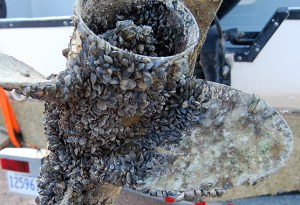
Boat propeller with quagga mussels - NPS photo

“Aquatic Invasive Species (AIS) are aquatic and terrestrial organisms and plants that have been introduced into new ecosystems (i.e. Great Lakes, San Francisco Bay, Florida, Hawaii) throughout the United States and the world and are both harming the natural resources in these ecosystems and threatening the human use of these resources. AIS are also considered to be ‘nuisance’ species or ‘exotic’ species and the terms are often used interchangeably.” NOAA Research

from NPS Glacier National Park:

Glacier National Park personnel performed almost 1,300 boat inspections during this past summer intended to reduce the risk of unintentional movement of aquatic invasive species (AIS) into park waters.

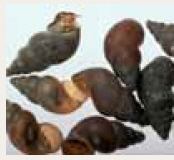
New Zealand mud snails - Nature Conservancy photo

“We put a lot of energy and resources into this program, but realize this is just the beginning of a long-term effort to protect the pristine waters of Glacier National Park and the Crown of the Continent Ecosystem against the devastating effects of aquatic invasive species,” said Glacier National Park Superintendent Chas Cartwright.

Glacier National Park contains the headwaters of three continental-scale watersheds. An infestation would pose a serious threat to all downstream waterways.

In 2010 the park initiated a boat inspection and permit program that required all motorized boats users to obtain a boat-launch permit prior to launching in any water body within the park. Inspections were only focused on boats believed to pose a high risk of transport of aquatic invasive species to park waters. The program also included an educational awareness component.

In May of this year, the park began an expanded boat inspection and permit program in response to an increasing threat of aquatic invasive species, which required an inspection and permit for all boaters. A free permit is required to launch any motorized or trailered watercraft in Glacier National Park. Hand-propelled water craft and personal flotation devices such as float tubes do not require a permit at this time. After an inspection of the watercraft indicates no signs of aquatic invasive species present, a launch permit will be issued. Boats must be clean, drained and thoroughly dry, including the bilge areas and livewells, upon inspection. A new permit is required upon each entry into the park.

From January to the beginning of October, 1,257 boats were inspected in the park. Six boats were denied launch permits for a variety of reasons, including that some that were not clean enough to properly inspect. No aquatic invasive species were found. The majority of the inspections were boats launching in Lake McDonald. Approximately 88% of the boats were registered from Montana with the remainder coming from 18 states and two Canadian Provinces.

Park visitors planning to launch a boat into any park waters throughout the winter are encouraged to call the park at 406-888-7801 to arrange for an inspection. Launching a boat without an inspection in Glacier National Park threatens park resources and is illegal, with a fine up to $500. Waterton Lakes National Park also has a boat inspection program.

Cartwright said, “Trailered boats with mussels attached to the boat and/or the trailer have been detected in Montana, as well as some aquatic invasive plants in local waters recently. This is a serious threat and we must be proactive to reduce any risk.”

Park managers and specialists recently met with Glen Canyon Recreation Area representatives to learn and share ideas on additional prevention measures, and to develop a response plan if something is detected in the area. Glacier National Park is also cooperating with other federal, state and local agencies and organizations, and Parks Canada to protect the lakes, rivers and streams of Montana.

Cartwright conveys his appreciation to park visitors for helping maintain the pristine waters in Glacier National Park by complying with the boat inspection and permit program.

See also:
Purple loosestrife - Nature Conservancy photo

Help Stop Aquatic Invasive Species for additional information about the NPS program and the AIS threat to the park.

Aquatic Invasive Species Threats to Glacier – NPS AIS “Resource Bulletin in PDF format that includes information about non-native species already in the park as well as “what’s on the way.” Primary threats include: Zebra mussels/quagga mussels, New Zealand mud snails, Eurasian watermilfoil and Purple loosestrife.

Glacier Park Volunteer Opportunities includes information about specific opportunities for volunteers, including work in the Aquatic Invasive Species program.

AIRD: Aquatic Invasions, Research Directory for AIS policy, programs and related information.

National Invasive Species Information Center for AIS resources in Montana. Click here for photographs of Nonindigenous Aquatic Species.

Malcolm

Malcolm R. Campbell is the author of three novels set in Glacier National Park, including the recently released contemporary fantasy “Sarabande” available on Kindle.

His nonfiction about Glacier Park includes “High Water in 1964” in A View Inside Glacier National Park: 100 Years 100 Stories (NPS-produced paperback) and Bears, Where They Fought: Life in Glacier Park’s Swiftcurrent Valley (99 cents on Kindle).

Walking My Future Novel’s Setting

While I was working as a seasonal, college-student employee at Glacier National Park, my father said, “One day you’ll write a book about this.” As I walked the mile between the hotel and the camp store for Cokes, candy bars and other “health foods,” I visualized long nature articles about the park for National Geographic Magazine that would combine with proposed climbs of K2 and Mt. Everest and canoe rides down the Amazon into a hiker’s guide to exotic trails.

Little did I know I would one day set three novels in the park.

Like most college students, I was used to walking—and sometimes running—across a campus to get from one class to another. While working at the park, I not only walked around every lake near the hotel, but hiked to every waterfall, tunnel, mountain pass, and alpine meadow. Why? For a lot of reasons. For a Florida boy, the mountains were an exciting new environment. Plus, in those days, seasonal employees weren’t allowed to bring cars into the park. So, we talked. Going to the camp store was child’s play. By the end of the summer, a 25 mile hike as an easy stroll.

A Sack of Guidebooks

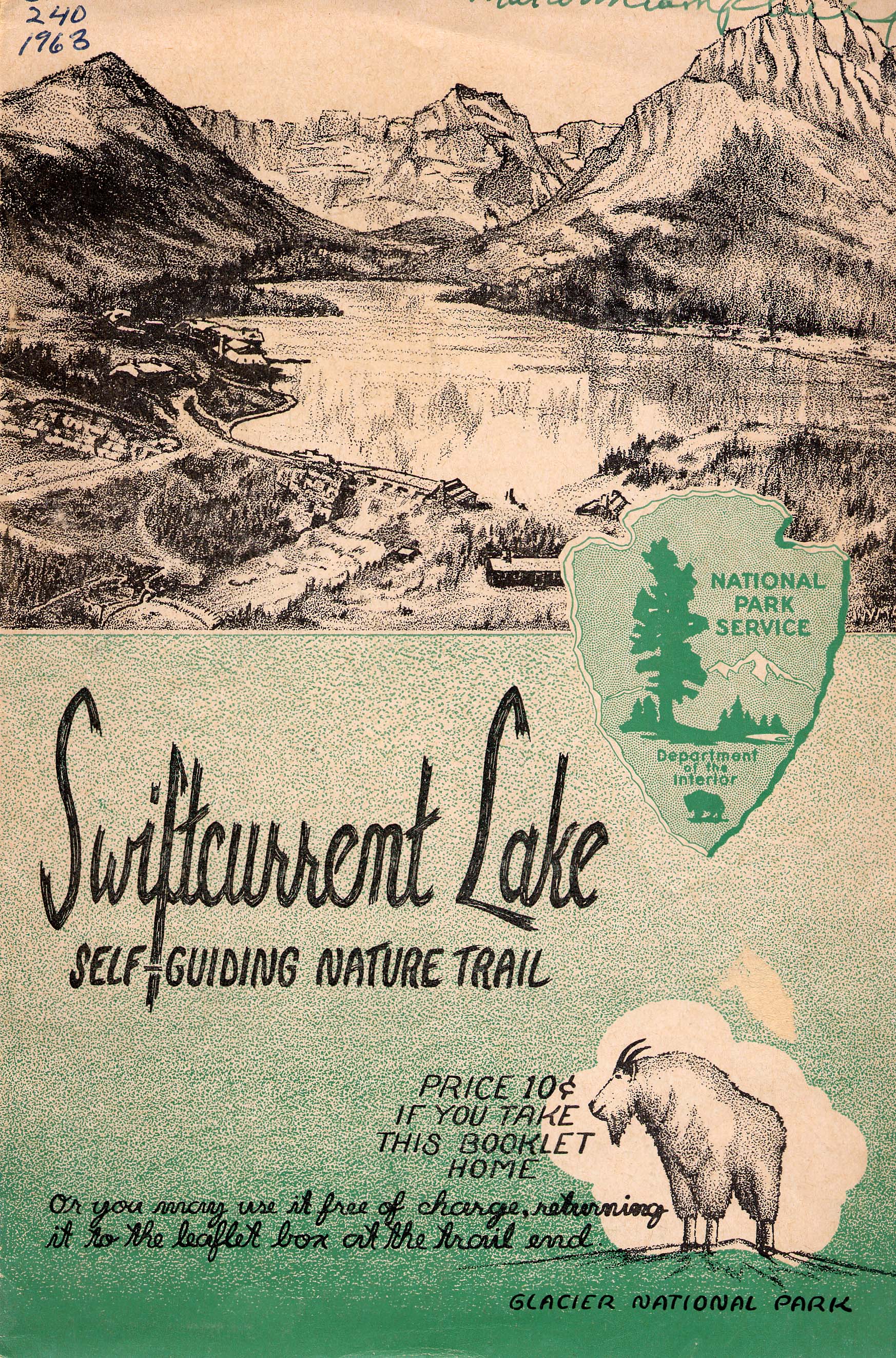
There used to be a wood box on a post near Many Glacier Hotel with a handfull of walking guides for tourists taking their first hike around Swiftcurrent Lake. If you wanted to keep the guide, you put a dime in a slot. If not, you put the guide into a similar box where the trail neared the camp store. I kept mine and along with it, brought home a sack full of guidebooks.

These materials are a writer’s dream. They allow me to merge my imagination and memories of the trails and mountains with specific factual information about the trees (subalpine fir, willow), wildflowers (fireweed, beargrass), and mountains (Grinnel, Allen). Even though I write contemporary fantasy, I want the setting to be as realistic as possible, and while I didn’t know it when I was a hotel bellman, all thosde after-work hikes were taking place in a world that would one say be part of The Sun Singer, Garden of Heaven: an Odyssey, and my new novel Sarabande.

I never wrote those National Geographic Magazine articles, much less climbed K2 or Everest, but I did write a few articles and essays about the Swiftcurrent Valley in Glacier National Park. Looking at the valley from a journalist’s or feature writer’s perspective helped me collect my thoughts for the fiction I would set there later.  Unfortunately, I haven’t been back to the park for many years, but all that time walking around in the setting of my future novels rather engraved the sights and sounds in my memory.

Sarabande Excerpt – from a Fictional Cabin at the Park’s Lake Josephine

Lake Josephine and Mt. Gould - twbuckner photo

The bright yellow of a late morning sun filled the bedroom when Sarabande awoke. She felt the light move before she opened her eyes and pulled the tangled folds of the quilt away from her face. A summer breeze followed the light, fluttering the blue curtains with a breath that smelled of fir trees, larkspurs, gentians, and stones from snow-melt streams. Pine siskins chirped to each other amongst the ferns and mosses, olive-sided flycatchers pipped from tree-top perches, and children laughed. The laughter came and went with the coming and going of a rumbling, technology-sounding hum. Sensing no threat in the sound, she projected outside and found that a boat traveling up and down the lake with visitors was powered by whatever made the pervasive hum. The visitors got off the boat, looked around, laughed, and then got back on the boat and went away.  They surrounded the cabin with their smells of strange soaps and fabrics, completely unaware of the magic in their midst. Whether it was the good night’s sleep or the rhythms of the water in the box of warm rain, her normally sharp senses intensified while she slept. Within the quilt of interlocking rings, she acquired—or was acquiring—Bear’s sense of smell, Eagle’s sight, and the quivering alertness of chipmunks and butterflies.

–Malcolm

an exciting adventure for only $4.99 on Kindle