If you’ve been lucky, you’ve been able to catch one of Guthrie’s book signings in Montana during the past six months.
I have two old favorites by the late Warren L. Hanna I would like to mention for your consideration for your reference shelf. The first is is “Montana’s Many Splendored Glacier Land” that provides an overview of the park from the early explorers up into modern times.
The other, which for reasons I don’t understand, is no longer sold by the Glacier Association. It’s “Stars Over Montana: A Centennial Celebration of the Men Who Shaped the Park.” Originally published in 1988, the book provides mini-biographies of the major players during the days when the shining mountains were discovered, including Hugh Monroe, Father DeSmet, William Jackson, James Willard Schultz, and Walter McClintock.
It’s still available here and there on the Internet in a reprint by TWODOT.
This book has served as an excellent reference for some of my earlier posts about the park and its early advocates. Hanna also wrote “The Grizzlies of Glacier.”
Glacier National Park’s Chief Mountain “(Nináistuko) was formed 100 million years ago when forces of incomprehensible power and magnitude slammed two slabs of the world together thrusting the older proterozoic rock 50 miles eastward up and over the younger cretaceous rock. Many said the great rocks that formed the backbone of the world were piled one upon the other and sculpted into shining mountains by Nápi, the Old Man who created the world from a ball of mud fetched up from the depths of the dark primordial waters by Muskrat.” – Malcolm R. Campbell in Garden of Heaven.
After Old Man and/or the Lewis Overthrust left older rock sitting on top of newer rock, the resulting mountains along Glacier’s eastern side were rootless. That’s how David Rockwell describes the Montana portion of the Rocky Mountain Front. These mountains, he writes in A Natural History Guide: Glacier National Park, are “not anchored, not sunk into the earth like most mountains. Rather they perch on top of it, unconnected except by juxtaposition to the rock beneath.”
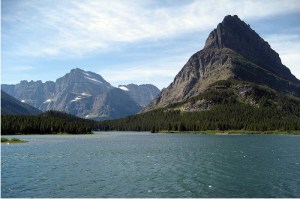
The red Grinnell Formation can be seen in Grinnell Point on Swiftcurrent Lake in this brianandjaclyn photoThe plucking action and abrasion of ancient glaciers created a world of stone throughout the park characterized by cirque lakes , stair-step valleys, moraine lakes, and rock formations known as horns and arêtes. While mountain climbers used to the lofty Colorado summits or the substantial granite of Yosemite may find Glacier’s well-weathered sedimentary rock a bit fractious—especially for technical climbers—the mountains that comprise the Crown of the Continent are nonetheless a rich feast for the tourist’s eye.
As you hike, notice the rock strata and the colors. Starting from the tops of the peaks and working down, you’ll find the following formations: Shephard, Snowslip, the Diorite Sill, Helena (formerly called Siyeh), Empire, Grinnell, Appekuny, Altyn and Prichard. The oldest rocks in the Park are the light-colored limestone and dolomite of the Altyn formation and the dark argillite of the Prichard formation.
When you drive between Babb, Montana and Waterton, Alberta, you’ll notice that Chief Mountain is an exposed remnant, or “outlier,” of the usually buried Altyn limestone. Contrast this rock with the somewhat greenish silture and argillite of the Appekuny formation which you can see, for example, at Dead Horse Point on Sun Road.
The red rocks of the Grinnell Formation are among the most striking in the park. The oxidation of iron-bearing minerals when the rock was formed created the distinctive color. The Grinnell Formation, with its ripple marks, is especially obvious near the St. Mary Falls trailhead on Sun Road and in the mountains around Many Glacier Hotel.
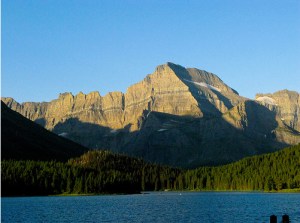
The diorite sill stands out on Mt. Gould in this Dave Sizer photo.A black diorite sill within the grey Helena Formation is clearly visible on Mt. Cleveland as seen from Waterton Lake, and on Mt. Gould, the Garden Wall and Mt. Wilbur in Swiftcurrent Valley. This is lava that pushed into the limestone, essentially cooking the rock above and below it. The resulting transformation of limestone into marble is an effect called contact metamorphism.
If you would like to learn more about the rock formations within the park, pick up a copy of the self-guided motorist’s tour Geology Along Going-to-the-Sun Road, Glacier National Park, Montana from the Glacier Association. See also, David Rockwell’s Glacier National Park natural history guide. Mountain climbers will find summit routes and other vital details in Gordon Edwards’ A Climber’s Guide to Glacier National Park.
Help celebrate 100 Years of Community in the Canyon at Tamarack Lodge in Hungry Horse, June 5, 7:30 pm to 9:00 pm.
The Historic Tamarack Lodge was built in 1907 and served in its original location as the Visitors Center for Glacier National Park. The public is invited to celebrate the lodge’s heritage with an evening of entertainment and discovery as part of Glacier National Park’s 2010 Centennial.
Relax in the original lodgepole pine architecture of the Lodge as local historian Bill Dakin brings to life the small communities that surrounded it in its early days, then sit back and enjoy the soothing sounds of Brad Lee, as the Grammy-nominated musician and local resident sings songs inspired by the beauty of the mountains.
Built in 1907, the lodge was moved to its current location in 1948 and completely renovated in 2003.
Glacier National Park’s Centennial Program Committee received the 2009 George and Helen Hartzog Volunteer Group Award for its efforts in promoting the park’s 2010 centennial.
Recipients of the 2009 Hartzog Awards for outstanding volunteer service were honored by the National Park Service and the National Park Foundation at a May 13 ceremony in Washington, DC.
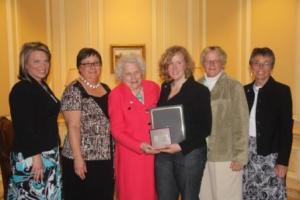
Accepting the Hartzog Volunteer Award for the Glacier National Park Centennial Program - Alicia Thompson, Stephanie Dubois , Helen Hartzog, Kass Hardy, Nancy Hartzog, and Jan Metzmaker. NPS PHOTOCoordinating Glacier National Park’s 100th anniversary activities through a community-driven Centennial Program, volunteers invested more than 1,000 hours of service and embraced the mission of celebrating the park’s rich history and inspiring personal connections.
Representing the Glacier Centennial Program were Glacier National Park Deputy Superintendent Stephanie Dubois, Glacier Centennial Coordinator Kassandra Hardy, volunteer Jan Metzmaker, and volunteer Alicia Thompson.
The group facilitated 108 centennial activities with 58 various organizations. They also helped 61 local businesses reduce their carbon footprint, developed 184 centennial products with 47 vendors, sponsored an art contest with 113 artists, and produced a book of selected stories with contributions from 240 authors.
National Park Service Deputy Director Mickey Fearn congratulated the recipients and recognized the contributions made by all park volunteers. “Volunteers increase the energy of the National Park Service and allow us to continue to do what needs to be done, including all things that could not be done without them.” Centennial Book Honoring Outstanding Service
The George and Helen Hartzog Awards for Outstanding Volunteer Service were started eight years ago to recognize the time, talent, innovation, and hard work contributed to national parks through the Volunteers-In-Parks (VIP) Program. Last year, 196,000 volunteers spent 5.9 million hours assisting the National Park Service.
George B. Hartzog, Jr., (1930-2008) served as the director of the National Park Service from 1964 to 1972 and created the VIP Program in 1970. In retirement, he and his wife established a fund to support the program and honor the efforts of volunteers. His widow, Helen, and children attended the awards ceremony and congratulated each recipient.
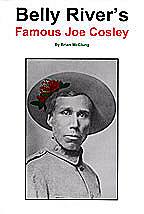
Hikers in the Northern Lewis Range area of Glacier National Park following the trail above Lake Elizabeth northeast along the Belly River are walking in a world once favored by the park’s first ranger Joe Cosley (1870-1944). To the west of Lake Elizabeth is Cosley Ridge (shown as Crossley on some maps), one of several landforms Cosley named after himself.
He wrote poetry and short stories, often wore a red sash, named nearby lakes after his lady friends, and carved initials and hearts on the sides of trees. Some say he was more poacher than ranger. As a trapper and guide, he knew the country well and was easily the last of the park’s true mountain men.
Appointed in 1910 by the park’s first administrator Major William R. Logan, Cosley served in the Belly River District. As C. W. Buchholtz writes in Man in Glacier, rangers were stationed around the periphery of the park: “These early rangers were directed to prevent poaching, illegal grazing, fires, ‘defacing of natural features,’ ‘obnoxious persons entering,’ and any other incongruous activities which might endanger the park.”
Of French, Spanish and Indian ancestry, the Ontario-born Cosley was known by the Indians Paeaushka for his long flowing hair. He served with distinction as a sharpshooter in France during World War I with the 13th Canadian Mounted Rifles.
When he returned to the Belly River area after the war, he no longer worked as a ranger, though it’s said that rangers on both sides of the US/Canadian border constantly sought him out on suspicion of smuggling. Where, many asked, was his cache of furs? He was ultimately caught and arrested when he was 60 years old by Glacier Ranger Joseph Heimes.
He was tried, fined and then escaped, purportedly heading on snowshoes through the mountains for the border. In 1944, he was found by the RCMP in his trapping cabin near Isle de la Crosse, Alberta, where he had died of scurvy.
Joe Cosley Collection
On July 24, a collection celebrating the life and legends of Joe Cosley will open in Glacier Discovery Square in Columbia Falls, Montana. The Hungry Horse News said in “Cosley collection bound for Columbia Falls,” Cosley was a true renaissance man of the late 1800s. He was both a lawman and an outlaw. The story of Cosley’s Great Escape — when he snowshoed over the top of Ahern Pass to escape capture by the law — is truly an astounding tale of intrigue, athleticism and adventure. Cosley represents an era in the West that was rough, rustic and ever-changing.
Re-dedication of Glacier National Park
The public is invited to the re-dedication ceremony for Glacier National Park at the Community Building, Glacier National Park, MT, on May 11 between 10 a.m. and 4 p.m.
Set in Glacier, including Lake Elizabeth and the Belly River
City: St. Paul, MN
Date: Saturday, May 15th
Location: Rice Park
Time: 10:00 a.m. to 4:00 p.m.
A touch of Glacier in downtown Saint Paul. Glacier comes to life through exhibnits, vendors, and live music featuring Montana’s Troubador Jack Gladstone and local bluegrass band Pickin’ up Steam. Activities for kids; Glacier Education Specialist Laura Law will be on hand. In addition, a 1930s Red Jammer bus will be on display.
Glacier Fest is free and families are welcomed. Commemorative buttons will be available for a $5.00 donation to that support the Glacier Park Fund.
See Glacier Fest for informational exhibits and presentations including LOSING A LEGACY: DISAPPEARING GLACIERS, 100 DAYS OF GLACIER, and LAND OF MANY STORIES.
$5.99 Kindle purchases support the Glacier Centennial
“In its one and only issue, Altyn’s Swift Current Courier on September 1, 1900 observed the high-pitched activity within the ceded strip and headlined: ‘NO DOUBT ABOUT THE PERMANCY AND PRODUCTIVENESS OF THE SWIFT CURRENT MINES.’ And also: ‘THE GROWTH OF ALTYN ASSURED.'” — Malcolm R. Campbell, “Bears, Where They Fought,” in NATURE’S GIFTS.
As you drive into the east side of Glacier National Park from Babb, MT to Many Glacier Hotel on Glacier Road 3 alongside Swiftcurrent Creek, picture how different this valley would be today if the early 1900s mining boom town of Altyn had survived within a strip of mountain wilderness ceded to the U.S. by the Blackfeet Indians in 1895.
Geologists, prospectors, developers and entrepreneurs were convinced that, while the scenery in the valley was lovely and didn’t put food on the table, that a great mining center would develop at the head of today’s Lake Sherburne. The speculators thought they would find enough silver, gold, quartz and oil to put a lot of meals on a lot of tables, and they braved the harsh winter elements and bad road conditions to see if what was under the ground proved to be more valuable than the natural wonder of the place. Altyn in 1911 - W. T. Stanton Photo, USGS
According to a reporter on the nearby Dupuyer Acantha, “the road up to Swift Current in its present condition has been known to make a preacher curse, and I have my opinion of the man who makes the trip over this road road (!) without breaking the 3rd commandment or perhaps all ten of them.”
It was all for nothing: the mineral deposits weren’t commercially viable. By 1906, only a few people remained in Altyn hoping against hope that the mining shafts and test wells would strike pay dirt. Today, the remains of Altyn–such as they are–lie beneath the water of Lake Sherburne.
Lake Sherburne is a man-made reservoir that filled the valley in 1921 where once there was a forest and several smaller lakes and a saloon and a barber shop and a hotel and a fair number of businessmen who could never imagine the centennial we’re celebrating in the park this year.
from Nature’s Gifts Anthology from Vanilla Heart Publishing
Lake Sherburne from Glacier Road 3 - Photo by Andrew KalatWhen Hudson’s Bay Company agent Hugh Monroe and a Piegan hunting party rode up the Íxikuoyi-yétahtai (Swiftcurrent Creek) into a U-shaped valley that would become part of Glacier National Park a half century later, they saw two male grizzly bears fighting next to two small lakes. They named the place Kyáiyoix ozitáizkahpi (Bears-Where-They-Fought-Lakes) because that’s what happened there and that’s how they would speak of it later when they told their stories.
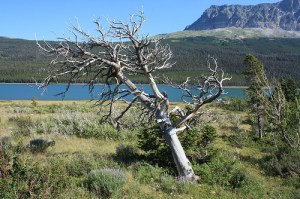
A hiker following Glacier Route Three west into the valley from the plains along lateral moraines left behind when the valley glaciers melted off 8,000 years ago will hear no residual growls from those fighting bears. No sign marks the spot. The wise aspen, spruce and pine keep their counsel. On a quiet day, however, those walking alongside the relatively recent Lake Sherburne reservoir may hear the voice of grandfather rock whispering a secret: within the scope of geologic time, all rivers are new, and the men and women who follow them are as ephemeral as monarch butterflies on a summer afternoon.
From the perspective of Glacier National Park’s Proterozoic rock born in a great sea 1.6 billion years ago, the immortality man acquires here in the Shining Mountains comes through his stories.
Nature’s Gifts Anthology
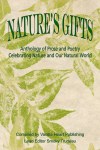
My essay “Bears, Where They Fought” about the stories surrounding Glacier National Park’s Swiftcurrent Valley from the days of Hugh Monroe to the short-lived mining boom town of Altyn to the 1975 flood is one of many contributions in Vanilla Heart Publishing’s 2010 Earth Day anthology, “Nature’s Gifts.” You can read the remainder of this 4,500 essay I wrote in commemoration of the park’s 2010 centennial in the e-book in multiple formats or on Amazon as a trade paperback.
The anthology offers readers more than twenty pieces, from haiku to villanelles, from essays to short stories. Take a walk in a garden or hike in a national park. Reflect on the moon. Learn something new. Laugh and cry with our writers as they discover the beauty, the joys, and the raw power of nature.
Nature Conservancy Contribution
The Nature Conservancy will receive a donation of 50 percent of the profits for every book sold in both print and e-book editions for one year. Dedicated to protecting our rapidly vanishing natural environment, The Nature Conservancy has protected more than 117 million acres of land in 28 countries.
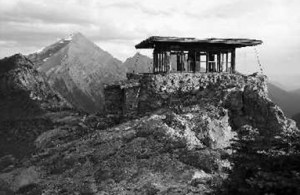
Heavens Peak - Rachel Zinger photoA fire lookout constructed of wood, stone and glass perches at the tip of the north ridge of Glacier National Park’s Heavens Peak. Built on the prominent, often-photographed 8,994-foot mountain in 1945 at a cost of less than $5,000, the structure once served as an integral link in the park’s network of manned fire lookouts. The lookout was added to the National Register of Historic Places in 1986.
Calling the rustic lookout “the most enduring legacy of the Civilian Public Service (CPS) Camp in Glacier National Park,” The Glacier Park Fund has taken on the building’s restoration as one of its Glacier Park Centennial Legacy Projects. The proposed work involves stabilizing the roof, repairing and reconstructing shutters, repairing and painting exposed exterior wood surfaces, and masonry stabilization.
Fire Lookout - Gary Ludwig photoThe Glacier Park Fund projects funding needs of $36,000 of for the lookout’s rehabilitation. (Click here to make a donation.) The planned restoration work will slow down the accelerating deterioration so that the historic structure can withstand the harsh alpine conditions in harmony with the landscape.
While air observation allows a more comprehensive coverage of the park
and has replaced the manned lookout almost entirely, the Heavens Peak fire lookout once provided observers with a marvelous panoramic view including the Livingston Range, the Lake McDonald Valley, Logan Pass and the Garden Wall. Typically, observers used an Osborne Firefinder (aligning the sites rather like aiming a rifle) to pinpoint the exact location of any observed smoke on a circular park map.
The construction of the Heavens Peak lookout was one of many projects completed by conscientious objectors assigned to Glacier Park’s World War II Civilian Public Service Camp (CPS). The camp housed 550 men.
The Glacier Park Fund’s overall goal for multiple, short-term legacy projects is $250,000. According to the fund, the Heavens Peak Lookout restoration, in consultation with the park’s historic architect, is part of a 2010 birthday gift to the park. In 2009, restoration work on a 1913 ranger cabin was completed providing space for a winter school programs. More accessible trails, a wildlife viewing platform and upgraded Logan Pass visitor center exhibits are also on the wish list.
–
My Glacier National Park Centennial posts can be found on Twitter by searching on the #glaciercentennial tag.
Purchases of this adventure novel benefit Glacier Park
From road and campground status, to park interpretation, fire, and search and rescue updates; learn the realm of communication possibilities through social media in Glacier National Park. On Tuesday, April 6th, from 12 – 12:45 pm at the West Glacier Community Building, Dave Restivo will present how Glacier National Park is joining in on social networking sites and how you can join in on the conversation.
There is no substitute for experiencing the park first hand, but with the ever increasing popularity of social networking media, thousands of visitors are having a virtual experience that can be very rewarding. With more than 375 million Facebook users to-date, Glacier‘s staff are actively finding new visitors “where they are at, and where they expect us to be.”
David Restivo is a Visual Information Specialist with time split between Glacier National Park and the Intermountain Regional Office developing new media interpretive products. He is the recipient of several 1st place awards from the National Association for Interpretation in Interpretive Media and was awarded the National Freeman Tilden Award from the NPS for excellence in Interpretation.
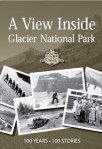
 With the 2010 Glacier National Park Centennial, some great new books have appeared, including “100 Years – 100 Stories” from the National Park Service and Carol Guthrie’s beautiful large-format book “Glacier National Park: The First Hundred Years” from Farcountry Press.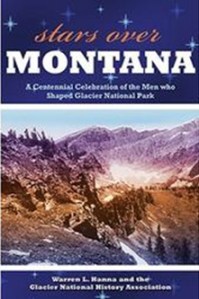







 Malcolm's Round Table