Glacier Park Volunteer Opportunities

Glacier National Park relies on 50,000 hours of of volunteer help from over 500 individuals every year. You can find information about programs and requirements here. And, you can find an application form here.  There is a limited amount of no-cost housing for volunteers working 32 or more hours per week.

Volunteers, primarily for work between June and September, are needed in the following programs:

  • Nurturing Native Plants
  • Transit Center
  • Visitor Center
  • Interpretation
  • Campground Host
  • Citizen Science
  • Back Country Patrol
  • Aquatic Invasive Species
  • Headquarters Phone Volunteers
  • Group Projects

The Glacier Institute

The private nonprofit Glacier Institute offers educational programs and adventures within the park and the Flathead National Forest. Offerings include outdoor education courses, youth camps and the discovery school. According to the institute, “Volunteers are always appreciated at our field sites and include various duties such as assisting with educational programs and facility maintenance and cleaning.” Volunteer and staff position information can be found here.

Glacier National Park Fund

The Glacier National Park Fund was established in 1999 to conduct fund raising activities on behalf of the park. Their efforts support NPS and volunteer group projects such as the planned restoration of the Heaven’s Peak Fire Lookout.

For a list of events requiring Glacier Park Fund volunteers, click here. For a list of current projects for which the fund is raising money, click here.

Boy Scouts of America

Scouts volunteering in Glacier National Park dates back to the 1920s when Eagle Scounts helped create some of the park’s first trails. In 2010, both Glacier and the BSA celebrated their 100th birthdays; appropriately, the Scouts were volunteering again. Scouts, scout leaders, and parents who are interested in Glacier volunteer projects should contact the Nu-Ooh-Sa District for programs and information.

For information and volunteer needs throughout the nation’s 400 National Parks, click here. On the western site of the park, check with the North Fork Preservation Association for trail clearing and other opportunities.

Malcolm

Set partially in Glacier National Park

Avalanche Damages Historic Glacier Park Chalet

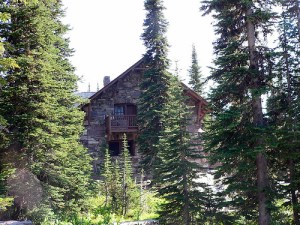
Sperry - Lee Coursey photo

Skiers have discovered that an avalanche hit Glacier National Park’s historic Sperry Chalet over the Winter. Windows, doors, interior walls and fixtures in the south end of the remote structure have been damaged, and several of the rooms were filled with snow.

While some of the rooms may not open this season, Chalet Coordinator Kevin Warrington hopes the chalet will open on July 8th as planned. However, the assessment of the damage is incomplete. Check for updates on the chalet website.

Sperry Chalet, which can be reached only by trail, is 6.5 miles from Lake McDonald Hotel on Glacier’s west side. The chalet was built in 1913 by the Great Northern Railway.

Malcolm

Malcolm R. Campbell is the author of two novels set partially in Glacier National Park. “The Sun Singer” and “Garden of Heaven: an Odyssey.”

Glacier Park Fund Continues Trail Maintenance Support

The Glacier National Park Fund partners with the National Park Service in the Save the Trails Project. Past work has included the McDonald Creek overlook and the reconstruction of the Horse Bridge.

This year, most of the park’s historic hotels and campgrounds will be open by mid-June and hikers will be out on their favorite hikes. Trail flooding is just one of the yearly spring problems that necessitates maintenance.

If you would like to help support Glacier year-around, the Glacier Park Fund offers a way to do it. Click here for information. In addition to maintenance, work will continue this year on a wheelchair accessible trail across the lake from Many Glacier Hotel and the Hidden Lake trail boardwalk.

Budget cuts at the federal level make volunteer help and donations via the Glacier Park Fund urgent. Keeping over 700 miles of trails in good shape takes a fair amount of effort. Those who have been going to Glacier for years will remember that the park once advertised over a thousand miles of trails. Let’s not lose any more of them.

Malcolm

Vanilla Heart Publishing announced today the release of a new satirical e-book in the “Jock Talks Series.” Authored by Smoky Trudeau Zeidel and Malcolm R. Campbell, Jock Talks Lightning Safety is a parody of the summertime helpful hints articles that often run in daily newspapers. Along with the fun, the book takes a look at safety myths which really are nothing more than myths.

Click on the link for Amazon and on the cover for OmniLit.

Snow Pack to Delay Some Glacier Openings

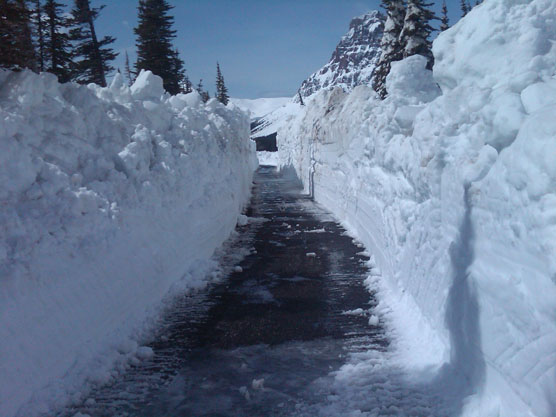
I couldn’t resist posting this great NPS Glacier photograph of the deep snow along the road to Swiftcurrent on Glacier’s east side. You can see part of Mt. Wilbur on the right side of the picture.

NPS Photo

from NPS Glacier:

Due to an unusually large,  lingering snowpack and cool temperatures, Glacier National Park officials announced delays in opening some east side campgrounds and the Swiftcurrent Motor Inn. The opening date of the Many Glacier, Cutbank and Two Medicine Campgrounds will be June 10th, instead of the usual Memorial Day Weekend opening date. The Swiftcurrent Motor Inn opening will also be delayed until June 10th rather than the previously anticipated June 3rd. Visitors with reservations at Swiftcurrent Motor Inn will be accommodated at other Glacier Park, Inc. properties. Park crews are working diligently to get facilities uncovered, water and wastewater services turned on, utilities repaired and roads dug out.  

A Glacier Park Novel

Handy Guidebook for Glacier Park’s Wildflowers

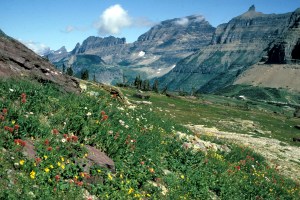
During the Spring and Summer, hikers throughout Glacier National Park report being enchanted by the colorful profusion of wildflowers from McDonald Valley to Granite Park to the Belly River Valley. For years, I counted on Guide to Glacier National Park by George C. Ruhle and Plants of Waterton-Glacier National Parks by Richard J. Shaw and Danny On for identifying just what I was seeing along the trail.

Sad to say, both of these books are out of print and relatively hard to find. The pages of my old wildflower book are now a loose-leaf collection of sheets; the same would also be true of Ruhle’s book if it were not spiral bound.

Last year, Mountain Press Publishing came out with a wonderful replacement for the book by Shaw and On: Wildflowers of Glacier National Park and Surrounding Areas. Written by botanists Shannon Fitzpatrick Kimball and Peter Lesica, the book features beautiful photographs and layperson friendly details.

A botanist for 15 years, Kimball has served as a consultant for the park. Lesica is also the co-author (with Debbie McNeil) of A Flora of Glacier National Park, Montana and other books based on his 25 years as a Montana botanist.

Published in April 2010, this 260-page guide is an easy-to-use wonder for Glacier’s visitors from Red Bus tourists to casual hikers to ardent backpackers and climbers. The book is available from Amazon and through the Glacier Association. Like my earlier book, this one also groups flowers by color—a very handy technique.

Readers of Glacier Park Magazine will also enjoy Kimball’s article “The Healthy Rose” in the magazine’s Spring 2011 issue.

You May Also Like

The first time I drove to the lake it was a lakemy Earth Day post about a lake that now exists more in my memory than in fact

Malcolm

A Glacier Park Novel

Glacier to Celebrate New Quarter

Glacier National Park will celebrate the launch of the Glacier Park Quarter on April 13th at the Columbia Falls High School Gymnasium at 1:00pm. The public is invited to attend.

The quarter is the seventh coin in the America the Beautiful Quarters® Program.

After a brief ceremony, visitors may swap their currency for the new quarters in $10 rolls. All children under 18 will receive a free quarter.

The coin, one of five new coins honoring National Parks to be released this year, features a mountain goat surveying the high country with Reynolds Mountain in the background.

According to Glacier Park superintendent Chas Cartwright, “The design of the coin is one of the iconic views of Glacier National Park and will be very familiar to the thousands of visitors that drive over the Going-to-the-Sun Road each summer.”

Novel partially set in Glacier's Swiftcurrent Valley

Going-to-the-Sun Road Geology

Every year thousands of people enjoy the views from Glacier National Park’s engineering marvel known as the Going-to-the-Sun Road. Whether you’re looking at the scenery from the seat of your bicycle, a red tour bus or your car, the trip from St. Mary’s to Lake McDonald provides some of the best high country ambiance in the Rocky Mountains.

Up close and personal, you will notice the rock formations. They are stunning and colorful but, unless you have a good tour guide or a handy reference book, the geology on display may remain incomprehensible.

Geology Along Going-to-the-Sun Road, Glacier National Park, Montana will meet your needs perfectly. First published by the Glacier Association in 1983, this practical, well-illustrated guidebook has met the test of time. The book is organized into twenty-one stops from east to west along Sun Road that illustrate many of the park’s geological features.

Sun Road Tour Stops

Sun Road's Logan Pass - NPS Photo
The book includes color photographs of both the far-away and the close-up features. For example, you can compare what you see when you look at Curly Bear Mountain 3.9 miles from the entrance station with a diagrammed photograph that illustrates the mountain’s visible rock formations.

Or, at Stop 5, “Grinnell Formation,” text and close-up photographs in the book help you better understand this colorful red rock. Logan Pass, Stop 10, at 6,680 offers excellent views of the horn-shaped mountains created by glaciation, including Clements Mountain (shown in the book).

In addition to the stops, the book includes a glossary, information about rock colors, a list of the park’s rock formations and a handy shaded relief map of the road. Written by geologists in a language intended for non-scientists, the guide adds to a visitor’s understanding and enjoyment of a highway that has thrilled millions of tourists since its completion in 1932.

Malcolm R. Campbell, who worked as an editorial assistant for this Glacier Association book project, is the author of two novels partially set in the park, The Sun Singer and Garden of Heaven: an Odyssey.

Kalispell Workshop: Getting Kids Engaged with Nature

Free copy for each participant
from NPS Glacier National Park

On Saturday, April 9 the education staff at Glacier National Park, in conjunction with the Flathead Community of Resource Educators (CORE), will offer a free workshop for parents, educators, and others who work with children focused on how to get children outside and engaged with nature. The full-day session will be held at Lone Pine State Park (see map) in Kalispell from 9 a.m. to 3:30 p.m.

Topics to be covered include how to encourage youth to spend time outdoors, fun activities that connect children with nature, and places in the local community for outdoor play. In addition to Glacier National Park staff, Flathead CORE partners for the day include the Flathead Conservation District, Ravenwood Outdoor Learning Center, Flathead National Forest, and Montana Fish, Wildlife, and Parks.

A large portion of the day will be spent outdoors, so participants should come prepared to be outside, regardless of the weather. Participants should also bring a bagged lunch. A variety of information resources will be provided.

As more and more children and adults become disconnected from the natural world, Glacier National Park hosts this workshop to support goals of the National Park Service Children in Nature effort: “To reconnect our youth and their families with the land, create a new generation of stewards, and improve the physical and mental health of our Nation.”

This is the third year this workshop has been made possible through a grant from the Glacier National Park Fund. Thanks to this generous financial support, all workshop participants will receive a free annual Glacier National Park pass, valid for unlimited visits to Glacier National Park for 12 months plus a copy of Richard Louv’s book ‘Last Child in the Woods – Saving Our Children from Nature- Deficit Disorder.’

The workshop is limited to the first 40 registrants. Staff from Ravenwood Outdoor Learning Center will provide a free concurrent children’s camp for up to 20 school-aged children that accompany parents attending the workshop.

Contact Debby Mensch at debby_mensch@nps.gov or (406) 888-7942 to register and/or ask questions.

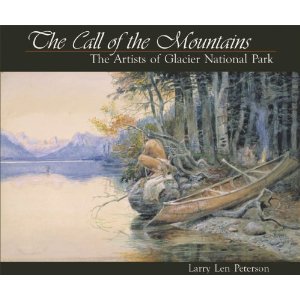
The Call of the Mountains: The Artists of Glacier National Park

Larry Len Peterson brings together in one book a representative selection of the artists who have been inspired by Glacier National Park along with commentary that places the work into a historical perspective.

The Call of the Mountains: The Artists of Glacier National Park (Mountain Press Publishing, 2002), is organized into four sections: “Sign Talkers: The Authors,” “Empire Builders: The Hills and Their Artists” “Shadow Catchers: The Photographers” and “Word Painters: Charles M. Russell and Friends.”

Author of over forty publications, Peterson is a collector of western art and the former chairman of the Charles M. Russell Museum’s advisory board.

Jerry Fetz, of Crown of the Continent E-Magazine writes, “The Call of the Mountains is an exceptional book, one that every admirer of Western art and Glacier National Park, separately but especially together, should own, look at again and again, and give to likeminded or even potentially like-minded friends and family members on special occasions. We owe Larry Len Peterson much gratitude for gathering these artists and works together, and for supplying extremely important textual background and information about the artists, their artistic works, and the amazing Glacier National Park that inspired them.”

A magical novel set in Glacier National Park

Heavens Peak Fire Lookout Assessment Open For Comments

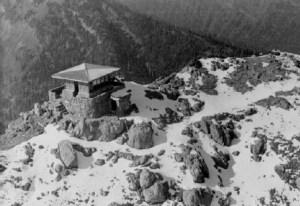
NPS Photo

The Environmental Assessment (EA) for the proposed stabilization of the Heavens Peak Fire Lookoutis complete and ready for public review and comment.

Built in 1945 by conscientious objectors, the rustic stone lookout was in operation until 1953 when aerial fire detection became the new standard.

The building was listed on the National Register of Historic Places in 1986; however, the original historic fabric and structural integrity of the lookout is being lost through lack of maintenance and harsh weather conditions on the 8,994-foot Heaven’s Peak.

The planned project would be limited to repairs that would minimize further deterioration and keep the structure standing without upgrading the rail leading to the lookout.

According to the plan, “the building’s roofing system would be repaired and new roofing installed, and the floor would be repaired. Window and door components would be repaired, plexi-glass would be placed in selected windows for viewing purposes, shutters would be repaired or replaced, exterior and some interior surfaces would be re-painted and minor re-pointing, masonry, and concrete repairs would be made where necessary.”

Released last month, the EA concluded that the project will have moderate adverse long-term impacts on the site and that wildlife impacts will be negligible.

Click here to view the project page and read the documents.

25% off during "read-an-e-book" week