The Cassadaga, Florida Devil’s Chair

“The term devil’s chair (or haunted chair) in folklore is frequently attached to a class of funerary or memorial sculpture common in the United States during the nineteenth century and often associated with legend tripping. Nineteenth-century graveyards sometimes included carved chairs for the comfort of visitors. In this function, the object was known as a “mourning chair,” and cemeteries have since provided benches for similar purposes, most often movable units of the type used in parks, but also specimens in the tradition of the carved chairs.

“Some carved chairs were probably not intended for use as anything but monuments, while the “monubench” is still commercially available. Once the original purpose of these chairs fell out of fashion, superstitions developed in association with the act of sitting in them. In a typical example, local young people dare one another to visit the site, most often after dark, at midnight, or on some specified night such as Halloween or New Year’s Eve. Variously, the stories suggest the person brave enough to sit in the chair at such a time may be punished for impudence or rewarded for courage.” — Wikipedia

Florida’s  Creepy Urban Legends reports that “Cassadaga is known for being Florida’s spiritual center where thousands of psychics and clairvoyants gather year round to exercise their talents. As you might imagine, this spiritual haven is a hotbed of spiritual activity, though one particular site is known to send chills down your spine. Known as the Devil’s Chair of Cassadaga, many people in the community believe that if you sit in this chair late at night while no one is around the Devil will visit you. Better have a cold beer on hand because legend also has it that the Devil will be expecting one.”

According to the Serpent’s Pen, these stone chairs were originally called “Mourning Charis” and were placed near loved one’s graves use by family and friends who stopped by to pay their respects. The spooky legends began when these chairs or benches fell out of fashion and became objects of superstition.

One of the more notorious cemeteries has been Greenwood in Decatur, Illinois where my grandparents lived (in the town not the graveyard). In addition to numerous devil’s chairs,  the place was filled with ghostly lights and other weird stuff that we didn’t want to see at night.

Only in Your State says that Greenwood (shown here) is one of the most haunted sites in the country. “One of the most evil parts of the graveyard is the Civil War Memorial. It is said that a prison train carrying Confederate prisoners to camps went through this area and that many died from Yellow Fever while on board.”

I didn’t even like driving past Greenwood in the daytime. The same is true of the graveyard in Cassadaga. Some places are best left alone.  These Devil’s Chairs at Greenwood are such a place: they’re just asking for trouble. Or worse!
Malcolm

‘The Florida Skunk Ape’ by Jacob Desjarlais

“The skunk ape is a large and hairy human-like mythical creature purported to inhabit the forests and swamps in the southeastern United States, most notably in Florida. It is often compared to, synonymous with, or called the “cousin” of Bigfoot, a prominent subject within North American popular culture.

Many dubious articles have been presented in an attempt to prove the skunk ape’s existence, including anecdotal sightings, disputed photographs, audio and video recordings, and casts of large footprints. The majority of mainstream scientists have historically discounted the existence of the skunk ape, considering it to be the result of a combination of folklore, misidentification, and hoax, rather than a living animal. The skunk ape has permeated into the popular culture of the southern United States, especially in Florida” – Wikipedia.

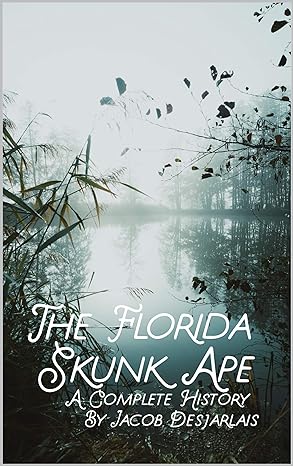
Books about Florida’s folklore often reference the Skunk Ape. Among those is a short Kindle book released in 2020 by Jacob Desjarlais that bills itself as “A Compete History” all in 26 pages.

From the Publisher

“Jacob Desjarlais grew up on the edges of the swamp less than 50 miles from where the original Skunk Ape sightings started popping up. The Skunk Ape, the stinky cousin of the Pacific Northwest’s Bigfoot, was the original Florida Man, known for bursting out of bushes and attacking cars. Desjarlais examines Skunk Ape sightings that pre-date Florida statehood as well as the history of the beast’s name. With a look at how breeding populations would work with the sustainability of the cryptid, fossil evidence, and even social media’s impact, Desjarlais leaves no fern unturned in his search for the possible realities behind the Skunk Ape myth. Through his investigation, he outlines who has been involved in furthering the myth and who could be profiting from it along the way.

“The Florida Skunk Ape: A Complete History is Book One in a series of Conspiracy Chapbooks written by Jacob Desjarlais that explore controversial subjects and outlines the history and ramifications of them. From who believes to who profits, Desjarlais investigates topics ranging from Skunk Apes and Ticks to the Panama Papers and Phantom Time.”

You can also find information about the critter at Shealys Skunk Ape Headquarters in Ochopee, FL.

–Malcolm

Would you eat a rotten peanut?

In the old days when I was in Scouting, we often sang the song we called “Found a Peanut. Like “100 Bottles of Beer of the Wall” and “Can’t Get to Heaven,” it was repetitive, easy to remember, and allowed for a little improvisation.

Found a peanut, found a peanut, found a peanut last night.
last night I found a peanut, found a peanut last night.
Cracked it open, cracked it open, cracked it open last night last night I cracked it open, cracked it open last night.
It was rotten, it was rotten, it was rotten last night,last night it was rotten, it was rotten last night .

We always wondered why anyone walking along would pick up a rotten peanut and eat it. And, since almost everyone knew the song, you’d think the song itself would serve as a warning since the person eating the bad peanut dies near the end of the song. It (the song) had been around since the 1940s, so everyone should have known better than to eat anything off the street.

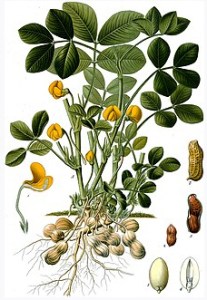
Wikipedia graphic

I sold “parched peanuts” at college football games when I was in high school. We called them parched to distinguish them from boiled peanuts which were very popular in the south.

We’d go up and down the aisles shouting out what we had. I felt sorry for the people selling Cokes because they were heavy. The hotdogs were too much trouble. Peanuts were easy and if somebody wanted one who was 10 seats away from the aisle, he’d pass the money own the row, and then we’d toss the pack of peanuts back to him.

You could get people to laugh if you shouted out “Hey, I found a peanut.” That worked best if we were losing the game and the fans still left in the stadium wanted something to divert their attention from the field. We never ever shouted, “Get your goobers here.”

If you found a peanut on the sidewalk,

  • Would you pick it up?
  • Eat it, even if it was rotten?
  • Call 911?
  • Feed it to a friend?

–Malcolm

Malcolm R. Campbell is the author of the comedy/satire novel “Special Investigative Reporter” from Thomas-Jacob Publishing.


Briefly noted: ‘Go Gator and Muddy the Water: Writings by Zora Neale Hurston from the Federal Writers Project’

It’s a sad commentary on biased people that the majority of Zora Neale Hurston’s writings for President Roosevelt’s Federal Writing Project for Florida never made it into the Florida guide. Politics and racism kept a lot of her work out of the public eye for a long time even thought she was one of the state’s best collectors of folklore. She saw better than most, I think, the value of old stories as they relate to a place.

By now, her expunged FWP writings have surfaced in a variety of places. Fortunately, most of them–such as Kristin G. Congon’s Uncle Monday and Other Florida Tales–credit Hurston with collecting these folktales in 1938 (or earlier). I mention Uncle Monday in my novel Eulalie and Washerwoman.

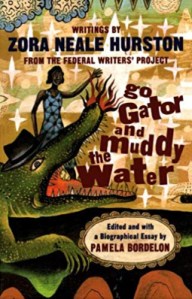
Go Gator and Muddy the Water, while an old book that grew out of Pamela Bordelon’s doctoral dissertation has been around for almost twenty years, it includes Hurston’s stories along with some meaningful commentary. It remains an excellent resource, and Bordelon’s essay offers helpful perspective.

Most readers remember Hurston as the author of Their Eyes Were Watching God and/or her posthumous novel Barracoon: The Story of the Last Black Cargo released in May.  Both novels are masterpieces, I think. However, her range and her contribution to our understanding of our past is larger than these novels and can be found in her work as a collector of folklore.

I have found great inspiration and enjoyment from her stories.

Malcolm


Keeping track of the old stories

“If you know or happen upon a story, record it in some way. As a voice memo on a phone. In written form. Do the same with your friends and relatives. And archive the stories or send them to someone who keeps folklore records. Because this preservation is vital to ensure that we do not lose our old traditions or beliefs. Never assume that everyone knows why a particular road, or field, is called by a certain name. If you know the history, record it. Otherwise you do not know what may be lost in the future.” – Jon Buckeridge in “Once Upon a Time: Folklore and Storytelling” in The Folklore Podcast

Wikipedia Photo – Dutch Proverbs

Folklore is easy to lose. Mainstream history often runs roughshod over local stories. The stories themselves may have been passed from person to person to the extent that details have been lost or exaggerated or even changed. Yet, if the participants and places aren’t famous, the stories may be forgotten.

As writers, we can help keep those stories alive by writing down those we know and disseminating them in nonfiction or as the basis of our fiction. These stories can add a lot of depth to a novel.

When my wife and I moved to a small Georgia town in 2002, the subdivision we chose was once part of a farm. The subdivision was named after one of the city fathers; his name can be found in local and county histories, and in walking tour notes. The subdivision’s streets were named after members of the farm family. We were the first owners of a house that had been built the year before. You could see in the property’s deeds who owned it before we did. But you won’t find the links there between the street names and the family members’ names.

Long-time residents had known the family, so in time we learned where the street names came from. The developer/builder also knew this. We moved out two years ago. I wonder how many people in that neighborhood today know where their street’s name came from. I don’t recall the homeowners association documents including any neighborhood history. In a brief Google search, I can’t find that information on line.

I’m sure somebody in town still knows it. But have they written it down? If not, the information will disappear in time along with any remembrances people had of the family members and what they did or where they ended up. Quite likely, none of them are famous and, to my knowledge, they didn’t factor into any city or county news stories of note. But in a lot of locales, the names of streets have histories connected to them that might make for good background information in a short story of a novel.

“Stories are the very basis and heart of folklore. Certainly, when you look back at cultures that did not have a recorded history per se, or who relied on outsiders to chronicle their histories, the essence of them is held in the stories. Without those stories they will die. We need people with passion and drive to not let them die. For Jon, it does not matter whether you believe that the supernatural elements of these stories are real; what matters is that the stories, the culture and the history, and heritage of those who call a place home is preserved and held up for future generations. It is something that every person has a right to.” – Podcast Introduction.

Many of us remember our parents and grandparents telling us family stories when we were young. We remember some of them, but unless we wrote them down, we’ve probably forgotten most of them. Too bad: that’s the kind of information that can be passed down to children and grandchildren and, when it figures into the local history and development of a town or county, it quite possibly should end up in local history books, short stories, and novels.

–Malcolm

Malcolm R. Campbell’s Kindle short story (which is based on Florida folklore) “En Route to the Diddy-Wah-Diddy Landfill While the Dogwoods Were in Bloom” has been nominated the 2018 Pushcart Prize.