Stephen King, Joyland and the Lure of Pulp

joylandA haunted carnival funhouse gives a supernatural spin to events in Thriller Award–winner King’s period murder mystery with a heart. In the summer of 1973, 21-year-old college student Devin Jones takes a job at Joyland, a North Carolina amusement park. Almost immediately, a boardwalk fortune-teller warns that Devin has “a shadow” over him, and that his destiny is intertwined with that of terminally ill Mike Ross, a 10-year-old boy who has “the sight.” – from the Publishers Weekly review of Stephen King’s “Joyland” (June 2013 release)

Anyone Stephen King’s age or older has been impacted by pulp fiction whether we’ve read any of it or not. Pulp, referring to the cheap paper, covered a lot of genres from westerns to mysteries to sports to gangsters. It was cheaply produced and, so some people say, never could have seen the light of day in the up-scale “slicks” or “glossies”—the magazines and books printed on better paper.

The cover art, which was usually suggestive, garish, colorful, and over the top, meant that readers typically wouldn’t let their parents, teachers, office workers, pastors, and spouses see the books. In terms of magazines, most pulps died out during the 1950s as the sixty-year-old publishing approach began to run its course. Today, the book covers that were once considered scandalous are now considered “camp” and/or treasures of a bygone era that began with Argosy Magazine and included authors H. Rider Haggard,  Edgar Rice Burroughs and Talbot Mundy.

“Undeniable…charm [and] aching nostalgia…[JOYLAND] reads like a heartfelt memoir and might be King’s gentlest book, a canny channeling of the inner peace one can find within outer tumult.” – Booklist

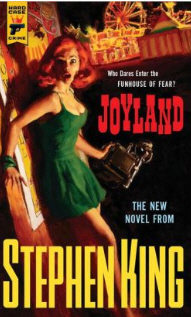
The cover of Stephen King’s upcoming novel Joyland screams PULP. Published by Hard Case Crime, the look of the book is intentional as its author takes a nostalgia trip back to his roots and the fiction he grew up reading. The publisher is a friend of pulp:

Hard Case Crime brings you the best in hardboiled crime fiction, ranging from lost noir masterpieces to new novels by today’s most powerful writers, featuring stunning original cover art in the grand pulp style.

Though King embraced e-books early on, Joyland will be available in paperback only. That’s made bookstores happy and caused other people to wonder what King is up to when he says, “I have no plans for a digital version. Maybe at some point, but in the meantime, let people stir their sticks and go to an actual bookstore rather than a digital one.”

Pulp seems to be less pulpy on a Kindle or a Nook. Perhaps that, and the nostalgia of those pulpy old days is sufficient rationale for the paperback-only release. Personally, I would like to see some other major writers delay the release of the digital versions of their books. Only the prosperous could afford to do that, to go against the tide that often washes e-books up on shore before the paperback and hardcover releases.

Some years ago, literary agent Mort Janklow said of King, “That’s a fellow sitting up in Maine having fun, but it’s not a way to run a business.”

No, it probably isn’t. But I like it. I like it even on a day when I’m talking to the regional library system about including e-book editions of my novels on their e-lending lists. I like it because it’s fun. And yes, I’ll buy a copy at a bricks-and-mortar bookstore because that’s part of what pulp fiction is all about, walking in, making sure Mom, Dad or the school teacher aren’t around, and grabbing a copy of the latest hardboiled story off the spinning rack of books.

I remember the thrill of all that and I’ll enjoy going back in time to renew my memories. Unlike the old days, this book has glowing reviews from mainstream reviewers. I almost wish it didn’t.

–Malcolm
The seared images of ‘Body Heat’

bodyheatposterNed: I need someone to take care of me, someone to rub my tired muscles, smooth out my sheets.
Matty: Get married.
Ned: I just need it for tonight.

–from “Body Heat” starring William Hurt as Ned and Kathleen Turner as Matty

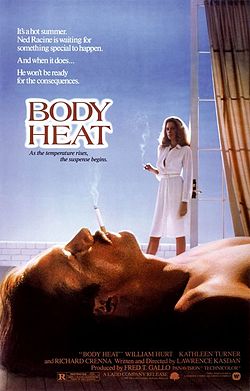
From the sex to the crime to the moody saxophone music to Florida’s hot summer days when small-town lawyer Ned Racine meets the married, but overtly sexual Matty Walker, “Body Heat” was, in 1981, the kind of film everyone talked about. Men wanted to be Ned even though things ended up badly. Women wanted to be Matty because she got everything she wanted.

When I watch this film today on DVD, it still plays well. I do like noir films. I did grow up in Florida in the days before air conditioning when everyone sweated when the temperature outside reached 98.6 degrees or higher. And, John Barry’s music is the kind of music I remember hearing in blues bars on those summer nights when I was hoping to meet somebody like Matty Walker who didn’t want me to kill a husband for her. But it’s more than that, though what is is, is hard to define

Movies have become more permissive since 1981. Skimpy clothing, more innuendos, racier language than Ned Racine ever used, and more body heat than most people experienced in “real life.” Think of it: The near-nudity on “Survivor” is more extravagant, the language on “Hells Kitchen” is more profane, and the urgent sexual encounters on “Grey’s Anatomy” are more frequent than in most of the films we saw thirty-two years ago.

My wife and I saw “Body Heat” in a packed theater with another married couple. Afterwards, all of us commented about the same sexual encounter when the audience was stunned into an overt hush. When Ned throws a porch chair through the front door of Matty Walker’s house while she stands inside at the foot of the stairs waiting, leading to wildly hot sex in the foyer, nobody in the audience moved, chewed popcorn, breathed, looked at anyone else, or even risked allowing a tangible thought to enter their brains.

If you saw this film thirty-two years ago or even last week, that scene may well be hard-wired into your memory of movie moments. Watching the movie now, my experience of the film is partly based on how I reacted to it with five hundred other people that night. I can still feel that stunned hush.

As an author, I look closely at what produces a stunned hush in readers and movie goers. It need not be sex. It may be a car chase, a serene moment in a beautiful setting, or a conversation in a bar while a a bluesy enchantress sings out her troubles. What exactly makes for the perfect combination of setting, action, and words to thoroughly capture (and control) the heart and soul of a reader or a viewer?

Perhaps you remember a film or a novel with a scene that has stayed with you long after you first saw it or read it. Maybe the scene is tied together in your memory with the weather, the daily news, the people you were with, and the kind of day you were having when that fictional moment stopped you in your tracks. We know it when we see it and we know it when we read it…

Ned: Maybe you shouldn’t dress like that.
Matty: This is a blouse and a skirt. I don’t know what you’re talking about.
Ned: You shouldn’t wear that body.

Malcolm

Malcolm R. Campbell is the author of four novels, including the recently released “The Seeker,” a story with a high degree of body heat between the covers.

seekerbanner

Book Review: ‘Bitter Orange’ by Marshall Moore

Bitter Orange - Cover - 1600x2500 - 300dpiMarshall Moore follows his collection of enigmatic and delightfully twisted short stories, Infernal Republic, with an equally inventive novel about a character we can’t always see. Notice how protagonist Seth Harrington is already fading away on the book’s cover.

If Bitter Orange were a feature film showing at your local theater, a sign on the door would say: ABSOLUTELY NO ONE ADMITTED DURING THE LAST 15 MINUTES. The why of things doesn’t appear until the final pages and it’s well worth the wait.

The problem Seth Harrington thinks he has isn’t the worst problem he has. Personally impacted by 9/11, Harrington has allowed his days and nights to take on an out-of-focus aimless quality as though he isn’t engaged in his life. In spite of a fling with Elizabeth in Spain, he can’t connect with people, either because he isn’t sure of what, if anything, he wants or because others aren’t seeing him as he is.

Others not seeing him is the problem he thinks he has. By fits and starts, he is becoming invisible—literally. But unlike the daring-do characters out of comic books and high fantasy, Harrington not only can’t control his growing ability, he doesn’t seem inclined to use it to save the world or fight crime. In fact, he first uses it to steal a bottle of wine from a convenience store.

Other than his aimlessness, Harrington’s a likeable enough everyman trying to negotiate the world while getting past bitter memories and making sense of the seemingly random chaos of his daily life. In Spain, after telling Seth that Seville Oranges are bitter and bullfights are cruel, Elizabeth says, “So we came all this way for bitter oranges and cruelty to animals. And we meet here instead of back home in the States. What does that say about us?”

Back in San Francisco, Elizabeth—who becomes Seth’s tattoo artist of choice because she’s very good—wants to remain as important to him as she ever-so-briefly was in Spain. While Seth is, or potentially is, more attracted to his roommate Sang-hee (even Elizabeth begrudgingly sees it), he cannot seem to embrace the life he prefers. He speculates about just what that says about him.

As the invisibility problem becomes more complex, Seth travels to Portland and Las Vegas to try and find himself. He notes that the people in those towns can’t see him either. He feels bad taking advantage of that fact.

Marshall Moore tells an inventive story, one with prose as likeable as his protagonist, though some readers may want a  more highly focused plot. Moore keeps both the reader and his protagonist guessing about just how and why a man becomes invisible and whether the problem Harrington thinks he has is literal or figurative.

The solution to the problem provides a fitting climax to a well written, fanciful tale. Poor Seth: he didn’t see it coming.

Malcolm

Malcolm R. Campbell is the author of contemporary fantasy novels, including “The Seeker,” released this month by Vanilla Heart Publishing.

seekerbanner

Speculative Supernatural Novels and the Growing Fantasy Genre

CowanToday’s guest post by Laura K. Cowan (The Little Seer) examines speculative supernatural fiction and its relationship to fantasy. As authors, we often like to push the envelope, so to speak, and explore new realms. Speculative fiction of all kinds has been a popular arena of late.

It’s difficult to sort through all the variables that make for good fiction as new genres and sub-genres come on the scene, but one important consideration is the readers’ comfort level. Some fantasy readers stick to one area, while others see all the colors and hues of fantasy as a tempting smorgasbord. I’m always tempted to try new treats. How about you?

Speculative Supernatural Novels and the Growing Fantasy Genre

The fantasy genre is a diverse one, from the elves of high fantasy to pookas and werewolves at the intersection of fantasy and fairy tales, all the way to the dark fantasy of authors like Neil Gaiman with mainstream appeal. But a growing number of writers not satisfied with the status quo is beginning to write a new sub-genre called speculative supernatural. What is it and why should fantasy readers care?

Well, as a speculative writer, I suppose I’m biased, but I think readers of fantasy will embrace the speculative supernatural genre for one reason: it’s never boring! In a similar way that science fiction takes a “What if?” question of technology or science and stretches it into the future, speculative supernatural takes a “What if?” question and pushes into the spiritual or supernatural. Everything from weird ghost stories to spiritual warfare novels with warring angels and demons, to the cosmological stories that explore the physical and metaphysical nature of the world can fall under speculative supernatural, and that can take a reader and a writer down a very deep rabbit hole indeed. Isn’t that where all the best fantasy fiction goes?

Angels, Demons and Dreams

SEER FINAL V 2013-FrontThis week, my debut novel The Little Seer was pushed to the top of the Amazon Bestseller lists for free fiction when I made the first book of the novella trilogy, Exodus, free for 5 days. We all love free, but what I think really made this book an instant hit with readers was the premise. The story follows a young girl who wakes from a nightmare that her church is destroyed by a tornado and her pastor orders crows to peck out her eyes, only to discover deep cuts on her arms where she was attacked. And it only gets stranger from there, as her dreams unfold in her waking life and she finds herself the focus of a spiritual war over her life and town that could decide the fate of millions.

The supernatural angle of this book is obvious: angels, demons, and a behind-the-veil look at heaven as it manifests itself in our minds and around us at all times. But in order to make this story really gripping, I had to bring the supernatural into the natural in a literal way. “What if your dreams could really hurt you?” I asked myself. “What if what appears to be the safe choice spiritually could not only devastate your soul but risk your life?” “What if God wasn’t who you were told he was, and neither were you? How would you find the truth? ” And suddenly my character was an armchair theologian no more. She found herself diving deep into symbolic prophetic dreams and the depths of her own mind to seek answers to pressing questions, even as her family and church and community fell to pieces.

A Viable Fantasy Sub-Genre

The books I’m working on for the next few years all contain a similar thread of speculative thought and supernatural themes, but I’m excited to see how this work doesn’t fit in a box. It’s too out there for the Christian market even when it does contain angels and demons, but it’s too spiritual for a mainstream market. I think fantasy is the ideal home for my work, because my next novel Music of Sacred Lakes deals with a mystical connection with nature through a haunting that saves a young man’s life, and my upcoming short story collection The Thin Places: Supernatural Tales of the Unseen actually takes 30 separate speculative “What if?” questions and spins them in all directions, from modern mythology to the marriage of fairy tales and time travel. Like I said, never boring, and who knows interesting stories better than fantasy fans?

Welcome to the speculative supernatural genre. Let’s jump in together and see how deep the rabbit hole goes.

rabbitOn February 19th, Amber McCallister, who often reviews speculative fiction, will overview The Little Seer and provide an excerpt on her Wonderings of One Person weblog. Erin El Mehairi will be interviewing Laura on February 20 at Oh for the Hook of a Book! 

The Little Seer is available on Amazon in paperback and on Kindle.

You can also find Laura at her website and on Facebook and Twitter at @laurakcowan. And, I would like to thank her for stopping by Malcolm’s Round Table today.

–Malcolm

“How the Snake Bird Learned to Dry His Feathers”

snakebirdWhen friends and family visited us in north Florida, we would often take them to nearby Wakulla Springs to ride in the glass bottom boats and then on the so-called “Jungle Cruise” along the St. Marks River. First, they noticed all the alligators along the river’s bank. And the turtles.

The anhingas, also called snake birds, attracted a lot of attention, because they spent a fair amount of time on tree limbs holding their wings out while drying their feathers. Why? Their plumage lacks the oil of ducks and other water birds and takes a while to dry before they can easily take off again. As the excerpt below shows, taking off with wet wings was a noisy business.

Snake birds swim under water with only their heads and above the surface. They look like snakes. Well, odd snakes. We always told tall tales about this. I finally wrote one down. It appears in Quail Bell Magazine and can be read the story here .

It begins like this:

On a long-ago summer afternoon in the land between the rivers, Tcheecateh was enjoying a long, cat-like stretch of a nap on a fallen sabal palm until the snake bird created a raucous spectacle by running, splashing and wing flapping across the previously calm water of the swamp. Although the blissful quiet returned when the bird finally became airborne, the panther kitten hissed at a blowing leaf out of frustration and stood up to see who else was awakened by Chentetivimketv’s noisy takeoff.

Hope you like it.

Malcolm

trilogybanner

Book Review: ‘Handover’ by Paul Blaney

handoverOn July 1, 1997, the British Crown Colony of Hong Kong became the unique Hong Kong Special Administrative Region  of the People’s Republic of China, ending 156 years of colonial rule. Hong Kong, which translates to “Fragrant Harbor,” had for years been considered in financial, governmental and tourism circles, as a shining jewel.

The colony attracted many expatriates who were lured there for the heady “East-Meets-West” mix of people, the city’s dazzling cultural attractions and nightlife, the innovative high-density architecture and by the prospects of fortunes to be made and new lives to be started. Expats, however, always live within a curious limbo because they are never quite native and never quite who they were before they arrived. This limbo became more intense in Kong Kong as the date of the handover from British to Chinese rule approached.

Three interlocking stories comprise Paul Blaney’s novella Handover (Signal 8 Press, November 2012). His three expat Brits arrive in Hong Kong and find that the complexities of their own lives are somehow made more urgent and dear because of the changes and potential turbulence of the long-awaited handover.

Tess, whose aunt and uncle live in Kong Kong, graduates from college and then arrives and  finds work as a photo editor. Rob arrives with a head filled with memories of a former girlfriend who once lived there and begins to relive them while working as a bartender. Sally, a magazine editor, must confront on-the-job sexual harassment and the abandonment of her family when she defends herself and ends up in the colony’s criminal justice system.

The novella’s sections, each of which is—like Kong Kong—a compact and shining jewel, are bound together by the setting, minor characters and by the looming political and cultural manifestations of the handover. The stories are told in a non-linear style, giving them a kaleidoscopic organization and texture akin to that of Hong Kong itself. As such, the the novella depicts multiple slices of life rather than a traditional tale with a plot line leading through conflicts to an overt resolution.

Well-read readers may see the dark and gritty world of Blaney’s expats as a prospective new level of hell for Dante’s Divine Comedy: here in a heady world where everything wonderful is so close and so possible, doom is a likely result. Adventurous readers, those who love new things, new things with a hint of danger and intrigue, will discover that Paul Blaney’s Handover has many gritty delights to offer.

The novella is also a spot-on description of the the beauty and poverty of Kong Kong during a time in its history when nothing was certain.

Malcolm

The author of contemporary fantasy and paranormal short stories, Malcolm R. Campbell enjoyed his long-ago visit to Hong Kong and was happy when Signal 8 Press supplied a complimentary copy of a novel set in one of his favorite tourist destinations.

Briefly Noted: ‘House of Lies’ by S. R. Claridge

Picture this: You spend many months writing a mystery/thriller, work with your publisher to fine-tune the story and the cover art, and experience the thrill of seeing your novel appear on Amazon. Then, suddenly, a high-profile crime occurs, and it seems to have borrowed your plot.

This happened to my Vanilla Heart Publishing colleague S. R. Claridge and her latest novel House of Lies.

Claridge told FOX news, “From my regular readers who knew more about me and from personal friends — they were saying, ‘Have you seen this? Like, this is your book playing out in real life’ and that was kind of scary.”

FOX news in Kansas City talked to Claridge (Murder of Bethany Deaton Has Similarities to Novel ‘House of Lies’) about the parallels between her novel and the subsequent cult-related murder of 27-year-old Bethany Deaton.

Publisher’s Description: A strange message sets Skylar Wilson on a perilous journey to rescue her sister from a deadly cult. Searching for answers, Skylar discovers that the cult stretches far beyond its pseudo-evangelical veil, penetrating the upper echelon of the United States government and pushing a lethal international agenda.

To expose the truth, she must first unravel the lies, each one leading her down a trail filled with dangerous scandals and mysterious deaths. For this nightmare to end, Skylar will have to go back to where it all began.

Opening Lines: Tess grabbed her cell phone and dashed into the bathroom of her tiny, one bedroom apartment, locking the door behind her. With trembling fingers, she sent a text: COME HERE! HURRY! Within moments she heard them burst into her apartment, hollering her name. Diving into the tub, she pulled the white shower curtain closed and prayed. She knew it was only a matter of time before they would kick through the door and take her.

Claridge, who also wrote the popular Just Call Me Angel series, is writing a sequel to House of Lies that will be released next year. House of Lies is dedicated to Claridge’s family and to “anyone who has fought to rescue a loved one from the grips of a cult-type organization.”

Malcolm

The Next Big Thing: a novel in progress

“The Aeon is the symbol for the Rise of Phoenix, it stands for a time of insight, the true understanding of the circle of life, of growing and fading.” – Raven’s Tarot Site

When author T. K. Thorne (“Noah’s Wife”) invited me to participate in a “blog chain” that focuses on the working title of our next book, I faced the same problem she did when she sat down to write her post. Which book do I want to talk about? Should I talk about the collection of short stories or my next Glacier Park Fantasy novel in the series that includes “The Sun Singer” and “Sarabande”?

I’ve decided to talk about the novel.

  1. What is your working title of your book?  “Aeon”
  2. Glacier Park’s Chief Mountain – M. R. Campbell photo

    Where did the idea come from for the book? When I wrote “The Sun Singer,” I knew the book’s Grandfather Elliott character would eventually return to a mirror-image universe (set in another time period) hidden within the mountains of Glacier Park Montana. “The Sun Singer” was his grandson Robert Adams’ story. Now it’s time to tell Tom Elliott’s story.

  3. What genre does your book fall under? Contemporary fantasy.
  4. Which actors would you choose to play your characters in a movie rendition? I’ve been waiting for Clint Eastwood to call and say he wants to play Billy, an Indian medicine man, in a movie version of “Sarabande.” So far, nothing. Maybe he’s been waiting for the Tom Elliott role to be ready.  There’s a role for Mila Kunis and another for Angelica Huston.
  5. What is the one-sentence synopsis of your book? An aging avatar returns to the land of Pyrrha to fulfill the ancient prophecy, overthrow the evil king and neutralize the traitorous sorcerer, and prepare the land for the arrival of the goddess.
  6. Will your book be self-published or represented by an agency? Neither. I will submit the novel to the publisher directly.
  7. How long did it take you to write the first draft of your manuscript? I am still working on it.
  8. What other books would you compare this story to within your genre? Although I write contemporary fantasy and Stephen R. Donaldson writes epic fantasy, Tom Elliott’s quest has some similarities to that of Thomas Covenant in Donaldson’s “Chronicles” cycle. Needless to say, “Aeon” can best be compared to “The Sun Singer” and “Sarabande.”
  9. Who or what inspired you to write this book? I wrote “The Sun Singer” based, in part, on my own psychic experiences and my love of magic and Glacier National Park. “Aeon” is the logical next step in the cycle. As the title suggests, I also like the meaning behind the trump #20 in the Tarot deck.
  10. What else about your book might pique the reader’s interest? The story is going to be a wild ride that begins on a Harley Davidson FXE Superglide Shovelhead. After that, what’s the worst that could possibly happen? Among other things, that means the production company for a movie version will have to spend a truck load of money on special effects.

I’ll keep you posted. By that I mean, don’t call me (unless you’re Clint, Mila, or Angelica), I’ll call you.

Now, for the next installment of THE NEXT BIG THING blog chain during the week of November 26th, check out the blogs of authors Melinda Clayton, L. E. Harvey and Pat Bertram.

Malcolm

Stop by my Facebook page!

Briefly Noted: Fairy Tales from the Brothers Grimm: A New English Version by Philip Pullman

Fairy Tales from the Brothers Grimm: A New English Version,  by Philip Pullman, Penguin (11/8/2012), 400 pp

Best known for his Dark Materials trilogy (The Golden Compass, The Subtle Knife, The Amber Spyglass) Philip Pullman turns his attention to the now-classic fairy tales published by Jacob and Wilhelm Grimm in 1812. Most of us were brought up on one retelling of these stories or another, including the Disney versions. Pullman’s retelling focuses on his favorites with an imaginative approach that honors the originals.

From the Publisher: Philip Pullman, one of the most accomplished authors of our time, makes us fall in love all over again with the immortal tales of the Brothers Grimm. Pullman retells his fifty favorites, from much-loved stories like “Cinderella” and “Rumpelstiltskin,” “Rapunzel” and “Hansel and Gretel” to lesser-known treasures like “The Three Snake Leaves,” “Godfather Death” and “The Girl with No Hands.” At  the end of each tale he offers a brief personal commentary, opening a window on the sources of the tales, the various forms they’ve taken over the centuries and their everlasting appeal. Suffused with romance and villainy, danger and wit, the Grimms’ fairy tales have inspired Pullman’s unique creative vision—and his beguiling retellings will draw you back into a world that has long cast a spell on the Western imagination.

Frontispiece of first volume of Grimms’ “Kinder- und Hausmärchen” – Wikipedia

From Ron Hogan (founder of Beatrice): Right away, you get a sense of the comic earthiness to Pullman’s characters–and since, as he notes in his introduction, the characters in Grimm’s tales don’t have psychological motivations or interior lives as such, dialogue becomes the chief instrument through which a storyteller can give them personality. It’s a tool Pullman uses to masterful effect. Even a simple, 16-word exchange between the protagonist of “Lazy Heinz” and his equally slothful wife can reveal volumes about the characters.

Pullman includes notes, sources and information about each tale’s variations. This one looks like a good read for cold Winter nights.

–Malcolm

Malcolm R. Campbell is the author of the contemporary fantasy novels “The Sun Singer” and “Sarabande,” both of which are available in trade paperback, Kindle and Nook from Vanilla Heart Publishing. His paranormal short story “Moonlight and Ghosts” was released for Kindle and Nook in September.

Rowling’s Amazon Experience

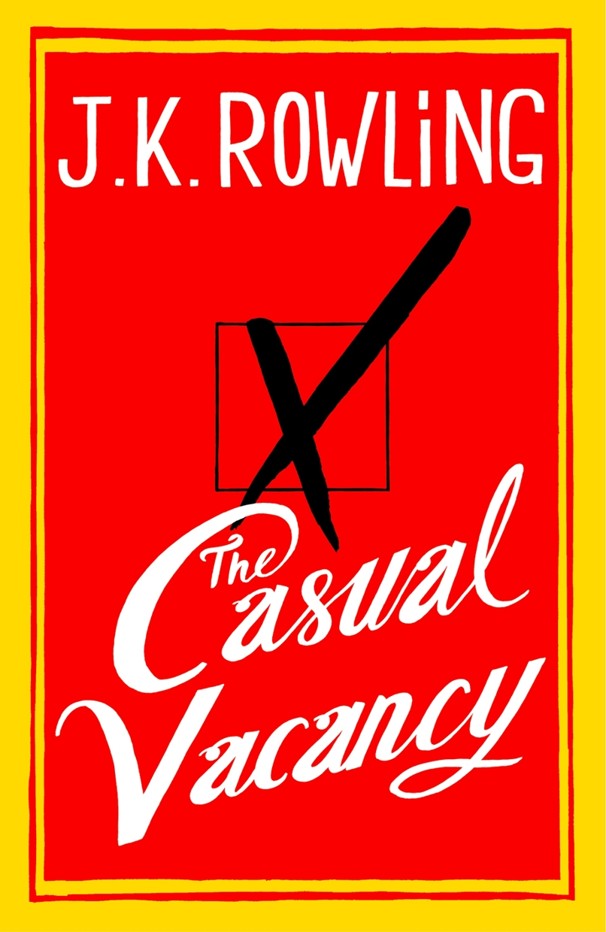
As the week winds down, and I sit here with a glass of dark red wine contemplating J. K. Rowling’s negative reviews on Amazon, I have come to the conclusion that the wrong people bought  The Casual Vacancy and then got mad about it. By the “wrong people,” I mean people who are reading literary fiction who normally stick to commercial fiction and people reading about troubled everyday characters who normally read fast-paced, high-energy page-turners.

As of this moment, The Casual Vacancy has 193 one-star reviews and 125 five star reviews. Who would have thought during the heady days of Harry Potter and midnight book sale parties that a Rowling book would fair so badly in the public eye?

Those who don’t like the book claim it’s dull, that nothing happens, that the people are gloomy low life trash, that they weren’t entertained because there wasn’t any humor in it, that the author’s normal charm was missing, that the characters were petty and had disgusting behavior, and that the story was filled with general dullness and lackluster material.

I don’t agree. Since I’m only 250 pages into the 500-page novel, I can’t write a review yet. So far, the book is a gem that I think may well be viewed as an important novel about small-town life in England long after the Harry Potter series has faded from the public consciousness. I say this even though, as a writer of contemporary fantasy, I’m a fan of the Harry Potter series.

I don’t want to spend the time doing this, but I suspect that some of the reviewers who claimed that the characters in The Casual Vacancy were trashy and disgusting, probably gave five stars to Stieg Larsson’s The Girl With the Dragon Tattoo whose characters were far more violent and disgusting. Why? Most of those reading Larsson’s riveting Millennium Trilogy want a rush of crime, sex and fast-turning pages rather than a book filled with characters who are rather like the Harry Potter’s Dursley family on a very bad day.

If somebody forced me to read the genres and styles I usually avoid, quite possibly I would want revenge. If I had just smoked or drank the wrong stuff, I might take out my frustrations on the authors of some very fine books that just don’t happen to be my cup of tea. But that would be unfair, rather like criticizing a sushi chef for preparing a meal for a person who hates fish.

The book reviewing world feels out of sync to me when people proudly claim they “reviewed” The Casual Vacancy based on the synopsis alone or trashed it in public after reading only a hundred pages then believe what they left on Amazon is a review. No, it was a non-review. Perhaps the wine has loosened my tongue, but I really want to tell such people to shut the hell up.

I’m enjoying the book. It has its own magic and its own truth.

Malcolm