Review: ‘When the de la Cruz Family Danced’

When the de la Cruz Family DancedWhen the de la Cruz Family Danced by Donna Miscolta

My rating: 5 of 5 stars

The slice-of-life scenes in Donna Miscolta’s tightly written “When the de la Cruz Family Danced” create an elegant portrait of a Southern California family suspended between its first and second generation Filipino origins, its “Little Manila” neighborhood and the outside world, and between familial cohesiveness and individual freedom. As the novel begins, the family is mired in a stasis that has crept uninvited into its home through the dynamics of time, illness, aging and lack of attention.

Also uninvited, a young man named Winston comes into their home because he believes he might be Johnny de la Cruz’s unacknowledged—and perhaps, unknown—son. Nineteen years earlier, Johnny made his only return trip to the Philippines to visit his family. While there, he had an unplanned sexual encounter with an old flame. Since they never spoke again, Johnny didn’t know Bunny Piña subsequently separated from her husband and moved to California with her son Winston. Winston didn’t know about the de la Cruz family until he found an un-mailed letter to Johnny hidden among his mother’s mementos when she died.

Lost after his mother’s death, Winston wants to know more about Johnny even though he cannot articulate exactly why. He wonders whether Bunny meant to mail the letter and simply forgot it or whether she chose to remain silent. The sentiments include “since you so gallantly made your escape from my couch that afternoon” and “we each had our reasons for what happened.” Does this suggest that Johnny is Winston’s biological father? While Winston isn’t sure, he wants to get to the heart of the secret Bunny never shared.

When he finds Johnny dying of cancer and the rest of the family suspicious of his motives for appearing on its doorstep, Winston simply says he’s Bunny’s son. He says he didn’t know if Johnny heard that Bunny moved to the U.S. or that she had recently died. At this point, readers might expect Winston to leave after suffering through a few days of the de la Cruz family’s polite but disinterested company or that he will produce the letter and ask, “Johnny, are you my father?”

Instead, Miscolta carefully inserts Johnny into the family’s life. None of them are quite sure why he’s still there, but he’s nice enough. He helps Tessie look after Johnny, partly by keeping him company. While the slice-of-life details about family life, shown from the viewpoints of each of the family members, do slow down the development of the plot, they paradoxically add great depth to the novel and to the reader’s understanding of the family itself.

Miscolta has created poignant story about a family (with secrets) that very much needs to find itself within the multicultural world of Southern California. The story revolves around one dual question: will Winston come and go and soon be forgotten or will he be the catalyst for something more long term and meaningful? All of the characters step close and then step away from that question like awkward beginners at a club who haven’t yet learned how to dance.

“When the de la Cruz Family Danced” is a highly recommended waltz of well-crafted prose and endearing characters.

Malcolm

Malcolm R. Campbell is the author of “The Sun Singer,” “Garden of Heaven: an Odyssey” and “Jock Stewart and the Missing Sea of Fire.”


Coming this Fall

Zen and the Art of Editing

“When you seek it, you cannot find it.” — Zen Proverb

When editing and revising a novel in progress, I try not to seek anything. While I sometimes jot down things to consider, I don’t make lists of characters, events, dialogue snippets or internal monologues as I ponder the latest draft of my manuscript. If I do, I suddenly can’t see the forest for the trees.

Like a hiker on an unknown trail, I try to get a sense of the place–in this case, that place is the world created by the novel. Casually, I wonder: What is going on here? Who are these people? What do they want?

If I were to look too hard for specifics, it would blind me to what is missing, what could have been said, what might have been done. In many ways, I’m reading my manuscript the way I would read another author’s novel for the first time—with as few expectations as possible.

In my Sarabande’s Journey blog, I have been writing about some of the issues, symbols, motifs, and themes that are often found in a heroine’s journey story.  While my novel in progress, Sarabande, is a heroine’s journey, I do not read my manuscript looking for those issues, symbols, motifs and themes.

First, I need to internalize all of that before I begin writing; otherwise, the novel sounds like I’m simply pasting ideas into a story say, the way somebody might randomly use words in a language they don’t know in a conversation with a native speaker. Second, I don’t intend for my fiction to be a demonstration of the heroine’s journey theme or to explore everything that has been written, say, about women in a man’s world. The novel is a story before it’s anything else.

I know before I begin writing where my character is going and why. I know how the novel will end. I try to keep everything in between loose and flexible until I begin to write. Then, I go where the story carries me. When I edit and revise a manuscript, I try not to have a destination. I want to see where I am being carried by the currents and tides of the work. Editing this way is relaxing if you don’t fret about it.

Worrying about whether one ought to be doing one thing or another thing with the story doesn’t help the work. Actually, nothing helps the work more than staying out of the way of the story as much as possible. When I put on my editing hat, I’ll “fix” a lot of things and re-do a lot of things without being heavy handed.

Does this sound chaotic? Not at all. When you’re not actively looking for a result, the novel begins to edit itself.

Malcolm

Malcolm R. Campbell is the author of the recently released Bears; Where they Fought: Life in Glacier Park’s Swiftcurrent Valley, a glimpse at the dramatic history of the most beautiful place on Earth. A Natural Wonderland… Amazing Animals… Early Pioneers…Native Peoples… A Great Flood… Kinnickinnick… Adventures… The Great Northern Railway.

“Give a month at least to this precious reserve.  The time will not be taken from the sum of your life. Instead of shortening, it will indefinitely lengthen it and will make you truly immortal. — John Muir, “Our National Parks,” 1901

What are your favorite comfort books?

When people are feeling stressed, tired, depressed or overworked, they often head for comfort food like macaroni and cheese, a pizza, Kentucky Fried Chicken or that tasty TV dinner with all the salt. Of course, there’s always a stiff drink.

When things are really bad, people add a movie to the menu. Once upon a time, folks would grab a musical like “The Music Man” or “Singing in the Rain.” Now, maybe they head for “Babe” or “Finding Neno” or something light and romantic like “Notting Hill” or “You’ve Got Mail.”

Comfort Books

And then there are books, either the real thing or something on a Nook or Kindle to cuddle up with on a cold winter night or take out to the beach during the summer.

Some people define comfort books as spiritual books or something with an uplifting story and a happy ending. Others want a good adventure, a story that has twists and turns and enough action to make them forget how tired, overworked, depressed or burnt out they are.

Personally, I have so many books on my to-be-read list that I can hardly keep up with them, much less opt to re-read older books.  One blogger said she turns to the Harry Potter books for comfort books. While, I haven’t re-read any of them, the Harry Potter movies do make good comfort movies around our house.

For comfort books, I’ve re-read Katherine Neville’s The Fire and The Eight multiple times. Why? Not totally sure, but it’s probably because they are long and have involved plots. They are fun as well as distracting. For me, if a comfort book is too light weight, it doesn’t hold my attention well enough to keep from thinking whatever dark thoughts led me to search for an old friendly book to read.
Suggestions?

Last December, the Overdecorated Bookcase blog listed these as great comfort books:

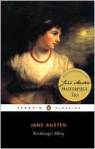
  • Northanger Abbey (Austen)
  • Persuasion (Austen)
  • Leave It To Psmith (Wodehouse)
  • 84 Charing Cross Road (Hanff)
  • The Importance of Being Earnest (Wilde)

Meanwhile, Reading in Reykjavík includes these on her top ten list:

  • My Family and Other Animals (Durrell)
  • All Creatures Great and Small (Herriot)
  • Moving Pictures (Pratchett)
  • The Hobbit (Tolkien)
  • Anne of Green Gables (Montgomery)

To these, I can add:

  • The Prince of Tides (Conroy)
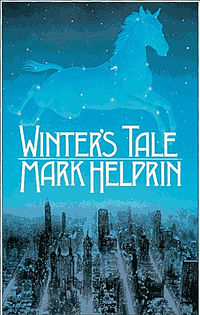
  • Winter’s Tale (Helprin)
  • Lonesome Dove (McMurtry)
  • To Dance With the White Dog (Kay)
  • Shadow of the Wind (Zafón)

It Depends on My Mood

There are days, when watching the first or second Terminator movie is just what the doctor ordered, while a week later, I might prefer Sleepless in Seattle. Same thing is true with books. How about you?

Do you use books to help you relax and/or chase the blues away? If so, how does your mood play into it? That is, do some moods require a good romance while others definitely need a mystery or a fantasy?

Only one problem I haven’t solved with comfort books—unlike comfort movies, it’s hard to enjoy them with comfort food. I don’t want pizza toppings all over my books. Reading, perhaps, requires something that works well with a straw.

At any rate, books, movies and food are much cheaper than a trip to the shrink.

–Malcolm

–Jock Stewart, Special Investigative Reporter for the Star-Gazer. Download his free “Jock Talks…Satirical News” e-book from Smashwords.

JTSATIRICAL

Review: ‘The Swan Thieves’

The Swan ThievesThe Swan Thieves by Elizabeth Kostova
My rating: 4 of 5 stars

Elizabeth Kostova has written a mysterious novel with finely-drawn characters, excellent descriptions of artists and the process of making art, and an engaging storyline. While “The Swan Thieves” is basically a modern-day story about a psychiatrist treating a troubled artist, the story unfolds via multiple points of view in multiple time periods.

Artist Robert Oliver attacks a painting of a swan at the National Gallery of Art and is subsequently committed to a psychiatric hospital under the care of Andrew Marlow. It becomes clear that Oliver is obsessed with an unknown woman who appears in many of his sketches and paintings. Is this obsession connected to the attack on the painting? Neither the reader nor the psychiatrist can easily answer this question because Oliver refuses to speak. Marlow bends the rules and provides Oliver with paints and canvases, allowing Oliver to “speak” in a sense through the art he creates in his hospital room. But otherwise, he is mute.

Multiple Characters and Viewpoints

The mute and enigmatic artist is the axis on which the world of “The Swan Thieves” turns. This device enhances the mystery and gives Kostova and her psychiatrist the rationale for bringing a lot of other characters and their viewpoints into a plot that otherwise might unfold in half the time. To learn more about Oliver, Marlow visits the painter’s former wife Kate and former lover Mary and their relationships with Oliver are told as smaller stories within the book. Marlow also visits art experts and museums in multiple cities to find learn more about the real or imaginary woman Oliver paints over and over.

For the book to “work,” the reader must accept the fiction that a psychiatrist at a facility with many patients would go to such lengths—even to the point of becoming obsessed with Oliver’s obsession himself. Some of Kostova’s best writing in the book focuses on the techniques exhibited in the relevant paintings as well as the thoughts, viewpoints and brush strokes of artists at work. A cynical reviewer might suggest that the author was an artist and/or had a great love of impressionism and needed an excuse to spend a considerable amount of space writing about her avocation.

The World of Artists

As the device behind the plot structure is Oliver’s refusal to speak, the device behind the massive amount of detail about artists and their work is the fact that almost every character in the book, including psychiatrist Andrew Marlow, is a professional or highly skilled amateur painter. True, the matter of artists and their work is part of the “evidence” Marlow considers as he searches for Oliver’s demons. Yet, I cannot help but think that the “artists and their work” theme is a bit over done even though it has been done very well.

A Young Impressionist Painter from Another Time

The primary plot of “The Swan Thieves” is interrupted first by the presentation of the text of a series of letters between a promising artist, Beatrice, in the 1870s and her uncle (and artist) Olivier. Written in French, the letters are translated for Marlow over a period of some weeks, so they appear out of nowhere in between the other chapters. Subsequently, the letters chapters morph into chapters devoted to Beatrice and her life almost a century and a half ago.

The storylines finally come together, and by the time they do, the haunting puzzle with all its characters, paintings, artists, museums, easels, palettes and brushstrokes becomes a clear picture of obsession and its impact on others. “The Swan Thieves” has great depth in spite of its somewhat tortuous route to its conclusion.

View all my reviews

Coming May 5th: A visit from Chelle Cordero, author of the new novel “Hyphema.”

My One School, an organization I support in the Orlando area, has entered the Pepsi Challenge to help raise money for local libraries. If you like the sound of this, you can vote here.

Malcolm R. Campbell is the author of “The Sun Singer,” “Garden of Heaven: an Odyssey,” and “Jock Stewart and the Missing Sea of Fire.”

Light Conquers All

Today’s guest post is by Pat Bertram, author of the recently released novel Light Bringer (Second Wind Publishing, March 27). She is also the author of “More Deaths Than One,” “A Spark of Heavenly Fire,” and “Daughter Am I.”

Pat and I discussed “Daughter Am I” here on Malcolm’s Round Table on October 19, 2009 and October 20, 2009

Planet X

The Sumerians believed there were twelve celestial bodies in our solar system: the sun, the moon, the planets we know — including poor demoted Pluto — and one other. This twelfth planet goes by many names. Astronomers today call it planet X. Sumerians called it Nibiru, Babylonians Marduk, Greeks Nemesis, Hebrews the Winged Globe. Prophets called it the Fiery Messenger and the Comet of Doom. They also called it Lucifer, which means light bringer, because it brought its own light rather than reflecting the light of the sun like the moon does.

Light Bringer

Hence, the title of my latest book: Light Bringer. Though it doesn’t make an appearance, this Planet X, this bringer of light and destruction, is the reason for the happenings of the story.

Light Bringer is not only the title; it is also a statement of the theme, or at least one of them. All of my novels explore the same themes, such as love in its various guises and a search for identity, but Light Bringer has one theme uniquely it’s own: bringing light. This light is both figurative and metaphorical. During the course of the story, light is brought to hidden places, both in the world and in my characters’ hearts. Light is brought to truth, or at least the possibility of truth. Light, as love, is brought into the lives of my characters.

Harmonics of Light and Sound

This theme of bringing light also refers to different aspects of light itself, including the harmonics of light and sound (where sound becomes light and light becomes sound) and color (different wave lengths of reflected light).

Light Bringer took years of research, of enlightenment. The plot demanded extensive information about mythology, conspiracies, UFOs, history, cosmologies, forgotten technologies, ancient monuments, and color. Especially color. Color is the thread connecting all the story elements, and all the colors have a special meaning. (You can find a brief listing of color meanings here: The Meaning of Color.)

Auras

Rena’s dark eyes brighten to amber when she is delighted, (yellow denotes joy and intelligence). The auras that envelop her and Philip show their moods: a magenta cloud of distrust, a mauve of confusion, a pale pink of love and devotion. And the world itself reflects their growing love: After the sun set, they headed home in a rich, warm alpenglow that turned the world to gold. (Gold counteracts feelings of loss, enhances feelings of security.)

Because of this theme of light, it is fitting, then, that Light Bringer begins with a bright light in the sky and ends with a new clarity of light in my little town. Perhaps the novel will even bring a bit of light into your life.

You May Also Like

Sandra Shwayder Sanchez’s review of Light Bringer on Bookpleasures.

A free preview of the first chapter of Light Bringer is available here.

Review: ‘Good-Bye, Emily Dickinson’

Good-Bye, Emily DickinsonGood-Bye, Emily Dickinson by Smoky Trudeau Zeidel
My rating: 5 of 5 stars

She’s homeless and she believes she’s Emily Dickinson’s daughter. She observes the world, writes poems wherever she parks her shopping cart of notebooks and other treasures. She ponders the fate of great artists who didn’t get any respect until after they were dead. But, she’s patient (though some say she should be a patient until she gets her mind right).

Smoky Trudeau Zeidel (“The Cabin” 2008) tells a story that’s born in a respected teacher’s English class and played out on the hot streets between the church, the Sinclair service station and the underpass. She—real or imagined daughter of the long-gone Emily—truly understands that “the mere sense of living is joy enough.”

View all my reviews

The spookiness of written truth

Some people have a built in BS detector. They can see the flaws and scams in the world’s best publicity.

Writers have a spookiness truth detector.

In her excellent book for writers, The Sister from Below: When the Muse Gets Her Way, author Naomi Ruth Lowinsky begins with one of my favorite Robert Graves quotes:

“The test of a poet’s vision,” writes Graves, “is the accuracy of his portrayal of the White Goddess. The reason why hairs stand on end, the eyes water, when one writes or reads a true poem is that a true poem is necessarily an invocation to the White Goddess.”

The experience Graves describes is similar to that spooked feeling one gets while walking down a lonely road at night and pondering what might be watching him from the dark forest, or while walking through an old house at night and thinking of yarns about it being haunted or that people were killed there or that something lurks within that isn’t human.

When a writer reads or writes the truth, the bells and whistles of his spookiness truth detector go off. Now, this detector won’t help him decide whether Mobil or Valvoline is better for his car or even whether he can get the meal his body needs on any given night at Olive Garden or Outback.

No, the spookiness truth detector is usually reserved for matters of the heat and soul, gods and goddesses, sun and moon, and for thoughts and ideas that are only too happy to go bump in the night.

When I read, I want to be spooked either by thrills and chills and excitement or by the truth of important things. When I write, I know my revisions and edits are done when my eyes water and the hairs on my arms stand on end.

If you’re a writer who is in tune with his muse—or, say, with the universe—then you may feel spooked when you read Lowinsky’s book. Truth be told, my BS detector went off while reading certain sections of Robert Graves The White Goddess. But it didn’t go off when I read The Sister from Below: When the Muse Gets Her Way.

But, I’m not here to convince you to buy the book. I’ve been feeling spooked while researching and writing my novel Sarbande and while reading through a lucky haul of good novels lately.

I’m not frightened, mind you. I just wanted to spread out the chills a bit.

You may also like

I’ve started a new web log called Sarabande’s Journey to share some of the heroine’s journey resources I’ve found while working on my novel. If you are reading about, writing about, or on such a journey, I invite you to stop by and see if anything there spooks you.

Malcolm

Review: ‘Razor’s Revenge’ by Paul Chandler

“Lawyers spend a great deal of time shoveling smoke.” — Oliver Wendell Holmes

“The true culprit in my tale is the legal justice system. It
holds itself up as something to be admired and then proceeds to
render itself useless because it is so easily undone. All it takes is
something that any human being can speak: a lie.” — Samuel Razor, in “Razor’s Revenge”

When Samuel Razor is a young man, his promising company is stolen by three unscrupulous and corrupt men, judge Henry Craymoor, attorney Jarod Hibbard, and businessman Mark Harrington. They succeed by shoveling smoke.

Razor’s experience teaches him a powerful truth: the courts cannot protect the innocent from a well-crafted lie. As Razor plots his revenge against Craymoor, Hibbard and Harrington, this truth will serve as a mantra and a constant.

Paul Chandler’s (Peeper, 2004) thought-provoking novel Razor’s Revenge first tells the stories of the three conspirators and their desperate attempts to escape the retribution planned for them by Samuel Razor.

Time passes. Razor ages. We don’t see him directly, but through the eyes of Craymoor, Hibbard and Harrington, we understand that he is patient, relentless, thorough and richer than those who knew him way back when can possibly imagine. As Craymoor, Hibbard and Harrington see it, that vast wealth allows Razor cut their lives apart well past the limits of an eye for an eye and a tooth for a tooth.

But these men are small fish. The trophy Razor seeks is the criminal justice system itself where truth often falls on deaf ears while lawyers shovel smoke. As he ages and becomes infirm, Razor has one last dream in mind: he longs for the day when he can destroy the smoke and mirrors arguments and defenses common in our courtrooms with more truth than anyone can possibly imagine–or even want.

His dream depends on technology yet to be invented, so he hires people to research it, invent it, and test it well beyond the limitations of a preponderance of the evidence and reasonable doubt. If Razor’s researchers succeed, Razor’s revenge will be complete. The novel spends a fair amount of time on technology and testing, and some readers may find the lab work and marketing implications a bit heavy going.

Paul Chandler has, however, created an amazing paradox of a novel in which it becomes conflicting to dislike such men as Craymoor, Hibbard and Harrington as they consider punishments that exceed their crimes; and where it becomes very troubling to root for a wronged man who has yet to learn that revenge cuts both ways and might not lead to justice.

En route to the final verdict in Razor’s Revenge, readers who cheer Razor at the beginning will have ample opportunity to question whether absolute and merciless truth in a courtroom represents the best of all possible worlds or represents a dark victory.

Malcolm

Malcolm R. Campbell is the author of three novels, including Garden of Heaven: an Odyssey

Books on the Nightstand

My nightstand has so many books on it, there’s hardly enough room left over for the reading lamp and the alarm clock. I sleep better when there are plenty of yet-to-be-read books there. When they’re gone, I’m worse than a chain smoker who’s run out of cigarettes.

Running out of books is not an option. After finishing Stieg Larsson’s “The Girl Who Played with Fire,” I started reading two books simultaneously since one of them is on my computer. Yes, I know, if I had a Kindle, I could read e-books in bed.

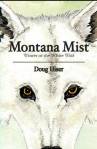
By night, I’m reading Montana Mist: Winter of the White Wolf by Doug Hiser. In addition to the wolves, this novel is filled with memorable characters and mountains. I couldn’t resist.

Publisher’s Description

In the remote Montana wilderness, a mountain man, once a professional athlete, lives his life in seclusion protecting and raising orphan wolves until he gives his heart to Sassy, a young woman hitchhiking across America. He guards his secrets and the other woman in his life, a beautiful blind woman, known as “Shy Girl.” The wolf pack roams the mountains as he searches for the white wolf, Mist; that he raised and released into the harsh snowy forested peaks, his ties with the wolves as close as the bond with his new love. Montana Mist is the story of one man’s secrets, the two women in his life, and the wild world of wolves of the remote forest in the last untamed region where man has not put his imprint on the land. A man shaped by the mystery of his past and the complication of his future while the adventure of his heart threatens to destroy his solitary precious world of mountain, wolverine, moose, elk, and wolf.

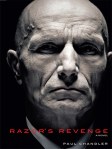
By day, I’m reading Razor’s Revenge by Paul Chandler. I enjoyed Chandler’s previous novel Peeper, and was happy to see the new release. This is very different (as its cover suggests) from Montana Mist, but equally absorbing.

Publisher’s Description

In 1958, a group of unscrupulous men use fabricated evidence, perjured testimony, and a crooked judge to steal Samuel Razor’s company. For ten years Razor allows them to believe they’ve gotten away with their crime. They continue to believe it until the day Razor comes for them.

Five decades later, Samuel Razor is a billionaire and an icon in the business world. His revenge taken, his youth long gone, and his health rapidly failing, there is one last important thing he wants to accomplish before he leaves this world, one more villain he needs to deal with.

The legal justice system-the very system that made the theft of his company legal and binding-is laughably easy to deceive. All it takes to defeat it is something that any human being can do: tell a lie. And from that lie come lawyers, trials, incompetent verdicts, and inevitably, unsatisfying compromises.

To ensure that the law only serves and does not victimize, there can be no lies, no lawyers, no biased judges. Samuel Razor has the money, the influence, and the motivation to reinvent the system. It will be his last and final act of revenge.

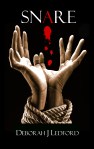
Coming up next, Snare by Deborah J. Ledford. The novel has has been nominated for The Hillerman Sky Award and follows Ledford’s outstanding 2009 novel Staccato.

Publisher’s Description

Native American pop singer/songwriter, Katina Salvo’s career is about to take off. There’s one problem: someone wants to kill her. Katina and her bodyguard, Deputy Steven Hawk, are attacked during an altercation at her first live concert. Could the assailant be a mysterious, dangerous man from her youth? Or her estranged father recently released from prison for killing her mother?

Performed against the backdrop of the picturesque Great Smoky Mountains of North Carolina , and the mysterious Taos Pueblo Indian reservation, SNARE is a thriller fans of Tony Hillerman will appreciate.

These will keep me busy for a little while, though I’m already looking for more so I don’t run out. What great books are waiting on your nightstand that I ought to be considering?

You might also like: Quick Sex, Weekend Relationships and Short Books

Malcolm

$4.99 on Kindle

Review: ‘Labyrinth’ by Kate Mosse

Labyrinth (Languedoc Trilogy, #1)Labyrinth by Kate Mosse
My rating: 4 of 5 stars

Kate Mosse’s engaging and well-researched novel Labyrinth (2006) brings readers another version of the Holy Grail and those who would protect it, seek it, destroy it and use it. Labyrinth joins Khoury’s The Last Templar (2006) and The Templar Salvation (2010) and Neville’s The Eight (1997) and The Fire (2008) in its presentation of a religious secrets story that switches back and forth between time periods and characters.

Set in thirteenth-century Languedoc and twenty-first century southern France, Labyrinth presents readers with medieval and modern characters who are searching for the Grail with good and bad motives. Alaïs du Mas, the daughter of the steward of historical character Raymond-Roger Trencavel in Carcassona, resides in a world where Cathars and Catholics live in harmony with each other. Alice Tanner, a professor of English literature in Sussex, is a volunteer in an archeological dig in the Sabarthès mountains in France in 2005.

The lives of these dual protagonists—and the characters around them—become intertwined across history when Alice inadvertently discovers some of the Grail secrets Alaïs dedicated her life to protect. Alaïs’ world is under attack by a Crusade and subsequent inquisition ordered by Pope Innocent III in 1208 against the Cathars who were viewed by Rome as a heretical sect. Alice’s world is that of a modern police investigation into deaths and thefts linking a mainstream archeological dig with a shadowy world of those who follow or oppose the Grail.

The mirror aspects of the characters’ lives across the centuries serves Mosse and her plot well. Unlike Dan Brown, who viewed the Grail as Mary Magdalene and Arthurian literature that viewed the Grail as a sacred chalice, Mosse presents instead the secret artifacts which are intended to lead true seekers through both a real and a figurative labyrinth to the Grail as a transcendent experience.

With the exception of a slow beginning and a few sections where the detail in both the modern and medieval worlds becomes more history and travelogue than a novel, Labyrinth is a well-told story. The novel’s discussion guide notes that the book begins with short glimpses of the leading characters without any narrative to tie them together or explain their motives, and then asks “what effect does this have on you, as a reader?” It’s a good question. Some readers will find it slow and unnecessarily obscuring of the story, while others will find that it heightens the intrigue and suspense.

For readers who want to know more about the life and times of the Cathars, Mosse includes a historical note, a selected bibliography, information about the langue d’Oc spoken in Alaïs’ world as well as a glossary of Occitan words.

View all my reviews

Copyright (c) 2011 by Malcolm R. Campbell, author of two hero’s journey novels,The Sun Singer and Garden of Heaven.