I’ve got my work cut out for me with Philip Lee Williams’ huge new novel The Divine Comics: A Vaudeville Show in Three Acts. It’s a 1,000+ page, two-inch thick novel from an award-winning Georgia author. However, I’m really looking forward to this one. I’ve previously enjoyed his poetry in Elegies for the Water, his natural history about the ridge he calls home in In the Morning, and his civil war novel A Distant Flame. Williams, who is also a composer of classical music, recently retired from the University of Georgia.
I’ve had the pleasure of meeting Williams several times at our local library when he was on tour.
I’m also looking forward to Rhett DeVane’s new novel Cathead Crazy. She wrote a guest post about the novel’s background here on March 12. I’ve started reading the book—it’s great. I’m not surprised. I liked Rhett’s Evenings on Dark Island, co-written with Larry Rock. What a great vampire spoof that was. While Rhett lives in Tallahassee, Florida, the town where I grew up, I’ve never met her. She needs to do a book tour into the Northeast Georgia region where we also happen to like large biscuits.
Meanwhile, I’ve been reading and enjoying Lynne Sears Williams wonderful novel about the long-ago days in the country now known as Wales. I’ll be talking more about The Comrades on this blog very soon.
Meanwhile, I’m busy keeping up with my Book Bits blog (writer’s links) while working on short stories. (I’m not yet ready to tackle another book-length story.) And then, too, the website has undergone a major overhaul lately. That can happen when you switch the domain from one ISP to another.
The weather’s heating up in northeast Georgia, the grass is growing faster than I like, pollen is covering the cars, the cats are constantly miaowing about something, and I’m starting to think I’m ready for a vacation.
Yesterday afternoon, I enjoyed a wonderful conversation about writing, fiction and the hero’s journey via a speaker phone with professor Melissa Studdard and her English 2341 students in “A Study of the Journey in World Literature” at Lone Star College in Texas. Readings for the course included my 2010 contemporary fantasy The Sun Singer.
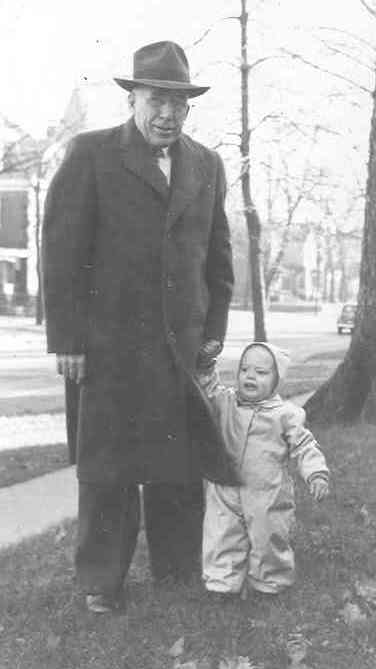
When one student asked whether the novel’s supporting character Grandfather Elliott was based on a real person, I had a ready answer. No, but I was strongly influenced by my Grandfather Joe Gourley who lived in Decatur, Illinois where the initial parts of the novel are set.
My grandfather and me
Imagination With Dash of Reality
After the Q&A session was over, I started thinking about what I would say about characters’ role models in fiction if I were teaching a creative writing course. First, I would clear away the misconception some readers have that novelists can’t possibly dream up characters from scratch, that characters must be based on real people.
That commonly held belief is a long way from the truth. Characters are created out of authors’ imaginations with a dash of reality. In the case of Grandfather Elliott in The Sun Singer, my fictional character is not my grandfather with a pseudonym. If my grandfather had been alive when the novel was published, he wouldn’t recognize himself in the character.
What he would see is a character who, as he did, took his grandson on a day trip to the nearby Allerton Park where they saw wooded trails, formal gardens, and sculpture including the famous bronze Sun Singer statue. Joe Gourley would also see that my novel was set in the house he owned when I was a child and that the characters visited the parks where I once played.
Everyone is fair game
Joe Gourley in Decatur in the 1940s
I think there’s even a tee shirt out there that says something like “if you aren’t nice, I’ll put you in my next novel.” When novels focus on real towns, the author’s neighbors try to find themselves in the book. They did it with Peyton Place and when The Help was released, they were still doing it. Since I tend to “meet” my characters as I write in much the same way all of us see people in our dreams that we didn’t know before, I seldom think of real people as role models. My grandfather Gourley played a role because, like my character, he visited the Sun Singer, lived in a neighborhood that made a strong impression on me from the time I was born through junior high school, and loved practical jokes.
When I’m writing about a character with certain traits, I often think of people I know who have those traits. The title character in Sarabande is a good-natured individual who expects the best from other people and loves learning new things and traveling to new places. She shares these qualities with a co-worker I knew forty years ago. If my former co-worker read the book, she might like seeing those qualities in Sarabande, but she wouldn’t for a moment think I was writing about her.
Those old familiar places
Buses and street cars came and went from this transfer house in Decatur's Lincoln Square when I was a child.
Decatur, Illinois made an impression on me because our family was there so often during my formative years. The Florida Panhandle made an impression on me because I lived there from the first grade through college. Glacier National Park made an impression on me because I worked there while I was in college. So, I know these places. They influence me whether I consciously think of them or not. The same is true of family and friends. Since I like blurring the line between fiction and “real life,” I take the influence of places one step further and put real places in my books.
The Sun Singer is set in Decatur and Montana. So is Sarabande. My magical realism novel Garden of Heaven: an Odyssey is also set in those locations as well as north Florida and the places I saw when I was in the Navy. The three short stories I’ve written so far this year are also set in those places, perhaps because Decatur, North Florida, and Glacier National Park fit me like old shoes.
My memories influence what I do, just as they influence everyone else. When I write, most of those memories are part a figurative vat of stew. As I dream up characters, they often remind me of people I knew—or know now. Bob Hope’s signature song was Thanks for the Memories. If I wore tee shirts with slogans on them, they might say “Thanks for the Influences.”
“The Bible says that in the beginning was the void, and it hasn’t escaped me how fast the Lord moved to take care of His own particular vacuum—dividing day from night, spitting out vast oceans, carving out competing continents that would one day have the power to blow each other up. What an inspired series of creations to keep the devil of boredom at bay. No wonder God kept seeing that it was good.”
So begins the story of Fleur Robins.
Fleur Robins is called creepy child, poor child, little monster, odd duck, space cadet and assorted other synonyms for “weird” by almost everyone who notices her existence and tries to figure out whether she is gifted, autistic, simply hopeless or hopelessly simple. Fleur’s imagination contains many worlds because—as she explains life as the fifteen-year-old narrator of The History of My Body—positioning her body and mind “just this side of the lurking pit of nothingness” requires constant vigilance and ingenuity.
Whenever the void looms too large for her to handle, Fleur flaps her arms, bangs her head, pinches herself, emits strange noises and makes oddly literal pronouncements that simultaneously appear to miss the point and contain cosmic truths. No school will take her. An alcoholic mother loves her, but spends her days drunk or asleep. A mean-spirited father dislikes her, but fills his days with a pro-life crusade while filling an entire nursery wing of the family’s large house with children rescued from the “devil abortionists.” An odd-duck household/nursery staff cares for her, but is too busy to overtly save her from the void.
Fleur is her own teacher. She makes lists, keeps diaries, consults the dictionary frequently, and assembles the often-confusing puzzle pieces of information from others to make sense of the external world. She listens to the voices of her heart and her infinite imagination to define her internal world and to explore far-flung probabilities beyond the ken of “normal people.”
When she’s told that a woman who walks down the street every day in a bathrobe has lost her mind, Fleur falls into a figurative pit considering the ramifications:
“What kind of God would let people lose their minds? And was there some kind of cosmic Lost and Found where He kept them? I tell you, it gave me a serious case of the heebie-jeebs, thinking of God feeling so empty and alone that He needed to steal people’s minds to stuff into His own unfillably huge one.”
In her wise, superbly crafted debut novel, author Sharon Heath connects a series of highly improbable events into a tightly knit story about a self-taught young girl who believes her coming of age is a wonderful example of the butterfly effect: or, as Fleur came to understand nonlinear systems, a personal development with a sensitive dependence on initial conditions. Potential events spin off in all directions when Fleur finds a dying baby bird in the garden; while those that ultimately manifest as her body’s history could never have been predicted, they represent a meaningful synchronicity if not harmony.
Fleur’s phases of growth (incarnations, to her way of thinking) unfold as a metamorphosis out of the chaos of her childhood. Her progress isn’t ugly duckling to swan. It’s more like a butterfly transitioning from egg to larva to pupa to adult, or like the unfolding of the beloved David Austen roses she tended on the grounds of the childhood home of her first incarnation.
In The History of My Body, Sharon Heath masterfully combines darkness and light, tragedy and comedy, and the sublime and the ridiculous into a dazzling and beautifully ironic dance of opposites that create an unusual and endearing protagonist with an unforgettable tale to tell.
–
Malcolm R. Campbell is the author of four novels, including the recent contemporary fantasy “Sarabande.”
Writers like keeping up with contests, tips and techniques, publishers and magazines where they can submit their stories and articles, and advice on how to market their work once it’s published.
Readers like keeping up with their favorite writers, upcoming books in the genres they read the most, and information about authors’ future book signings and other appearances.
Book Bitsbrings you the links to this kind of information six days a week. Quite simply, Book Bits is a blog in which every post is a list of links covering the latest reviews, books and author features, contests, marketing and social networking advice, “writer’s how to” posts, and essays and features about authors, books and publishing.
Book Bits Titles
Book Bits is numbered from the first issue onward toward infinity. The higher the number, the more recent the post. The titles are designed to attract attention, so they include the names of authors/events most likely to lure people into the post. For example, the title for this morning’s post looked like this:
Book Bits #117 – Hedy Lamarr, Roberto Bolaño, Elmore Leonard and more writing news
So now you know I’ve made 117 posts. This one included a review of Roberto Bolaño’s latest novel, a biography about Hedy Lamarr, and an article about author Elmore Leonard who, says “why not,” when asked why (at age 86) he’s still writing.
This morning’s Book Bits had 24 links. In addition to those attention-getting names in the title, the other offerings featured a link to a blog hop where you might win a Kindle, a story about the return of the Lit Fest to Haiti, and the names and novels of the ten finalists in Georgia’s Townsend Prize for Fiction.
Naturally, some posts will bore you. My top picks on those days will be authors you’ve never heard of or genres you never read. I try to include a variety, though, in hopes that every time you stop by, you’ll find at least one link you want to click on.
Some posts will take over you’re entire day because, heck, you’ll want to click on every feature, news story and review. The reviews will tempt you to read books. The contest announcements will tempt you to write books, or maybe short stories or poems.
This morning, you might have followed the link to this review:
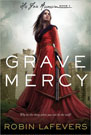
Review: Grave Mercy by Robin LaFevers – “With characters that will inspire the imagination, a plot that nods to history while defying accuracy, and a love story that promises more in the second book, this is sure to attract feminist readers and romantics alike.” – Booklist
Or the link to this advice:
Lists: 10 Ways to Get Paid for Online Writing, with Lior Levin – “Selling words for dollars is easy, if you are aware of two things: -How to put down the words together. -How to sell your piece in the right market.”
I invite you to surf over to Book Bits, read a few posts and see what you think. That’s sort of like kicking the tires on the car you just might want to buy. Unlike the car, Book Bitsis free.
Sure, you’ll see some banners at the ends of the post with links to my author’s site and my novels. Maybe those banners will tempt you. If not, have fun. Goodness knows, I have a lot of fun every day finding the news and rev iews for each post. I tell me wife I’m working, but I think she suspects I’m just surfing the net for the heck of it.
Coming in tomorrow’sBook Bits, a link for a wonderful piece of satire that pokes good-natured fun at the Antiques Road Show (imagine people bringing in crime evidence rather than antiques) and some pithy advice for authors planning to self publish their books. Oh, and reviews, too. There are always reviews.
P.S. When the “Book Bits” title is short enough for me to squeeze in an extra word, I add the #bookbits hashtag to help people find the posts on Twitter. Now, here’s an example of a book banner:
Looking at the pamphlet shown here, I can say that I have no idea how and when I got it, who scribbled on the cover, or even why the handy little pocket guide published in 1956 didn’t get buried in one of the numerous boxes of packrat stuff in the garage or attic.
Today, of course, a writer can Google just about anything. If he’s persistent, he can sort through all the hobby sites and find information he can count on. While writing my 2010 novel Garden of Heaven: an Odyssey, I needed a handy reference to Florida’s trees. And there it was: right on my shelf less then six feet from my desk.
Published by the Florida Board of Forestry since 1925, I’m guessing I stole or borrowed or received this pocket guide while I was in the Boy Scouts in North Florida. The guide contrains black and white drawings of leaves, acorns and cones along with a descriptive text for each tree. This makes it easy for a hiker or a Boy Scout in Tate’s Hell Forest, the Apalachicola National Forest, or the swamps and estuaries along the Gulf Coast to identify what he’s looking at.
I grew up around Baldcypress, Chinkapin, Tupelo, Sweetbay Magnolia, Sassafras, Cabbage Palmetto, and Swamp Cottonwood trees. So, one would think I’d be a walking encyclopedia about their common attributes, the quick kinds of details a writer needs when he writes a sentence such as “David stood beneath the ______ leaves of the ____-foot tall Swamp Popular.” But no, I’ve been away from Florida too long to remember even the simplest details.
If only I had a photographic memory!
I include a lot of detail in my novels about mountains, trees, lakes and wildlife. That helps anchor the magic and fantasy in the story while making the location settings three dimensional. There’s a risk, though. If you make a mistake, somebody’s going to write you a letter or focus his review on the fact that while the hero of the novel was in a gun battle fighting for his life beneath a Chinkapin Oak, you forgot to mention that the three- to seven-inch leaves are toothed or that the trees are between fifty and eighty feet tall. Nice to have a quick reference book!
When it came down to quick reference materials, I found it much faster to grab this old pamphlet off the shelf than to search online. Sorry, Google, but I rather enjoy being a packrat and every once in a while I can actually justify it.
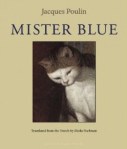
In Jacques Poulin’s Mister Blue, the novel’s protagonist, lives in a ramshackle house on the Île d’Orléans with his cat Mr. Blue. Jim’s world is defined by the bay, the St. Lawrence River, the beach and the novel he’s writing and not writing in the attic room where he works. As a novelist, he refuses to intrude into the lives of his characters; he watches and waits for them to fall in love on their own while he watches and waits for his chance to meet a mysterious young woman who has suddenly taken up residence in a small cave near his house.
Jim and Mr. Blue have seen her anchored sailboat, her footprints in the sand and a few possessions in the cave including a copy The Arabian Nights inscribed with her name, Marika. Yet, he refuses to overtly intrude into her life, certain that he will ultimately meet her by slightly nudged chance. When he cautiously visits the cave, the sees her bookmark’s progress through Scheherazade’s fanciful stories for the Persian king, but Marika is never home. Jim’s life suddenly shifts from that of an aging, divorced man dwelling in solitude with a cat to to an awakening writer in a shifting world of daydreams and obsession that mirror the fits and starts of a manuscript in the attic.
Before his obsession begins, he wonders if he’s picked the wrong subject for his novel. A former Hemingway scholar, Jim sees that he has broken Papa’s first rule: write what you know best.
“I had to acknowledge that I’d broken this rule. I was trying to write a love story without being in love myself. I’d probably chosen this subject because, as I felt myself growing older, I was afraid it was too late to fall in love one last time.”
Poulin’s compassionate story about a man searching for himself flows from beginning to end as smoothly and effortlessly as the river outside Jim’s attic window. The 150-page novel appears deceptively modest because the prose is just as unadorned as the protagonist’s gentle life of promising days and lonely blue days.
On days of hope, Jim’s novel moves forward and he almost finds Marika. Though he is forever just missing her, the marching bookmark in The Arabian Nights, the movements of her sailboat and other hints of her presence nourish him. On blue days, he sees no sign of her and loses himself in memories of the past and mourns the fact that his haunting, off-stage muse eludes him like words in his book.
“Words are independent, like cats, and they don’t do what you want them to do. You can love them, stroke them, say sweet things to them all you want – they still break off and go their own way.”
Poulin’s novel is a powerful masterpiece of understatement. What is real and what is dream? Neither Jim nor the reader can be sure in a story where seemingly disparate elements—an idealized woman, tennis games with a brother, the friendship of young girl who suffered an abusive past, and Mr. Blue—rise and fall like the tides in the bay without the heavy handed intervention of novelists and their characters.
This novel rubs up against a reader’s emotions with a soft, but persistent purr.
–
Mister Blue (Archipelago Books, January 3, 2012) originally appeared in 1989 as Le Vieux Chagrin (old sorrow) and in a subsequent English edition Mr. Blue, in 1993. Like the 1993 edition, this new edition comes to English readers through the work of the award-winning translator, Sheila Fischman. The novel has won Prix Québec-Paris, Prix Molson of the Académie des lettres du Québec, and the Prix France-Québec.
–
–Novelist Malcolm R. Campbell is the author of magical realism and contemporary fantasy including “Sarabande” (Vanilla Heart Publishing, August 2011).
As the author of two contemporary fantasies and one magical realism novel, I enjoy blurring the line between the real settings in my novels and the stuff I make up.
Real settings provide a foundation for the magic of my imagination whether they’re well-known locations such as Glacier National Park or personal locations such as the house my parents owned in Eugene, Oregon when I was in kindergarten.
However, the trickster in me wants the reader to always be in doubt where reality begins and ends. When people tell ghost stories around a camp fire, the stories often begin with: “Many years ago in these very woods on a summer night just like this one, a monster watched a patrol of Boy Scouts cooking their evening meal.”
Suddenly, everyone around the camp fire starts hearing strange noises in woods—perhaps it’s just the wind, or perhaps it isn’t. When I set my contemporary fantasy novels Sarabande (2011) and The Sun Singer(2004) in Glacier Park, I not only had a lot of photographs and reference materials helping me make my descriptions accurate, but also the benefit of knowing that many of my readers will have been there or seen pictures or TV programs about the area. (I also had my memories of hiking a good many trails in the park.)
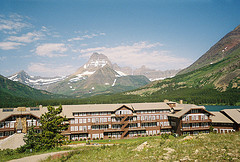
So, is there magic at Many Glacier Hotel in Swiftcurrent Valley? Maybe yes, maybe no.
Garden of Heaven
InGarden of Heaven: an Odyssey (2010), I used well known locations in Glacier National Park such as Chief Mountain and Many Glacier Hotel. For my own personal amusement, I also used the starter-house my parents owned on Alder Street in Eugene. While I barely remember the house, I do have pictures of it. My readers, of course, don’t know anything about an obscure street in Eugene, but they have heard of the town. That’s why I used the name in this stream-of-consciousness, vision quest sequence in the novel:
My mother at the house in Eugene
He woke up in the centre of the prairie where the land lay like a calm sea and the black mountains were small in the west. On his mind there was a predominant thought, ‘I am east of the sun and west of the moon,’ and though that was true, for it was sometime past noon, the thought was on his mind in a strange déjà vu way, pulling him he knew not where. His memory danced like a frail aspen leaf in the north wind until he was carried southwest by south on more or less a straight course past the grey ice of Api-natósi, the north fork of the Flathead, the Kootenai National Forest, the Bitterroots, south of Couer d’Alene Lake, the boiling confluence of the Columbia and Snake, the Cascades, to Eugene and Alder Street, to the little buff-coloured house with the blue roof and white picket fence and a snowman to the left of the driveway, and then inside to a room bluer than the roof where an inviolate circle of light from the lone lamp encompassed mother and child, she in a chair reading aloud from an old tan book of stories, he sleepy-eyed beneath covers hearing about trolls, witches, winds that talked, a castle, and a prince, the stuff that dreams and futures are made of before seasons matter and life hardens the soul.
In a vision quest, the real and the unreal are often tangled up. I always want the reader to wonder which is which. In this passage, most readers will recognize the real places such as the Snake River and the Cascades even if they’ve never been to the area. I added “Alder Street” just for me because I’m a spinner of tall tales that are occasionally true.
While I was working as a seasonal, college-student employee at Glacier National Park, my father said, “One day you’ll write a book about this.” As I walked the mile between the hotel and the camp store for Cokes, candy bars and other “health foods,” I visualized long nature articles about the park for National Geographic Magazine that would combine with proposed climbs of K2 and Mt. Everest and canoe rides down the Amazon into a hiker’s guide to exotic trails.
Little did I know I would one day set three novels in the park.
Like most college students, I was used to walking—and sometimes running—across a campus to get from one class to another. While working at the park, I not only walked around every lake near the hotel, but hiked to every waterfall, tunnel, mountain pass, and alpine meadow. Why? For a lot of reasons. For a Florida boy, the mountains were an exciting new environment. Plus, in those days, seasonal employees weren’t allowed to bring cars into the park. So, we talked. Going to the camp store was child’s play. By the end of the summer, a 25 mile hike as an easy stroll.
A Sack of Guidebooks
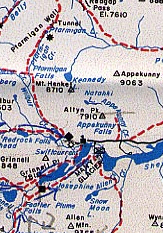
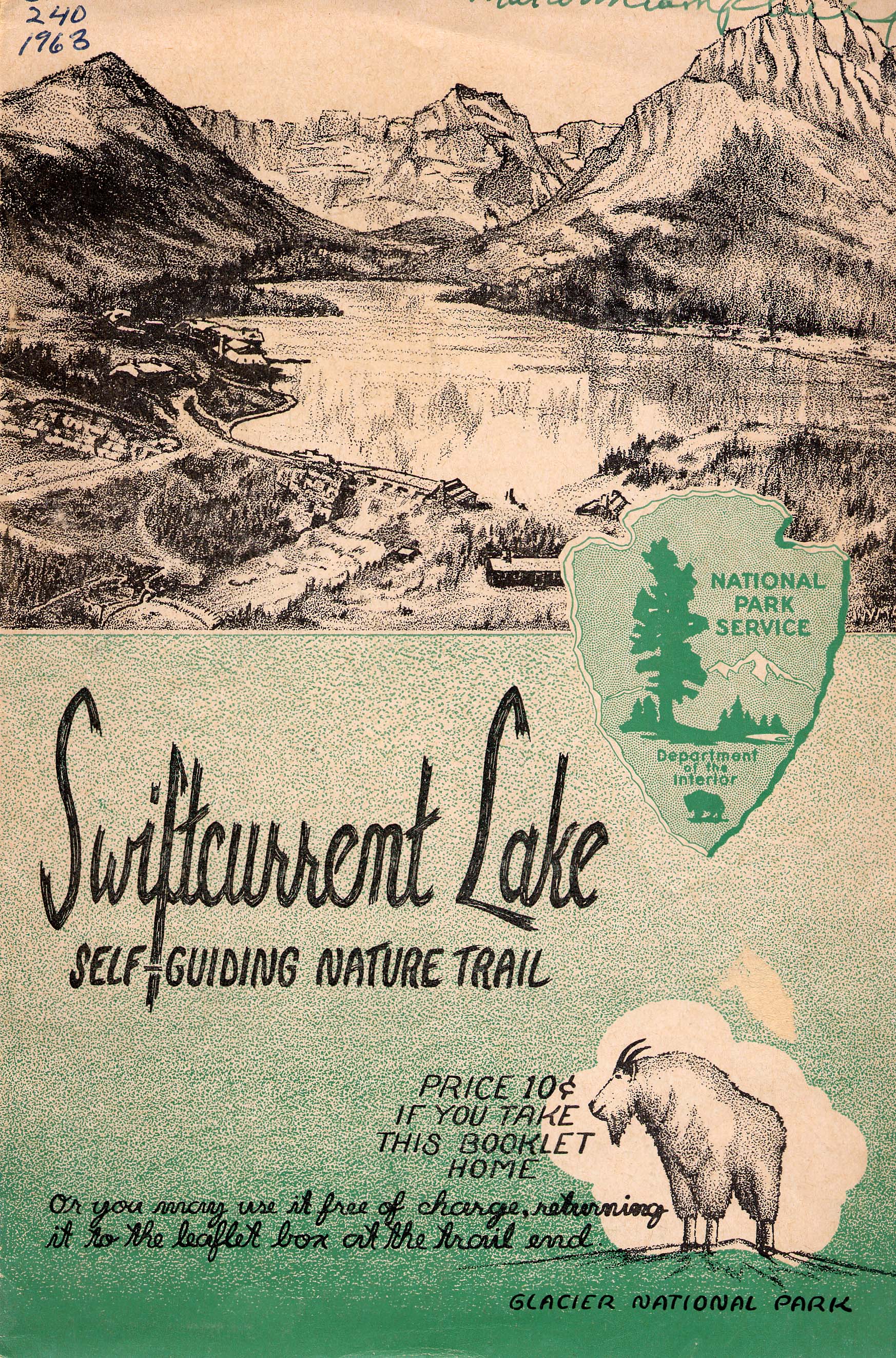
There used to be a wood box on a post near Many Glacier Hotel with a handfull of walking guides for tourists taking their first hike around Swiftcurrent Lake. If you wanted to keep the guide, you put a dime in a slot. If not, you put the guide into a similar box where the trail neared the camp store. I kept mine and along with it, brought home a sack full of guidebooks.
These materials are a writer’s dream. They allow me to merge my imagination and memories of the trails and mountains with specific factual information about the trees (subalpine fir, willow), wildflowers (fireweed, beargrass), and mountains (Grinnel, Allen). Even though I write contemporary fantasy, I want the setting to be as realistic as possible, and while I didn’t know it when I was a hotel bellman, all thosde after-work hikes were taking place in a world that would one say be part of The Sun Singer, Garden of Heaven: an Odyssey, and my new novel Sarabande.
I never wrote those National Geographic Magazine articles, much less climbed K2 or Everest, but I did write a few articles and essays about the Swiftcurrent Valley in Glacier National Park. Looking at the valley from a journalist’s or feature writer’s perspective helped me collect my thoughts for the fiction I would set there later. Unfortunately, I haven’t been back to the park for many years, but all that time walking around in the setting of my future novels rather engraved the sights and sounds in my memory.
Sarabande Excerpt – from a Fictional Cabin at the Park’s Lake Josephine
Lake Josephine and Mt. Gould - twbuckner photo
The bright yellow of a late morning sun filled the bedroom when Sarabande awoke. She felt the light move before she opened her eyes and pulled the tangled folds of the quilt away from her face. A summer breeze followed the light, fluttering the blue curtains with a breath that smelled of fir trees, larkspurs, gentians, and stones from snow-melt streams. Pine siskins chirped to each other amongst the ferns and mosses, olive-sided flycatchers pipped from tree-top perches, and children laughed. The laughter came and went with the coming and going of a rumbling, technology-sounding hum. Sensing no threat in the sound, she projected outside and found that a boat traveling up and down the lake with visitors was powered by whatever made the pervasive hum. The visitors got off the boat, looked around, laughed, and then got back on the boat and went away. They surrounded the cabin with their smells of strange soaps and fabrics, completely unaware of the magic in their midst. Whether it was the good night’s sleep or the rhythms of the water in the box of warm rain, her normally sharp senses intensified while she slept. Within the quilt of interlocking rings, she acquired—or was acquiring—Bear’s sense of smell, Eagle’s sight, and the quivering alertness of chipmunks and butterflies.
As the August 31st release date approaches for my concemporary fantasy novel Sarabande, I am celebrating with a book give-away on GoodReads. Three free copies are available. All you have to do is surf over to GoodReads, click on the ENTER TO WIN button and fill out the form. (If you’re not a member of GoodReads, registration is free.)
Sarabande is the 80,000-word story about Sarabande’s journey from her alternate-universe home deep in the Montana mountains to central Illinois in search of the once-powerful Sun Singer. She needs his help to rid her of the haunting ghost of her sister Dryad whom she killed in self-defense three years ago. She knows she has a 1,650 trip ahead of her. She does not know that the journey itself will be just as perilous as confronting the evil temptress Dryad.
Released by Vanilla Heart Publishing, Sarabande can be read as a stand-alone novel or as a sequel to The Sun Singer. The e-book edition of Sarabande was released August 13 and is already available on Kindle.
Best of luck in the give-away. The entry deadline is October 1.
After her sister, Dryad haunts her from beyond the grave for three long and torturous years, Sarabande undertakes a dangerous journey into the past to either raise her cruel sister from the dead, ending the torment…or to take her place in the safe darkness of the earth.
Sarabande leaves the mountains of Montana for the cornfields of Illinois on a black horse to seek help from Robert Adams, the once powerful Sun Singer, in spite of Gem’s prophecy of shame. One man tries to kill her alongside a deserted prairie road…one tries to save her with ancient wisdom… and Robert tries to send her away.
Even if she persuades Robert to bring the remnants of his magic to Dryad’s shallow grave, the desperate man who follows them desires the Rowan staff for ill intent… and the malicious sister who awaits their arrival desires much more than a mere return to life.
Gwendolyn Greer Field has woven together the lives of the career-oriented Elizabeth Bishop and her old friend Annie into a compelling and complex psychological and spiritual coming of age story. Bishop, who plans to leave her increasingly empty high-profile New York City job visits Annie in a small town because Annie’s life is falling apart and she needs help.
Annie’s husband Arthur committed suicide a year earlier, plunging what had appeared to be a perfect home into a world of secrets and doubt. Annie’s fourteen-year-old daughter, Betsy—who was Arthur’s favorite—blames Annie for the family’s ills. Her eight-year-old brother, Sam, who was ignored by Arthur, is less overt about his feelings.
Without realizing it, Elizabeth steps into a minefield of doubts, secrets and mysterious undercurrents, many of which cannot seem to be openly discussed. The cast of characters also includes Arthur’s former best friend Jackson, whom Annie despises for reasons she will not say, and Luke, Elizabeth’s high-school boyfriend whom she hasn’t seen or heard from in years.
“The Butterfly’s Kingdom” focuses primarily on the multiple conversations between these characters as they try to understand each other and their complicated relationships. Elizabeth, who went to Annie’s side as a rescuer not only has to come to terms with who her old friend has become, but with the fact that she herself also needs to be rescued from whatever sent her away to New York in the first place.
Field allows her characters the time and space to get to know each other and discover where their lacks of trust begin and end. While the conversations are therapeutic and demonstrate that all of those involved need to confide and trust each other more than they do, they also show that a temporal solution isn’t going to fix all the discordant lives.
“The Butterfly’s Kingdom” is also about spiritual journeys. While the spirituality has a clear Christian focus, it should resonate well with readers from many faiths.
This beautifully imagined book has a pervasive editorial flaw. The characters’ conversations all follow the same pattern: When one character makes a pithy and revealing statement about another, the statement is followed by “you’re not mad at me for saying this, are you?” or by “do you know what I mean?” This device for transitioning from the pronouncement back into give-and-take dialogue is overused throughout the book and tends to blur the characters’ personalities because they all do the same thing.
Nonetheless, this book of mysteries and secrets provides a thoughtful plot, issues that many readers may be experiencing in their own lives, and beautiful spiritual images and analogies en route to a satisfying conclusion.
–
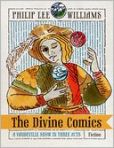 I’ve got my work cut out for me with Philip Lee Williams’ huge new novel The Divine Comics: A Vaudeville Show in Three Acts. It’s a 1,000+ page, two-inch thick novel from an award-winning Georgia author. However, I’m really looking forward to this one. I’ve previously enjoyed his poetry in Elegies for the Water, his natural history about the ridge he calls home in In the Morning, and his civil war novel A Distant Flame. Williams, who is also a composer of classical music, recently retired from the University of Georgia.
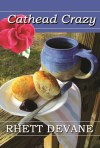 I’m also looking forward to Rhett DeVane’s new novel Cathead Crazy. She wrote a guest post about the novel’s background here on March 12. I’ve started reading the book—it’s great. I’m not surprised. I liked Rhett’s Evenings on Dark Island, co-written with Larry Rock. What a great vampire spoof that was. While Rhett lives in Tallahassee, Florida, the town where I grew up, I’ve never met her. She needs to do a book tour into the Northeast Georgia region where we also happen to like large biscuits.
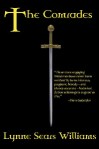 Meanwhile, I’ve been reading and enjoying Lynne Sears Williams wonderful novel about the long-ago days in the country now known as Wales. I’ll be talking more about The Comrades on this blog very soon.











 Malcolm's Round Table