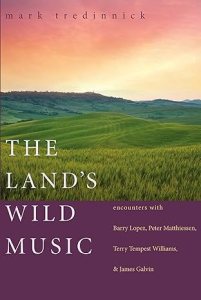
 I should have read this book sooner because I would like to talk to Barry Lopez (via Ouija Board), Peter Matthiessen (same Ouija board), James Galvin, and Terry Tempest Williams. And also, I like the wild music the land sings to us when we walk slowly and listen. The awareness one finds when listening to Earth’s music and, perhaps, the Creator’s music is what I was talking about in yesterday’s post about “gnosis.” That music is more difficult to hear inside a building, no matter how sacred the structure.
From the Publisher
“‘The Land’s Wild Music’ explores the home terrains and the writing of four great American writers of place―Barry Lopez, Peter Matthiessen, Terry Tempest Williams, and James Galvin. In their work and its relationship with their home places, Tredinnick, an Australian writer, searches for answers to such questions such as whether it’s possible for a writer to make an authentic witness of a place; how one captures the landscape as it truly is; and how one joins the place in witness so that its lyric becomes one’s own and enters into one’s own work. He asks what it might mean to enact an ecological imagination of the world and whether it might be possible to see the work―and the writer―as part of the place itself. The work is a meditation on the nature of landscape and its power to shape the lives and syntax of men and women. It is animated by the author’s encounters with Lopez, Matthiessen, Williams, and Galvin, by critical readings of their work, and by the author’s engagement with the landscapes that have shaped these writers and their writing―the Cascades, Long Island, the Colorado Plateau, and the high prairies of the Rocky Mountains. Tredinnick seeks “the spring of nature writing deep in the nature of a place itself, carried in a writer’s wild self inside and resonated over and over again at the desk until it is a work in which the place itself sings.”
About the Author
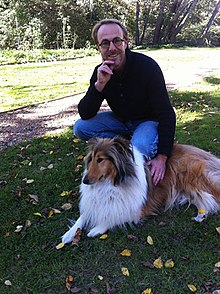 Mark Tredinnick is an essayist, poet, and writing teacher. He is the author of The Blue Plateau: A Landscape Memoir and the editor of A Place on Earth: An Anthology of Nature Writing from Australia and North America. His essays and journalism have appeared in Island, ISLE, Orion, Resurgence, the Bulletin, and the Sydney Morning Herald. Winner of the 2005 Wildcare Tasmania Nature Writing Prize, Tredinnick lives in the highlands southwest of Sydney, Australia.
–Malcolm

 The 6,247-acre lease held by Solenex was one of 47 oil and gas leases originally issued by the Reagan Administration in the Badger-Two Medicine in the early 1980s. With today’s settlement agreement, all of these leases in the area have now been permanently eliminated without any development having occurred, ending the threat of drilling in this wild, roadless area once and for all. Read more
 The lesson of this is that activities outside protected lands can bring pollution and other negative impacts to the flora and fauna inside those protected lands. Like the mine, the Solenex leases had that potential. Water and air pollution can be ubiquitous in that protected land boundaries don’t magically stop the inflow of pollution. At the time, I pushed an idea forward that would place concentric “circles” around protected areas in which nothing “dangerous” could be constructed. Naturally, this wasn’t passed. Development, such as that impacting
  The proposed
 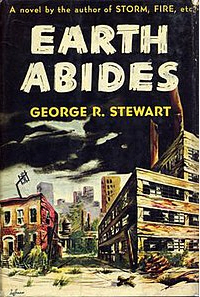 Let’s suppose NASA developed a shuttle system to transport people to a distant planet that is more or less exactly like Earth was before we screwed it up. I wonder how many people would leave.
![Florida Folk Magic Stories: Novels 1-4 by [Malcolm R. Campbell]](https://m.media-amazon.com/images/I/51JM4A8GQFL.jpg)

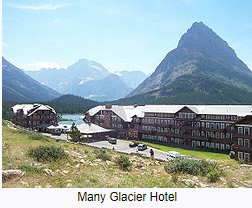 The national parks are suffering a similar death, one in which most people consider humans to be the most invasive species with the once pristine preserve. Years ago, Glacier National Park was considered the most threatened park in the NPS system, primarily from air and water polution that arose outside its borders. Now the new threat comes from within as the NPS continues to resist putting a cap on the number of visitors allowed each year.
 Charlie died of kidney failure. I can’t know this for sure, of course, but based on the speed of this whole thing, his eventual refusal to eat, and the anemia that was apparent from his tongue (it got progressively pale and was nearly white by the end), my vet said all signs pointed to kidney failure, too advanced by the time he showed symptoms to have done anything about. Charlie seemed to be improving for a couple of weeks which is why I thought it was arthritis and which, frankly, was the only reason I was capable of sharing that first update – and I’m so glad I did. Having you all looped in has helped me more than I ever could have imagined. We buried Charlie under his favorite tree.” – Shreve Stockton, weblog, 10/27/2020
 The movers and shakers who–for reasons of insanity or short term gratification of the riches gained from habitat destruction–want the world to call it a day missed their chance to end life as we know it years ago. They could have kept the U.S. out of World War II, let Hitler and Hirohito have it all, and head toward the resulting, predicted ruin.
 Black titi (pronounced tie-tie), Cliftonia monophylla, sometimes called the Buckwheat Tree, is a perennial evergreen shrub/tree found in Florida’s wet flatwoods and bogs. Deer and bees like it a lot. Sometimes native plant nurseries can find it for your garden. The flowers are generally white and bloom in the spring.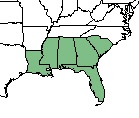
 Some requests bother me, and those are the ones from everyday people like me who get behind on their mortgage payments (or whatever) and put up a crowdfunding link on Facebook and we’re all rather shamed into kicking in to help somebody we don’t know make ends meet. Yet, I read how they got into debt–because I’ve been there–and wish I could contribute.
 Malcolm's Round Table