For guidance, I turned to the authority, the Chicago manual. Yet even that widely accepted all-knowing guide doesn’t make a distinction among editing levels: “Manuscript editing, also called copy editing or line editing, requires attention to every word and mark of punctuation in a manuscript, a thorough knowledge of the style to be followed, and the ability to make quick, logical, and defensible decisions.”New authors are often confused about what level of editing they need, and rightly so. I hope to offer insight into the differences between line editing, copy editing, and proofreading.
Source: The Differences Between Line Editing, Copy Editing, and Proofreading | Jane Friedman
Authors, especially indie authors who aren’t used to the multiple editing cycles their work will go through at a major publisher, often consider hiring an editor, but then become unsure what kind of editing service they need to purchase. This blog helps make distinctions between editing types.
Copy, of course, is your printed-out or Word manuscript. A proof is your manuscript after it’s been laid out as it will look in magazine or book form. Generally speaking, proofreading is a search for the printer’s errors while copy editing is a search for the author’s errors.
So what is line editing and when do you need it? A good question. You’ll find a credible answer in this article in Jane Friedman’s blog.
 Malcolm R. Campbell is the author of “Fate’s Arrows,” the fourth novel in his Florida Folk Magic Series.
 Used to be a copyeditor would catch a lot of the misspelt names. Now, reporters and writers are expected to catch their own mistakes because copyediting has become a lost art as organizations cut costs. When a reporter covers a story, readers expect him/her to have a basic knowledge of the subject and when that proves not to be true, the story won’t be trusted.
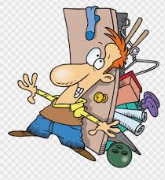 In case you don’t, it means that the person making the suggestion wants to get rid of a lot of stuff the person hearing the suggestion wants to keep.
 Malcolm's Round Table