‘Path of the Panther: New Hope for Wild Florida’ by Carlton Ward Jr.

CBS news reports that “Three dozen endangered Florida panthers died this year, the most in nearly a decade, according to the state’s Fish and Wildlife Conservation Commission. It’s the most panther deaths since 2016, when 42 panthers were killed.”
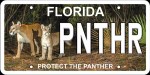
All the more reason to read this 2023 book, follow panther-related conservation organizations such as Wildpath, for FL residents purchase a protect the panther license plate, and keep up with news about Florida conservation efforts.

From the Publisher

“The panther is the state animal of Florida, the last big cat surviving east of the Mississippi River, and an emblem of the Endangered Species Act. It was driven to extinction in the eastern United States, except for a small remnant population that persisted in Florida’s Everglades. Panther numbers had dwindled to fewer than 20 individuals by the 1980s, but heroic conservation efforts have helped panthers come back to nearly 200 today. The biggest obstacle for the panther’s continued recovery is access to enough of its historic territory throughout Florida and beyond.

“The tale of the Florida panther has grown from the unlikely survival of a rare cat to a story of hope for all of wild Florida. Path of the Panther in now a call to action to recognize and protect the Florida Wildlife Corridor – a network of public and private land that connects the panther’s current range in south Florida to suitable habitat throughout the state of Florida and adjoining states.

“The Florida Wildlife Corridor is the panther’s path to recovery and a western-scale conservation opportunity that remains largely hidden in the east. It is now as a Last Wild Places partnership with the National Geographic Society. With 27 percent of Florida already protected as public land, this project aims to inspire the additional one million acres of conservation needed over the next decade so that Florida can be a leader in the goal of protecting 30 percent of the planet by 2030.

“Photographer Carlton Ward helped put the Florida Wildlife Corridor on the map by trekking from the Everglades to Georgia in 2012 and from the Everglades Headwaters around the Gulf of Mexico to Alabama in 2015. Through these National Geographic–supported expeditions, he and his team have witnessed that a path for the panther’s recovery still exists. But with 1,000 new residents moving to Florida every day, and more than 100,000 acres of habitat lost to development each year, to window to save it is closing quickly. Through Ward’s intimate photographs, expert essays and compelling maps, the Path of the Panther book, combined with a National Geographic magazine article, National Geographic Society Last Wild Places campaign, and feature documentary film, is poised to awaken people to wild Florida and inspire them to save it.”

Happy New Year

–Malcolm

Short Story Collection: The Land Between the Rivers features three tales set before the dawn of recorded time in the Florida Panhandle world bordered by the Apalachicola River, Ochlockonee River and the Gulf of Mexico. This diverse environment of coastline, baygalls, swamps and forests includes the beautiful and notorious Tate’s Hell State Forest. In How the Panther Lost Her Roar, you’ll meet the rare and endangered Florida Panther that could be found in Tate’s Hell as late as the 1960s. In How the Snake Bird Learned to Dry His Feathers, you’ll meet a Florida bird—also called the Anhinga—that learns to swim before he learns to fly. And, in How the Bear Found Her Favorite Food, you’ll learn what the Florida black bear eats when she has her choice. These stories begin where the Seminole Creation Myth ends as seen through the eyes of Eulalie, the root doctor in my novella Conjure Woman’s Cat, available in both electronic and print formats.

Bears Ears Makes History with Release of Proposed Management Plan in Collaboration with Five Tribes

NPCA News Release

This plan marks historic progress, incorporating Tribal collaboration into the care and stewardship of this critical landscape–Theresa Pierno, NPCA’s President and CEO

© Arlene Hochman Waller/Dreamstime

The plan aims to manage the lands and resources of Bears Ears in collaboration with Tribes, to fulfill the vision of President Obama’s proclamation that established the monument and President Biden’s proclamation that restored its boundaries.

The proposed resource management plan will guide resource policies and procedures for the monument’s 1.36 million acres of public lands. It is the result of a multi-year collaboration with the Bears Ears Commission – the Ute Indian Tribe, Ute Mountain Ute Tribe, Zuni Tribe, Hopi Tribe and the Navajo Nation – and federal partners at the Bureau of Land Management and the U.S. Forest Service.

NPCA is carefully reviewing the final plan which is expected to shape policies that protect Bears Ears National Monument for years to come and help connect one of America’s most diverse national park landscapes from Glen Canyon to Canyonlands National Park.

Statement by Theresa Pierno, President and CEO for the National Parks Conservation Association (NPCA):

“Since time immemorial, Bear Ears has been a place of healing and refuge, connecting many Tribal communities to their ancestors across centuries. By placing Tribal collaboration at the forefront, we all benefit along with our national parks and public lands.

“Years of determination and hard work by Tribal Nations, local communities, businesses, and people across the country have led to this moment. This plan marks historic progress, incorporating Tribal collaboration into the care and stewardship of this critical landscape.

“This would not have been possible without the unwavering leadership of the Ute Indian, Ute Mountain Ute, Zuni, and Hopi Tribes and the Navajo Nation. NPCA is proud to have worked alongside the Tribes, whose leadership reinforces the integral role of Traditional Ecological and Indigenous Knowledge in shaping the future of our public lands.”

–Malcolm

Malcolm R. Campbell is  a long-time member of NPCA.

Parks Group Applauds Landmark Collaborative Tribal Management Plan to Protect Bears Ears National Monument

NPCA News Release

March 13, 2024

Washington DC – The Biden administration in collaboration with five Native American Tribes released a historic draft management plan for Bears Ears National Monument in Utah. Through this plan, the lands and resources of Bears Ears will be managed in collaboration with Tribes, utilizing Indigenous knowledge and Tribal input, as was intended in President Obama’s proclamation that established the monument and President Biden’s proclamation that restored the monument.

This management plan was the result of a two-year collaboration among five Tribes of the Bears Ears Commission – Ute Indian Tribe, Ute Mountain Ute Tribe, Zuni Tribe, Hopi Tribe and the Navajo Nation – along with federal partners at the Bureau of Land Management and the U.S. Forest Service. Once finalized the plan will inform resource policies and procedures for the protection of Bears Ears National Monument, connecting one of America’s most diverse national park landscapes, for years to come.

Statement by Theresa Pierno, President and CEO for the National Parks Conservation Association (NPCA):

“This landmark management plan is proof that through collaboration and elevation of voices traditionally underrepresented in public lands management, our country can preserve culturally important places and ecosystems while also balancing recreational opportunities. It’s clear the Biden administration understands that true Tribal consultation in the management of our public lands benefit all of us, as well as the future of our national parks and public lands.

“Bears Ears connects and protects one of America’s most iconic national park landscapes. It is a sacred place that provides healing and sustains life for so many. This historic collaborative management plan safeguards those values. It commits to long-term Tribal consultation and ensures that the management of this landscape honors traditional Indigenous knowledge and cultural wisdom. Once realized, this plan will create a future where visitors learn about the full history of Bears Ears and the people who have understood and cared for these lands for thousands of years.

“For years, NPCA worked alongside Tribal Nations, local communities and businesses, and countless people across the country to protect the Bears Ears landscape. But this plan would not have become a reality without the leadership of Ute Indian, Ute Mountain Ute, Zuni, and Hopi Tribes and the Navajo Nation. We are proud to stand with them, together as partners, in the fight to protect Bears Ears, and all our national monuments, for generations to come.”

***

Floridians: Stop the Northern Turnpike Extension

I grew up in Florida, so I can say this. Florida is famous (infamous) for its toll road boondoggles. If you live in Citrus, Levy, Marion, or Sumter countries, you’re at ground zero for a proposed turnpike extension that’s bad for you, the land, the panthers, and your pocketbook.

There’s been a continuing disconnect between what the people in your part of the state say you don’t want and what the Florida Department of Transportation (FDOT) seems bound and determined to shove down your throats.

As the No Roads to Ruin coalition says, “FDOT’s current approach to SB 100 completely ignores (1) the overwhelming public opposition, (2) the M-CORES Northern Turnpike Corridor Task Force’s failure to find any need for a northern extension of the turnpike, (3) the M-CORES Northern Turnpike Corridor Task Force’s findings on the fragility of the region’s environmental and agricultural resources, and (4) the reality that this folly is wasting, once again, precious Florida taxpayer dollars.”

This graphic from the coalition’s website sums up the situation nicely:

The evidence shows that the FDOT proposal is bad for water, wildlife, health, taxpayers, agriculture, rural communities, and the climate. It’s not just the roads themselves, it’s the sprawl and pollution that follow.

There’s also a disconnect between FDOT and the damage it does. My primary concern is the endangered Florida Panther. Estimates vary, but there are less than 200 left.
Wildlife ecologist Randy Kautz, writing at the request of the Nature Conservancy, said, “The construction of a new toll road expressway from Central into Southwest Florida is likely to have two primary effects on Florida panthers. First, there will be a direct loss of panther habitat within the footprint of the new road. Second, the toll road will accelerate the predicted loss of panther habitats, increase roadkill mortality, result in increasing fragmentation of remaining panther habitats, and likely jeopardize panther population survival by facilitating the movement of new residents and developments into regions of Southwest Florida that are now rural.”

FDOT doesn’t care about the panther or the water or the agriculture, much less the quality of life. Its job is to bring money into the state with toll roads and the tax money generated by sprawl. Your protests will never change FDOT’s thinking. The only thing to do is lean on the public, the legislature, the governor–and if need be–the courts to stop its absurd fixation on paving over the state.

Malcolm

Malcolm R. Campbell’s novels are set in the Florida Panhandle where FDOT devastation isn’t as extreme as it is in the peninsular part of the state.

Florida’s Carnivorous Plants

In some parts of the county, searching for autumn-leaves color is not only a regional pastime but a tourist experience. Spring wildflowers are another large attraction, though I don’t hear as much about timing and destinations as I do for fall color.

In the Florida Panhandle, we have a scenic byway (State Route 65) that runs north and south through Liberty County (where I’ve set my conjure and crime Florida Folk Magic Series) that’s a beautiful road that becomes a bit congested in the spring as the cameras come out to “capture” wildflowers. Florida’s carnivorous pitchers, when found en masse, are referred to as “pitcher plant prairies.”

White-topped Pitcher Plant – photo by chapstickaddict on Flickr

According to Missouri Botanical Garden, “Sarracenia leucophylla, commonly called white-topped pitcher plant or white trumpet, is native to mucky soils of sandy bogs and pine savannas in coastal plain areas from south western Georgia, southern Alabama and the Florida panhandle. This is a stemless herbaceous perennial that grows in full sun.”

It’s also a carnivorous plant. When I lived in Florida, I used to tell out-of-state visitors that these flowers were worse than alligators and could strike like a snake and consume a 200-pound man in a nanosecond. They normally eat insects, considering people off limits most of the time. Goodness knows how many of my exaggerations got ferried back to the rest of the country!

Blazing Star – Route 65 Tour Guide photo.

You can see pitchers during April and May, and to a lesser extent in the fall. Don’t pick any of them: you might end up in jail. In addition to pitchers, you’ll find a spectacular display of color from the False foxglove, Rayless goldenrod, Hairy chaffhead, Bristleleaf chaffhead, Flattop goldenrod, Narrowleaf Sunflower, Blazing star, and White rosegentian.

If you live in Florida or are traveling to West Florida during the blooming season, you’ll find this tour guide to be a handy reference.

Malcolm


On Location: Florida’s Garden of Eden Trail

In the 1950s retired lawyer and Republican candidate for governor Elvy Edison Callaway opened his Garden of Eden Park along the highway in the Florida Panhandle town of Bristol. Callaway believed that God had created man in the delta of the Apalachicola river, which split into four rivers, just as the Bible describes four rivers leading out of Eden. – Atlas Obscura

Signs like these pointed out Biblical-related highlights throughout the old park.

Florida’s Garden of Eden park near Bristol in the panhandle west of Tallahassee is long gone, though in its memory, there’s still a Garden of Eden Trail in the Nature Conservancy’s Apalachicola Bluffs and Ravines Preserve:

According to the Conservancy, the Apalachicola Bluffs and Ravines Preserve protects one of the rarest of habitats: steephead ravines and streams. The Apalachicola River and Bay region is one of five biological hotspots in North America; it is unique to Florida and home to a disproportionate number of imperiled species. The preserve’s longleaf pine sandhill uplands have undergone a complete transformation over the past 30-years: the groundcover restoration techniques developed at ABRP are currently being used across the southeastern U.S.”

Nearby Torreya State Park , (north of the Bluffs and Ravines Preserve) and also at Bristol, makes for a great side trip.

The 3.75 mile trail leads to Alum Bluff overlooking the Apalachicola River. If you’re new to Florida, or live in the peninsula region, the sheep head ravines, longleaf pines, and sand hills are a sight to see.

Trail today – Artie White photo, Flickr creative commons.

Fortunately, a lot of restoration work has been going on there, including the introduction of wiregrass plugs and pine seedlings. Ensuring the preservation of the endangered Florida torreya and Florida yew trees is still in doubt. I hope we don’t lose them.

I took a dim view of the park and the Eden theory when I was growing up in nearby Tallahassee. However, as a writer of a trilogy of magical realism novels set near the trail, the site and and its potential symbolism have been a great way to add myths and local color to the novels. And, as an environmentalist, I’m happy with the Nature Conservancy’s protection and proactive restoration work on behalf of this unique environment.

In addition to the conservancy, groups like the Torreya Guardians are also working to save the Torreya tree. Among other things, experiments that appear to have promise include planing seedlings in a variety of environments (not necessarily in Florida) to see if healthy trees can be created and subsequently returned to their natural environment.

If you live in the Florida Panhandle or are going there for a visit and want to see visit the trail, Florida Hikes as a brief overview here.

Malcolm

Florida Wildflowers: Seaoats

“Seaoats are important dune builders and protect beach dunes from erosion. It is unlawful in Florida to destroy or take this grass.” – “Florida Wildflowers: a Comprehensive Guide” by Walter Kingsley Taylor

“It shall be unlawful for any person to cut, collect, break or otherwise destroy sea oat plants, Venus’s-flytrap plants or any part on public property or on private property without the owner’s consent. Any person violating the provisions of this section shall be guilty of a misdemeanor and upon conviction shall be fined not more than two hundred dollars or imprisoned not more than thirty days nor less than five days. Each violation shall constitute a separate offense.” – SC Code § 16-11-590 (2013)

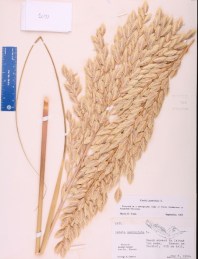
Herbarium Specimen – Atlas of Florida Plants photo.

Seaoats (Unicola paniculata) are perennial grasses, often clumped and with vast root systems, that can grow over six feet tall that are found throughout the state in coastal uplands and beach dunes. The flat, inch-long flowers (spikelets), which are slightly purple or the color of straw, blooms throughout the year.

Seaoats can be found along the coasts and on barrier islands along the eastern seaboard from Virginia to Florida. Seaoats are very tolerant of salt spray. They are also very heat and drought tolerant and green until late in the summer. While the conditions under which they thrive reduce encroachments from other plants, beachfront development is a primary threat. (As you can see in the Florida state park photo below, developers, dune buggy enthusiasts, and others are likely to write the plant off as a weed.)

Some people like using them as accents in flora arrangements or as the focus of dried arrangements–one reason why some areas classify the grass as a threatened or endangered species as well in addition to being vital to soil stability within its habitats. They not only protect dunes year around but are an important factor in protecting coastal areas from the erosion associated with tropical storms. Restoring seaoats often becomes an important part of dune restoration programs.

Seaoats provide food for songbirds, burrowing owls, mice and marsh rabbits. While the grass produces numerous spikelets, these don’t generate a lot of viable seed. Fortunately, the seeds don’t have any important commercial value.

Seaoats on the crest of a dune at the John U. Lloyd Beach State Park, Florida – Wikipedia photo.

“What is so tantalizing about sea oats, making one wish to break the law to have sea oats in their own garden? For starters, they have a striking appearance growing and swaying in the slightest breeze. The decorative plumes (seed heads) are often dried and placed in floral arrangements, or displayed alone as a focal point. Sea oats are quite easy to have without breaking the law, but few people are aware seeds and/or plants may be bought legally from nurserymen licensed by the state of Florida to propagate them. These nurseries supply sea oat plants to local, state and federal government agencies for dune restoration after hurricanes; the nurseries are allowed to sell them to the public as well.” – Darius Van d’Rhys

Seaoats are edible (browned or used as a cereal), but if you want to try them, you have to grow your own. Note that the plant is not the same as Inland Sea Oats (Chasmanthium latifolium) that often grows as a ground cover in open areas and is found in northern states as well as the southeast.

–Malcolm

For a chance to win a free Kindle copy of “Conjure Woman’s Cat,” see the Amazon giveaway which runs through August 8th.


Should I be writing about political issues?

Arts, publishing and books websites are showing us a large number of links about writers and politics these days. Some writers are speaking out (from one side of the aisle or the other) at rallies, via letters to Senators and Representatives, and posts on Facebook profiles. Others are writing poems, entire poetry chapbooks, essays, book reviews, short stories and novels that reflect their concerns about a wide variety of political, economic and social issues that became part of the very polarized national debate during the Presidential campaign.

Somebody–I forget who–once said that all fiction and poetry is at one level or another political. Perhaps so. My contemporary fantasies can’t help but show sadness over a world that relies more on technology than spirituality. My two Florida conjure novels shine a light on the racism of the 1950s. Nonetheless, my primary intent with these novels was telling stories I was passionate about rather than creating “message novels.”

When I think about the folk songs of the 1960s–and a lot of the poetry and fiction as well–I remember them as being intensely political, about “the military industrial establishment,” segregation, poverty, and the Vietnam War. We seem to have come full circle back to writings of protest and resistance against conservative policies as well as writings suggesting that that previous liberal policies created a mess that needs to be cleaned up.

Of course I have opinions about the issues. One opinion of longstanding favors a better approach to the environment, conservation, protection of wild areas and natural resources, and more care about not polluting the environment. Since these views go all the way back to the days when I was in the Boy Scouts and first began to participate in conservation organizations such as the Wilderness Society and the National Parks and Conservation Association, I will keep writing about this–and referring to it in my stories.

While I respect writers and others who feel a need to speak out for or against the issues that now threaten to further divide this country into camps that refuse to work toward consensus, I’m not going to do it. For one thing, I have no credentials that give me any special insight into whether we should be doing ABC or XYZ.  For another thing, much of the debate in both the news media and the social media is being driven by biased or skewed news, sensationalism and other misleading information, and voters on both sides of the issue who approach discussion with a “my candidate right or wrong.” All of this divides us further and makes the truth harder to find.

So my “voice” is going to stay focused on environmental issues and in writing fiction even if the two things get stirred up together a little bit. None of the rants–even those I basically agree with–on Facebook and elsewhere are changing people’s minds. Why not? Because they’re skewed toward the far right or the far left rather than a more centrist approach where people can really discuss the issues sanely rather than throwing gasoline on the fire with dueling wisecracks and graphics.

I welcome those journalists and other writers who do their best to look past the hysteria and tell us the facts and/or to carefully analyze the practicality, ethics, and legality of the issues in their news stories, features, essays, poems, and fiction. Anything else is pretty much spitting into the wind.

–Malcolm


Rescued Florida Bobcat Release in Protected Preserve

florida-bob-catThis cute kitten is called Spirit Feather. She was found on a road near Orlando last summer, turned over to Big Cat Rescue, and given medical care, food, and the kind of training she needed to live in the wild–including how to hunt.
“Spirit Feather has grown up to become a strong, feisty bobcat equipped with the skills to return to the wild where she belongs,” said Jamie Veronica, President of Big Cat Rescue. “We are very happy that she will be released on a vast, protected property and find everything she needs there to thrive.”

You can see pictures of the work behind the scenes here as well as a video showing the bobcat’s release several days ago. I really applaud the work of these folks. Florida has diverse habitats and animals. If things had been done right over time, we wouldn’t see long lists of flora and fauna on endangered lists. The Nature Conservancy is a partner in many of the rescue, re-establishment and conservation projects,

Let’s hope it’s not too late to save the Gopher Tortoise, the Indigo Snake, and the Florida Panther as well.

–Malcolm

Malcolm R. Campbell’s Florida Piney Woods novel “Conjure Woman’s Cat” will be on sale Friday, January 20th on Amazon.

You may live in Wiregrass Country and not know it

By and large, people have forgotten wiregrass. Time was, it occupied the forest floor where longleaf pines grew. Sadly, most of the longleaf pine forest is gone as well.

Wikipedia photo
Wikipedia photo

The deep South is wiregrass country and for those who remember, there’s a lot of folklore in and around those old woods. “Progress” killed the longleaf pines. And, wiregrass, too. (Some people call it “Pineland Three-awn.”)

Like longleaf pines, wiregrass needs fire to prosper. Native Americans in the Florida Panhandle and south Georgia knew this and so did incoming settlers. They burned off the grass yearly. This helped the forest by clearing out all the understory clutter of brush that choked pines and pine seedlings. The grass, which returned soon after the burns, came up fresh and new and was succulent enough for cattle for a while before getting wiry and inedible.

In some ways, Smoky the Bear helped kill off our wiregrass and longleaf pine forests because he kept brainwashing us with the phrase “Only You Can Prevent Forest Fires.”

But here’s the thing: forest fires are a natural part of environmental renewal. Preventing them where they are needed harms the forest. In the 1940s, the forest service banned controlled burning and we have been paying for that mistake ever since even though the practice is now more in favor.

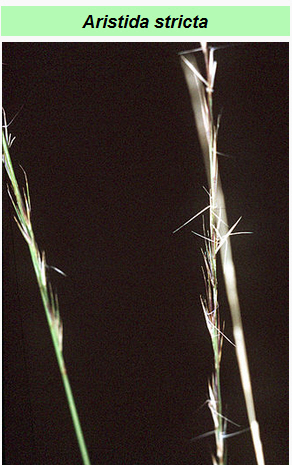
wiregrasscountryIn Wiregrass Country, one of my favorite folklore books about the world where I grew up, Jerrilyn McGregory writes that “Wiregrass (Aristida stricta) depends on fire ecology to germinate. Its fire ecosystem created a unique set of circumstances, tied closely to a way of life…Although it was once the most significant associate in a community of species that formed the piney woods, many human inhabitants of the region have lived and died without knowing the plant.”

I grew up with wiregrass and longleaf pines and miss them. Perhaps that’s why I’m working on another novel set in “Wiregrass Country.” Maybe talking about wiregrass and pines will remind people what we once had and will help garner support for restoration efforts.

Traditions in Wiregrass Country run deep even though they often seem out of place in an increasingly “citified” world. If you grew up there, you probably ate mullet, went to peanut festivals and rattlesnake roundups, knew well the “shape note” old-style hymns of Sacred Harp music, fished or played a rousing game of fireball and loved storytellers.

If you didn’t grow up there, you missed a lot. Same goes if you grew up there in a suburban neighborhood and never ventured out into the piney woods and small towns.

Maybe it’s time to go see what it’s all about.

–Malcolm

KIndle cover 200x300(1)Malcolm R. Campbell’s “Conjure Woman’s Cat” is a magical realism novella set in the wiregrass and piney woods country of the Florida Panhandle.