Book Review: ‘Sweet Music on Moonlight Ridge’

Sweet Music on Moonlight Ridge Sweet Music on Moonlight Ridge by Ramey Channell

My rating: 5 of 5 stars
Perhaps it was fate, but cousins Lily Claire and Willie T. were born the very same instant just after their mothers Sara Onselle Nash and Rachel Bodicea Nock got into a fight about something or other and just about trashed their shared hospital room.

After that, Lily Claire and Willie T. couldn’t help but be inseparable friends and playmates throughout the old roads and backwoods of Moonlight Ridge near Eden, Alabama during a long-ago time when skinned knees, grubby hands and natural music were more prevalent than they are today.

Protagonist Lily Claire relates that Willy T. “was the meanest little booger you’d ever want to see. In the early years, before we started to school, we fought about as much as we played. And then it got so that, for the most part, we couldn’t tell the difference between fighting and playing.”

There’s a lot of laughter in “Sweet Music on Moonlight Ridge.” Author Ramey Channell has filled her charming story with a boocoos (that’s a Southern word meaning “a lot”) of well-drawn, quasi-eccentric mountain people. When they come together, they’re just naturally funny even though that’s not always their intention.

They’re good people, too, and no-nonsence pragmatic, the kind it would be a pleasure to know. In the novel’s introduction, Channell says that even though she’s not Lily Claire, she used to be a lot like her. Channell grew up on a mountain like Moonlight ridge, one that “seemed like a mystical place then.”

Channell has a good memory, and she writes in the kind of lyrical prose that comes from a writer with an ear for the language of the place where her characters are coming to life on the page. Moonlight Ridge is filled with magic and mystery. As it turns out, Lily Claire and Willy T. have a better handle on what’s what in the magic and mystery department than the adults.

After this charming story comes to an end, readers will discover a handy glossary that defines words like “boocoos” and “Arby-vida.” There are some recipes, too, for those who can’t wait to try Granny’s Persimmon Cookies, Cabbage Chow-Chow or barbecued ribs with Sam Nash’s “Secret” sauce.

While one expects a talented storyteller like Ramey Channell to spin a fine backwoodsy yarn, finding food at the end of the tale is a bonus. As Lily Claire says about almost every wise revelation, “I guess it just goes to show you.”

View all my reviews >>

Malcolm

Why I review the books I review

Truth be told, if my name were James Patterson and/or if I worked for the New York Times, a fair number of readers might be waiting to see what I (or my newspaper) had to say about “The Girl Who Kicked the Hornet’s Nest” or “Frankenstein: Lost Souls.”

But I’m not and I don’t.

I’ll probably read “The Girl Who Kicked the Hornet’s Nest” because I enjoyed the late Stieg Larsson’s “The Girl with the Dragon Tattoo.” I probably won’t review it, though, because by the time I get around to reading it adding one more review to a slough of them on Amazon or GoodReads just isn’t going to matter.

More importantly, though, is the fact that Stieg Larsson’s books don’t need any help, nor do they need any cautionary words or warnings. But small-press and self-published authors do need publicity, so I’m going to focus on novels from those sources when I find books I like.

I have no delusions of grandeur about this. My review isn’t going to catapult an unknown author onto the New York Times bestseller list. The book world runs on publicity. The trouble is, those who don’t need it keep getting more of it. Those who do need it get very little of it because they’re not already famous.

This is one of those paradoxes that drives authors nuts. “Why,” they ask, “is there a million dollar marketing budget for a book that’s going to become a bestseller with no marketing at all?” And, “Why are a hundred reviewers lining up to review the last James Patterson book when, really, everything that could be said about it has already been said?”

Mob instinct, I would say.

I would much rather offer my humble opinion about a book you might not hear about at all unless you chance upon my blog review or my GoodReads review. Perhaps you will find a title you like and you’ll buy a copy. After you read it, you might tell your friends about it.

The authors of the books I review may have worked for a year or two writing their books. In some cases, they struggled with their manuscripts off and on for decades. I think they deserve a chance to be read. That’s why I review them.

Malcolm

If I Owned a Bookstore

In his novel “If On a Winter’s Night a Traveler,” Italo Calvino divides a book store into some amusing sections:

    Books You Haven’t Read

    Books That If You Had More Than One Life You Would Certainly Also Read But Unfortunately Your Days Are Numbered

    Books You Mean To Read But There Are Others You Must Read First

    Books Too Expensive Now And You’ll Wait Till They’re Remaindered

    Books That Everybody’s Read So It’s As If You Had Read Them, Too

If I owned a bookstore I would probably already be broke and/or insane, but assuming I wasn’t, I would look to Calvino (figuratively, since he’s dead) for guidance in arranging my store.

Near the front of the store, there would be: Books Most People are Too Embarrassed to Pick Up. In-store video would display people sneaking up to this section and making sure they’re alone before hurriedly shuffling through the titles and centerfolds.

In the center of the store, I’m thinking of a section enclosed in barbed wire (to keep the kids out) called Books That Know Where You Live and Will Come to Your House if You Don’t Buy Them. I think a lot of people will look at these books, put them down, and then go home and see what happens. Once something does happen, I’ll start raising prices because people will have to buy the books then.

To prove that my store had a heart of gold, I would have sections called Books Your Friends Keep Borrowing and Never Give Back (with a bulletin board for posting names of your forgetful friends), Books You Need to Keep the FEDs From Hassling You (obviously, a section for those who think we have too much government already), and Books That Are, Frankly, Pretty Damn Stupid (these will sell as beach reads).

There would be smaller sections with tasteful signs like:

PURE SMUT

IMPURE THOUGHTS

DISEASES YOU DON’T WANT YOUR SPOUSE TO KNOW ABOUT

FAKE EMPOWERMENT SECRETS

SELF-HELP FOR THE ENTITLEMENT GENERATION

As for ambiance, it needs to be threatening. People like danger. They want to be able to say, “I went to BAD ASS books and got out without spending more than $250.” A biker-bar motif might work with complimentary booze for anyone who can prove they’re not already drunk.

Even so, I’d probably need a section of my store called Books You Would Buy if You Weren’t Too Hammered to Stand Up Straight. (The shelves in this section would be low to the floor so you could see the titles while crawling.)

Needless to say, we’d require folks to check their guns at the front door.

Garden of Heaven – A new novel with action and vision quests in Glacier National Park.

A sweeping mythic novel of magic and quantum entanglements that fractures time and tangles the today and yesterday of a family’s lies, a lover’s secrets, a seeker’s journey, and reality itself.

E-book only $5.99 at OmniLit

Review: ‘Awakening of the Dream Riders’

Awakening of the Dream Riders Awakening of the Dream Riders by Lynda Louise Mangoro

My rating: 5 of 5 stars
Kyra has discovered how to fly.

As Lynda Louise Mangoro’s magical novel “Awakening of the Dream Riders” begins, fourteen-year-old Kyra is trying out her new talent: “Her favorite unicorn poster suddenly loomed directly ahead. Pulling back, she slowed just in time to avoid a collision with the wall and sent herself tumbling backward through the air, rolling head over heels in a clumsy display of aero-gymnastics.”

Before Kyra discovers what she’s doing, veteran readers of paranormal fiction will guess that her joyful and liberating flight is astral projection. But she’s too elated to concern herself about technical terms. She can’t wait to share her stunning discovery with her best friend at school.

This well-told story moves at light speed, as fast as a person flying in their “light body” can soar across town in the blink of a thought. Soon, Kyra and her friends, Ray, Lauren, Crystal, and even the science-minded Noah are talking about “dream riding.”

On the back cover of “Awakening of the Dream Riders,” Mangoro describes Kyra’s world as “a quiet street in a picturesque English seaside town.” As Kyra and her friends discover, that’s only one reality, and it’s heavy and dense when compared to dream riding.

But unknown shadows await them within the infinite scope of the bright reality that knowing how to fly has offered them. Kyra and her friends will discover their unique dream riding talents, talents they must develop quickly in order to survive a tragedy their freshly opened eyes do not yet see.

“Awakening of the Dream Riders” plunges the reader into an inventive paranormal adventure. The high-energy magic of the story arises out of the fact that Kyra’s world on the ground and in the air appears very real. And there’s more to come: Mangoro’s debut novel is the first in a projected series of open-your-mind fantasy adventures for young adults and adults.

View all my reviews >>

Malcolm R. Campbell is the author of two magical realism novels, “Garden of Heaven” and “The Sun Singer.”

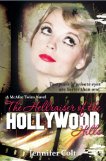
Review: ‘The Hellraiser of the Hollywood Hills’

When some low-life malware from the wrong side of the Internet comes after your fancy laptop, you call for McAfee antivirus software. When some Tinsel town ne’re-to-wells hassle your hot teen recording artist, you call for Kerry and Terry, the McAfee twins.

They have red hair, a pink Harley and a street-wise attitude seasoned with more wisecracks and putdowns than the law allows. At 25, they’ve already been around the block a few times (when it comes to crime fighting) because they run Double Indemnity Investigations of West Los Angeles.

When Bethany (aka “the gum-pop phenom”) walks in front of their camera in disguise during a routine stakeout of an apartment in the bad part of town, she jumps to the conclusion the twins are “stinking paparazzi.” Just moments earlier, Kerry had been thinking how well they blended into the neighborhood in their trashed rental car, just a couple of “harmless crackheads or hookers making an honest living.”

A fight ensues—and without giving away why the three women end up at a no-tell motel that smells “like the place where mildew goes to die”—the story is soon racing like a Harley out of hell through a plot jam-packed with twists, turns and hijinks. It’s a plot to die for.

And people are dying, mostly around Bethany, and as a discerning reader, you might ask if “psychopathic killer” ought to be added to the rich and spoiled singer’s long list of issues. Bethany’s on the run and while the twins are chasing her the cops—who don’t see the humor in this caper—are trying to pin the murders on Kerry and/or Terry.

The snap, crackle and pop you hear while reading “The Hellraiser of the Hollywood Hills” is not your breakfast cereal, it’s Jennifer Colt’s smart, high-energy writing. The characters, while a bit over the top at times in a good way, are memorable even though they aren’t the kind of people you’ll have over to dinner, and there’s plenty of snappy dialogue for everyone.

It’s nice to see the McAfee Twins back in their fourth very enjoyable novel that will keep you guessing until the last page.

View all my reviews >>

Malcolm R. Campbell is the author of “Garden of Heaven,” “The Sun Singer,” and “Jock Stewart and the Missing Sea of Fire.”

Book Review: ‘We Hear the Dead’

Rap twice for “yes.” Rap once for “no.”

If spirits weren’t talking through raps, taps and other assorted sounds in the darkened rooms, how were the girls doing it? Some said Maggie and Kate Fox were frauds when they first claimed to hear the dead in Hydesville, New York in 1848.

Perhaps Maggie, the protagonist, had a gift for counseling and perhaps her more adventurous sister Kate truly had the evolving abilities of a medium, even though the whole thing began as a prank. Their mother believed more than they believed. Their older sister Leah saw that if “spirit circles” were properly presented, there was money to be made.

Welcome to the world presented in living color through the well-focused lens of Dianne K. Salerni’s very readable novel “We Hear the Dead.”

While the dashing military hero and Arctic explorer Elisha Kent Kane, who had his eyes on Maggie, did not believe the rapping came from the spirit world, many of the rich and famous did. The Fox sisters, who were born on the wrong side of the tracks, became sought after by high society. One of the strong points of this novel is the dynamic interplay between historical and fictional characters in believable settings as the sisters travel and attract press attention and large audiences.

Before you begin reading “We Hear the Dead,” you will know that the story is true. As you read, you’ll quickly discover that the Salerni’s wonderful historical novel not only brings the Fox sisters to life, but the dead with whom they spoke as well.

“We Hear the Dead” is real because Salerni knows how to weave solid research and meaningful historical details into a novel that begins with two confessions, moves on to the haunting, and remains strong and vital throughout.

Malcolm R. Campbell is the author of “Garden of Heaven,” “The Sun Singer” and “Jock Stewart and the Missing Sea of Fire.”

Fine storytelling: ‘Above the Fray, Part II’

Above the Fray Part Two Above the Fray Part Two by Kris Jackson

My rating: 5 of 5 stars
Part I of “Above the Fray” (CraigsPress, May 2009) follows the exploits of protagonist Nathaniel Curry, a fifteen-year-old telegraph operator from Richmond, with the Union Army Balloon Corps from the Peninsula Campaign during the spring and summer of 1862 through the Battle of Antietam that September.

Part II begins as General Ambrose Burnside, who was placed in command of the Army of the Potomac in November 1862, is pushing into Virginia with the objective of capturing the Confederate capital at Richmond. En route, the Union Army will suffer a costly defeat at Fredericksburg in December with a battle plan that Nathaniel sees as “simple to the point of folly.”

Richmond will not fall until the spring of 1865, two years after Chief Aeronaut Thaddeus Lowe has resigned from the balloon corps due to pay and logistics disputes. The Union Army Balloon Corps, a civilian contract organization, disbands in August 1863.

Curry, however, is not out of the war. There’s no precise way to say just how he stays in the war without giving away the inventive plot. Both the Union and the Confederacy want him to spy for them, for he is either an exceptionally streetwise chameleon or a man protected by the gods. He is equally at home with generals and prostitutes, with Southern slaves and northern infantrymen, and with soaring above the fray of a battlefield and with slogging it out under fire on both sides of the lines.

Taken together, parts I and II of “Above the Fray” give the reader a balloonist’s view of the Civil War from Atlanta to Richmond to Washington, D.C. Jackson’s research is broad and impeccable, his ear for dialogue is well-tuned, and his rendering of the war from multiple theaters and perspectives is stunning.

One evening Curry and his friend Vogler are sitting in camp with several of the many historical characters, Thaddeus Lowe, James Allen and Ezra Allen reading mail.

“‘Solly,’ Nathaniel Curry said, ‘you get more mail than the rest of us together.’

“‘Vogler looked over his glasses at him and smiled.

“‘What are you reading now? What language is that?’

“‘It’s German. This is the journal of the Royal Society of Prussia.’

“‘Wouldn’t they speak Prussian?’

“‘No. You’re thinking of Russia where they speak Russian.’
“‘Oh. The letters aren’t the same as ours.’”

Vogler then tells his fellow aeronauts he’s reading an account of several record-setting balloon ascents by aerialists Henry Coxwell and James Glaisher in England who reached a height of over 37,000 feet. The second flight occurred about the same time the balloon corps was at Antietam. The aeronauts are excited about the record, and they discuss the impact of the cold temperatures and thinner atmosphere on both the aerialists and their balloon.

Such accounts expand the reach of the novel to events far from the field of battle, greatly adding to the perspective of both the characters and the reader. Similarly, events Nathaniel observes at the Second Battle of Bull Run in “Above the Fray, Part I,” bring him to the attention of those conducting the controversial court-martial of Union General Fitz-John Porter in Part II where the issues of politics, command competency and scapegoats intertwine.

Is it likely that a young telegraph operator from Richmond would be on speaking terms with President Abraham Lincoln, Confederate President Jefferson Davis, General Robert E. Lee, and multiple officers in both the northern and southern chains of command? Perhaps not.

But Kris Jackson makes it credible and entertaining. “Above the Fray, Part II” is fine storytelling by an author who knows the territory. When Nathaniel Curry approaches Appomattox Court House in the spring of 1865, he has come a very long way from that long ago day when he inadvertently rode a balloon into the sky with Professor Thaddeus Lowe, that day when Lowe said, “The sun’ll not rise today, Nathaniel. You and I shall have to rise to meet it.”

View all my reviews >>

Note: The trade paperback cover of Part II looks slightly different than the one displayed here by GoodReads.

Copyright (c) 2010 by Malcolm R. Campbell, author of “The Sun Singer” and “Jock Stewart and the Missing Sea of Fire.”

Authors who connect with readers

“Funny how people are. Known for books that can make people pass out from nausea, Chuck Palahniuk in person is a gracious, sweet guy who really connected with the crowd at our event last Tuesday. He spent two to three minutes with each person who was getting a book signed, asking them questions and posing for pictures.” — Tom at RiverRun Bookstore in Portsmouth, NH

Don’t you wish it were always like this?

Not passing out from nausea while reading a novel, but meeting an author at a book signing who is genuinely glad you’re there.

After all, you’re giving up an afternoon or an evening. Perhaps it took you 30-40 minutes to get to the store and it will take you another 30-40 minutes to drive home.

Maybe you planned to buy the book anyway or maybe you heard something during the reading that caught your interest and you fished out a credit card and bought the book on an act of faith. At this point, I think you deserve more than an assembly-line book signing experience. We’ve all been to these and we’ve seen them on TV.

Sure, if 1000 people are lined up and the end of the line is five blocks away, the author–or, the store, at least–can’t afford a five minute chat per person. But how about a smile, a handshake, and a few questions about you? That shows an author is glad you’re there as contrasted with those who take you, your book reading experience, and your credit card for granted.

Good show, Chuck Palahniuk and RiverRun Bookstore.

Read the book, then visit Glacier and discover the magic again.

Book sales to help Breton Wildlife Refuge

from Vanilla Heart Publishing:

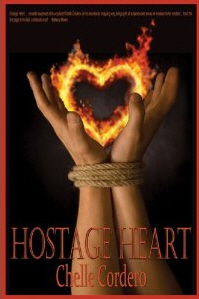
Chelle Cordero and Vanilla Heart Publishing are donating 25% of publisher proceeds on sales of Hostage Heart to aid recovery and cleanup efforts of damages to Breton National Wildlife Refuge caused by Deepwater Horizon oil spill disaster.

This offer applies to all copies of the book sold between May 8 and June 8, 2010 in print, e-book, and Kindle formats.

Chelle’s romantic suspense, Hostage Heart, published by Vanilla Heart Publishing in July, 2009, is a suspenseful romance deeply rooted in the Louisiana delta, and Chelle and VHP will be donating to a local Louisiana organization involved in the recovery and cleanup of the Chandeleur Islands, barrier islands that are part of the Breton National Wildlife Refuge, teeming with birds, marine life, and plant life that will be affected by the oil slick, tarballs, and more from the oil spill.

The Breton refuge is an important breeding and nesting area for many endangered and threatened bird species. “Oiled birds, including a gannet and brown pelicans, Louisiana’s state bird, have been found on the islands,” said Jeff Dauzat of the Louisiana Department of Environmental Quality.

Order books online from Amazon, Smashwords and other booksellers or stop by your favorite store.

Click here to find an independent book store near you.

A beautiful bookstore in Dubuque

I love locally owned independent bookstores. They’re not only great for a city’s economy–as websites like IndieBound will tell you–they are also a reflection of the local culture, people, reading habits and thought.

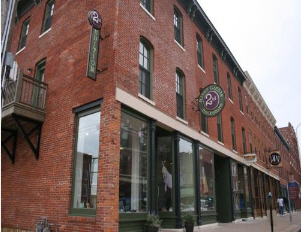
River Lights Bookstore Photo
When I reached handwritten postcard number 100 in the stack I’m sending out to bookstores telling them about “The Sun Singer,” I was curious about the store getting the postcard. It’s River Lights Bookstore, 2nd Edition on Main Street in Dubuque, Iowa. They have a website and a Facebook page, so it was easy to learn more about the store.

They also have something else that chain stores can’t match: a wonderful historic building. The “Second Edition” in the store’s name comes from the fact that when the original store closed, some of the folks involved created a new store down town.

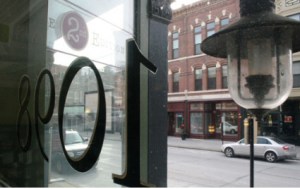
On June 1st, 2007, the new River Lights Bookstore opened in a beautifully renovated historic downtown building at 1098 Main Street. The wooden floors and tin ceilings of this 1870’s building offer an inviting atmosphere in which to browse or connect with fellow booklovers.

River Lights Bookstore photo
As the former chairman of my town’s Historic Preservation Commission (HPC), I was happy to see the “adaptive reuse” of the old building. I wish the store would include a note on its site saying what the building originally housed. By the look of it, it could have been a small manufacturing operation. According to Dubuque’s website, the city has an HPC that oversees the historic districts and historic properties. Doing this is also good for the local economy; and, of course, it strengthens a community’s sense of its own past history and architecture.

River Lights looks like what a bookstore ought to look like: a vibrant operation with excited book people in the perfect setting. If I lived in Dubuque–a three-hour drive from Batavia, the small town where my father was born–I would be shopping at this store every week.

I have no idea how many weeks it will take my postcard to travel from northeast Georgia to 1098 Main Street in Dubuque. Probably several weeks. Chances are, the card will be swept into a stack of Baker & Taylor, Ingram and other catalogues where it might sit for another several weeks. Somebody might actually see it, pause, and think, “hmmm.”

“Hmmm” is fine with me, assuming they can read my handwriting which, suffice it to say, was getting a bit sloppy when I reached card #100. Otherwise, I’m glad I looked up the store where the card is headed. For a preservation-minded writer, the website is a real treat, and imagining what it would be like to shop or attend book club meetings in River Lights 2/e is wonderful to imagine.

Each copy sold benefits Glacier National Park!