Review: ‘The Wonderful Demise of Benjamin Arnold Guppy’

The Wonderful Demise of Benjamin Arnold GuppyThe Wonderful Demise of Benjamin Arnold Guppy by Gina Collia-Suzuki
My rating: 4 of 5 stars

When Alex and her husband Roy move into an apartment in a middle class English neighborhood and meet their grumpy, greedy and potentially insane neighbors, Ben and Pat Guppy, it becomes abundantly clear before chapter one ends with “And with that the battle lines were drawn up,” that any sane person would begin considering murder as a viable alternative to long-term unpleasantness.

After all, in any aquarium of dazzling tropical fish, the guppy is background clutter at best. But, should the rather plain and unamazing fish go rogue—like Benjamin and Pat in the finite world of the apartment building—then when all else fails, stricter measures appear more reasonable than reasonable measures.

In the well-written and vastly humorous “The Wonderful Demise of Benjamin Arnold Guppy,” Ben and Pat are quite accustomed to ruling their environment. New tenants, such as Alex and Roy, are informed by the 70-year-old Benjamin Guppy on day one of his rules and expectations: bedtime (and quiet) begin at ten except on Sundays when they commence at nine, dinner is at five. It gets worse. The Guppy’s don’t like to hear music, water draining out of the bathtub, or toilets being flushed.

Alex, who tells this story, says of Benjamin Guppy on the first page: “He made no effort to conceal his dislike of us from the outset, his opinion being formed immediately that we were not his sort of people. I consider myself fortunate in that.”

The Guppy’s shenanigans, and the delightfully droll and deadpan way the novel unfolds, are reminiscent of the outlandish kinds of circumstances played out in the 1970s BBC sitcom “Fawlty Towers.” Benjamin and Pat are clearly a couple of rogue guppies, yet their outlandish activities, their low character and the absurdity of their endless fishy demands for money for fabricated damages to their flat appear to be unnoticed by everyone except Alex and Roy.

Will Alex kill Benjamin? She has cause. And while her cause is a funny one—from the reader’s perspective—it’s hard to imagine Benjamin and Pat being humorous in real life. The strength of the book is an understated humor that builds throughout the novel rather like a snowball rolling down a steep hill. While some of Benjamin’s and Pat’s abusive words and deeds become a bit repetitive, Gina Collia-Suzuki’s style and tone more than makes up for that.

“The Wonderful Demise of Benjamin Arnold Guppy” is good for a lot of laughs, some uncomfortable truths about the nature of ill-bred apartment dwellers, and—for philosophers—an opportunity to ponder just how long a couple of angel fish can possibly swim in the dark and dangerous currents of an environment with so little privacy and space, the walls might as well be made of glass.

View all my reviews

Malcolm R. Campbell is the author of “Jock Stewart and the Missing Sea of Fire,” “The Sun Singer,” and “Garden of Heaven: an Odyssey.”

Review: ‘Snare’ by Deborah J. Ledford

SnareSnare by Deborah J Ledford
My rating: 5 of 5 stars

Deborah J. Ledford’s “Snare,” book two of the Deputy Hawk/Inola Walela Thriller Series quickly entangles readers who believe young Katina Salvo’s broken past will remain long ago and far away. A popular California songwriter and recording star, Katina has never released photographs and videos or appeared in a live concert because she doesn’t want her fans to know what happened in Valentine, Nebraska on August 29, 1995 at 11:29 p.m.

After convincing her twenty-three-year-old Native American signing sensation she owes her fans a live concert, business manager Petra Sullivan hand-picks a small theater in North Carolina so Katina can debut in a nonthreatening environment.

However, before they leave for the Great Smoky Mountains, Katina discovers that Petra has been hiding threatening fan mail from her. Both overprotective and nurturing, Petra is the mother Katina was never allowed to have. Katina asks if the series of letters is coming from the father she wants to forget.

While Petra maintains the nasty letters are simply a nuisance downside of being famous, Katina is less certain, and wonders what else Petra has been keeping from her. The concert goes forward as scheduled because, as Petra tells Katina, “you can’t hide out forever.” Plus, Katina’s safety is a top priority through the efforts of the sheriff’s point man on the security detail, Deputy Steven Hawk. Hawk also appeared in Ledford’s stunning debut novel “Staccato” (Second Wind Publishing, 2009).

The concert appears to be a triumph until Katina is attacked by a shadowy man in the audience who escapes leaving few clues behind. Katina thinks she knows who it was. Hawk thinks he is responsible for the security lapse. Together, they plan to ensnare the perpetrator. Against the advice of Petra, Hawk’s girl friend and sheriff’s department colleague, Inola, and veteran officer Kenneth Stiles, they fly to the Taos Pueblo in New Mexico where Katina’s past lies hidden.

In “Snare,” Ledford brings her readers a novel of contrasts: Katina’s horrible childhood vs. a successful recording career, people who can be trusted vs. those who follow their own agendas, Native American beliefs vs. mainstream spiritual viewpoints, and the lush beauty western North Carolina vs. the stark beauty of central New Mexico. “Snare” has been nominated for a Hillerman Sky Award, an honor presented to the mystery that best captures the landscape of the Southwest.

While “Snare” does not quite match the bone-chilling punch of “Staccato,” it excels in other ways with deeper character development, a realistic presentation of Native American society and beliefs, and the role of family and friends in the choices one makes. By no means legato, “Snare” provides an ever-tightening story with a realistic, satisfying and unpredictable conclusion

View all my reviews

If you like the Pueblo influences in SNARE, you may also like the Blackfeet influences in GARDEN OF HEAVEN

Book Note: ‘Montana Moments: History on the Go’

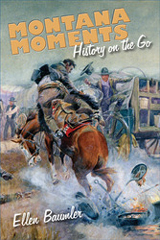
If you love Montana or simply enjoy humorous and shocking vignettes about the old west, Montana Historical Society historian Ellen Baumler has an easy-reading book for you.

Montana Moments: History on the Go, released last fall, is packed with the stuff of legend from strange epitaphs to bizarre happenings to comedic are-you-kidding-me yarns.

Harry Fritz of the University of Montana puts it this way: “The pages of ‘Montana Moments’ overflow with historical vignettes that cover nearly everything important that’s happened in Montana’s history. Newcomers will find an excellent introduction to what makes Montana tick, while Baumler’s careful research and entertaining writing style will delight old-timers.”

Do you know about the madams, villains and critters? Do you know who wrote the state song? Have you seen the monster lurking in Flathead Lake?

Click on the link above to buy the book from the Montana Historical Society in support of its work. Or, check out the book on Amazon.

Malcolm

Click here to enter the Garden of Heaven Give-Away drawing

Review: ‘Razor’s Revenge’ by Paul Chandler

“Lawyers spend a great deal of time shoveling smoke.” — Oliver Wendell Holmes

“The true culprit in my tale is the legal justice system. It
holds itself up as something to be admired and then proceeds to
render itself useless because it is so easily undone. All it takes is
something that any human being can speak: a lie.” — Samuel Razor, in “Razor’s Revenge”

When Samuel Razor is a young man, his promising company is stolen by three unscrupulous and corrupt men, judge Henry Craymoor, attorney Jarod Hibbard, and businessman Mark Harrington. They succeed by shoveling smoke.

Razor’s experience teaches him a powerful truth: the courts cannot protect the innocent from a well-crafted lie. As Razor plots his revenge against Craymoor, Hibbard and Harrington, this truth will serve as a mantra and a constant.

Paul Chandler’s (Peeper, 2004) thought-provoking novel Razor’s Revenge first tells the stories of the three conspirators and their desperate attempts to escape the retribution planned for them by Samuel Razor.

Time passes. Razor ages. We don’t see him directly, but through the eyes of Craymoor, Hibbard and Harrington, we understand that he is patient, relentless, thorough and richer than those who knew him way back when can possibly imagine. As Craymoor, Hibbard and Harrington see it, that vast wealth allows Razor cut their lives apart well past the limits of an eye for an eye and a tooth for a tooth.

But these men are small fish. The trophy Razor seeks is the criminal justice system itself where truth often falls on deaf ears while lawyers shovel smoke. As he ages and becomes infirm, Razor has one last dream in mind: he longs for the day when he can destroy the smoke and mirrors arguments and defenses common in our courtrooms with more truth than anyone can possibly imagine–or even want.

His dream depends on technology yet to be invented, so he hires people to research it, invent it, and test it well beyond the limitations of a preponderance of the evidence and reasonable doubt. If Razor’s researchers succeed, Razor’s revenge will be complete. The novel spends a fair amount of time on technology and testing, and some readers may find the lab work and marketing implications a bit heavy going.

Paul Chandler has, however, created an amazing paradox of a novel in which it becomes conflicting to dislike such men as Craymoor, Hibbard and Harrington as they consider punishments that exceed their crimes; and where it becomes very troubling to root for a wronged man who has yet to learn that revenge cuts both ways and might not lead to justice.

En route to the final verdict in Razor’s Revenge, readers who cheer Razor at the beginning will have ample opportunity to question whether absolute and merciless truth in a courtroom represents the best of all possible worlds or represents a dark victory.

Malcolm

Malcolm R. Campbell is the author of three novels, including Garden of Heaven: an Odyssey

Books on the Nightstand

My nightstand has so many books on it, there’s hardly enough room left over for the reading lamp and the alarm clock. I sleep better when there are plenty of yet-to-be-read books there. When they’re gone, I’m worse than a chain smoker who’s run out of cigarettes.

Running out of books is not an option. After finishing Stieg Larsson’s “The Girl Who Played with Fire,” I started reading two books simultaneously since one of them is on my computer. Yes, I know, if I had a Kindle, I could read e-books in bed.

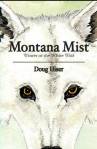
By night, I’m reading Montana Mist: Winter of the White Wolf by Doug Hiser. In addition to the wolves, this novel is filled with memorable characters and mountains. I couldn’t resist.

Publisher’s Description

In the remote Montana wilderness, a mountain man, once a professional athlete, lives his life in seclusion protecting and raising orphan wolves until he gives his heart to Sassy, a young woman hitchhiking across America. He guards his secrets and the other woman in his life, a beautiful blind woman, known as “Shy Girl.” The wolf pack roams the mountains as he searches for the white wolf, Mist; that he raised and released into the harsh snowy forested peaks, his ties with the wolves as close as the bond with his new love. Montana Mist is the story of one man’s secrets, the two women in his life, and the wild world of wolves of the remote forest in the last untamed region where man has not put his imprint on the land. A man shaped by the mystery of his past and the complication of his future while the adventure of his heart threatens to destroy his solitary precious world of mountain, wolverine, moose, elk, and wolf.

By day, I’m reading Razor’s Revenge by Paul Chandler. I enjoyed Chandler’s previous novel Peeper, and was happy to see the new release. This is very different (as its cover suggests) from Montana Mist, but equally absorbing.

Publisher’s Description

In 1958, a group of unscrupulous men use fabricated evidence, perjured testimony, and a crooked judge to steal Samuel Razor’s company. For ten years Razor allows them to believe they’ve gotten away with their crime. They continue to believe it until the day Razor comes for them.

Five decades later, Samuel Razor is a billionaire and an icon in the business world. His revenge taken, his youth long gone, and his health rapidly failing, there is one last important thing he wants to accomplish before he leaves this world, one more villain he needs to deal with.

The legal justice system-the very system that made the theft of his company legal and binding-is laughably easy to deceive. All it takes to defeat it is something that any human being can do: tell a lie. And from that lie come lawyers, trials, incompetent verdicts, and inevitably, unsatisfying compromises.

To ensure that the law only serves and does not victimize, there can be no lies, no lawyers, no biased judges. Samuel Razor has the money, the influence, and the motivation to reinvent the system. It will be his last and final act of revenge.

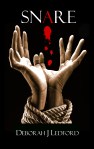
Coming up next, Snare by Deborah J. Ledford. The novel has has been nominated for The Hillerman Sky Award and follows Ledford’s outstanding 2009 novel Staccato.

Publisher’s Description

Native American pop singer/songwriter, Katina Salvo’s career is about to take off. There’s one problem: someone wants to kill her. Katina and her bodyguard, Deputy Steven Hawk, are attacked during an altercation at her first live concert. Could the assailant be a mysterious, dangerous man from her youth? Or her estranged father recently released from prison for killing her mother?

Performed against the backdrop of the picturesque Great Smoky Mountains of North Carolina , and the mysterious Taos Pueblo Indian reservation, SNARE is a thriller fans of Tony Hillerman will appreciate.

These will keep me busy for a little while, though I’m already looking for more so I don’t run out. What great books are waiting on your nightstand that I ought to be considering?

You might also like: Quick Sex, Weekend Relationships and Short Books

Malcolm

$4.99 on Kindle

Review: ‘The Girl Who Played with Fire’

The late Stieg Larsson (1954 – 2004) left a legacy that includes the Millennium Trilogy of novels, a dispute between his life partner of 30 years and his family over the estate, and an unfinished forth book that would continue the story he began in The Girl with the Dragon Tattoo and ended with The Girl Who Kicked the Hornet’s Nest.

As the second book in the trilogy, The Girl Who Played with Fire, is as absorbing as The Girl with the Dragon Tattoo. Once again, the primary characters are the crusading magazine journalist Mikael Blomkvist and the illusive goth super computer hacker Lisbeth Salander. Blomkvist and Salander are both complex, three-dimensional characters, the former, no doubt, inspired by Larsson’s career focus as a journalist. Salander is less goth than she was in “tattoo” and her background and motivations are more fleshed out.

Cast of Characters and Plot

Readers will know from the back cover blurb that Millennium Magazine’s investigative journalism in this book focuses on sex trafficking, that two people are killed before the material is published and that Salander is a suspect.

Once matters played out in The Girl with the Dragon Tattoo, Salander went on vacation. Unfortunately, this initial section of the book appears to have little to do with the plot. Salander’s development as a person gains strength during this vacation section. She does get involved in a harrowing experience. Yet, these events do not come into play later in the novel.

Except for other supporting characters whom readers met in “Tattoo,” most of the characters have few shades of grey. To some extent, they are stereotypes of the roles they play: liberal and conflicted journalists, sadistic had guys with a brutal and horrific way to life, and police with a dutiful approach but very little imagination.

Writing Style and Approach

Larsson tells his story from the viewpoint of multiple characters. This works more often than not in “Fire” because the reader sees what everyone is doing and what conflicts between them are upcoming. The approach works less well in cases where the point of view shifts to a character who, in real life, would think certain things, yet Larsson conveniently focuses their attention on something else.

One question on the reader’s mind, for example, is likely to be: “Are the police right about Salander and the murders?” Larsson goes into a “listmania” amount of detail about almost every part of the magazine work and police work, including the characters’ thoughts. Yet after the murders occur, he does not allow Salander to think either “I hope they don’t find out I did it” or “why the hell do they think I did it?” Such thoughts would go through most people’s minds. The tension is ramped up through the fact Salander does not ponder this, but it is an artificial device.

The surprising thing about the Millennium Trilogy phenomenon is that the books are popular (35 million copies sold as of last summer) in spite of their length. While some readers complain that they “just couldn’t get into “Tattoo,” the books sell well and generate a large number of reader reviews on Amazon and commentary on blogs and news stories.

The exceptional level of detail contributes to the length (“Fire” in paperback has 724 pages) and—at its best—immerses the reader into the the worlds of both the predators and prey in the book. The reader is brought “close in” to the action. At its worst, the detail wastes time, especially when it focuses on things (such as Salander spending a day shopping for furniture for her apartment) that do not advance the plot.

On Balance

On balance, the book succeeds. Its high points are the author’s development of Lisbeth Salander, the intricacies of its plot, and the author’s use of mini-cliffhanger plot points when he shifts the story’s view point from one character to another. The Guardian’s comment that Salander is a Laura Croft for grown-ups is certainly apt.

The ending of the book is satisfactory in terms of emotional justice for characters and readers. However—like other scenes in the book—it relies a bit too much on contrived coincidences. Nothing is totally resolved, though we can forgive the author that because at this point, since there’s still another book to come.

The Controversy Surrounding the Estate

Larsson died without a will. According to Swedish law, his life partner of 30 years does not have the rights of a spouse. Consequently, Larsson’s assets, including control of the books, passes to his brother and father rather than to Eva Gabrielsson.

Gabrielsson contends that the brother and father were virtually estranged from Larsson and herself and that she helped plan the Millennium series from the beginning. On the Support Eva web site, she also claims that “she was there when he received death threats from ultra-nationalist groups” and was an integral part of everything that the rest of the family had nothing to do with. Larsson’s own experience clearly was a major factor in the creation of the Blomkvist character and the other investigative journalists and she says she was part of it.

The brother contends in press releases, some of which you can find on the Stieg Larsson web site, that the family has been more than fair, that it has returned to Gabrielsson many assets she held in common with Larsson, and that they are willing to work with her in creating additional books. They contend that had Larsson wanted her to have total control of the estate, he would have married her and/or created a will.

Fuel will be added to this fire when Gabrielsson’s new book Stieg & Moi becomes available in Europe next week. Meanwhile, Gabrielsson will work on another Millennium Book. See “Stieg Larsson’s partner plans to complete final Millennium novel.” See also “Stieg Larsson feud hots up with partner’s memoir.”

Some commentators have said that the controversy surrounding the estate has the same flavor of the novels itself: that is, it’s about men who hate women. While that characterization’s accuracy depends on the “side” one takes in the dispute, it adds another level of detail and drama to an appealing series of books.

–Malcolm R. Campbell

Malcolm R. Campbell is the author of three novels, including the 2010 “Garden of Heaven: an Odyssey” about a man suspended between heaven and hell in a world where one place is often mistaken for the other.

Review: ‘The Templar Salvation’

The Templar SalvationThe Templar Salvation by Raymond Khoury
My rating: 4 of 5 stars

Raymond Khoury’s The Templar Salvation (2010) sequel to The Last Templar (2006) is better than the original. Like the original, The Templar Salvation presents a story of lost/hidden church secrets with dual time lines, a lot of historical detail, and plenty of action.

In the present day, Khoury brings back FBI agent Sean Reilly and archeologist Tess Chaykin in a race with terrorist Mansoor Zahed to find a cache of early Christian documents. In 1203, while the Fourth Crusade siege of Constantinople is in progress, a small band of Templars sets out to rescue and then hide the same set of documents. In both time lines, the Catholic church doesn’t want the documents to come to light.

The Last Templar featured an amazing opening scene. The Templar Salvation’s opening, while slightly less spectacular is action-oriented and inventive. Tess is in danger. Sean rushes to the rescue and, in spite of the law enforcement resources available in Turkey and at the Vatican, becomes the point man in a search for Tess, Mansoor, the documents, and a variety of people who end up dead.

The Templar Salvation is more tightly woven than The Last Templar. It also contains fewer “talky scenes” where Tess and/or Sean explain elements of the 1203 story to present day police officers as though 800-year-old information trumps current evidence or the need to get out of the squad room with some sense of urgency. The Templar Salvation might be called “The Book That Will Not End.” Tess, Sean and Mansoor find themselves within nanoseconds of being killed (or worse) numerous times throughout the story only to escape/survive and keep on searching, fighting or running.

Nonetheless, the improbable story somehow makes for more exciting reading than The Last Templar. The Templar Salvation is a violent, tangled, twisted, groaner kind of escapist read that features the kind of over-the-top, don’t-worry-about-civilian-deaths-and-collateral-damage law enforcement that viewers of the TV series “24” tuned in every week to see.

Like agent Jack Bauer in “24,” Sean Reilly is as relentless as a Terminator in his quest for neutralizing the bad guys and possibly obtaining justice. And, like Jack, Sean keeps going, going and going even though his wounds would have killed ten normal men.

The book is a guilty pleasure.

View all my reviews

Malcolm R. Campbell is the author of “Jock Stewart and the Missing Sea of Fire,” “Garden of Heaven: an Odyssey,” and “The Sun Singer.”

Review: ‘Labyrinth’ by Kate Mosse

Labyrinth (Languedoc Trilogy, #1)Labyrinth by Kate Mosse
My rating: 4 of 5 stars

Kate Mosse’s engaging and well-researched novel Labyrinth (2006) brings readers another version of the Holy Grail and those who would protect it, seek it, destroy it and use it. Labyrinth joins Khoury’s The Last Templar (2006) and The Templar Salvation (2010) and Neville’s The Eight (1997) and The Fire (2008) in its presentation of a religious secrets story that switches back and forth between time periods and characters.

Set in thirteenth-century Languedoc and twenty-first century southern France, Labyrinth presents readers with medieval and modern characters who are searching for the Grail with good and bad motives. Alaïs du Mas, the daughter of the steward of historical character Raymond-Roger Trencavel in Carcassona, resides in a world where Cathars and Catholics live in harmony with each other. Alice Tanner, a professor of English literature in Sussex, is a volunteer in an archeological dig in the Sabarthès mountains in France in 2005.

The lives of these dual protagonists—and the characters around them—become intertwined across history when Alice inadvertently discovers some of the Grail secrets Alaïs dedicated her life to protect. Alaïs’ world is under attack by a Crusade and subsequent inquisition ordered by Pope Innocent III in 1208 against the Cathars who were viewed by Rome as a heretical sect. Alice’s world is that of a modern police investigation into deaths and thefts linking a mainstream archeological dig with a shadowy world of those who follow or oppose the Grail.

The mirror aspects of the characters’ lives across the centuries serves Mosse and her plot well. Unlike Dan Brown, who viewed the Grail as Mary Magdalene and Arthurian literature that viewed the Grail as a sacred chalice, Mosse presents instead the secret artifacts which are intended to lead true seekers through both a real and a figurative labyrinth to the Grail as a transcendent experience.

With the exception of a slow beginning and a few sections where the detail in both the modern and medieval worlds becomes more history and travelogue than a novel, Labyrinth is a well-told story. The novel’s discussion guide notes that the book begins with short glimpses of the leading characters without any narrative to tie them together or explain their motives, and then asks “what effect does this have on you, as a reader?” It’s a good question. Some readers will find it slow and unnecessarily obscuring of the story, while others will find that it heightens the intrigue and suspense.

For readers who want to know more about the life and times of the Cathars, Mosse includes a historical note, a selected bibliography, information about the langue d’Oc spoken in Alaïs’ world as well as a glossary of Occitan words.

View all my reviews

Copyright (c) 2011 by Malcolm R. Campbell, author of two hero’s journey novels,The Sun Singer and Garden of Heaven.

Glacier: One Hundred Beautiful Views

Regular readers of this blog know that my favorite place on the planet is Glacier National Park. I not only like visiting the “Crown of the Continent” in Montana, I like sharing the history, geology, flora and fauna with others. As Christmas approaches, I think of the books that will make great gifts.

Artist Roy E. Hughes’ 100 Beautiful Views of Glacier National Park, published last year, is high my list.

Hughes, who served as Glacier National Park’s artist in residence during July and August of 2005, uses Adobe Photoshop to create prints that look like they were produced by silkscreen or wood blocks. These, he calls digital block prints.

The results are stunning. For anyone passionate about Glacier National Park, the views in this 144-page book will bring back wonderful memories.

Malcolm

Set in Glacier - Only $4.79 on Kindle

My favorite books become Christmas gifts

As an author, I’m guiltily thankful for the readers who consume books the way movie-goers consume popcorn. From a sales and marketing perspective, authors and publishers like seeing giant sacks of books going out the door of the neighborhood bookstores.

My perspective is quite different at Christmastime when I am selecting gifts for family and friends. I want to give gifts that matter. Whether it’s fiction or nonfiction, my most pleasurable and meaningful reading experiences come from books that impact me in a profound way.

Such books are not like popcorn or even a shopping cart of the latest in glittering electronic gadgets and toys people lined up to buy on Black Friday. Most of those Black Friday gifts will be forgotten by year’s end. When I know a person well enough to give him or her a book I greatly treasured, then my hope is that they will treasure it and remember it many years into the future–just as one remembers the best dinners they ever had at their favorite five-star restaurant.

Some of the joy of giving books has been lost because the economics of the business has forced us into a world of paperbacks and e-books that are mere ghosts of what books used to be. Books once were more than the words they contained. They were visual and tactile experiences from the selection of the type fonts to the choice of paper to the binding.

That said, when I begin Christmas shopping, my favorite books of the past year are my inspiration for many of the gifts I give. A shared book is, in a sense, a very personal moment, somewhat like a deep conversation next to a warm fireplace fire on a cold winter’s night. We come to know and understand those we love, in part, through the discoveries of the books we have in common.

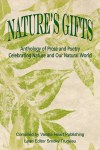
This year, I will think of Smoky Trudeau’s Observations of an Earth Mage and Vanilla Heart Publishing’s Nature’s Gifts anthology of stories, poems and essays for those who love the out of doors whether they be casual travelers of avid back country hikers.

For those who ponder spirituality and the psychological and transcendent experiences of life’s journey, I’ll be wrapping up copies of Patricia Damery’s Farming Soul: A Tale of Initiation.
(See my review.)

Those who enjoy good storytelling with a touch of backwoods wisdom and magical realism, might well find a copy of River Jordan’s The Miracle of Mercy Land. (See my review.) Others will unwrap Melinda Clayton’s powerful Appalachian Justice.

I want to share my favorite books of the year at Christmas because they are important to me, and I can think of no better gifts to give.

Malcolm