Book Review: ‘Mister Blue’ by Jacques Poulin

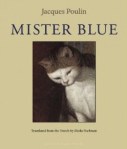
In Jacques Poulin’s Mister Blue, the novel’s protagonist, lives in a ramshackle house on the Île d’Orléans with his cat Mr. Blue. Jim’s world is defined by the bay, the St. Lawrence River, the beach and the novel he’s writing and not writing in the attic room where he works. As a novelist, he refuses to intrude into the lives of his characters; he watches and waits for them to fall in love on their own while he watches and waits for his chance to meet a mysterious young woman who has suddenly taken up residence in a small cave near his house.

Jim and Mr. Blue have seen her anchored sailboat, her footprints in the sand and a few possessions in the cave including a copy The Arabian Nights inscribed with her name, Marika. Yet, he refuses to overtly intrude into her life, certain that he will ultimately meet her by slightly nudged chance. When he cautiously visits the cave, the sees her bookmark’s progress through Scheherazade’s fanciful stories for the Persian king, but Marika is never home. Jim’s life suddenly shifts from that of an aging, divorced man dwelling in solitude with a cat to to an awakening writer in a shifting world of daydreams and obsession that mirror the fits and starts of a manuscript in the attic.

Before his obsession begins, he wonders if he’s picked the wrong subject for his novel. A former Hemingway scholar, Jim sees that he has broken Papa’s first rule: write what you know best.

“I had to acknowledge that I’d broken this rule. I was trying to write a love story without being in love myself. I’d probably chosen this subject because, as I felt myself growing older, I was afraid it was too late to fall in love one last time.”

Poulin’s compassionate story about a man searching for himself flows from beginning to end as smoothly and effortlessly as the river outside Jim’s attic window. The 150-page novel appears deceptively modest because the prose is just as unadorned as the protagonist’s gentle life of promising days and lonely blue days.

On days of hope, Jim’s novel moves forward and he almost finds Marika. Though he is forever just missing her, the marching bookmark in The Arabian Nights, the movements of her sailboat and other hints of her presence nourish him. On blue days, he sees no sign of her and loses himself in memories of the past and mourns the fact that his haunting, off-stage muse eludes him like words in his book.

“Words are independent, like cats, and they don’t do what you want them to do. You can love them, stroke them, say sweet things to them all you want – they still break off and go their own way.”

Poulin’s novel is a powerful masterpiece of understatement. What is real and what is dream? Neither Jim nor the reader can be sure in a story where seemingly disparate elements—an idealized woman, tennis games with a brother, the friendship of young girl who suffered an abusive past, and Mr. Blue—rise and fall like the tides in the bay without the heavy handed intervention of novelists and their characters.

This novel rubs up against a reader’s emotions with a soft, but persistent purr.

Mister Blue (Archipelago Books, January 3, 2012) originally appeared in 1989 as Le Vieux Chagrin (old sorrow) and in a subsequent English edition Mr. Blue, in 1993. Like the 1993 edition, this new edition comes to English readers through the work of the award-winning translator, Sheila Fischman. The novel has won Prix Québec-Paris, Prix Molson of the Académie des lettres du Québec, and the Prix France-Québec.

–Novelist Malcolm R. Campbell is the author of magical realism and contemporary fantasy including “Sarabande” (Vanilla Heart Publishing, August 2011).

contemporary fantasy for your Nook

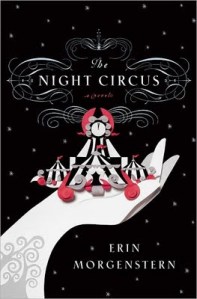
My 2011 Favorite: ‘The Night Circus’ edges out ‘The Tiger’s Wife’

In April, I began my book review of The Tiger’s Wife with the following: Gather around, my friends, and I will tell you the story of the man who could never die, who, some say, still walks the streets of our village at night, and then—if most of you are still awake—I’ll tell you the story of the tiger Shere Khan whose eyes burn brightly in the night when he prowls near campfires like this looking for his wife.

As a storyteller, I’m drawn to stories that sparkle with probabilities, magic, a sense of mystery, and a raw potential for being real beneath the guise of the novelist’s art. In April, I didn’t think anyone would do better in 2011 than Téa Obreht. Then I started seeing the hype for Erin Morgenstern’s novel of fantasy and magical realism The Night Circus. Hype bothers me because it smacks of money-fed, well-oiled machines churning out literary propaganda for those favored authors who get the rare treatment of a real, book-selling campaign. As a storyteller and author, I am jealous of those authors and that alone kicks in a nasty attitude of bias against whatever it is they are selling.

Yet, when it came to The Tiger’s Wife and The Night Circus, my intuition told me I was going to like these books in spite of my bias and in spite of the fact that I really wanted my 2011 favorite to come from a small press. Perhaps The Night Circus edged out The Tiger’s Wife because I finished reading it later in the year. Or perhaps it was because the magic of two dueling magicians in the Le Cirque des Rêves in Morgenstern’s novel reminded me of the dueling magicians in Susanna Clarke’s Jonathan Strange & Mr Norrell, my favorite novel in 2004.

Complete Worlds

Both Susanna Clarke and Erin Morgenstern paint rich pictures of complete worlds, worlds where there is room to experience the magic in depth and to believe that it fits there and really did happen or could happen. Booklist saw this complete world in Jonathan Strange & Mr. Norrell in its starred review: The brilliance of the novel lies in how Clarke so completely and believably creates a world within a world: the “outside” world being early-nineteenth-century England, as Napoleon the eagle looms over all of Europe; the “inner” world being the community of English magicians.

Likewise, Library Journal saw an equally complete world in Morgenstern’s novel this year: To enter the black-and-white-striped tents of Le Cirque des Rêves is to enter a world where objects really do turn into birds and people really do disappear…Debut novelist Morgenstern has written a 19th-century flight of fancy that is, nevertheless, completely believable. The smells, textures, sounds, and sights are almost palpable. A literary “Mr. Toad’s Wild Ride,” this read is completely magical.

Mysterious Plot

In The Night Circus, two young illusionists, Celia and Marco, are magically bound by their mentors into an endless competition without rules or time limits that is destined to play itself out in a mysterious circus of dreams that arrives in towns with no advance notice and is only open from sunset to dawn. Celia and Marco use real magic, but because the public doesn’t believe in such things, they pretend to be illusionists.

Neither magician knows when or how his or her illusions will be judged or when or how a winner will be declared, but only that they are not allowed to tell the outside world about the competition. In fact, the competition itself influences how the circus is maintained, what the patrons see or think they see, and creates a rather dream-like realm where it’s difficult for readers and circus visitors to know where the fantasy of it all begins and ends.

While most of the reader reviews for The Night Circus are positive (three to five stars), as of today, the novel’s 64 one-and-two-star reviewers saw no plot in the book at all. Generally, they found the book to be boring and pointless. One way or the other, these reviewers’ expectations were not met. I suspect they were looking for an overt storyline more like Harry Potter’s battles with the evil Voldemort throughout J. K. Rowling’s popular series. Rowling has also created a very complete world, yet what happens in it happens faster and with more splash and consequence and that garners more happy readers.

Storytelling Itself

Near the end of The Night Circus, one of the two devious mentors tells a circus performer about the imporance of stories themselves and how they connect writer and reader in intersting ways and spin out consequences outside the control of either of them:

Someone needs to tell those tales. When the battles are fought and won and lost, when the pirates find their treasures and the dragons eat their foes for breakfast with a nice cup of Lapsang souchong, someone needs to tell their bits of overlapping narrative. There’s magic in that. It’s in the listener, and for each and every ear it will be different, and it will affect them in ways they can never predict. From the mundane to the profound. You may tell a tale that takes up residence in someone’s soul, becomes their blood and self and purpose. That tale will move them and drive them and who knows what they might do because of it, because of your words. That is your role, your gift. Your sister may be able to see the future, but you yourself can shape it, boy. Do not forget that…there are many kinds of magic, after all.

I love blurring reality and fiction together in my writing. My wont to do this, as a trickster and storyteller, led me to enjoy reading both The Tiger’s Wife and The Night Circus. Both Téa Obreht and Erin Morgenstern have created believable worlds with strong characters that can move and drive readers. Even though I have always loved tigers and have always disliked circuses, Le Cirque des Rêves has manged nonetheless to connect with my blood and self and purpose.

Coming Soon: a review of Mister Blue by Jacques Poulin, to be released later this month by archipelago books. Published in 1989 as Le Vieux Chagrin, the novel first appeared in English in 1993.

You May Also Like: Yesterday, I announced an end-of-the-year book give-away challenge for my contemporary fantasy Sarabande. If you enter, you might just win a free copy.

Malcolm

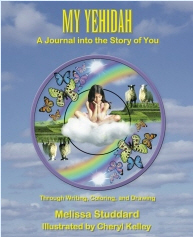
Briefly Noted: ‘My Yehidah: A Journal into the Story of You’

We often hear people say they’re feeling centered or feeling uncentered and take such comments to mean they’re having a good day or a bad day. True enough, but for those who want to know the true unity of the self, there are deeper personal explorations and stories to discover, tell and experience.

As I often suggest in my fiction, discovering the transcendent magic of oneself is often difficult in a science and technology world where we’re directly and indirectly taught as children that “the answers” come from books, experts, and the latest polls.

Years ago, we used to say that everything that influenced a child to seek answers outside himself/herself was akin to programming, and that by the time one reached adulthood those programs were often “running in the background” and very hard to get out of one’s system.

That said, I’m pleased when I see fiction and nonfiction for children that encourages them to think outside the box and discover the power and joy of the imagination. That’s how we get to the unified center of ourselves. The words “My Yehidah,” in Melissa Studdard’s new book My Yehidah: A Journal into the Story of You refer to an individual’s essential essence.

Studdard’s writing prompts, in combination with artist Cheryl Kelley’s illustrations, offer children—in and out of classroom or camp settings—a wonderful and lighthearted way to take exciting trips into the worlds of their imagination. We might call this a personal voyage of discovery.

The book can be used in combination with Studdard’s novel Six Weeks to Yehidah (reviewed here in August), showing young readers how the fairytale protagonist Annalise learned to explore her magical dreamscape; or it can be used as a standalone volume with or without adult mentors (parents, teachers, camp counselors, workshop facilitators).

The workbook was a joy to read and almost made me wish I was a kid again with no pre-programed horizons in front of me, setting off on my journey into my own center with a box of stories, some crayons and colored pencils and a copy of My Yehidah: A Journal into the Story of You as my private drawingboard.

Malcolm

Review: ‘The Uncertain Places’ by Lisa Goldstein

“A long time ago there lived a poor woodsman. One day he was walking in the forest when a man came out of the trees and hailed him. ‘Good day,’ the man said. ‘And how are you doing today?’

“‘Very poorly,’ the woodsman said. ‘My family and I have not eaten for three days, and if I do not find food for them soon I fear we will all die.’

“‘I can help you,’ the man said. ‘But you must promise to give me the first thing you see when you return home today.'”

All long-time readers of fairy tales are familiar with stories that begin like this, or similar to this, and they all involve people who are down on their luck who are mysteriously offered a great boon. The boon isn’t free because it involves a bargain that may change the lives of a family throughout time forever.

Just stories, of course, with morals in them about getting something for nothing, being too quick to give away something not clearly specified, and trusting anything that happens at crossroads, boundaries and other undertain places.

In Lisa Goldstein’s wonderful contemporary fantasy “The Uncertain Places,” protagonist Will Taylor looks back on the events that occurred after his college roommate Ben introduced him to Livvy Feierabend in 1971. Will is smitten with Livvy; Ben is smitten with Livvy’s sister Maddie. Livvy and Maddie live with their mother Sylvie and younger sister Rose in an odd and rambling house in the Napa Valley.

Will notices on his first trip to Napa that Sylvie is rather scattered. On subsequent visits, it becomes more and more obvious that the house and the family are, in ways that cannot be pinned down, also scattered as though they aren’t quite living in the here and now, or that if they are present in the here and now, that the line between the family’s house and vineyard on one hand and their secrets on the other hand is not altogether well defined.

Will and Ben slowly discover that stories they always believed were “just stories” might be more than that. How exactly did the Brothers Grimm come by old fairytales about woodsmen and witches in their famous books of “Children’s Tales” published in multiple editions beginning in 1812? Growing up, the Feierabend sisters were not allowed to read fairytales. How odd. But Will finds out why, and that “why” has to do with the kinds of fortune and fate that befall those who find themselves confronted by friendly helpers in the uncertain places.

The consequences of decisions made in such places are forever. There’s good fortune, to be sure. But it comes at a price, one that Will doesn’t want Livvy to pay. All of this happened in California during the rather abnormal times of the 1960s and early 1970s, and Will narrates the events that followed the weekend when he became smitten with Livvy Feierabend as though he’s telling a fairytale that contains fairy tales.

Will’s telling of the story is one of the novel’s greatest strengths, but also a lingering weakness. Looking back, as he is, Will places Ben, Livvy, Rose, Maddie and Sylvie into the world of “once upon a time,” and this adds to the ephemeral nature of “The Uncertain Places.” The Feierabend sisters’ world is vague in all the secret ways magic and boundary areas are vague, and that makes them all the more plausible and delightful.

The flasback structure of the novel also blurs the impact of the story because there periods of normal reality in between the odd events Will is telling us about. Readers who are more accustomed to constantly forward-moving plot might say, “get back to the story.” While these gaps filled with normacy are not large, they are somewhat distracting.

Nonetheless, the novel sparkles like stars and faerie lights in the woods and old secrets on the cusp of revelation, and is highly recommended for all lovers of fantasy whose ancestors didn’t make long-term bargains with those they met in uncertain places.

Update, August 2012: Novel wins 2012 Mythopoeic Fantasy Award for Adult Literature

Malcolm R. Campbell, author of contemporary fantasies. including the “Sarabande”

a young woman’s harrowing story in multiple worlds

Recent Small Press Fantasy

I like finding fantasy from small presses. One place I check regularly is the “Small Press Bookwatch” on the Midwest Book Review site. Their capsule reviews give bookstore owners and readers a quick look at each book along with the name of the publisher and the publisher’s web site. The following recently reviewed books are all available on Amazon. Click the book covers for the links.

The Guardians of Time by Damian Lawrence

  • Kirkus: This is a compelling, detailed read, and one that offers its audience something solid to chew on. Lawrence does a masterful job of drawing readers into his fully realized, morally complex vision of the future.
  • Midwest: When the world is out of time, anything to buy some would be very much welcomed. “The Guardians of Time” is a fantasy by Damian Lawrence as he constructs a tale of the world on the brink of destruction faced with the environment revolting. With the assistance of time travel, Mark Lawson tries to buy the world much more but in the process may only expedite the process. Blending the history of Greece into a tale of balance, “The Guardians of Time” is a choice and much recommended read for fantasy readers.

Remember Me To Paradise by Amy J. Benesch

  • Publisher: A Shapeshifter from a planet known as Paradise, comes to Earth on a mission to rescue other Shapeshifters who may have become trapped in Earth shapes and are unable to return to their home planet. During his time on Earth the Shapeshifter becomes a dog, a duck, a pigeon, a human male, and a human female. It is as a human female that the Shapeshifter begins to forget his true identity. Although her dreams terrify her (she can’t understand why she dreams of flying and of making love to women), she keeps working to put the pieces of the puzzle together and recover her memory, although with each passing day she becomes more identified with her current shape and less likely to believe the truth of who she really is.
  • Midwest:  It is hard to remember what we truly are at times. “Remember Me to Paradise” is a fantasy telling of Shapeshifters and their efforts to return to their home planet of Paradise. Trapped in earthly forms with little memory of their true identity, they feel disconnected as humans and must slowly come to terms with their true nature. “Remember Me to Paradise” is a fun and much recommended pick for fantasy collections.

The Last Seer and the Tomb of Enoch by Ashland Menshouse

  • Publisher: Aubrey Taylor’s quaint and cozy life in the subdued, Appalachian town of Lake Julian had never been exceptional. Shouldered by his lifelong friends, Buzz Reiselstein and Rodriqa Auerbach, he quietly endured the puerile punishments of a persistent pack of pesky bullies that included the most-feared kid in school, Magnos Strumgarten, and his own obnoxiously, well-accomplished brother, Gaetan. Comfortable in his humdrum niche of the absolutely average, Aubrey never pushed back. Until…fate dug a little too deep…and the unseen darkness of unspoken places rattled his mediocrity. When spurious specters and elusive mountain men battle for a tomb of Watchers, buried in ages past, only those who choose to look beyond the surface feel the grip of the ancients’ revenge. Unusual disappearances, a colorful cadre of insightful townsfolk and a whirlwind of blunders and mishaps exposes the struggling forces that transform Aubrey and his friends into more than spectators amidst the oldest war of all.
  • Midwest: Trapped in a conflict of time, the world struggles to squeak through. “The Last Seer and the Tomb of Enoch” is a science fiction and fantasy epic from Ashland Menshouse as he spins a tale of angels and watchers looking over the fate of the world as our traditional world is torn apart by its march to the future and the pull of the past legends and mythology. “The Last Seer and the Tomb of Enoch” is an excellent pick for fiction fans looking for a massive overreaching and unique tale, highly recommended.

Finding Magic by Ray Rhamey

  • Publisher: Annie is a gifted healer in the Hidden Clans, descendants of a Celtic ancestress with a genetic inheritance of mental abilities that enable them to do magical things. She can slow aging, cure disease, heal a heart from the inside . . . or crush an enemy’s as it beats. They hide to escape persecution that has haunted them through the ages, and they’ve moved safely among us since the Salem witch trials. But a Homeland Security agent penetrates Annie’s disguise, and she’s forced to flee. On the run as a suspected terrorist, Annie is desperate to protect her kin from discovery. Then a greater threat arises when a clansman bent on avenging the murder of his son creates an unstoppable killer plague. Annie is the only hope for billions of people . . . if she can evade capture. With high-stakes conflict and human drama, Finding Magic explores loss, prejudice, family, and the human magic within each of us.
  • Midwest: When something is not understood, it is feared. “Finding Magic” follows Annie, the latest in a long line of a priestess clan with the power to save or destroy lives. When a government agent finds that her clan has this power, she finds her people under the gun as terrorists, and with the outbreak a new plague that could end humanity, she finds that more than ever she must live and be free or else there will be nothing to protect. “Finding Magic” is a riveting work of modern fantasy, highly recommended.

Malcolm

Malcolm R. Campbell is the author of two contemporary fantasies from Vanilla Heart Publishing, “The Sun Singer” and “Sarabande.”

contemporary fantasy - a woman's trials

Publisher donates to Developmental Center

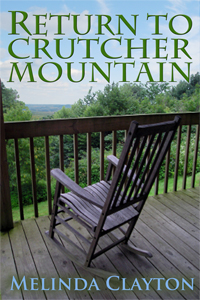
Vanilla Heart Publishing and author Melinda Clayton are extending their donation period to benefit the Tipton County Adult Developmental Center of Covington, Tennessee. All sales of Clayton’s novel, Return to Crutcher Mountain, print and electronic, will earn a donation to the center, direct from VHP and Clayton. The TCADC fundraiser began in October.

Clayton wrote in her blog that, “TCADC currently serves seventeen adults with physical and/or developmental disabilities.  As in all human service fields, money is a constant concern.  TCADC operates on a shoestring budget, with a payroll of less than $100,000 for a staff of six. As a professional in the field of mental health and developmental disabilities, I hold centers such as TCADC near to my heart.  As Sam’s sister, I am forever indebted to them for the services they provide my brother.”

Return to Crutcher Mountain – Publisher’s Description

Jessie is a success, at least by all outward appearances. She’s helped establish a wilderness retreat for special needs children on top of Crutcher Mountain.  Everything has come together beautifully, until a series of strange events threatens to shut down the operation.  Unsure what to expect, Jessie returns to West Virginia in search of answers and finds more than she bargained for.

You can read more about TCADC in “Contributing to a Good Cause” on Clayton’s blog.

Briefly Noted: Dreaming of Sheep in Navajo Country

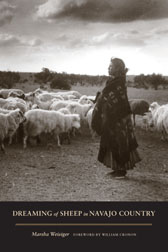
Dreaming of Sheep in Navajo Country, by Marsha L. Weisiger, Foreword by William Cronon, paperback (University of Washington Press, October 25, 2011), 418 pages.

From the Publisher: Dreaming of Sheep in Navajo Country offers a fresh interpretation of the history of Navajo (Diné) pastoralism. The dramatic reduction of livestock on the Navajo Reservation in the 1930s  –  when hundreds of thousands of sheep, goats, and horses were killed  –  was an ambitious attempt by the federal government to eliminate overgrazing on an arid landscape and to better the lives of the people who lived there. Instead, the policy was a disaster, resulting in the loss of livelihood for Navajos  –  especially women, the primary owners and tenders of the animals  –  without significant improvement of the grazing lands.

Awards: Winner of the Hal K. Rothman Award, the Norris and Carol Hundley Prize, the Caroline Bancroft Honor Prize, and the Gaspar Perez de Villagra Award

From the Reviewers: “While past accounts have either emphasized the view of the New Dealers or the Dine, Marsha Weisiger uses both fresh and refreshed data, adds layers of gender and ecological analyses, and brings a variety of interpretive lenses to this history. . . . Her work is the most comprehensive examination of this episode to date, and her use of interdisciplinary techniques to see an issue from a multitude of perspectives makes this book a new model for environmental history.” – Agricultural History  

Contents

FOREWORD: Sheep Are Good to Think With / William Cronon

Preface
Acknowledgments

PROLOGUE:  A View from Sheep Springs

PART 1: FAULT LINES
1.  Counting Sheep
2.  Range Wars

PART 2:  BEDROCK
3.  With Our Sheep We Were Created
4.  A Woman’s Place

PART 3:  TERRA FIRMA
5.  Herding Sheep
6.  Hoofed Locusts

PART 4:  EROSION
7.  Mourning Livestock
8.  Drawing Lines on a Map
9.  Making Memories

EPILOGUE:  A View from the Defiance Plateau

See Also: Reviews in American Scientist and The American Indian Quarterly

A Journey from Sheep Ranch to Shakespeare

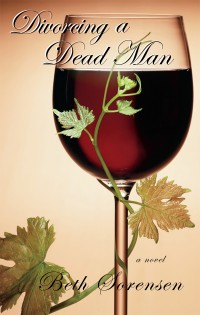
Review: ‘Divorcing a Dead Man’ by Beth Sorensen

In her fine-vintage debut romantic mystery Crush at Thomas Hall (Chalet, August 2010) Beth Sorensen introduced readers to Cassandra Martin who buried an abusive husband Tony, left home to see the world and ended up in northern Virgina running a small winery and deeply in love with the son of Thomas Hall’s owner, Edward Baker. In spite of murder and embezzlement, Cassandra and Edward appeared destined to lead a charmed life at the end of the novel.

The title of Sorensen’s sequel, Divorcing a Dead Man, is the first clue to the fact there may be more than grapes to be crushed at the winery—potentially, hearts and lives, as Cassandra discovers that Tony faked his death and wants to control her life again if he doesn’t kill her first. As a rich, successful CEO, Edward is used to getting his way, and to him that means controlling Cassandra’s life as well.

In my review of Crush at Thomas Hall, I noted that while former college professor Cassandra Martin was an intelligent protagonist when it came to running the winery, she was indecisive about personal matters, especially emotional commitments. She remains indecisive in Divorcing a Dead Man.

But, she has cause:  two men want to control her life, one out of hate and love; one man makes threats while the other keeps secrets; she is a devout Catholic who must now contemplate filing for divorce while her wedding is approaching as a potential train wreck; and, since Cassandra’s life is in danger, those closest want to hover even closer when she would prefer to run the winery (or run away) and have some unfettered time to think.

While Divorcing a Dead Man is not quite as tightly written as Crush at Thomas Hall, this contemporary romance successfully develops the character of Cassandra Martin in an environment of danger and betrayal. Meanwhile, Cassandra is not without doubts. While Tony was a mistake, she wonders as she accuses Edward of trying to run their relationship like a corporation, if marrying him will be another mistake.

Sorensen has written a compelling story about relationships and how easy it is for them to come into question and come under fire during times of great stress. From the outset, it’s clear that Cassandra and Edward are deeply in love and want only the best from each other. It’s also clear, whether fate plays a deadly hand or not, that they’re facing a steep learning curve in how to make a relationship work with very little time to do the necessary homework.

Malcolm R. Campbell is the author of four novels, including the recent contemporary fantasy, “Sarabande.”

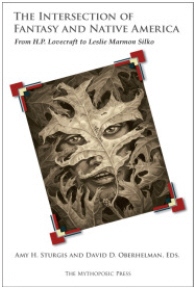
Book of pioneering essays explores fantasy with Native American influences

In 2006, author Amy Sturgis  presented a paper at the  Mythopoeic Society’s Mythcon 37 in which she suggested that specialists in fantasy studies and Native American studies have a lot to offer each other. In an August 2009 interview, Sturgis said, ‘Both sides I think are missing out on great opportunities to talk about and share the remarkable — and remarkably similar — literature in their respective fields. In my talk I recommended ways of bringing together those who love fantasy and those who love Native America.”

After her Mythcon talk, Sturgis was approached by the Mythopoeic Society Press and asked to edit a book of essays that would use her paper as a catalyst for exploring: (1) Native American mythology in literature, (2) Native American authors writing works with fantasy elements, (3) non-Native fantasy authors incorporating Native America into their own work.

As an author interested in the cultures and stories of the native nations traditionally associated with the locations in which my novels are set, I’m was happy to see the publication of The Intersection of Fantasy and Native America: From H.P. Lovecraft to Leslie Marmon Silko (Mythopoeic Society Press, October 2009) with pioneering work about the long-neglected impact of native themes in fantasy genre novels.

Publisher’s Description

A number of contemporary Native American authors incorporate elements of fantasy into their fiction, while several non-Native fantasy authors utilize elements of Native America in their storytelling. Nevertheless, few experts on fantasy consider American Indian works, and few experts on Native American studies explore the fantastic in literature. Now an international, multi-ethnic, and cross-disciplinary group of scholars investigates the meaningful ways in which fantasy and Native America intersect, examining classics by American Indian authors such as Louise Erdrich, Gerald Vizenor, and Leslie Marmon Silko, as well as non-Native fantasists such as H.P. Lovecraft, J.R.R. Tolkien, and J.K. Rowling. Thus these essayists pioneer new ways of thinking about fantasy texts by Native and non-Native authors, and challenge other academics, writers, and readers to do the same.

Author’s Comments

In an April 2009 interview in which she was asked about myth, fantasy and science fiction, Sturgis said, “All three are involved in the project of answering the question of what it means to be human: the nature of humanity; the nature of humanity’s relationship to the earth, the cosmos, the infinite; and other questions like these. The very first storytellers, through their mythological stories, parables, and other tales, were trying to come to some sense of the world and to figure out their place in it. I see mythology as a “mother figure” out of which the other two have grown.”

Reviewer Opinions

  • “With excellent and accessible scholarship, this book opens wide the door of Native American mythology and fantasy by connecting it with the fantasy many of us already know and love.” — Travis Prinzi, Author of Harry Potter and Imagination and editor of Hog’s Head Conversations.
  • “The essays in Sturgis and Oberhelman’s The Intersection of Fantasy and Native America open our eyes to the kinship between families of literature hitherto seen as separate-fantasy and Native American fiction-showing their interconnections in subject matter, in techniques of dream and trance and magical realism and post-modern meta-narrative, and most importantly, in their ability to penetrate appearances in search of underlying truths. The result is that we see each in light of the other and both as parts of the larger, so-called mainstream, and as essential to our understanding of literature, its  writers and readers, in the 21st century. –Verlyn Flieger, Professor of  English, University of Maryland at College Park, Author of Interrupted Music, A Question of Time, and Splintered Light.

The myths flowing out of classic Greek and Roman mythology and the impact of fact and fiction about kings and queens and elves and faerie folk from faraway worlds have, I believe, partially obscurred the role of Native American folktales and belief systems in creating both our world view and the fantasy fiction given birth by our imagionation in the place where we live. By examining the work of widely known authors, The Intersection of Fantasy and Native America helps interpret the rich landscape we may not have noticed just outside the front door.

–Malcolm

contemporary fantasy with native themes

Walking My Future Novel’s Setting

While I was working as a seasonal, college-student employee at Glacier National Park, my father said, “One day you’ll write a book about this.” As I walked the mile between the hotel and the camp store for Cokes, candy bars and other “health foods,” I visualized long nature articles about the park for National Geographic Magazine that would combine with proposed climbs of K2 and Mt. Everest and canoe rides down the Amazon into a hiker’s guide to exotic trails.

Little did I know I would one day set three novels in the park.

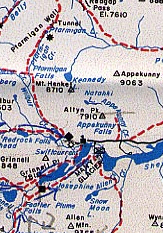
Like most college students, I was used to walking—and sometimes running—across a campus to get from one class to another. While working at the park, I not only walked around every lake near the hotel, but hiked to every waterfall, tunnel, mountain pass, and alpine meadow. Why? For a lot of reasons. For a Florida boy, the mountains were an exciting new environment. Plus, in those days, seasonal employees weren’t allowed to bring cars into the park. So, we talked. Going to the camp store was child’s play. By the end of the summer, a 25 mile hike as an easy stroll.

A Sack of Guidebooks

There used to be a wood box on a post near Many Glacier Hotel with a handfull of walking guides for tourists taking their first hike around Swiftcurrent Lake. If you wanted to keep the guide, you put a dime in a slot. If not, you put the guide into a similar box where the trail neared the camp store. I kept mine and along with it, brought home a sack full of guidebooks.

These materials are a writer’s dream. They allow me to merge my imagination and memories of the trails and mountains with specific factual information about the trees (subalpine fir, willow), wildflowers (fireweed, beargrass), and mountains (Grinnel, Allen). Even though I write contemporary fantasy, I want the setting to be as realistic as possible, and while I didn’t know it when I was a hotel bellman, all thosde after-work hikes were taking place in a world that would one say be part of The Sun Singer, Garden of Heaven: an Odyssey, and my new novel Sarabande.

I never wrote those National Geographic Magazine articles, much less climbed K2 or Everest, but I did write a few articles and essays about the Swiftcurrent Valley in Glacier National Park. Looking at the valley from a journalist’s or feature writer’s perspective helped me collect my thoughts for the fiction I would set there later.  Unfortunately, I haven’t been back to the park for many years, but all that time walking around in the setting of my future novels rather engraved the sights and sounds in my memory.

Sarabande Excerpt – from a Fictional Cabin at the Park’s Lake Josephine

Lake Josephine and Mt. Gould - twbuckner photo

The bright yellow of a late morning sun filled the bedroom when Sarabande awoke. She felt the light move before she opened her eyes and pulled the tangled folds of the quilt away from her face. A summer breeze followed the light, fluttering the blue curtains with a breath that smelled of fir trees, larkspurs, gentians, and stones from snow-melt streams. Pine siskins chirped to each other amongst the ferns and mosses, olive-sided flycatchers pipped from tree-top perches, and children laughed. The laughter came and went with the coming and going of a rumbling, technology-sounding hum. Sensing no threat in the sound, she projected outside and found that a boat traveling up and down the lake with visitors was powered by whatever made the pervasive hum. The visitors got off the boat, looked around, laughed, and then got back on the boat and went away.  They surrounded the cabin with their smells of strange soaps and fabrics, completely unaware of the magic in their midst. Whether it was the good night’s sleep or the rhythms of the water in the box of warm rain, her normally sharp senses intensified while she slept. Within the quilt of interlocking rings, she acquired—or was acquiring—Bear’s sense of smell, Eagle’s sight, and the quivering alertness of chipmunks and butterflies.

–Malcolm

an exciting adventure for only $4.99 on Kindle