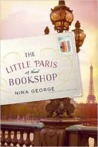
Review: ‘The Little Paris Bookshop’ by Nina George

The Little Paris BookshopThe Little Paris Bookshop by Nina George
My rating: 4 of 5 stars

This is a sensual book, filled with logic-numbing regrets, dreams, desires, wines, culinary extravagances, books that heal broken hearts and knit together shattered souls, and dreams larger than the imaginations of people who keep life in check or feel safer walling up their most excessive hopes.

Some say the book is pure sugar. Those who say that have never truly danced the tango as Paris bookseller Jean Perdu was taught to dance the dance by his long-lost lover Manon whom he has mourned for twenty years. (She simply left him one day without a word.) Now he sits on his “Literary Apothecary” barge–long tied up tight against a Paris pier rather than moving like a dancer on the river as boats are intended to move–and almost psychically “reads” the hidden away words of his customers’ stories so accurately that he can recommend the books they need to heal and, perhaps, to dance unfettered.

Unfortunately, he cannot prescribe for himself. Yes, he has danced the tango and set aside thinking for pure feeling and unchained inhibitions. So why has he chained his boat and his total self to a Paris pier when he knows what life can be if he let go of everything but the yearnings of “right now”? The answer is not mine to give you.

I can say that Jean Perdu finally unties his boat and motors down river to find out why he’s been held fast by memories. He meets other people who need but who don’t quite know what they need. Borrowing Hemingway’s words, the journey becomes a “movable feast” and the plot turns upon the question of whether or not Monsieur Perdu will prescribe for himself the charity and clarity he needs to enjoy it.

Like a rare evening meal when the best red wine, the best lamb cutlets with garlic flan, and the best conversation with people who know low to listen with their eyes conjure an experience that memory will often doubt could have been real, “The Little Paris Bookshop” takes its characters–and its readers–into the heart of bliss that will ever seem too unlikely to be possible.

The best way to dance the dance while reading this exuberant novel is to unchain yourself from whatever logical rules and proprieties bind you. Doing that is the book’s prescription.

View all my reviews

‘Waking Plain’ Free on Kindle December 14-18

WakingPlainCoverFor years, I wanted to take a famous fairy tale and turn it upside down. The result is my Kindle story “Waking Plain” which is a fairy tale while poking fun at “Sleeping Beauty.”

In “Sleeping Beauty,” like other tales, the woman is always beautiful, needs a man to rescue her, and that man is somebody who (after waking her up or otherwise saving her), sweeps her off her feet because he’s not only a rich king or prince, but is really handsome.

What if “Sleeping Beauty” had been a hag? Yes, she’d probably still be asleep.

What if the guy who kissed her was the castle janitor? Does she wake up and die of fright? Does the king give him a meaningless title so he’s fit to marry the princess? Or, maybe the janitor is thrown in the dungeon?

These are the kinds of questions that need to be asked.

But, more could be done. So, I made the sleeper a rather plain prince who, as the story unfolded, was more of an out of sight, out of mind kind of royal. Who’s going to wake him up? Maybe nobody, God willing.

Enjoy the story.

Malcolm

Coming December 1: ‘A Woman Misunderstood’

Thomas-Jacob Publishing will release the second novel in Melinda Clayton’s Tennessee Delta Series, A Woman Misunderstood, December 1. The novel follows Blessed Are the Wholly Broken (2013), with another gritty tale about harsh losses, determined survivors, and the tangled webs of dysfunctional people’s lives.

Publisher’s Description: 

Available for pre-order prior to the release date.

On a sweltering July morning in rural Tennessee, fifty-year-old Rebecca Reynolds visits the family farm, where she literally stumbles across the mutilated bodies of her parents and younger sister, a sister who had spent life in a wheelchair after a birth fraught with complications.

Rebecca’s first thought is to call 911. Her second is to find her estranged sister, Lena, who was disowned by the family years before. Her third is to wonder how long it will be before Lena is arrested for the murder of their family.

As the police gather evidence pointing to Lena, the sisters turn to attorney Brian Stone. Convinced of Lena’s innocence, he agrees to take on the case. But in a family ripped apart by dysfunction, is anyone truly innocent?

Clayton is also the author of the four-novel Cedar Hollow series that began with Appalachian Justice (2013).

Those of us at Thomas-Jacob do not review each other’s books because our words would always appear to be a conflict of interest. I’ll bend that rule ever so slightly by saying that I enjoyed reading A Woman Misunderstood.

Malcolm

Malcolm R. Campbell is the author of magical realism, paranormal, and fantasy novels and short stories.

Brief Review: ‘The Immortal Life of Piu Piu’

The Immortal Life of Piu PiuThe Immortal Life of Piu Piu by Bianca Gubalke
My rating: 5 of 5 stars

Some books come very close to being holy writ, sacred in their reach, profound in their wisdom, delightful in their humor, well-anchored in the world as we know it, fueled by the worlds we yearn for. This is such a book, with wonderful storytelling as well. You’ll meet Pippa, the girl who loves nature and thirsts for knowledge. You’ll meet Piu Piu, the who takes the plunge into a brief flirtation with our temporal life and thirsts for freedom. Look closely: behind the magic, you’ll probably meet yourself.

Well developed and memorable characters, an inventive story, and an immersion into the well-researched and well-described flora and fauna of the setting. Highly recommended and magical.

View all my reviews

So, you’re writing a novel and can’t think of a title for it

My muse tells me what my titles are going to be, so there it is.

But there are other approaches. Maybe a line out of a poem or your story’s plot in three words or the name of the main character along with a nice key word like “Joe’s Plague” or “Bob’s Dungeon” or “Mary’s Escape.”

booktitleTucker Max says, “The title is the first piece of information someone gets about your book, and it often forms the reader’s judgment about your book. Let’s be clear about this: A good title won’t make your book do well. But a bad title will almost certainly prevent it from doing well.”

Whether you’re shopping on line or in a bookstore, the title and the cover art are the first things you see. Their potential impact on sales is enormous.

Lynne Cantwell’s post in Indies Unlimited surveys a number of authors who have a smorgasbord of ways they come up with titles for their books. For me, it’s fun to see how others do this in case they have a technique worth borrowing.  Since I’m familiar with these authors’ books, it’s also instructive seeing when and how they decide on their titles.

Looking at what successful authors and teachers say about titles seems more reasonable than going to an online book title generator even though the headline of this post makes it look like a software-generated title is best: Book Title Generators: Free Tools To Help You Pick A Winning Title.

Agent Rachelle Gardner writes , “I was talking to a writer who mentioned she hadn’t worked too hard to come up with a great title for her book. When I asked her why, she said she’d been to a workshop taught by an editor at a major publishing house, who said, ‘Don’t get too attached to your title — there’s a good chance the publisher will change it anyway.’” Perhaps there’s some truth in that if you’re going with a big New York publisher. But most of us aren’t.

She quickly adds that you need to start with your best possible title even if you’re presenting the book to agents and editors who might ultimately suggest you change it. She follows that up with links to her post called How to Title Your Book.

Everyone who sees your book from beta reader to freelance editors to publishers will be impacted by your title. It shows them a lot about your intentions when it’s paired with your synopsis and/or sample chapter. So, what’s in a name?

Almost everything.

–Malcolm

Campbell’s Kindle books “At Sea,” “College Avenue,” and “Lady of the Blue Hour” will be free on Amazon on Black Friday. Click here for my website which has links to the books at the top of my home page.

Memory Lane: Where The Southern Crosses The Yellow Dog

I know the Yellow Dog district like a book
Indeed, I know the route that Rider took;
Every cross’, tie, bayou, burg, and bog
Way down where the Southern cross’ the Dog

— W. C. Handy

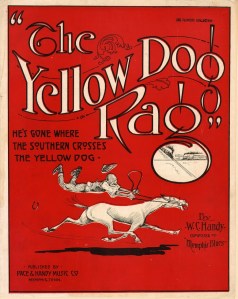
Once upon a time, if you were a rail fan in the South or even a weary traveler sitting in a southern diner drinking a cup of coffee, somebody might come up and ask you if you knew where the Southern crosses the Yellow Dog. If you answered, “Moorhead, Mississipi,” you were okay and belonged in the area. You were in better shape if you also knew the east-west tracks the Southern Railway (now Norfolk-Southern) and the north-south tracks of the Yazoo Delta Railroad (AKA “The Yellow Dog”) crossed each other about 75 feet from the town’s post office.

yellowdogragWhile Norfolk-Southern still uses that line, the dangerous, old-style diamond crossing is no longer active. However the site has been preserved, identified with a historical market that draws rail fans to it like a sacred pilgrimage.

The railroad crossing is part of legendary blues lore, the story being that in 1903, W. C. Handy heard a guitar player singing about that crossing in a musical style he’d never heard before. He was fascinated by it and subsequently wrote “The Yellow Dog Rag” based on this real or imagined blue player at a train depot. Other composers, including Sam Collins in 1927, have written and recorded yellow dog crossing songs. Blues fans can talk long into the night about where the first version came from.

As for “Yellow Dog,” I’ve seen four explanations of the reason that the name was applied to the Yazoo Delta Railroad: (a) “dog” often refers to a branch line, (b) the box cars were painted yellow, (c) somebody saw a yellow dog chasing the train every day, (d) railroad men on the line had to sign contracts with a yellow dog clause in them stating they wouldn’t join a union. All of these might be wrong, but they sound right enough for legends.

When it comes to song names, singers, lyrics, railroad crossings and blues recordings, it’s hard to tell the difference between facts and fictions because they all merge together in a dark bluesy way that just makes any good song and any good exaggeration about it all the better. So what I’m saying here is that this post may contain more fiction that fact, and that that’s a good thing.

–Malcolm

I couldn’t resist mentioning the title of this song in my recent novel “Eulalie and Washerwoman” because it was too good to leave out.

Books, the new heroin

While I was finally getting rid of a 20-year addiction to cigarettes, I read a detailed description of what happens when a person tries crack. The description was so powerful that I would have tried crack if any had been lying around. Instead, I lit another cigarette, postponing my last tobacco day for several weeks.

A writer friend of mine just sent me an excerpt from her work in progress. The result: instant addiction. But, since the rest of her story wasn’t lying around, I had a bourbon and Coke instead. Better than nothing, but not as good as her writing.

heroinHello, addiction, my old friend. I’ve been there and done that and ought to have a tee shirt. Perhaps some will say that an addiction to books is a good thing, especially if those books are wonderful novels that are good enough to elevate the soul through the mere contact with the words.
Ever since I finished my recent work in progress, Eulalie and Washerwoman, and sent it to my publisher, I’ve lost all my discipline and have been reading books at flank speed. I know I have to come down off of this and get stuff done, but coming down is almost as difficult as giving up Marlboros.

Some suggest that addiction to a positive thing is good. They equate it with the oneness promised to the seeker who becomes one with the god of his or her heart so that the two are synchronized. I don’t think that kind of addiction is true enlightenment because with the dominance of the large over the small, the small is lost and no longer has the freedom to continue the relationship.

We’ve seen this dominating kind of addiction a lot during the Presidential race. Movers and shakers and every day voters have become so addicted to the candidate of their choice that they can no longer think for themselves. So, they are lost and have neither arrived at Nirvana nor a meaningful psychological balance–much less a logical political decision.

Some days, we need to put down the book we’re reading and do something else. No, it’s not easy. That’s why it’s called addiction and it represents a loss of free will. Even the “most positive addictions”–love, God, freedom, justice, compassion–can steal souls and render us less than ourselves.

As a reader and a writer, I know how easy it is to lose oneself in a book or a cause. Saying “no” really doesn’t fix it. It takes a strength of will to be oneself and get rid of the best of things that have entrapped you.

–Malcolm

Hex Free (mostly) Halloween Book Sale

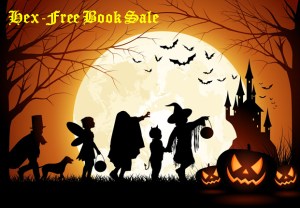
Yes, you can go door to door begging for free candy and still take advantage of my 99% Hex Free Halloween Book Sale.

hexfreeSale dates: 10/28/16 through 10/31/16

Free Books: Waking Plain, Dream of Crows, At Sea, Willing Spirits

The Stories:

  • Waking Plain is a story about a sleeping prince who is so plain nobody wants to kiss him and wake him up. Bummer.
  • Dream of Crows is a story about a poor slob who’s being led into an early grave. Warning: it just might be you.
  • At Sea is a novel about a conscientious objector serving on an aircraft carrier during the Vietnam War. As it turns out, friends and family are more dangerous than the Viet Cong.
  • Willing Spirits is a story about a girl who waited to the last minute to do her book report and asks the dead author for help. You know before you start reading that this can’t be good.

Warranty: In spite of modern technology no reputable author can guarantee that his or her books are 100% hex free. We do our best to keep hidden hexes and subliminal messages out of our books. But a small percentage of you might fall under a spell that will cause you to buy more of our books and/or steal your children’s Halloween candy.

Malcolm


Jesus, a Sun Deck, a Kimono and Magical Realism

“You can imagine then how distinctly I remember the day Jesus of Nazareth, in person, climbed the hill in our back yard to our house, then up the outside stairs to the sun deck where I was sitting. And how He stayed with me for awhile. You can surely understand how clear those details rest in my memory. ” – Gloria Sawai, “The Day I Sat With Jesus on the Sun Deck and a Wind Came Up and Blew My Kimono Open and He Saw My Breasts” in ‘A Song for Nettie Johnson’ (2002)

It probably won’t surprise you to hear that this short story, first published in 1976 or 1980 (depending on which source you use), has been anthologized and discussed a great deal due to its unusual title.  I find magical realism flowing through the story while others think the author merely came up with a clever title and couldn’t do it justice. (You can read the short story in PDF form here.)

nettiejohnsonI like Morny Joy’s take on the short story in Voices and Echoes: Canadian Women’s Spirituality: “No ecstasies, stigmata, fasts undo death or masochistic indulgences for this visionary. No cloistered convent or perpetual vows of chastity in the name of a temperamental divine lover. No proclamations of salvation or indictments of this perfidious, lascivious world. Instead, a woman has a neighborly chat with Jesus on the deck of a house on the outskirts of Moose Jaw.” (You can read the rest of her commentary here.)

As Joy notes, this story “illustrates the extraordinary in the ordinary,” and that is what we expect when reading magical realism.

Within A Song for Nettie Johnson, the story is unique, for it is the only one where magic is overtly mixed with the days of the characters’ lives. Some reviewers think the story doesn’t fit and should have been left out. I see their point, but I don’t agree. This story presents another viewpoint in a collection that Cocteau Books says “examines the heartbreaking lives of people on the margins.”

Consider the book’s descriptionA group of young school students prepares a memorial for the town’s deceased doctor, at the inadvertent risk of deeply offending his widow. A young girl learns important things about herself – some of them extremely unpleasant – on a storm-ravaged Mother’s Day weekend. A woman on a road trip in search of her erstwhile husband finds instead the one thing she never expected to see again in her lifetime. A woman sitting on the deck outside her Moose Jaw home receives an unusual and unexpected gentleman caller. And, in the title story, an outcast and misunderstood woman and her disgraced lover struggle toward what may be their last chance at redemption.

canadacouncilThe short story collection won the Governor-General’s-Award in 2002. The winner’s news release said, “Gloria Sawai brilliantly creates a world in which love and light redeem human failings. With clarity, deftness and generosity, she celebrates a universe in which even the least of her characters can achieve a vision of the infinite.” The finalist news release said, “A Song for Nettie Johnson is a profoundly light-filled collection of short stories set on the Prairies and peopled with holy sinners, visionaries, children and so-called ordinary folk. The power of grace illuminates her world.”

I read this collection years ago and I think I wrote a post about it–because she is among the writers who have influenced my own writing–but that must have been in another blog because I can’t find it in the archive.  I find myself thinking of her from time to time along with her stories which, as the Canadian Encyclopedia describes them, are “filled with gentle humour. Her stories often focus on characters in pious communities, set amid the majestic extremes of weather and landscape on the prairies. They emphasize the power of grace to bring forth hope, wonder, and goodness out of circumscribed lives and straitened circumstances.” (Sawai, of Edmonton, Alberta, Canada, died in 2011 at 78 years of age.)

Here’s a brief excerpt from the story: “First He was a little bump on the far, far off prairie. Then He was a mole, way beyond the quarry. Then a larger animal, a dog perhaps, moving out there through the grass. Nearing the quarry, He became a person. No doubt about that. A woman perhaps, still in her bathrobe. But edging out from the rocks, through the weeds, toward the hill, He was clear to me. I knew then who He was. I knew it just as I knew the knew the sun was shining…And there He was. Coming. Climbing the hill in our back yard, His body bent against the climb, His robes ruffling in the wind. He was coming. And I was not ready. All those mouldy clothes scattered about the living room. And me in this faded old thing made in Japan, and drinking—in the middle of the morning.”

Perhaps some of you will enjoy this collection, the art and craft of all the selections, and the lighthearted but powerful “The Day I Sat With Jesus on the Sun Deck and a Wind Came Up and Blew My Kimono Open and He Saw My Breasts.”

–Malcolm

Malcolm R. Campbell is the author of the magical realism novella “Conjure Woman’s Cat.”


do you know why you read what you read or does it just kind of happen


“A reader’s tastes are peculiar. Choosing books to read is like making your way down a remote and winding path. Your stops on that path are always idiosyncratic. One book leads to another and another the way one thought leads to another and another. My type of reader is the sort who burrows through the stacks in the bookstore or the library (or the Web site — stacks are stacks), yielding to impulse and instinct.” ― Jane Smiley

I’m a creature of habit and my strongest habit is inconsistency.

During the Vietnam War, bar girls in navy liberty ports used the phrase “butterfly man” to describe sailors who weren’t “loyal” to the same woman every time they came to port.

Assuming I can forget where that phrase came from, it aptly describes the apparent inconsistency of a writer’s reading habits as well as his/her seemingly slapdash approach to the art and craft of writing itself.

As Smiley says, our paths are winding and are choices along them are idiosyncratic and ruled by impulse and instinct. I grab books off the shelves because they seem like they’re going to be good. I am seldom fooled by this approach, though I have gotten stuck with a few books I wished I hadn’t grabbed off the shelves.

When I try to outline or, so to speak, plot out my reading choices (such as reading only one genre or reading all the books that receive certain prizes), I end up with a mess. Inconsistency makes perfect sense to me because I trust instinct and impulse more than I trust to-do lists and step-by-step plans.

I spent a lot of time out doors when I was growing up, and while certain things were good to do based on experience, one had to be ready for anything, to watch for signs, changes of weather, become attuned to sounds and scents and wrap that all together into moving up a mountain or along a trail with a fair amount of intuition. Sure, a lot of it was knowledge that had become internalized and then followed without having to think about it. But instinct kept one aware of dangers and wonders that plans never uncovered.

The worst thing people can for me is to recommend books. Then, suddenly, I start feeling an obligation to read those books, and get back to them the moment I’m done as though I’m doing a school book report. Funny, how there are people I like and agree with about a lot of things except the books they want me to read. “They want me to read book ABC because it’s by the same author and/or similar to book XYZ which they know I liked.”

I know NPR and other media outlets mean well with their lists of a year's best books, but I don't take those ideas a gospel.
I know NPR and other media outlets mean well with their lists of a year’s best books, but I don’t take those ideas a gospel.

I dislike most of the books suggested to me based on that kind of reasoning.

This will sound superstitious and insanely inconsistent, but I’m a “force is with me” kind of reader and writer. That is to say, if I’m “supposed to read” a certain book, I’ll find if by myself one way or another. If it’s a book I probably won’t like, I either don’t hear of it or stay away from it for unknown reasons.

My wife and I often finish each other’s sentences, but we seldom finish books one of us reads and recommends to the other. If you’re not my wife (and the odds are 100% that you’re not) you have a snowball’s chance in hell of handing me a book to read that I’ll be happy with.

Over the years, family members have given up on picking books for me as gifts. When Christmas and my birthday approach, they want to see a wish list from which to choose. (I just need to remember not too buy anything off the list before December 25th and August 12th have come and gone.)

So, how have you fared? Do family members and friends tend to know what you want to read and suggest or send books to you that you actually like. Or do they strike out?

I feel bad when people send me books I don’t like because having to tell them I don’t like the book they selected is about as difficult to do without injury as answering such questions as “how do you like my new dress,” “isn’t my hairdo just perfect,” and “would you like some more of my green bean casserole?” So many hurt feelings, busted noses and broken marriages come from answering those questions incorrectly.

Seriously, if we like each other, please don’t say, “Malcolm, you really need to read Lust in a Broken Birdbath (or whatever).”

Malcolm

Malcolm R. Campbell’s Vietnam novel “At Sea” is free on Kindle August 15-17.