Thomas-Jacob Publishing has released the latest addition to Sharon Heath’s The Fleur Trilogy, The Mysterious Composition of Tears (July 18). Currently available in Kindle and paperback, The novel book follows History of My Body, Tizita, and Return of the Butterfly.
From the Publisher:
 After a series of climate calamities, physicist Fleur Robins takes off for deep space in a desperate attempt to save the species from extinction. During her mysteriously prolonged absence, the internet has crashed, fire and flood have devastated whole countries, and End of Times cults have proliferated. There have been some intriguingly hopeful changes, too—nanoparticle holograms have replaced electronic devices, young people are witnessing exquisitely colorful “Shimmers,” and the most gifted of them converse regularly with animals and trees.
While Fleur’s distraught husband Adam leads their Caltech physics team in frantic efforts to pinpoint her whereabouts, and Fleur herself plots her return home, their teenaged children Callay and Wolf fall in love with surprising partners. But when the charming son of an End of Times pastor crosses Wolf’s path during a particularly vibrant Shimmer, events are set in motion that will upend everyone’s life and transform planet Earth itself. This latest installment of Sharon Heath’s saga of the quirky Nobelist Fleur is simultaneously a vision of what awaits us in a post-Covid world, a wild romp through quantum reality, and a deep sea dive into the dark and light vagaries of the human heart.
From the C. G. Jung Institute of Los Angeles
 Come and join us at the Institute Clubhouse or via Zoom on September 10th at 10:30 a. m. for a book reading and signing by Jungian Analyst Sharon Heath of her sequel to The Fleur Trilogy. Admission is free, but registration is required
Heath is also the author of Chasing Eve.
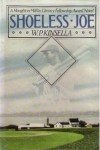 If you watched Ken Burns’ 1994 documentary “Baseball,” perhaps you felt the magic in the sport. PBS called the film, “An American epic overflowing with heroes and hopefuls, scoundrels and screwballs.” If you sense this magic at the ball field or even while watching a game on TV, perhaps you can understand why Canadian author W. P. Kinsella (1935-2016) used magical realism in Shoeless Joe, The Iowa Baseball Confederacy, and his later novel Butterfly Winter.
 The spirit of the magic is aptly summed up in the New York Times review of Shoeless Joe that includes the following excerpt that appeared after a character was discovered to have been lying about his baseball experience: “I imagine Eddie Scissons has decided, ‘If I can’t have what I want most in life, then I’ll pretend I had it in the past, and talk about it and live it and relive it until it is real and solid and I can hold it to my heart like a precious child. Once I’ve experienced it so completely, no one can ever take it away from me.'”
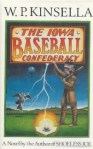
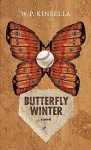 Wikipedia says,” The Iowa Baseball Confederacy (1986) another book blending fantasy and magical realism, recounts an epic baseball game a minor league team played against the 1908 World Champion Chicago Cubs” and Butterfly Winter as “The story of Julio and Esteban Pimental, twins whose divine destiny for baseball begins with games of catch in the womb, the novel marks a return to form, combining his long-held passions of baseball and magical realism.”
 According to the website, “Western Writers of America annually honors writers for distinguished writing about the American West with the Spur Awards. Since 1953 the Spur Awards have been considered one of the most prestigious awards in American literature. Spurs are given for the best western historical novel, best western traditional novel, best western contemporary novel, best short story, best short nonfiction. Also, best contemporary nonfiction, best biography, best history, best juvenile fiction and nonfiction, best drama, best documentary, and best first novel as well as best first nonfiction book.”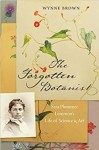



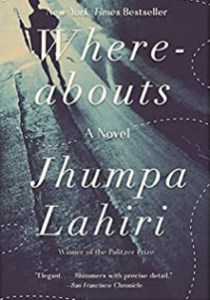 If you sharpen a knife for too long, you ultimately have nothing left. This novel treads closely to that eventuality. Lahiri has removed everything readers look for in a work of fiction, presenting us with a plotless, episodic story told in short chapters out of which most of the unnamed, middle-aged female protagonist’s soul has been honed away.
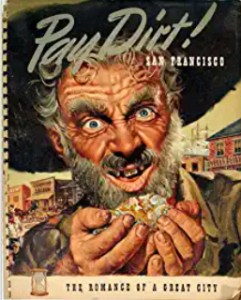 My late uncle Maury B. Campbell edited this lavish, spiral-bound love letter to San Francisco in 1949. As a child, I was a little scared of the old prospector on the cover but found myself drawn to the photographs inside. If you search for the book on Google, you’ll find it for sale (used) for $30 to $50.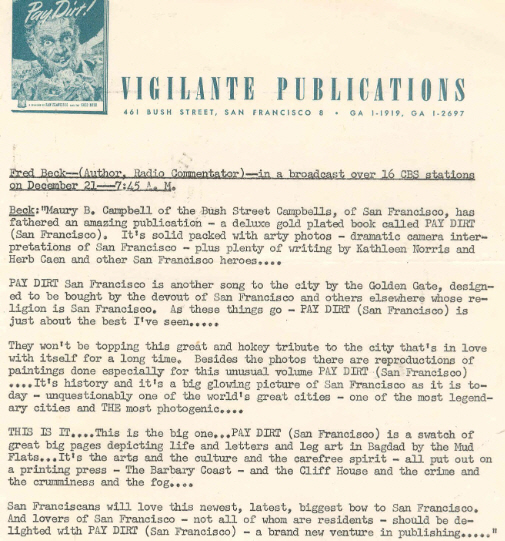
 Malcolm's Round Table