Book Review: ‘New Dimensions of Being’ by Nora Caron

NDB cover smallAuthor Nora Caron (Journey to the Heart) returns with the gentle and deeply spiritual sequel New Dimensions of Being about a young Canadian woman named Lucina who has moved to Oaxaca for a much-needed change of scene. Fluent in Spanish and acclimated to the warm climate and culture of Southwestern Mexico, the former computer professional works as a waitress and shares her apartment with her boyfriend Teleo.

While she is happy with her decision to move to Oaxaca, Lucina’s sleep and serenity are being disrupted by frightening nightmares. Then she discovers she is pregnant. Her uncertainty about motherhood at this time in her life puts a strain on her relationship with Teleo and widens the scope of her spiritual quest.

New Dimensions of Being is a story about mentors. Teleo is an herbal healer; John is a shaman, Maria–a former actress–is wise in the ways of predatory men (vampires, as she calls them); Teleo’s mother is a midwife with strong connections to spirit as indigenous cultures view humankind’s relationship with Earth, gods and elemental forces; and Weeping Willow brings Lucina the Hopi worldview and its prospective  connection to her nightmares.

Each of these mentors has a role to play in Lucina’s quest, imparting wisdom and advice out of their experience. What does she want to do about her pregnancy, her relationship with Teleo, and her role as a woman at a time of spiritual shifts?

Written in a natural, easy-to-read style, New Dimensions of Being brings us a believable protagonist who is learning how, exactly, to define herself. At times, she is more reactive than active, when some of the mentors’ stories become lengthy.

However, her reactions ring true and her progress along her spiritual path will appeal greatly to women who are reclaiming their feminine energy and power in a patriarchal world, and to others who are focused on a more natural and cooperative relationship with Mother Earth.

Bad News: Quercus to publish new title in Stieg Larsson’s Millennium series

“Quercus Publishing has announced it will publish a fourth installment of Stieg Larsson’s Millennium series.” – Quill & Quire

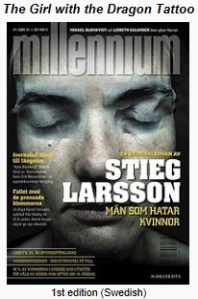
dragontattooWe often ask: “Why is Hollywood re-make happy?” Or, “Why are some writers sequel-to-a-dead-author’s books happy?”

Is it the money? Is it the vanity of stars and directors and authors who think they can do it better? Or, is it simply easier to tinker with something old rather than coming up with something new?

Perhaps, all of these. And then, there’s another matter I’ll mention in a moment.

As a writer, I cannot imagine finding any joy of creation by re-doing already successful screen plays or by adding sequels to an acclaimed author’s series. Perhaps as satire. “The Girl With No Tattoos Whatsoever.” – Now that, I would like.

Otherwise, I see the characters of a novel as being an extension of the original author. While it’s highly unlikely anyone will find new stories to tell about my fictional characters Robert Adams (“The Sun Singer”) or David Ward (“The Seeker”), I promise to haunt anyone who tries to do it. In fact, maybe I’ll hired a wizard too put a hex on the books.

The estate of Stieg Larsson has authorized David Lagercrantz to write a fourth novel in the Millennium series. Even if I spoke perfect Swedish, I wouldn’t line up to read any work that trades on the heritage of the dead.

Likewise, as the “Quill and Quire” article points out, Ian Flemming has been dead for 50 years, but a new James Bond novel called Solo came out this fall. While the Guardian says it’s better than some of the originals, it has as much to do with Flemming as many of the Bond films.

In September, Publishers Weekly announced that the Agatha Christie estate, has authorized Sophie Hannah to write a new Hercule Poirot. Poirot is famous for saying, “It is the brain, the little gray cells on which one must rely. One must seek the truth within–not without.”  One might say the same thing about authors and fictional characters: that it’s better to create your own rather than use somebody else’s creations.

There was a lot of talk, especially here in Georgia, about why the Margaret Mitchell Estate authorized Rhett Butler’s People by Donald McCaig in 2007. The first Gone With The Wind sequel, Scarlett (also auhorized) was written by Alexandra Ripley in 1991 and a lot of fans didn’t like it because it took Scarlett away from Atlanta and dodged all the questions fans might have about the character’s life after GWTW.

A Good Reason for the Sequels

Why such sequels? Many say that estates worry about the potentially expiring copyrights on original works and authorize sequels they can oversee before one of the vultures flying over the original author’s grave swoops in and writes his/her own version of the now-famous characters. What if Scarlett went out and got a dragon tattoo, for example. What if Rhett showed up in a Star Trek holodeck and said he always thought Scarlett should have married Ashley? The potential horrors are infinite.

I see the point in protecting the copyrights because there’s a lot of bad taste in the world and, sorry to say, some novelists and screenwriters are willing to disseminate it to make a buck. But otherwise, it seems like grave robbing.

Copyright issues or not, what a waste of talent!

Malcolm

Malcolm R. Campbell is the author of “Emily’s Stories,” “Jock Stewart and the Missing Sea of Fire,” and the heaven and hell fantasy “The Seeker.”

99seeker

You can also find “The Seeker” e-book for 99 cents on Smashwords and OmniLit.

Bloggers: Stop asking guests, ‘When did you first know you wanted to be a writer?’

Other than family and friends, nobody buys an author’s book after seeing a lame, blog-tour question answered like this:

“I’m very passionate about writing. I knew in the first grade I wanted to be a writer, but didn’t start trying to be one until after having another career in the insurance industry that finally burned out, leading me to think, holy crap, what am I going to do with my time now?”

Okay, perhaps I exaggerate.

wordcloudBut here’s the problem: answers like that don’t sound like anything a professional writer would say, and by professional, I’m talking about career authors who have spent years paying their dues and perfecting their art and craft.

Sure, sooner or they’re asked when they started writing, but it’s usually within the context of a larger, more detail-oriented professional sounding interview.

Blogs Mass Producing Author Interviews Don’t Help Anybody

If a blogger asks the same questions to every guest, including the typical first question, “Can you tell us something about yourself?” then the resulting interview is only preaching to the choir, the choir being the author’s friends, family, and co-authors at a publisher or critique group.

In a world where most people buy most fiction from authors with major buzz at major media outlets, few serious readers are going to select a book from an unknown author after reading a generic interview.

Real Interviews are Journalism

Books are an investment of money and time. Make them sound worth it.

While breaking news and short deadlines often cause reporters to ask bad questions, real interviews are done by reporters, magazine staff writers and competent freelancers who do their homework first. Homework means: research your guest before you start asking questions.

This is where most blog-tour bloggers fail. They’re looking for quantity rather than quality, so naturally, they don’t read the guest author’s book, study their websites, see what they say about themselves on Facebook, or so anything else to provide enough background from which to ask intelligent questions.

These bloggers are well intentioned. They see the generic interview as a service. And, on high-traffic blogs including those in which a guest author can answer, say, five out of a list of 50 possible questions, some authors may be getting decent publicity. The rest the authors are, I think being harmed more than helped.

Why? Because most readers are savvy enough to see the difference between a journalistic-style interview with a professional author and a talking-over-the-backyard-fence generic interview with an unknown author. Generic questions just scream: This is amateur stuff.

Most people have a limited book budget and are careful about what they buy: they’re not going to buy an amateur book because they can’t afford to spend the money on it, and even if they could afford it, they don’t have time to read it.

Perhaps Doing a Few Interviews Well is Better

Personally, I think a blog’s traffic goes up when it includes interviews in which readers see that the blogger actually knows something about the guest author’s work AND that s/he isn’t asking every author the exact same questions.

Publishing has become more democratic. There are more venues and more ways to get one’s workinto  print. Meanwhile, social networking sites encourage authors to get out there and shoot the breeze with as many followers as possible. It’s easy to see how this leads to blog interviews where the blogger and author act like just plain folks as though the author is the friendly neighbor who suddenly decided to write a book.

The bottom line is, people don’t spend money to buy a book written by their next door neighbor who just decided, what the hell, I think I’ll be an author.  We need bloggers willing to learn their subjects and present unknown authors in the best possible light rather than making them look like amateurs.

Now that would be an interview that makes both the blogger and author look like the kind of people we want to read again and again.

Malcolm

99seeker

Quebec author finds her stories and spirit in the Southwest

NoraCaronToday’s guest is Nora Caron, author of Journey to the Heart and the recently released sequel, New Dimensions of Being. From Montreal, Quebec, Caron works as a private English teacher and Kangen water distributor when she’s not in the American Southwest working on films.

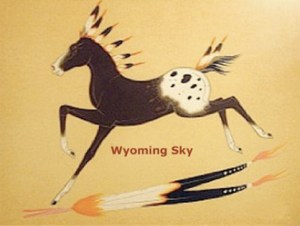
She co-wrote the script for Wyoming Sky, a film currently in development by her own film production company, Oceandoll Productions.

Malcolm: Welcome to Malcolm’s Round Table. You’ve been busy lately touring on behalf of New Dimensions of Being. I won’t ask you to tell tall tales about appearing in multiple towns and multiple stores, but I’m guessing it’s been an adventure. What are the high points?

NDB cover smallNora: I adore meeting new people and not knowing who will show up. Every bookstore has its own energy and I never know what to expect! It’s like a dream every time in which I don’t know what will happen. In the past I used to try to organize everything and count on certain people to show up but now I just go with the flow. Sometimes people don’t talk and other times, like in Texas recently, they just open up magically and incredible life stories are shared in the room. The best part of touring is that afterwards, you come home with new friends and unforgettable memories, not to mention great new ideas for future novels.

Malcolm: When you wrote Journey to the Heart, did you know that your protagonist Lucina had another story to tell or did she start appearing in your thoughts and dreams later?

Nora: I had several people come up and ask me, “So what happens after? I want to know more! Please!” I had never thought of writing a trilogy but I realized after much meditation that Lucina’s story indeed was not over. When I started writing the second book, I had so much to say that I couldn’t wait to start the third. I literally wrote two books one after the other without taking a break, something I thought I would never pull off given all my other work that I must juggle daily. I can honestly say these books wrote themselves through my fingertips, as though powerful forces were pushing their way to print.

Small-coverMalcolm: I can understand a resident of Quebec being fluent in French. But how did the German and Spanish come into the picture? How does being multi-lingual influence your work as a writer in English?

Nora: My mother speaks many languages and it was a sort of necessity growing up in our household to master different languages. I lived for a while in Berlin back in 2001 and loved the German culture very much, and it was at that moment that I began learning German. In 2002, I traveled to Mexico where I heard Spanish for the first time and couldn’t shake it from me. It was in University that I minored in German and Spanish because I knew that being multilingual would help me later down as I traveled the world. Speaking different languages allows me to study other cultures and people more in depth, and allows me to see more clearly how other people live and interact. The fact that I speak Spanish gave me an inside perspective on Mexico which is everywhere in my first three novels. I believe that to know different languages gives you freedom to explore worlds that remain hidden sometimes to the common outside tourist.

Malcolm: How does a person living in the ice and cold of Quebec become fascinated with the American Southwest? Yes, I know it’s warmer there, but I think there’s more to it than that?

Nora: Although I am born in ice and cold and gray skies, my spirit is far from that energy. It was in the south of the US that I started to feel myself fully, especially in California and Arizona. I find the people more welcoming and friendly, and I adore the dry heat. I am an outdoors person, I love running and swimming so winters in Quebec are a little death for me each year. In my heart, I am a true Californian: wild, free-spirited, open-minded, rebellious, and very liberal. Plus I love the joy and lightness of being in the southwest which is rare to find in my part of the world. Up here people are constantly fighting the weather hence that reflects in their personalities. Quebecers are rough, tough, and often not the happiest people on earth. I believe climate shapes people much more than we imagine.

Malcolm: You’re one of the few authors I know who also has an IMDb listing. What led you to acting and to your work in the Wyoming Sky project?

In the summer of 1884, the proud daughter of a horse rancher returns home from back east, only to face hardship and danger on the Wyoming frontier. To save her father's ranch, she must move a herd of rare horses over 100 miles, with a gang of killers in hot pursuit.
In the summer of 1884, the proud daughter of a horse rancher returns home from back east, only to face hardship and danger on the Wyoming frontier. To save her father’s ranch, she must move a herd of rare horses over 100 miles, with a gang of killers in hot pursuit.

Nora: When I first went to Los Angeles seven years ago, I befriended a wonderful actor named Ingo Neuhaus who became one of my closest friends on earth. One day he threw me into a short film Online Dating and we had so much fun, that we decided to work together on other short films. I had done television and theatre in the past, as well as film studies, so I felt like I was re-connecting with a part of me that had been sleeping for a long time. Three years ago, Ingo and I started writing our first feature film Wyoming Sky and once the script was complete, we realized we had something really special in our hands. Several people in Hollywood jumped on board, and last year we formed our film company with Brad Neuhaus and we became Oceandoll Productions. Since then, we have been raising funds for Wyoming Sky and recently launched a Kickstarter campaign for development money. It’s such a pleasure to be doing films with such talented men as the Neuhaus boys! There is never a dull moment and we like to think we are different from other filmmakers because we take time with people and listen to people rather than just think about ourselves. Hollywood can be very narcissistic at times, sadly.

Malcolm: In her novel The Goldfinch, Donna Tartt describes Nevada as a place of “wide horizons, empty skies, spiritual clarity.” I also get this feeling when I visit my granddaughters there, and I sense it lurking behind the scenes in your work set in the Southwest. How do you visualize the region when you approach it as a writer—and perhaps someday as a resident?

Mojave Sunset
Mojave Sunset

Nora: Since I did travel in Mexico, the scenes in my novel come from a first-hand account as well as much research about the places my narrator visits. I feel at home in places with wide horizons and clear skies, and one of my favorite places to visit was the Mojave desert in California. It was there that I heard the calls of the coyotes and slept under the starlit skies, and dreamed of shamans and witches and transformations. I hope that my descriptions of places in my novels stir that sense of wonder in readers, wonder about the mysterious unknown, the Other Side, the world of magic and spirits, and rebirth and death.

Malcolm: Thank you for stopping by Malcolm’s Round Table. Best of luck with your Kickstarter campaign for Wyoming Sky and your tour for New Dimensions of Being.

The Story: In New Dimensions of Being, Lucina is haunted by terrible recurring nightmares. Unsure of what they represent, Teleo and her seek answers but the quest opens up many new areas of life Lucina is not certain she can cope with. Discovering that she is pregnant, Lucina faces a huge decision: Is she ready to become a mother or not? As Lucina stumbles around to find the right path for her, she realizes that keeping love alive is much more complicated than she originally thought.

On the Web: You can visit Nora on the web here; you and learn more about her campaign to raise money for Wyoming Sky here.

Miscellany: New, upcoming, and around the Net

Here are a few updates about one thing and another, this and that, and things from that drawer most families have the kitchen that contains stuff that didn’t end up some place else.

New

  • EmilyaudioI’m happy to announce that my three-story Kindle set, Emily’s Stories, is now available as an audio book. The stories feature a fourteen-year-old girl who talks to birds and ghosts and, just possibly, tinkers a little bit with reality. That’s what I would expect from a curious, sharp and savvy young lady. Personally, it was strange (in a good way) to hear my words being read back to me by narrator Kelley Hazen. Kelley also narrates my Vanilla Heart Publishing colleague Marie Hampton’s Hunting Heartbreak. Stay tuned for more audio books from VHP later this year. It’s an exciting new way to tell you our stories.

Upcoming

  • I’m looking forward to posting reviews of two new books about Glacier National Park in late May, Best of Glacier and Glacier Park Lodge. This year marks the 100th anniversary of the famous lodge built by the former Great Northern Railway on the edge of the park. You can still get there by train via AMTRAK’s Empire Builder.cagedgravescover
  • Author Dianne Marenco Salerni (“We Hear the Dead” and her upcoming “The Caged Graves”) will be hear in two weeks with a spooky guest post. With today’s zombie fad, we usually hear about protecting the living from the dead.  However, there have been times when the dead needed to be protected from the living. It’s a great post with some wonderful photographs. Dianne and I used to contribute book reviews to the same review site, so it’s doubly fun to see her latest novels coming out and showing up with glowing reader responses on similar sites.

Around the Net

You’ll find some of my favorite places in the blogroll. In my search for author and publishing news for my “Book Bits” posts on my Sun Singer’s Travels blog, I look at a great many blogs and sites each week. But here are some posts I wanted to share (including one of mine own) outside the realm of reviews and author news:

Smoky Zeidel photo
Smoky Zeidel photo
  • My friend and colleague at Vanilla Heart Publishing, Smoky Zeidel (“The Storyteller’s Bracelet”), has been blogging about the the beauty of the California coast. I haven’t been back to the state where I was born for many years, so I’m contenting myself to read about it in In Search of the Pacific Crest Trail. This is the second in a two-part posting. Smoky is known as the Earth Mage for good reason.
  • Since I have blogged here in the past about the hero’s journey, I see a lot of visitors stopping by after having searched for more information. I would like to suggest The ongoing series of posts on C. LaVielle’s Book Jacket Blog about the hero’s journey and the Major Arcana from the Tarot deck. The deck’s Major Arcana, when followed in numerical order, are a representation of not only the hero’s journey, but the seeker’s journey. Yesterday’s post is The Sun, Part I.
  • Montucky photo
    Montucky photo

    My Montana friend “Montucky” has been running his Montana Outdoors blog for some years now and has gathered over time a surprising variety of high country photographs. He spends a lot of time on trails and forest service roads and always has his camera. You’ll see scenics, river pictures, and hundreds of wildflowers. Most recently, he showed us the beauty of Lichens and moss. Montucky makes frequent posts, and I have found a lot of serenity in stopping by his blog of late to see the last snowfalls and the first spring flowers. His blog is almost as good as flying out to Montana, though considerably less expensive! (However, as soon as Hollywood calls and makes me an offer for this book or that, I’m buying a plane ticket or a suite on the Empire Builder.)

  • Florida Memory photo
    Florida Memory photo

    In my recent post on my Sun Singer’s Travels weblog, I couldn’t resist placing my characters in Florida’s Garden of Eden, I continue a series of novel-location-essays focused on my new contemporary fantasy novel The Seeker. In the 1960s when the novel is set, the Florida Panhandle preserve now called the Apalachicola Bluffs and Ravines was touted as being the location of the Biblical Garden of Eden. There were signs all over the place, including one that said “Here Adam and Eve Built Their First Home.” The Garden of Eden trail is still there, but a lot of the former rhetoric and publicity about Arks and gopher wood has faded into the past. The habitat is exceptionally rare no matter what you believe about its past. I habitually use many real settings in my novels and short stories as a way of contrasting fantasy and reality, adding depth to my locations, and (in a small way) keeping a bit of local history alive.

Malcolm

Novelist Returns to Nonfiction with Patton’s Oracle Memoir

authcoverphoto (2)Today’s guest post is by Robert Hays (“Blood on the Roses,” “The Life and Death of Lizzie Morris”) who returns to his nonfiction roots with Patton’s Oracle: Gen. Oscar Koch, as I Knew Him. Since my writing career also began, like my father’s and Robert Hays’, in journalism, I wondered how Robert handled the move from fiction to nonfiction for this book.

Returning to Nonfiction

After four novels, I returned to non-fiction for my new book, Patton’s Oracle: Gen. Oscar Koch, as I Knew Him. I love writing fiction—the freedom to create settings and characters, the magic of working with different plots, the fun of trying ideas just to see if they work—but I also find great satisfaction in non-fiction. I’ve spent most of my adult life as a journalist. I loved newspaper reporting and the prospect of offering readers factual information that I consider interesting and important never wears thin.

Oracle cover 001 (2)What’s new for me in Patton’s Oracle is the addition of subjective material to the mix. The book is a biographical memoir, my effort to recount a marvelous four years of friendship and work with Oscar Koch, an unsung hero of World War II who became my personal hero as well.

Oscar Koch was a brilliant intelligence officer who deserves great credit for his behind-the-scenes role in the success of his celebrated commander, Gen. George S. Patton Jr. My military service had been two years as a draftee enlisted man and I had just turned 31 when I met Gen. Koch, who besides having a distinguished military career of almost forty years was well beyond twice my age. Surely the likelihood of us finding things in common was slight. But we live in a world of chance and in this case the unlikely came to pass.

I discovered the general to be a modest, scholarly and charming man. He found no glory in war, and sought none for himself. He was not enthusiastic when I asked to make him the subject of a personality profile article for the St. Louis Post-Dispatch. I believe he consented principally as a favor to me. He was pleased with the article, though, and invited me to collaborate with him on a book that had become his final goal in life.

kochGen. Koch was a joy to work with. His book quickly became almost as important to me as it was to him. But shortly after we began, he was diagnosed with terminal cancer. From that point forward I knew this was a race against time. We finished the book, G-2: Intelligence for Patton, but Oscar Koch did not survive to see it published. It came out in 1971 and still is in print.

As I summarized this experience in Patton’s Oracle: “I was granted only four years to share life with the general, a period that was far too short. In the beginning he lifted my spirits as we joined in a common purpose. In the end, I endured the anguish of watching an insidious cancer purloin the life from his body even though he never would surrender his gallant spirit. But what a remarkable four years it was, how grateful I am to have had that privilege.”

Patton’s Oracle is my tenth book. But it is the one I’ve wanted for decades to write, timid that I might not do justice to the subject. Even though the words are my own, there are passages that bring tears to my eyes. And of the ten, it is the book that is dearest to my heart.

You can find Robert Hays on the web on WordPress and on Facebook.

A talk with Scott and Smoky Zeidel, authors of ‘Trails’

scottandsmokyIt’s a pleasure to welcome Smoky and Scott Zeidel to Malcolm’s Round Table to talk about their new book Trails: Short Stories Poetry and Photographs released in paperback and e-book this month by Vanilla Heart Publishing.

Smoky is the author of fiction and nonfiction, including The Storyteller’s Bracelet (2012) and Observations of an Earth Mage, (2010). Her husband Scott, who plays the guitar, teaches music history as an adjunct professor at Mt. San Antonio College in California.

MALCOLM: Trails has been dedicated to the squirrels. Is this the entire family of tree or ground squirrels or a bird-feeder robbing band in your yard?

SCOTT: The squirrels are metaphors for nature. So, to answer your question, the book is dedicated to every type of squirrel in the world, the little bastards.

SMOKY: I started to say, “He doesn’t really mean that last part.” But then, I looked out my studio window, and there’s a pregnant ground squirrel out on the deck, ripping a rug to shreds, to get wool to line her nest, and I think, maybe Scott’s right.

trailsMALCOLM: I’ve had many conflicts with squirrels over the years, usually a difference of opinion about just who the bird feeders are for. Scott, when you write that you once thought everyone remembered their own birth, I thought of people who had either bad vision or better than normal vision and supposed everyone’s eyesight was the same. What has this memory given you that others do not have—long-term vision, connectedness to your family going back in time, insight into the big picture of our incarnation, or something else?
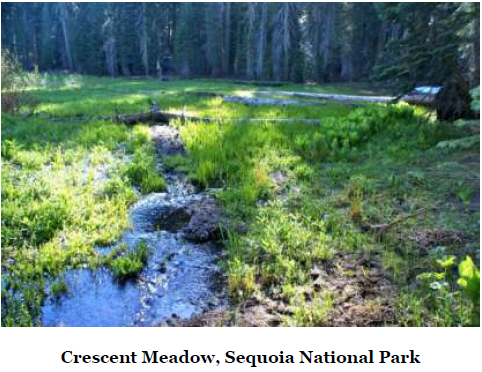
crescentSCOTT: I can’t speak for others, but, like I said, I do remember my birth. Nevertheless, was I instantly awake, instantly aware, at the moment of my birth? On a purely rational level, is this even possible? I think not. On a metaphysical level, when did my life really begin as a sentient being? When will it end? These are the big questions.

MALCOLM: Smoky, some people say that old stories change every time they’re told. Did you hear different versions of your childhood stories over time and do you now find yourself telling them differently when you relate them to others? Do you begin to wonder what parts of them have slowly become fiction?

SMOKY: I assume you’re referring to the stories I relate in the book about how I became a storyteller; the stories about my mother being a turkey murderer and my uncles’ wild snake stories. Hell, when I heard them the first time I wondered how much of them were true and how much my mother and my uncles made up. Even as a little girl I recognized these magical stories as being part truth, part fiction. What I garnered from them wasn’t whether my elders were being totally truthful or not, but rather the love they poured into the stories as they told them. Stories without love are dull, and seldom are they remembered. But these stories? There was so much love in them it wouldn’t have mattered if my mother said she’d slain a dragon, or my uncles done battle with Kaa (from Rudyard Kipling’s The Jungle Book) himself. The stories would have stayed with me.

MALCOLM: Scott, when you follow Smoky into the hospital for seemingly an infinite number of visits leading back to her being struck by lightning in 1989 and you sit, as you wrote, in another waiting room that looks the same as all the others, do you see it all as being within the hands and plans of the universe or do you watch people, read books and wait in a stoic limbo mode?

SCOTT: My intention was not to be particularly deep or philosophical here. I’m just a man. This is what I do; this what everyone should do. We all should hold out our hands and arms to others, friends, enemies, loved ones. What else is there? I comfort Smoky because this is what I do.

MALCOLM: Smoky and Scott, before either one of you wrote the first word of this book, did one of you say to the other, “Let’s co-author a book about life, walking and nature” or was it a muse or a publisher that suggested the project?

SCOTT: Our wonderful publisher, Kimberlee Williams, suggested the project. She has been so supportive and helpful. Kimberlee is our muse.

SMOKY: Let me clarify that “Kimberlee is our muse” thing. I talk about Muse frequently in the book; Kimberlee is not that muse. Kimberlee could ask me a thousand times to dive naked into a freezing mountain river and I wouldn’t do it. Muse, however… well, you’ve read the book, Malcolm. And whoever reads this here, on your blog, can read the book to learn more about that Muse.

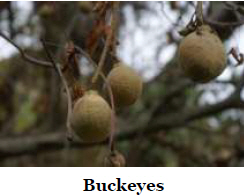
buckeyeMALCOLM: Smoky, has it taken a lifetime to learn the lesson of the California buckeye, that it’s part of a continuing process of life rather than a work of art to be preserved for all time as it was during one moment? Or, did the beauty of nature’s changes come to you more as an epiphany when you looked at the seeds you collected?

SMOKY: The beauty of nature’s changes first came to me when I was three years old and sitting in a blooming apple tree in my parents’ back yard. (I wrote about that experience in my “I Am Nature” essay in my book, Observations of an Earth Mage.) I’ve always been keenly in tune with the cyclical nature of Nature. In tune so much, in fact, I feel intense physical pain when rain is coming, for example, or when I’m near a place where our Mother Earth has been ravaged by bulldozers or mining equipment. The lesson of the buckeye is best summarized as a lesson in the impermanence of beauty; the impermanence of life as we know it. Life goes on, of course. It just changes form. The buckeye becomes a sprout, then a seedling, then, over time, an enormous tree. It would be wrong—it would be impossible, in fact—to try to contain it in any one form, no matter how beautiful. We also talk about that in the last chapter of Trails.

MALCOLM: Scott, you traveled a long way—and many years—from your childhood play in the dirt outside your house to the Big Sur where you re-discovered the land on a rainy night while reading Vonnegut. Do you wonder now why the journey to the Big Sur took as long as it did or whether you had missed signs and hunches early on that you needed to go there, or somewhere, to re-connect?

SCOTT: I do wonder why it took so long. I certainly missed signs along the way, many signs. When I would sit at a table in one of my many Ph.D. seminars, I felt like a robot, a machine, waiting for something. But sometimes I felt something taping, taping on my shoulder. Now I know what it was. It was Poe’s raven. It was my muse. I just brushed it away.

MALCOLM: Smoky, you write that you “find there are two kinds of people: those who believe it is possible to talk and listen to trees, rocks, animals, and rivers, and those who do not.” You talk and listen. Are you “wired differently” or are whose who don’t understand the dialogue brainwashed that it’s impossible or too busy to consider it?

SMOKY: Brainwashed might be too harsh a term. I think children hear Nature speaking. But as they grow, they’re told to put aside their playful, creative natures and buckle down and study hard so they can get a good job and support a spouse and 2.3 children and begin the cycle all over again. The quashing of creativity quashes the ability to hear Nature speak. By the time we reach adulthood, we’ve learned the only people who talk to rocks and trees are crazy people. So call me crazy, but I know what I know, and I know when Nature and her children—the rocks, trees, birds, rivers—are talking to me. And I think other people hear it too. They just don’t remember the language. It’s not unlike being dropped on some random street in, say, the Middle East, and all you hear is Farsi. You hear something. You just don’t understand it. The good thing is, this is a skill that can be re-learned, understanding what the trees and rocks are saying. You just have to sit still and listen long enough.

MALCOLM: Scott and Smoky, what draws you to the Kings River in the Sierras? Would another river serve the same purpose or is the voice of this one Sympatico with your thoughts and feelings?

SCOTT: All mountain rivers inspire us: the movement, the sound, the color, the smell. So sensual. But there are many levels to a mountain river. They’re veins through the natural world; they’re Gaia’s poetry; they’re the beauty of life; they’re spirit. But the Kings River is special; it’s a mountain river on steroids.

SMOKY: For me it’s all that Scott said, but I’d add one thing: the Kings was the river of a profound spiritual renewal I experienced and write about in Trails. While other rivers are sacred to me—the Little Pigeon in the Smokies especially comes to mind—none of them have affected me, spiritually, as profoundly as the Kings. The Little Pigeon is the river of my heart; the Kings is the river of my soul.
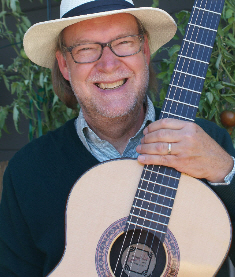
scottMALCOLM: My feelings about mountain rivers are the same. Smoky and Scott, one of you is inspired by a guitar and one of you is inspired by Snake. Is this an example of opposites (or differences) attracting, or is there a synchronicity here that lurks within your respective muses?

SCOTT: Yes, synchronicity! Someone strums a snake; someone strums a guitar. There’s really no difference. As Rumi said, “Everything is music.”

SMOKY: Our muses are definitely entwined, which evokes an image of Snake. And music is a theme of our lives: there are times we live our lives at a fevered pitch, and times when we sit in quiet repose. There are slow, dark sonatas when I am sick; there are times the music plays so fast we can hardly dance fast enough to keep up.

MALCOLM: Does each of you have a favorite line from the book that best communicates the depth and breadth and intent of the book?

SCOTT: For me, it’s what I just said, “Everything is music.”

SMOKY: For me it would be “ …we went to the mountains, deep in the wild Sierra, to refresh our tired bodies and restore our faith in all that is Nature, and wild, and sacred, and good.” I hope our book, Trails, is like that, that it restores readers’ faith that there is good, and it is as close as our own back yards.

MALCOLM: Thank you for stopping by the Round Table today with your wonderful background about Trails.

Trails is available on Kindle, Payloadz and OmniLit. More formats will be released in the coming weeks.

We could fill cemeteries with neglected books

books“There was a time when a learned fellow (literally, a Renaissance man) could read all the major extant works published in the western world. Information overload soon put paid to that. Since there is “no end” to “making many books” – as the Old Testament book Ecclesiastes prophesied, anticipating our digital age – the realm of the unread has spread like a spilt bottle of correction fluid.” – The Guardian in “In theory: the unread and the unreadable”

Carlos Ruiz Zafón writes about a “cemetery of forgotten books” in his novel The Shadow of the Wind. This cemetery is a library maintained by the secret few who know about it and who may lend you a volume if you will protect it for life. After reading the article in “The Guardian” which led me to The Neglected Books Page which led me author Jo Walton’s lengthy 2010 Neglected Books: The List (with a science fiction and fantasy focus), I wondered if we should build a cemetery, that is, a library, of forgotten AND neglected books.

neglectedbooks

You probably have some favorite authors and books that never seem to catch on with the general public. With my Georgia focus, I can usually name several Georgia authors who seem to be lost in the shuffle even though they have won awards and/or had a book or two made into a movie. While I’ll probably read the upcoming Dan Brown book Inferno, I don’t usually follow fads. Reading outside the latest fad, I’m usually able to think of wonderful books that are being overlooked.

“The Guardian” article mentions information overload. That’s certainly a factor. Adults aren’t known for reading a lot of novels per year. Perhaps high school and college literature classes made fiction seem boring. Perhaps the latest reality show, movie, or trending Internet story gets in the way. There are plenty of reasons.

One can also say that small press authors, not including those published by old-line prestigious small presses, are likely to feel neglected. For the most part, small press books do not get reviews from Kirkus, Booklist, Publishers Weekly and major newspapers. There usually are no noteworthy interviews with small press authors or off-book-page stories about their work. With few exceptions, their books are not entered into awards competitions, included on the media’s best-books-of-the-year lists, optioned for movies, or remotely on the radar of most prospective readers.

If you ask a major critic, book reviewer, literary magazine, or publishing magazine what a neglected or a forgotten book is, it is normally considered one from a major publisher that was well reviewed, but had lower than expected sales and was allowed to go out of print. Books by popular authors that don’t catch on like the authors’ other works are also in the “neglected” category.

The cemetery/library in The Shadow of the Wind resonated with me in part because of the novel’s notion that “Every time a book changes hands, every time someone runs his eyes down its pages, its spirit grows and strengthens.” In “real life,” a secret library that almost nobody knows about won’t serve our need. Perhaps books need patrons or people who love them and talk about them or people who share them with their friends. Perhaps we need more adventurous readers who will commit to buying five books a year that are not on the bestseller list. We need more reviewers: writers often wonder why people say, “hey, I loved youshadowofwindr book” but then don’t follow that up with a reader review on GoodReads or Amazon.

I think I’m only talking about band-aids here unless more people find more reasons to read. According to ParaPublishing, 27% of adults in the U.S. don’t read books for pleasure (based on figures from a few years ago). What books are the remaining adults going to pick from: an old and forgotten book, a book from a small press author, or the book sitting in the bookstore window and at the top of the national bestseller lists? No wonder so many books are forgotten and/or neglected and/or passed over—depending on your definition of those terms.

Years ago when literature and other liberal arts courses were more valued in high schools and college than they are now, most of the students in my classes came from families where their parents read almost no books. The students learned from home that reading wasn’t valued. Our town’s public library has reading classes for kids, and I love seeing the kids there. But I wonder, is the excitement of the reading program reinforced by parents at home or are the kids just dropped off at the library by parents who need time to run some errands elsewhere?

Reading is an investment in time more than an investment of money. I get offers via e-mail, Facebook and GoodReads for free downloads and sample chapters. I read a lot, but I can’t keep up with the deluge. I try to promote new authors on my blogs and on Twitter, but sooner or later, I want to read the books I hear about rather than free books I’ve never heard about. It’s book overload even for those of us who read a lot.

riflogoPerhaps reading just isn’t a modern-day avocation and perhaps it’s too late to change that. Can reading-oriented groups help or did we let lack of reading get so far out of hand that the problem is too broken to fix? More and more people are writing and publishing, but their viable readership seems to be getting smaller no matter how much time we all spend arguing about whether e-books should be almost free or should sell for enough to support the authors who wrote them?

  • So, what books and authors do you like that have fallen into the neglected or forgotten categories?
  • What happens when you tell your friends about these books? Do they yawn and then spend another evening watching reality TV shows or reading only the top ten book on their genre’s bestseller list?

Malcolm

trilogybanner

Speculative Supernatural Novels and the Growing Fantasy Genre

CowanToday’s guest post by Laura K. Cowan (The Little Seer) examines speculative supernatural fiction and its relationship to fantasy. As authors, we often like to push the envelope, so to speak, and explore new realms. Speculative fiction of all kinds has been a popular arena of late.

It’s difficult to sort through all the variables that make for good fiction as new genres and sub-genres come on the scene, but one important consideration is the readers’ comfort level. Some fantasy readers stick to one area, while others see all the colors and hues of fantasy as a tempting smorgasbord. I’m always tempted to try new treats. How about you?

Speculative Supernatural Novels and the Growing Fantasy Genre

The fantasy genre is a diverse one, from the elves of high fantasy to pookas and werewolves at the intersection of fantasy and fairy tales, all the way to the dark fantasy of authors like Neil Gaiman with mainstream appeal. But a growing number of writers not satisfied with the status quo is beginning to write a new sub-genre called speculative supernatural. What is it and why should fantasy readers care?

Well, as a speculative writer, I suppose I’m biased, but I think readers of fantasy will embrace the speculative supernatural genre for one reason: it’s never boring! In a similar way that science fiction takes a “What if?” question of technology or science and stretches it into the future, speculative supernatural takes a “What if?” question and pushes into the spiritual or supernatural. Everything from weird ghost stories to spiritual warfare novels with warring angels and demons, to the cosmological stories that explore the physical and metaphysical nature of the world can fall under speculative supernatural, and that can take a reader and a writer down a very deep rabbit hole indeed. Isn’t that where all the best fantasy fiction goes?

Angels, Demons and Dreams

SEER FINAL V 2013-FrontThis week, my debut novel The Little Seer was pushed to the top of the Amazon Bestseller lists for free fiction when I made the first book of the novella trilogy, Exodus, free for 5 days. We all love free, but what I think really made this book an instant hit with readers was the premise. The story follows a young girl who wakes from a nightmare that her church is destroyed by a tornado and her pastor orders crows to peck out her eyes, only to discover deep cuts on her arms where she was attacked. And it only gets stranger from there, as her dreams unfold in her waking life and she finds herself the focus of a spiritual war over her life and town that could decide the fate of millions.

The supernatural angle of this book is obvious: angels, demons, and a behind-the-veil look at heaven as it manifests itself in our minds and around us at all times. But in order to make this story really gripping, I had to bring the supernatural into the natural in a literal way. “What if your dreams could really hurt you?” I asked myself. “What if what appears to be the safe choice spiritually could not only devastate your soul but risk your life?” “What if God wasn’t who you were told he was, and neither were you? How would you find the truth? ” And suddenly my character was an armchair theologian no more. She found herself diving deep into symbolic prophetic dreams and the depths of her own mind to seek answers to pressing questions, even as her family and church and community fell to pieces.

A Viable Fantasy Sub-Genre

The books I’m working on for the next few years all contain a similar thread of speculative thought and supernatural themes, but I’m excited to see how this work doesn’t fit in a box. It’s too out there for the Christian market even when it does contain angels and demons, but it’s too spiritual for a mainstream market. I think fantasy is the ideal home for my work, because my next novel Music of Sacred Lakes deals with a mystical connection with nature through a haunting that saves a young man’s life, and my upcoming short story collection The Thin Places: Supernatural Tales of the Unseen actually takes 30 separate speculative “What if?” questions and spins them in all directions, from modern mythology to the marriage of fairy tales and time travel. Like I said, never boring, and who knows interesting stories better than fantasy fans?

Welcome to the speculative supernatural genre. Let’s jump in together and see how deep the rabbit hole goes.

rabbitOn February 19th, Amber McCallister, who often reviews speculative fiction, will overview The Little Seer and provide an excerpt on her Wonderings of One Person weblog. Erin El Mehairi will be interviewing Laura on February 20 at Oh for the Hook of a Book! 

The Little Seer is available on Amazon in paperback and on Kindle.

You can also find Laura at her website and on Facebook and Twitter at @laurakcowan. And, I would like to thank her for stopping by Malcolm’s Round Table today.

–Malcolm

Dear Reader: If you buy books like widgets, I don’t want you

“We get on social media, we try different kinds of events, we create interesting displays, we sell the hell out of the books we love, but none of that reaches the boardrooms where the big decisions are made. If I could get one wish from the ghost of Sylvia Beach, it’s that she, or someone who cares about the inherent value of books, gets a seat in those boardrooms to advocate for readers not consumers, for books as a pillar of culture not as a unit of sales, and for bookstores as community centers not retail outlets and merchandise showrooms.” – Josh Cook of Porter Square Books, Cambridge, Mass

We hear stories from time to time about artists, jewelers, furniture makers and other stubborn souls who, after perfecting the art and the craft of their work for nearly a lifetime, refuse to sell their work to customers whom they believe won’t appreciate the work for its inherent beauty and artistry or who try to prostitute themselves, the art and the artists by acquiring the perfect bentwood rocker, diamond ring or sonnet at a rock bottom price.

Amazon, the Internet and parents who rear children to believe they (the children) are the center of the universe are conspiring like planets in trine to create a book buying atmosphere in which many (but thankfully, not all) prospective readers feel entitled to free, or almost-free books. This attitude is strengthened by the unfortunate, but popular, mindset that anyone selling or making anything is corrupt, cheating at taxes, and trying to rip off customers one way or the other. Therefore, like every other false right people are claiming to have these days, cheap books have become a component of the public’s feelings of entitlement and a way to get back at those who are purportedly stealing us blind.

If you listen to Amazon and to those who believe Amazon has done more for authors and readers than anyone since Gutenberg, then you are hearing that an e-book is just a file.  That means that neither the publisher nor the author is paying printers to print it, nor warehouses to store it.  Those who buy books as units or widgets or just files, see no value in the product other than the momentary gratification of reading them. They not only do not see the inherent artistry in the storytelling, nor the expenses an author incurs in creating that file which might include: (a) a year or two of full-time work, (2) hiring at editor, (3) paying for cover art, (4) travel and other research, (5) promotional efforts including mailing off free review copies, maintaining a website, traveling to book signings, purchasing bookmarks and fliers.

Some authors who have become household names by selling their books through large publishers, can take their fame—as well as their talents—off into the self-publishing world and earn a living selling books for a dollar or two on Amazon. They will lead you to believe that any author or publisher who asks you to pay, say, $5.00 for an e-book is ripping you off because (after all) the book is just a file.

According to the Census Bureau, the current poverty income level in the United States is $8,959. Looking at this simplistically, if I take a year to write an 80,000 word novel, I would have to sell at least 8,959 copies of that book on Amazon at the $1 price to break even at the poverty level. If I had any expenses in creating the book, I’d be under the poverty level.

In spite of the success stories we read about from time to time, most self-published books sell less than a hundred copies. Small-press authors are lucky if they sell 1,500 copies. In both cases, the authors are under the poverty level.

My great hope is that my readers will be happy with my books and will feel that a near-lifetime of art and craft has gone into them. I’m just an everyday, journeyman writer, so I do not feel like a “Hemingway in the making” or a “not-yet-discovered” Pat Conroy or John Grisham. Nonetheless, I do work very hard to tell exciting stories, with three-dimensional characters, pitch-perfect descriptions and themes that provide food for thought. Yet, and I tell you this without vanity or guile, if you want to purchase any of my novels at rock-bottom prices to you and to others like you, don’t bother.

If you think my e-book is just a file rather than the words and the work within the file, I don’t want you buying any of my books because, while we might have to agree to disagree about this, I don’t think you will appreciate them for their value as art/craft/culture. And, if you are earning an income above the poverty level, my strong belief is that if you want me to live below the poverty level selling my books with a rock-bottom, Amazon-style price, then you’re not the kind of person who will appreciate me as an author.

Based on the comments I’ve received on this blog, either directly, or when I post the links on Twitter or Facebook, I know that my regular visitors agree with the Josh Cook quotation I used to set the stage for this essay. I’m not talking to you because that would be rather like preaching to the choir. I’m talking to the people who will find this post via search engines with search words like “rock bottom prices” and “Amazon.” If you are one of those people and if you came here hoping I can “get it for you wholesale” or give it away for nothing, then I don’t want you.

For everyone else out there who respects books for their stories, words fail me in telling you how much I appreciate you.

Malcolm