 My stomach infection is about four months old because the GP decided to refer me to a specialist whose first available appointment was two months away. When I complained, the GP did a test, found an infection, and gave me antibiotics. They seemed to be working but the infection came back after they ran their course. I didn’t tell him because by now, I was at the specialist’s practice. She ran an upper GI which came back normal, then sent me back to the lab for the same test the GP ran many weeks ago. I like the specialist, but think the infection would be gone for good if the GP had handled the whole process. I love modern medicine. <g>
 I guess I’m watching “Yellowstone” because all my regular shows are still off for the summer and/or stalemated by the actors’ and writers’ strikes. The series is gritty and well-written but seems to be composed of all the possible cliches about life in Montana, including large ranchers being evil, the rez being a bad place, and all levels of state and tribal government being corrupt. I hate to say that I’ve become addicted.
 I liked Jeff Shaara’s historical novel about Teddy Roosevelt called Old Lion. Very readable, and also compelling even for those of us who’ve read TR biographies such as Mornings on Horseback. Up to now, Shaara’s novels have focussed on wars and battles. I guess he finally ran out of wars to write about. His battlefield novels are always told via the points of view of some of the major players. It took me a while to adjust to an omniscient narrator point of view in a Shaara novel.
- Years ago, I learned that food poisoning was a “great way” to lose weight. As it turns out, so is a stomach infection. They work faster than all those diet plans advertised on TV. They’re a no pain, no loss kind of thing.
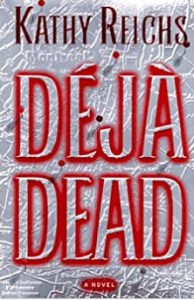 Well, it seems that most of the books I want to read haven’t come down in price yet. So, I’m re-reading many of my Kathy Reichs (Bones) thrillers, including her 1997 novel Déjà Dead. These are well-written and compelling even if you’ve read them before because there’s no way one can remember all the plots and subplots. Since her novels stem from her profession, one learns a lot about dead people and morgues. Like the TV series, the Temperance Brenan in the books likes skipping out of the lab and investigating what the police seem slow to focus on. Déjà Dead is her first novel. If you read enough of these, you’ll become well-versed in Quebecois profanity that you don’t hear in France such as “Tabernac.”
- Nice to see a little rain today in NW Georgia.
–Malcolm, author of “Conjure Woman’s Cat”
 I’m enjoying Diana Gabaldon’s Go Tell the Bees That I am gone. It’s 888 pages long in trade paperback, not counting the endnotes. I’ve often wondered if Diana or her publisher have considered including a synopsis of the series at the beginning of each novel to orient people who haven’t read prior books. If you started reading Bees without any knowledge of all the earlier books, you’d be completely lost.
 How many of you have seen “Indiana Jones and the Dial of Destiny”? The reviews have been lukewarm even though the trailer looks good. We’ll probably watch it out of nostalgia regardless of what the critics have to about it. As Wikipedia reports, “
 According to Variety,
  According to
 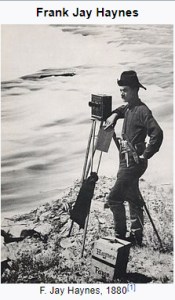 Haynes served as the official photographer for Yellowstone National Park as well as the Northern Pacific Railway. The railroad, which served the park, had a fair amount of interest in promoting Yellowstone just as the Great Northern Railway was instrumental in the development and promotion of Montana’s Glacier National Park.


 Malcolm's Round Table