Zeke Zany interviews me to get more words for his blog

zanyZeke Zany here at Zany Antics & Books where I chronicle my life as a car mechanic and part-time gigolo while working on my epic novel about a man who fixes the transmissions of rich widows. I’ve wanted to be a writer ever since I accidentally spelled a four-letter word beginning with “F” with my ABC blocks and my daddy’s reaction taught me the power or writing. Today’s guest is Malcolm R. Campbell who’s going to fill us in on who he is and why.

Zeke: Tell us about yourself

campbellphotoMalcolm: Well, Zeke, if you’d done your homework like a real interviewer, you’d know that I made my first fortune by selling my novels under pseudonyms that just happened to be the most famous names on the planet, starting with my bestselling novels Hunt for Brown November and Hunt for Blue December “by Tom Clancy” in 1987 and 1986. They were so good, even Tom thought he’d written them and came to my cell in the state pen to shake my hand.

Zeke: What are you currently writing/working on?

Malcolm: I’m writing answers to your one-size-fits-all interview questions. I’m working on getting done writing these answers as soon as possible, preferably before the Scotch runs out.

Zeke: When did you discover you wanted to be a writer?

Malcolm: I never discovered any such thing. Unfortunately, a muse named Siobhan with nothing better to do latched onto me like ugly on and ape (even though we’re both beautiful people) and demanded that I go into the biz. We got off to a bad start when critics around the world laughed at my debut novel To Kill a Blue Jay written under my Lee Harper alias.  Since then, it’s been “write good, or else.”

Zeke: Is there any part of you in your characters.

Malcolm: The worst parts. That’s what sells, Zeke.

Zeke: Are you a plotter or a pantser?

Malcolm: As God as my witness, I’m going to kill the next person who asks me this lame question. This question is so lame, it takes two crutches to hold it up. Suffice it to say, I wear pants at all times except during baths and sex.

Zeke: If Hollywood gave you the power to cast your novel in progress, what stars would you pick?

Wikipedia photo
Wikipedia photo

Malcolm: Hollywood never gives writers that power. You just want some names in this post that will attract search engines. Well, I can help you out with that: Olivia Wilde, Mila Kunis, and Megan Fox in my soon-to-be-released Three Bucks in the Fountain.

Zeke: When you are developing a book, what tools or techniques do you use, e.g. timelines, Ouija boards, character interviews, copy and pasting from obscure novels, sentence diagrams, or novel writing software?

Malcolm: Jack Daniels and a pencil work for me.

Zeke: Has your technique changed over time?

Malcolm: I started out with Ripple and a pen, but that’s what landed me in the slammer.

Zeke: Where you you get your ideas?

Malcolm: The mother ship beams them down.

Zeke: What kind of writing environment do you prefer: couch, bed, coffee shop, music, noise, abandoned hearse, the great out doors.

Malcolm: Siobhan says my best work comes when I’m writing in the drunk tank, and I’m sure as hell not calling my muse a liar.

Zeke: Do you have any advice for aspiring writers.

Malcolm: Avoid bloggers with canned interview questions that make you look like an amateur. Otherwise, promise your mother that “I’ll be all around in the dark – I’ll be everywhere. Wherever you can look – wherever there’s a fight, so hungry people can eat, I’ll be there. Wherever there’s a cop beatin’ up a guy, I’ll be there. I’ll be in the way guys yell when they’re mad. I’ll be in the way kids laugh when they’re hungry and they know supper’s ready, and when the people are eatin’ the stuff they raise and livin’ in the houses they build – I’ll be there, too.”

Zeke: Where can we find you on the Internet?

Malcolm: http://www.peoplefinders.com

How to destroy the pacing of your story

thrillerNovelists trick us in multiple ways in order to ramp up the suspense of a story. Important facts are concealed, backstories aren’t revealed, and point of view is shifted from one character to another keeping readers outside the head of the person whose thoughts would reveal important clues.

One trick annoys me, probably annoys others, and disrupts the pacing of the story. Let’s call this “hurry up and wait.” Here’s an example:

The Bomb

Joe opened the suitcase. There is was: enough C4 to level the building and a timer with ten seconds left in the countdown. The timer was old, sounded like a plastic clock.

The tick tock, tick tock reminded him of summer evenings at the lake when Dad not only woke him at the crack of dawn, but kept him awake most of the night with a loudly ticking alarm clock. Every time it woke him, he lay there waiting for it to go off in an explosion of bells and sunshine. Before the left the old cabin, he threw that darned clock in the lake, hoping a gator might eat it. He had to smile in spite of the bomb in the suitcase. If Dad were alive and sitting here next to him, he would love the sound of that timer.

When a story is racing toward a critical moment, stopping the action for an absurd reason cheats the reader, for it builds tension where there should already be enough tension to cover the action.  In this example:

  1. No sane person faced with a bomb with just seconds to defuse is going to walk down memory lane in his thoughts. He will run, throw the bomb out a window, or defuse it.
  2. Some novelists don’t pay attention to the time it takes a reader to read a passage. I always note it. In this case, the bomb will explode before Joe finishes his thoughts about the lake and the clock simply because the thought takes more time than he has.

A similar sin, somewhat less grievous, is the insertion of backstory information into a scene where, in reality, there’s no time for it. Now, if you’re a reader or a writer who isn’t concerned with the amount of time thoughts and memories take to occur, this won’t bother you as much as it bothers me. Consider this:

The Highway

Sue lit another cigarette and blew the smoke out the open window of the car. Goodness knows, she was driving fast enough for the wind to draw everything out the window including her soft voice, her hair and the gnats that took over the car while they were parked at a rest stop.

“What are we going to tell our parents when we get there,” she asked.

“If you’ll slow down,” said Jim, “we’ll have more time to come up with an elaborate lie.”

She laughed, looked at him sideways, and punched his shoulder gently.

“I’m eight months pregnant,” she said. “What kind of elaborate lie do you propose.”

Other than how she happened to get pregnant, Sue was forever practical. He preferred jokes and delays and white lies. If he could think of a real whopper, he would resort to that. This road was a highway of lies because it connected their hometown with the beach cottages. Things happened at those cottages. Always had. The road home, lined with saw palmetto and scrub oak and a few longleaf pines, was a fertile ground for fibs, large and small. They literally fell out of the trees. If they’d been fish, they would have jumped into his boat. Sue felt uncomfortable with lies. That’s why she drove down this road faster than the law allowed.

“You’ve been overeating,” he suggested.

Okay, maybe there’s some relevance in the fact Jim uses the road as a time and place for covering up whatever he did at the beach.

  1. Nonetheless, this diversion destroys what was developing as a back-and-forth dialogue of short sentences. The pace one can create with that kind of dialogue gets derailed with the intrusion of a giant paragraph of information.
  2. Plus, I feel like asking the author exactly what Sue is doing while Jim has this multi-sentence thought. Yes, sooner or later such conversations have to end. But not before they’re naturally over.

Pacing can help a writer’s work or destroy it. Sometimes, it’s a matter of personal taste. If you read your stuff aloud, you’ll hear the pacing as surely as you hear the rhythm of a song on the radio. The pace not only needs to feel right, it needs to make logical sense. I think it’s illogical for a man defusing a bomb to think about something else, and I think most people having a conversation would be saying “Jim, Jim, Earth to Jim” before Jim finished his thoughts about the road and the lies he found on it.

Pitch-perfect pacing keeps the thrills in your thriller.

My two cents for a Monday afternoon.

–Malcolm


A few potentially humorous quotes about writing

When a blogger is too tired to write something original, s/he compiles a list of something or other. Today’s list is composed of funny quotes about writing.

  • writing“If you have any young friends who aspire to become writers, the second greatest favor you can do them is to present them with copies of The Elements of Style. The first greatest, of course, is to shoot them now, while they’re happy.” ― Dorothy Parker
  • “I wrote a few children’s books. Not on purpose.” – Steven Wright
  • “Frankly, my dear, I should bury your script in a drawer and put a lily on top.”  – Noël Coward
  • “If I had not existed, someone else would have written me, Hemingway, Dostoyevsky, all of us.” — William Faulkner
  • “If you can’t annoy somebody, there’s little point in writing.” – Kingsley Amis
  • “One trouble with developing speed-reading skills is that by the time you realize a book is boring, you’ve already finished it.” –   Franklin P Jones
  • “Unless a reviewer has the courage to give you unqualified praise, I say ignore the bastard.” – John Steinbeck
  • “Writing is not necessarily something to be ashamed of, but do it in private and wash your hands afterwards.” — Robert A. Heinlein
  • Historian: an unsuccessful novelist.” – H. L. Mencken
  • “Panicky despair is an underrated element of writing.” ― Dave Barry
  • “I leave out the parts that people skip.” – Elmore Leonard
  • “Outside of a dog, a book is a man’s best friend. Inside of a dog it’s too dark to read.” – Groucho Marx
  • “It took me fifteen years to discover I had no talent for writing, but I couldn’t give it up because by that time I was too famous.” – Robert Benchley
  • “It usually takes me more than three weeks to prepare a good impromptu speech.” – Mark Twain
  • “When male authors write love stories, the heroine tends to end up dead.” ― Susan Elizabeth Phillips
    “In Hollywood the woods are full of people that learned to write but evidently can’t read. If they could read their stuff, they’d stop writing.” – Will Rogers
  • “I always start writing with a clean piece of paper and a dirty mind.” – Patrick Dennis
  • “This is the sixth book I’ve written, which isn’t bad for a guy who’s only read two.” – George Burns

Hope – the candle within otherwise dark tales

“At the heart’s core of fantasy literature lies the infinite possibility of dreams. Whether it presents alternate worlds in outer or inner space, alternate forms of life beyond humanity, alternate realities beyond our own, this genre speaks not to the limited self but to the limitless spirit. The well from which it draws its inspiration – be it established myth or the capacity for myth-making – is that which Joseph Campbell calls ‘the lost forgotten living waters of the inexhaustible source.’”
O. R. Melling

Bad things happen to good people every day. We cannot deny this. Good things happen, too, but when they happen too often in fiction, the author is likely to be criticized for his or her story’s Hollywood ending.

One of the reasons I read and write fantasy literature is, as Melling says, the hint that no matter how dark the tale, dreams contain infinite possibilities.

I don’t think this means fantasy is escapist fiction or that it helps people deny reality. I’d rather say that it helps readers nurture the innate glimmer of hope that burns (or, perhaps, hides) within every human heart.

When we read about real-life heroes in the news, their heroism not only says something about their values but about the fact that they defied an apparently hopeless reality and changed it. News stories about animals being saved from icy ponds and raging rivers, about platoons that make it back to headquarters from a hellish battle, and first responders who rescue people from burning buildings tend to catch our attention and turn into the things we share with friends on Facebook or around the dinner table.

Life is, I think, fueled by hope, and so it is that stories in the newspaper and the TV evening news about hope fulfilled resonate with us. This is the key to fantasy literature that people read and re-read and talk about.

Perhaps we think, “If the real person in the news item or the protagonist in the story can conquer an obstacle, so can I.”

As authors, our primary role is telling a good story, not making people feel good about themselves and their future. But for those of us who agree with Melling that “as long as the spirit is intact, nothing is broken irreparably,” writing fantasy is a natural outgrowth of the way we see the world.

When he “get the story right,” our readers feel that way, too, by the time they get to the end of the book.

Malcolm

Why do writers write what they write?

We’re told to write what we know. That doesn’t stop us from doing research and ending up knowing more. Perhaps what we know and what we want to learn about play into the list of things we care about.

I’m not talking about caring about mom and apple pie or caring about getting rid of war, poverty and prejudice, though those things are good to care about. What writers care about is often a mix of locations, themes, character types, story types and the related issues that attract their attention.

My earliest passions–other than having a slice of apple pie with a healthy slab of sharp cheddar cheese–were nature and psychic phenomena. Family vacations and Boy Scout camping trips introduced me to a lot of wild places and what it took to live in the woods. Books introduced me to intuition, transcendent experiences, improving one’s natural hunches and the kinds of things that might go bump in the night.

Perhaps this is why I write fantasy and magical realism with a strong sense of the natural world that surrounds my stories and characters.

A belief in unseen worlds and inner transformation turned me into the kind of person who detests conformity, authoritarian and/or patriarchal control of individuals, and brute-force lawless action whether it manifests in the KKK and Jim Crow, the Armenian genocide, Hitler or ISIS.

I grew up in Florida, a state that made its living and fame off of orange groves and tourist attractions. At the same time, the state was in the “top five” when it came to lynchings, Klan activity and corrupted government officials. Florida, to my mind, equals nature that has been compromised by development and a very ugly past that nobody likes to talk about.

I have a fondness for longleaf pines, blackwater rivers, Gulf Coast estuaries and beaches. I have an inherent dislike of the Klan because they were the devil I knew and feared as a child even though I am white.

All of these things led me to write my upcoming novella Conjure Woman’s Cat, a book about the natural world, folk magic, 1950s-era discrimination and the Klan.

The ever-popular question where do you get your ideas is one I detest because most people who ask it are doing so in an interview, or perhaps in an elevator, and expect a short answer such as “in the newspaper” or “from people watching” or “from my grandfather’s stories.”

The real answer is so much more complex that I don’t know how to put it into a 25-word answer that satisfies anybody. Ideas come from years of feeling strongly about one thing and another until somehow a story idea springs out of “nowhere” and I start writing.

This doesn’t add up to any recipe advice for people who want to write. Recipe advice tends to do more harm than good anyway. The real advice is to nurture oneself, follow one’s intuition and harvest all of that into a mix that accentuates one’s favorite (good or bad) areas of interest. And then, no matter what you believe, try not to preach, allowing the story to speak for itself.

–Malcolm

Malcolm R. Campbell is the author of the fantasy novels “The Seeker,” “The Sailor,” and “The Betrayed” and the paranormal short stories “Moonlight and Ghosts,” “Cora’s Crossing,” and “Emily’s Stories.”

Unfolding a novel out of cluttered thoughts

Let’s say you have an idea for a story in which a 21st century man walks across Florida in search of the fountain of youth.

If you’re an organized person, you might rush to your computer, open a DOCX file and start creating an outline. If you’re a disorganized person, you might wander the blue highways of Florida for a few years and see what kinds of ideas come to mind. Maybe you’ll even find the fountain of youth.

We'd all be better writers if high school English teachers taught us the value of hunches.
We’d all be better writers if high school English teachers taught us the value of hunches.

I don’t advocate either approach. Outlines tend to restrict the story before it has time to take shape–that is, everything you don’t put in the outline tends not to be considered. Wandering tends to be addictive and pretty soon the story gets put off for a year or two and then a year of two more.

You’ve heard people say: “I was just thinking about Uncle Nat when he called up” and “My wife and I were wondering why we don’t see any red barns and then suddenly we begin seeing them everywhere.”

Whether you want to call it creating your own reality, fate, destiny or the focus of your awareness, thinking or researching one thing tends to draw similar things to mind. If you’re allowing your story to unfold, these similar things can add a lot to the plot, theme, characters and settings.

For example, while working on my upcoming novella about a conjure woman, I began finding multiple references linking conjure and the blues. I like the blues and so I looked further (trying not to wander and become distracted with my research) and found that many blues songs refer to conjure women or being “tricked” (hexed) or needing some good gambling MOJO.

These ideas enhanced the plot of my novella because blues songs and a juke joint became part of the story. Had I outlined the story in advance, covering the major ideas I had for it, I might not have found how well the blues fit what I needed to do.

Many writers I know tell me that when they research a subject–and don’t get in a hurry about it–the research leads them from one thing to another thing and suddenly (as though it’s destiny) they find something very crucial to their story. How? I don’t know. But the “how” doesn’t matter. The results are what matter.

If you’re writing a novel about a modern day Ponce de León, reading about the historic person who purportedly sought the fountain of youth might generate ideas. Where in Florida did he go? Look at those places and keep your mind open for landforms, local legends, and perhaps a little history about the kinds of people who have lived there.

This might look like a waste of time because, after all, most of us were told in our high school English classes to start themes, book reports, term papers, etc. with many hours of work on an outline. Sooner or later, you might want to do this. When it comes to fiction, later (and possibly never) are better than sooner.

Let’s say the story you want to write has been nagging you to write it. Part of “writing it” is finding it. When it unfolds naturally, then you’ll probably end up writing the story you really wanted to write even though you didn’t know you wanted to write it the way it turned out when the idea first came to mind.

Writing that outline first has about as much chance of resulting in a good story as a marriage has of working out when you marry somebody during the first date before you know who they are.

Malcolm

EScover2014Malcolm R. Campbell is the author of “Emily’s Stories,” a three-story set about a young girl who allows her intuition to guide her so that she can solve problems her practical-minded parents can’t solve.

What might have been; what might still be

“Everyone who gives up a serious childhood dream — of becoming an artist, a doctor, an engineer, an athlete — lives the rest of their life with a sense of loss, with nagging what ifs.”

– Glenn Kurtz in “Practicing: A Musician’s Return to Music,” quoted in “The Pleasure of Practicing: A Musician’s Assuring Account of Creative Homecoming and Overcoming Impostor Syndrome” by Maria Popova

writergraphicIf I were to give up writing, I would, to borrow an idea from Kurtz, feel the loss more strongly than the greatest lovers I have lost.

Childhood dreams of becoming something–a poet, a novelist, a playwright–often nurtured by well-meaning parents who tell their sons and daughters they have what it takes to be great, often fade as interlocking realities about earning a living with creative writing as part of the equation.

Even before Amazon and e-books and free books and cheap books turned publishing upside down, few writers stepped out of college with a manuscript in their briefcases that was ready to become a critical and/or a commercial success on Broadway, in Hollywood or in a major publisher’s newly released book list.

Life as they say, got in the way. And it still does.

It’s easy to find oneself suddenly middle aged with a drawer filled with rejection slips for manuscripts actually submitted and another drawer filled with manuscripts that stalled somewhere between once upon a time and happily ever after.

How easy it is to stop trying, perhaps to ponder on dark and stormy nights what might have been if one hadn’t gotten married too soon, if the baby hadn’t forced one to take a second job, if aged parents hadn’t needed time-consuming care, if somebody somewhere had provided an ounce more of encouragement and support and/or a way for the amateur to get his or her foot inside the golden door to professional status.

It’s also easy to wonder what kind of youthful vanity or arrogance led one to believe s/he would be one of the appallingly small percentage of writers who earns all or a substantial percentage of his/her yearly income as a poet, novelist or playwright/screenwriter.

The dream seemed so right, how could it be wrong?

Quitting the dream makes sense because, with the list of failures in mind between then and now, it has injured a lot of people: spouses and lovers led from hope to hope and from pillar to post while the writer promised year after year that “this” was “the” book, while schedules and expenses and work spaces were arranged to accommodate the writer’s holy mission, while books and manuscripts turned the house into a warehouse of faded paper and faded hopes.

It’s hard to quit and easy to quit. It’s hard because, like the lottery player who thinks this week’s number will win the jackpot, the writer thinks “this time my work in progress will find an agent and then a publisher who believes in it.”

It’s easy to quit because writing, after a long while, becomes not only an expensive and time-consuming hobby, but a rather sad thing like the habits of inventors who think they’re on the verge of creating  something the world needs or aging models who think “I still have it” or various other delusions that verge (at best) on hobbies and avocations when the stars and planets align.

When you quit, you stop growing and you feel the way you felt when the person you wanted to marry somehow slipped away. When you quit, you stop growing because you’re not practicing the craft your childhood or young adult self said it loved, said was a mission, said was like breathing, said was more important than sex, said was a life’s purpose, said was destiny.

If you’re lucky, so you don’t quit because practicing your craft is who you are and you realize when you’re not writing, you’re somebody you don’t recognize in the mirror.

Maybe Hollywood and Random House will never call, though you still dream that they might, and you understand that as some people like creating lists of all the birds they’ve spotted or the places they’ve been or the languages they’ve learnt, that you’re writing because it’s you and you love it and you cannot abide the death of part of yourself if you didn’t keep typing one word after another.

Loving it is where we need to be for those of us who aren’t Hillary Mantel and Stephen King or Nora Roberts, and so we keep writing for what might still be, the satisfaction of reading what we’ve written whether anyone else reads what we’ve written and finds any satisfaction from it, much less pays for the opportunity.

Perhaps we will one day be discovered. Meanwhile, we’re continually discovering ourselves through the words we put on the page.

–Malcolm

thesailorcoverMalcolm R. Campbell is the author of “Emily’s Stories” and “The Sailor.”

Free listing for your book at Indies Unlimited

There are a lot of sites “out there” that are worth a look if you’re a writer needing advice or looking for a free listing for your book. My indiesfriend good friend, author and publisher Melinda Clayton, writes articles for Indies Unlimited, so I’ve been tuning in on that site a lot lately.

There’s good stuff there such as Melinda’s overview of AuthorsDen. Among other things, check out the blog and knowledgeBase. You can also list your books on the site on Thrifty Thursday and Print Book Paradise. These listings work well when you want to publicize reduced prices.

Here’s there’s blurb about the service

On every Thursday at 5 a.m. Pacific time, Indies Unlimited presents a feature called “Thrifty Thursday.” It’s simple: authors can list their free or 99¢ e-books and readers can find a large selection of free and cheap reads in one convenient place. For those of you looking for Freebie Friday, it has now been incorporated into Thrifty Thursday. Click here for the most recent Thrifty Thursday. If you have a print book priced under $15, you can participate in Print Book Paradise (also known as Mr. Pish’s Print Book Party) each Sunday at 9 a.m. Pacific time.

To learn more, click here.

I’ve used the Indies Unlimited listings several times and have been pleased with the results.

Malcolm

JockWho Malcolm R. Campbell is the author of contemporary fantasy novels, paranormal short stories and satire. “Jock Who” is free if you have Kindle Unlimited. That’s how I would read it!


Synchronicity and our Stories

Walk into the woods with an open mind. You'll be surprised at what you find there and how much it meets the needs of the stories you're telling.
Walk into the woods with an open mind. You’ll be surprised at what you find there and how much it meets the needs of the stories you’re telling.

We often notice how many things come in threes and how often seeing and noticing a thing (car make, idea, book) leads us to seeing it again soon.

I’ve often thought that where we focus our attention seems to enhance whatever it is we’re looking at and thinking about. So it is that whenever we begin to casually think about a story idea, we find ourselves stumbling over the ideas for scenes that will enhance the plot and characters that will be memorable after readers get to the last line.

Passion seems to fuel an interesting synchronicity throughout the research as well. One thing leads to another thing which leads to marvels that truly fit the story that we weren’t even looking for. The Internet and its links plays into this unfolding scavenger hunt for relevant facts, prospective locations, and the little details that can make or break a story.

Recently, a writer friend of mine told me about a call for submissions from an upcoming anthology of ghost stories about a city many miles away from there I live. The publisher wanted new paranormal stories that fit the city and its attractions and culture or new takes on legends and haunted places.

My first thought was to dismiss the idea out of hand. There was no way could fly or drive to that city and soak up its ambiance and turn my impressions into a story. But, if you’ll pardon the pun, the idea haunted me. An Internet search turned up a few ghostly legends that might possibly be brought forward into a current-day story. One legend kept drawing me into the facts and suppositions people had about it at the time it happened over a hundred years ago.

I kept saying I was just dabbling with the idea because, really, the anthology seemed best suited to people who lived in the city and who knew it well. Okay, maybe I could use Google’s maps and street view to see what the place looked like. Hmm, spooky. Then I stumbled across an author who’d written a book about the incident and who had been inside the house where it happened.

Oops, I just got hooked into submitting something. I have no idea whether the publisher will like it.* Either way, I had a good time watching characters, real-life facts, ghostly musings and plot ideas unfold before my eyes as though they had a mind of their own. Did the ghost herself lead me into her lair? Naah, stuff like that doesn’t happen. But the synchronicity behind the things an author becomes interested in is typical.

Another author recently said that whenever we choose to involve ourselves in a story, the universe aligns itself with us to help us tell the tale. I like that idea, and I find it works best if I don’t begin my dabbling with either an outline or a preliminary list of prospective characters.

These approaches may or may not be helpful later, but if they’re used too soon, they tend to restrict the incoming flow of information. How? Because the outline tends to limit the synchronicity to that which you include in the outline, leaving out the better ideas a writer could have used if s/he hadn’t made arbitrary decisions before the universe showed him what was possible.

I love discovering stories while I’m writing them.

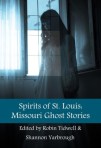
spiritsanthologyUpdate: That story, “Patience, I Presume,” was accepted for publication in the Rocking Horse Publishing anthology Spirits of St. Louis: Missouri Ghost Stories.

This post, written last summer, is from the Magic Moments blog archive. Before I remove that blog from WordPress, I wanted to share a few of the entries.

Malcolm

Is a copy of the publication suitable payment for your work?

This is the inside joke of creative writing programs in America. We know creative writing doesn’t make money, and yet we continue to graduate talented writers with no business acumen. At best, it is misguided. At worst, it is fraudulent. –  Nick Ripatrazone in his essay in The Millions, Practical Art: On Teaching the Business of Creative Writing

The short answer: can you use that copy to pay the rent, buy a Happy Meal or a new toner cartridge for your printer? If not, why would any writer want to work for a copy of a magazine or anthology while the publishers make money off his/her work?

Another short answer: or, maybe you can legitimately view writing for payment in copies as similar to blogging which–unless you have a highly popular, monetized blog–isn’t paying the rent either. Blogging is part of an author’s platform. That’s how we justify doing it. In both cases, free blogging and unpaid publication in anthologies and little magazines sooner or later have to lead to a money making business or they are not doing what they’re supposed to be doing: improving your craft and moving you from a hobby writer to a professional writer.

The Longer Answer: When mainstream fiction magazines were more prevalent, writers were told that writing stories for “little magazines” and for non-paying anthologies for free was a necessary part of building up a list of writing credits. If BIG MAGAZINE ABC saw that you had been published in MEDIUM MAGAZINE YXZ, you supposedly had a better chance of acceptance. The practice still has value and, perhaps, may be even more important for those in publish or perish careers. This view has many ramifications to it depending on the kind of paid writing you ultimately want to do and how valuable those at the top of that ladder view publication in one place or another as a prudent step.

“What does it mean,” asks Ripatrazone, “that we, in the literary community, have accepted lack of monetary payment as commonplace?”

While I’m old school enough to impractically view college as a place heavy with liberal arts that teaches students how to think rather than providing then with a certificate that allows them to move right into a job like a technical school, I see the need that Ripatrazone sees when he says writing programs often do little or nothing to prepare graduates for the business side of their chosen profession. Likewise, many writers groups online and offline, though self-publishing has brought marketing and PR more heavily into the discussions and seminars.

As he puts it, the art of writing is sometimes taught as though it’s a spiritual process in which long-term practical, positive results are viewed as an unnecessary luxury. According to the disciples of this approach, finding yourself and telling your story are the important things even if nobody pays a dime to read what you write.

The odds of making that dime are long odds. That’s reality. But saying that dime doesn’t matter sounds like a lot of self-effacing denial to me. “Payment for little old me? Golly, writing the story is what counts.”

Maybe so if you plan to live with your parents into your 40s or find a spouse that makes enough money to support you while you find yourself or you win the lottery or you work at a day job and stay up all night writing.

Look at the Business Side in Addition to the Art of Writing

Ripatrazon’s essay includes a handy checklist of ideas for bringing students more into the mainstream of what their chosen profession is all about, from demystifying publishing to an introduction to freelance writing and how it works to what editors want and how they want to see it presented to them.

Writing nonfiction can become a viable means of supporting oneself while working on fiction after hours. Taking a look at such magazines as the Atlantic and the National Geographic is proof enough that nonfiction isn’t a secondary kind of writing. Becoming good at it, helps improve a writer’s art and craft while building a list of credits. Writing for low rates of payment at first and working up to higher rates of payments seems to me to be a much better route than writing for copies of publications.

That’s not a hard and fast rule, especially if you’re making money some other way to pay the rent. And who knows, getting accepted by a prestigious publication might help your career. It’s hard to say, because no matter how much all of us study the business side of writing fiction, making money from novels and short stories is always a gamble. The number of writers who live off fiction writing is a very small number.

When we write, we can’t be like our non-writer friends who go to a 9-5 job that pays them to work their craft in a cubicle or assembly line without having to worry exactly how customers are found and products are marketed. Even if we’re lucky enough to find helpful publishers’ editors, agents or even business managers, we’re still–as novelists–both the CEO of the whole process as well as the craftsman down in the shop.

We need two mindsets, one that sees the dollars and sense in practical terms and one that sees the beauty of a well-told tale coming together on the page. As Ripatrazone says, “I need my students to know that they will likely struggle every step of this way in this business. They must be shrewd and determined and aware. But when they close the door and go to their writing desk, they must be generous, sensitive, and open to the mystery of this art.”

Being too willing to write for copies may be a sign that we’re not really looking at the practical side of the profession. Or maybe for a while it’s an expediency.

Malcolm