Let’s hope we’re all still writing when we’re old and grey

“Tall and agile at 97, with a neatly trimmed gray beard and oval tortoise shell glasses that magnified his glassy blue eyes, Mr. Ferlinghetti could pass for a man in his 70s. He still writes almost every day — ‘When an idea springs airborne into my head.’”

– Alexandra Alter, “A Literary Bromance, Now in Its Sixth Decade,” in The New York Times

Lawrence Ferlinghetti, whose poems I feel like I’ve been reading for several lifetimes, is polishing up a memoir/novel after years of badgering by his 96-year-old literary agent Sterling Lord. Their ages give me hope.
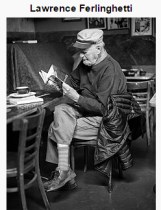
Wikipedia photo
Wikipedia photo

Hope. because it’s nice to live that long. It’s nice to still have words and a voice at that age and keep on writing. It’s nice to see that it’s possible to have a friend and colleague you’ve known since the beat-poet era of the 1950s. It’s nice and its hopeful to think that when one has a lot of ideas s/he wants to put into writing, it just might be possible to do it.

Not that I think I can equal Ferlinghetti’s 50 volumes of poetry by writing 50 novels. I’m realistic. Unlike Stephen King, who writes most of his novels in a couple of months,

I’m a lot slower. Ferlinghetti is, like Herman Wouk, (now 101) in that group of writers about whom people say, “Gosh, I thought he probably died years ago.” I don’t know how Ferlinghetti, Lord and Wouk react to those sentiments.

Doesn’t matter, really. It’s nice to know that if they ever hear people say that, they’re still around to say “I’m not only alive and kicking, I’m also alive and writing.” (There’s an interesting Herman Would article here.)

Photo from Herman Wouk's web site.
Photo from Herman Wouk’s web site.

Writing, I think, is one of those occupations that not only keeps people alive and kicking, it wards off the morbid maybe I should cash in my chips feelings a lot of people seem to get when they become senior citizens. Fortunately, writing doesn’t require heavy lifting or many other kinds of physical stamina that are usually gone by the time people each 96, 97 and 101. In fact, reading and writing are said to help develop people’s brains and minds when they’re young and keep brains and minds more facile and creative when they’re old.

What’s not to like?

Perhaps some of us will say everything we want to say before we’re old and grey. We’ll spend our years traveling. Tending our bees or our roses. Reading as much as we can. Enjoying family and friends and everything else with agile minds (due to the reading).

It’s hard to imagine not writing, even if we write only for ourselves and stash all those poems, novels and essays into basement file cabinets. When I was young, I once visited my 100-year-old aunt who not only remembered dozens of stories from crossing the country in a covered wagon, but also knew everything about current day books, politics and culture. I wondered how it felt to be 100. Mainly, I wondered if I’d be a totally different person. I’m not a hundred,  but as the years pass, my greatest surprise has been that age doesn’t change who one basically is–yes, we might have put away many of the thoughts and hobbies of youth, but still, we begin our days with hopes, many of which are similar to the hope felt when we were kids and beginning our first jobs and seeing our children born.

The writing gets better with age. Mostly, that’s just practice and experience. If you write for 60 years, you’re bound to get better. Most writers look forward to getting better even if they have great success when they’re young. We want to get better because no matter how well a book or a poem turns out, we see that it never quite matches the dreams we had for it when we wrote the first draft.

Like opera singers, we may lose some of the raw, unbridled power of our youth. There’s always more to be said, though. The fates are kind to give us time to say it.

–Malcolm

Malcolm R. Campbell is the author of “Sarabande” and “Conjure Woman’s Cat,” both of which are available in paperback, e-book, and audiobook editions.


Seriously, more of y’all need to go off and make baskets instead of writing

According to an unfortunate statistic, 81% of the public thinks they have a book in them. “In them” doesn’t mean they swallowed a book. It means they want to write a book. This statistic tells me why it’s so hard for authors to sell books. Too many people are writing and too few people are reading.

Consider Basket Weaving

Baskets have been around longer than books. In general, people like baskets even if they’re not sure what they’re going to put in them. I can’t find any statistics claiming that a sizable percentage of the population thinks they have a basket in them, so if you’re writing, stop it and do something where there’s less competition.

Wikipedia Photo
Wikipedia Photo

When I first became an author, I set up sales tables for my books at harvest festivals, art in the park, and other local fairs where people sold their stuff. I noticed several things.

  1. People selling homemade crafts, including baskets, sold more than authors even though their baskets, potholders, paintings,  etc. were priced higher than our books.
  2. Customers like being the first person to discover a new basket weaver, while readers are more like lemmings and won’t buy a book unless all of their friends already have it.
  3. Readers balk at an $8.00 paperback at a local festival while thinking nothing about slapping down $25 for a basket.
  4. Nobody asks a basket weaver if there’s a cheaper Kindle version. They buy the real thing rather than seeing the basket in a display and then rushing out to buy an e-basket from Amazon.
  5. People seldom compare your baskets with those by famous basket weavers because they don’t know any  famous basket weavers, whereas readers are likely to say, “you’re no Nora Roberts.”

Baskets Are Practical

If a basket looks awesome, people will buy it even though they have no earthly idea what they’re going to do with it. In contrast, readers have a 100-point checklist they go through before they’re risk buying a book from an unknown author that begins with “did Nora Roberts write it” and ends with whether there’s a lot of sex and violence on the first page and possible a nude on the cover.

Baskets are probably used for collecting dust on top of kitchen cupboards more than anything else. Most people can’t reach that high anyway, so once the basket’s up there, that’s it. If you own cats, they’ll get in the baskets, Otherwise, the baskets are up there for decoration. Books, on the other hand, require an investment of time. It takes time to read them, time that’s precious in a busy schedule of surfing the net, texting, watching “reality” shows on television, playing video games, and other urgent activities. The basket takes no time at all for customers to use.

Even without bothering to gather provable evidence, I think I’ve shown here that writing is a losing proposition compared with basket weaving. Baskets might lead you to more riches than uploading a Kindle novel which just sits there.

We don’t need 81% of the population out there writing a book. That’s way too much supply. But basket weaving, that could be a powerful niche business that doesn’t even require you to establish a platform, identify your target audience, or do daily blog posts.

–Malcolm

Malcolm R. Campbell is the author of “Conjure Woman’s Cat” and “Jock Stewart and the Missing Sea of Fire.” Both novels are available in paperback, e-book and audiobook editions. Check my website for more information.

Words you never publish might change the world

Those words that might change the world: perhaps you don’t know you’ve written them. You wrote them in a letter that changed another person’s life, and then others and countless others, and you never knew.

cloud2Those words that might change the world: perhaps you wrote them in your diary. You didn’t know what they meant until you wrote them and when you knew, you were changed and the ways you changed impacted what you wrote and published after that.

Those words that might change the world: perhaps they’re within a poem, a short story or a novel that never found a publisher. Even if none of your heirs find and publish those words and change the world long after you’re gone, they exist now and are part of your life, a life that would have gone down different roads without those words hidden away in a drawer.

You draw strength from the words you write because every word you write changes you into a person who is different than the one who sat down to write. Your strengths ripple outward and impact people who never see the words that served as a catalyst. Who you are now is always partly determined by the growth you achieved through writing words you may never publish.

The words you write are never wasted even if you throw them away. They are never quite gone from you even if your conscious mind cannot recall them. They are like a continuing breath, unseen but life altering and life giving.

You have cast a spell on yourself, enchanted yourself, discovered heretofore unknown dimensions of yourself, and from such things, there’s no return.

Since you cannot return, you will write other words that are impacted by your older words, you will say something wondrous to a stranger that you meet because the you who wrote those words walks down different streets with influences you may never see, you will wave to a man or woman on the street who will be changed, perhaps ever so slightly, by that wave or the smile behind it even though s/he will never know of the long lost words that brought about that moment.

This is the power of words that exist but remain hidden while their energy turns the world on its axis and casts devils into the sea.

–Malcolm

Why I became a writer – this is the whole ‘truth’

from the archives

My life began at a Gulf Oil Service Station at Immokalee, Florida, back in the days when the attendants came out with a whisk broom and swept the beach sand out of your car while they pumped your gas for you.

Papa at work

Word is, I was swept out of the back seat of our 1949 Nash even though I didn’t look like beach sand. Since authorities were certain that even though I was an ugly five-week-old baby, somebody would claim me sooner or later, they put me in the service station window with a sign that said IS THIS YOUR BABY?

Word is, I was there several weeks and learned how to use a whisk broom. By the time I had a resume, whisk brook operator didn’t cut it with modern day gas stations where nobody did nothing for nobody. I also learned how to tell the difference between swamp gas, ghosts and aliens from other planets. However, the feds have classified this and so I can’t tell you unless I move out of the country–like, to Russia maybe.

An aging alligator couple took pity on me and raised me as one of their own. They taught me to swim and they taught me to lurk in the water with only my eyes showing so that I could grab hapless ducks in my teeth and bring them home for Duck a la Orange.

Mugsy Walters Requesting Lunch Money

When I got to high school, playground bullies made fun of my swamp dialect and taunted me with phrases like “see you later alligator” and “after while crocodile.” That’s what they said after they stole my lunch money.

Papa Gator said, “Son, you’re never going to bring home the bacon with your teeth like your brothers and sisters. You’re going to have to use your wits.” That advice has served me well.

I convinced the playground bullies of several truths: (1) When I grew up, I was going to be a famous writer and would put all of them in my books for better or worse, (2) Looking good in a novel was a good way to pick up chicks, something they needed to think about since their teeth weren’t large enough to grab anyone at the prom, (3) Papa Gator knew where they lived.

No doubt, truth number one (1) got their attention; that, along with my weekly column in the school newspaper called “Alligator Alley Gossip.” Everybody read it, but nobody wanted to be in it: Is that hickey on a certain red-haired girl’s neck a true love bite or did somebody forget their lunch again? Once again, a lover’s lane romeo with the initials W. S. forgot the distinction between “Jail Bait” and “Gator Bait.” Note to S. T.: old lady Anderson doesn’t keep the test answers in her drawers any more.

The world has moved on from the Immokalee I once knew. The Gulf Oil Station was torn down years ago. Seaboard closed down the rail line. Most of the gators, including many who still remember my name, have retreated deeper into the swamps. And now, the people coming to town aren’t there for the fishing, but for the Zig Zag Girlz Blackjack at the Seminole Casino.

The basic truth comes down to this. If you can’t earn a living with your teeth, you need to go out and find an occupation that fits your station in life, one that honors how you were brought up. Even those who don’t know my first adult meal was a pine warbler on toast or that I still make slaw with swamp cabbage, walk carefully around any writer who just might put them in his books.

Papa Gator would be proud.

–Malcolm

VisitingAuntRubyCoverMalcolm R. Campbell is the author of the “Tate’s Hell Stories” series which includes the new Kindle short story “Visiting Aunt Ruby.” Papa Gator has friends in Tate’s Hell Swamp, so if you’re in the Carrabelle area, stop in and say hello.

about those days when we fight with our words

We try, don’t we, to make the words in our stories and novels flow smoothly like a languid river on a summer day. That seldom happens naturally; that smooth flow is often created with a lot of fits and starts before we get the words right.

There are days, though, when we fight with our words. On those days, smoothly flowing prose seems impossible.

If we don't relax, we'll never get the words right.
If we don’t relax, we’ll never get the words right.

That often happens when we go into a scene not fully decided what it’s supposed to accomplish. Or, if we do know, then something else is out of sync: the character’s motivations and beliefs, our background research about subject matter outside our comfort zones, or that we’re trying to cram far too many things into a scene–which, in reality–would play out as a very casual moment.

What do you do when this happens to you?

I glanced at my last post here which was about moonshine, and thought maybe a few swallows of white lightning would smooth out the words. As tempting as that may be, it seldom works.

Fighting with the words usually doesn’t work either because the longer it goes on, the worse the scene looks. Pretty soon, it’s real easy to think that one ought to just quit the writing business and do something more honorable like teaching or working on the railroad or beekeeping.

One way or the other, one needs to take a break from the words whether it’s for an hour or a day and think about something else. This is why so many of us surf the Internet: we’re doing something else so we can avoid looking at that messy paragraph where we’re temporary bogged down.

If I stay away from the manuscript for a while with things seriously divert my attention, I’ll sooner or later start hearing the words of that troublesome scene flowing like a river again. Then I go back to it and start typing, wondering why the solution wasn’t obvious from the beginning.

Knowing when to step away is, I think, an important part of the writing process. Since none of us quite know how the creative process works, it’s easy for a fight with words to turn into serious doubts about our abilities as writers: How can such a simple scene become impossible to write? Why don’t we know what the characters need to say and do here? Where’s that smooth-flowing river of words?

I’m guessing most writers know what I’m talking about. We might follow different prescriptions for curing the problem? Maybe you go to a movie, read a magazine, work in the yard, stop at a bar where your friends hang out, anything to take your mind off the words that aren’t coming out right.

If you have a sure-fire cure, tell us about it in the comments. Your secret won’t make you rich, but you’ll feel better about yourself for sharing it.

–Malcolm

selfeselect

Librarians: My novella “Conjure Woman’s Cat” has been selected by Library Journal for its national Self-e Selection listing.  If your library is not already part of the program, click here for more information.

Writers: How Tall Are You?

“If you aren’t in over your head, how do you know how tall you are?

– T. S. Eliot

In his article in the January/February 2016 issue of Poets & Writers Magazine called “Project Empathy,” Lee Martin advises those writing memoirs to keep in mind that the words on the page will never be as real as the lives we have lived.

poetswriterscover“We have to accept that fact and then forget it, so our subject matter won’t overwhelm us.” He goes on to suggest additional ways writers can approach difficult material…getting at emotionally charged issues through small details…letting the story tell itself without trying to say everything we feel about the horror of it or the joy of it.
In response to the quotation from Eliot, he says that “We should all feel as if we’re in over our heads when we write; that’s how we know we’re writing about something that really matters.”

If you have access to a library with a copy of Poets & Writers, I suggest reading this article whether you’re writing a memoir or writing a novel. I’ve often found the magazine available at Barnes & Noble stores.

When we think about how tall we are as writers, it doesn’t mean believing we’re taller than somebody famous. And when we think about writing about something that really matters, it doesn’t mean becoming full of ourselves because we are tackling an important subject of the day.

We do know what matters to us. We often avoid it, thinking who am I to write about this, thinking I can’t deal with this, thinking others have more dramatic stories to tell about this, and what this reminds me of are the lists of things we never want to talk about even with our loved ones or best friends. If you’ve known another person for a long time, you know what you cannot ask them because they refuse to discuss it. Maybe it’s something that happened in a war, the lost of a spouse or a child, a huge embarrassment at work.

If you have things you won’t talk about, they may be the stories you should be telling. Why? Because they’re important to you. Even in your silence, they have played a profound role in shaping your life. “Sooner or later,” writes Martin, “we have to face who we are in the world around us. We have to respond. We have to speak from the truest part of ourselves.”

When we respond–or, at least, try to respond–we find out how tall we are. A lot of us learn through the stories we read. We step into another person’s shoes and find out what it’s like to see what they have seen. What have you seen? Perhaps it will make a good story and perhaps it will resonate with the very people who need to hear it.

If you hurt while you’re writing it, you’re probably getting it right.

–Malcolm

Malcolm R. Campbell is the author of “Conjure Woman’s Cat,” a story about racism and folk magic in northern Florida in the 1950s. The Kindle edition is on sale for 99 cents on January 6th.


The black horse in my novels

The Black Horse is both death defying and death seeking. In other words it is symbolic of death and rebirth. It signifies the closing of one door and the opening of a new door. It can also signify the need for you to take a leap of faith and trust what you are being guided to do even if you can’t see the reason or the result. Go blindly forth and believe.

Spirit Animal Totems and their messages

A black horse in a dream could represent a part of the shadow self or a part of your personality that you usually prefer to keep hidden; instinctual urges operating in the dark recess of your mind; the unknown, what is mysterious.

Spirit Animals and Animal Totems

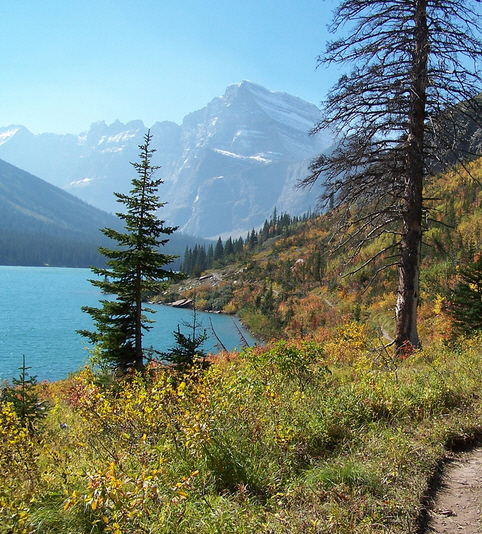
Lake Josephine and Mt. Gould where Sarabande first meets Sikimí. - NPS photo
Lake Josephine and Mt. Gould where Sarabande first meets Sikimí. – NPS photo

A huge black horse named Sikimí has appeared in five of my novels, including the upcoming new release of Sarabande. In all of these stories, he has been a totem animal associated with the mountains of Glacier National Park, Montana.

The word Sikimí means black horse in the Blackfeet language. The Blackfeet are the long-time residents of the eastern side of Glacier Park and the adjacent plains. They are the people the land knows and their language is the primary language the animals, trees, mountains and forces of nature respond to.

Appropriately, Sikimí appears in what might be called a “journey novel,” in this case, a “heroine’s journey.” Typically, heroines’ journeys are associated with night, the moon, the underworld, and the subconscious mind.

Journey novels often portray both physical travel and shamanistic or internal travel. Horse symbolism is well known whether we find the information in classic books such as Ted Andrews’ Animal Speak or David Abram’s Becoming Animal, online sites like the two quoted at the beginning of this post, or intuit them in our meditations and dreams.

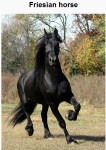
This Wikpedia photo looks like my vision of Sikimí.

I felt immersed into Sarabande’s story as I wrote it because Sikimí, along with Maistó (Raven), is my totem animal. When I meditate–or dream–about travel to places I’m intentionally visualizing, I will be riding Sikimí. Sikimí is, by the way, a huge Friesian horse with the classic (as opposed to “sport”) size and conformation. So it is, that I find it easier and more intuitive using this horse in a novel about a young woman named Sarabande who is going on a journey, not only to another place but another realm.

Sikimí and I are old friends.

Ted Andrews’ associations of the horse with travel, power and freedom work perfectly as symbols throughout the novel. We know these symbols, subconsciously if not consciously. Sikimí is intended to help pull the reader into the story by attuning with the reader’s intuitive knowledge about horses. If the reader likes horses, rides horses, and most especially appreciates the original Gothic (light draft horse) Frieisians, so much the better.

Sarabande quickly bonds with the horse on their first meeting as  you see in this snippet:

SarabandeCover2015Sikimí nodded or seemed to nod, but within his breath she briefly glimpsed the soul of night, a soul as powerful as the broad-chested Friesian of its manifestation, and there were feral love and rage there that far exceeded the scope of her understanding. But within that scope, her heart told her that night in the shape of a horse would carry her to the cornfields of Illinois without trying to chart the destiny of the ride.

What would it be like to ride night in the shape of a horse? I hope readers will wonder about that as they follow Sarabande’s journey from mountains to prairie and back again. I think I know what it’s like, but readers may well have other ideas that will influence how they react to the novel.

Once the novel leaves my computer and a publisher releases on Amazon and other sites, the story is no longer completely mine. Everyone who reads it will, in a sense, be reading their own version of the novel depending, in part, on how the large black horse gets into their thoughts.

–Malcolm

Clear here to see the trailer for "Sarabande."
Clear here to see the trailer for “Sarabande.”

The Thomas-Jacob Publishing second edition of Sarabande will be released on November 1, 2015. The Kindle edition is available now on Amazon for pre-order.


You may live in Wiregrass Country and not know it

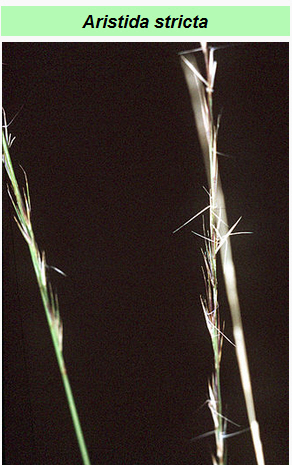
By and large, people have forgotten wiregrass. Time was, it occupied the forest floor where longleaf pines grew. Sadly, most of the longleaf pine forest is gone as well.

Wikipedia photo
Wikipedia photo

The deep South is wiregrass country and for those who remember, there’s a lot of folklore in and around those old woods. “Progress” killed the longleaf pines. And, wiregrass, too. (Some people call it “Pineland Three-awn.”)

Like longleaf pines, wiregrass needs fire to prosper. Native Americans in the Florida Panhandle and south Georgia knew this and so did incoming settlers. They burned off the grass yearly. This helped the forest by clearing out all the understory clutter of brush that choked pines and pine seedlings. The grass, which returned soon after the burns, came up fresh and new and was succulent enough for cattle for a while before getting wiry and inedible.

In some ways, Smoky the Bear helped kill off our wiregrass and longleaf pine forests because he kept brainwashing us with the phrase “Only You Can Prevent Forest Fires.”

But here’s the thing: forest fires are a natural part of environmental renewal. Preventing them where they are needed harms the forest. In the 1940s, the forest service banned controlled burning and we have been paying for that mistake ever since even though the practice is now more in favor.

wiregrasscountryIn Wiregrass Country, one of my favorite folklore books about the world where I grew up, Jerrilyn McGregory writes that “Wiregrass (Aristida stricta) depends on fire ecology to germinate. Its fire ecosystem created a unique set of circumstances, tied closely to a way of life…Although it was once the most significant associate in a community of species that formed the piney woods, many human inhabitants of the region have lived and died without knowing the plant.”

I grew up with wiregrass and longleaf pines and miss them. Perhaps that’s why I’m working on another novel set in “Wiregrass Country.” Maybe talking about wiregrass and pines will remind people what we once had and will help garner support for restoration efforts.

Traditions in Wiregrass Country run deep even though they often seem out of place in an increasingly “citified” world. If you grew up there, you probably ate mullet, went to peanut festivals and rattlesnake roundups, knew well the “shape note” old-style hymns of Sacred Harp music, fished or played a rousing game of fireball and loved storytellers.

If you didn’t grow up there, you missed a lot. Same goes if you grew up there in a suburban neighborhood and never ventured out into the piney woods and small towns.

Maybe it’s time to go see what it’s all about.

–Malcolm

KIndle cover 200x300(1)Malcolm R. Campbell’s “Conjure Woman’s Cat” is a magical realism novella set in the wiregrass and piney woods country of the Florida Panhandle.


Thank you to my 26,250 visitors

83grandThis blog has been staggering along for awhile like a sailor trying to find his way back to the ship after a night on the town in a foreign port. (Been there, done that.)

When I started Malcolm’s Round Table, I was thinking of King Arthur (indirectly in my family tree) and the Knights of the Round Table. Not that I would admit that I was looking for the Holy Grail. I had no idea what I was going to say or that I’d end up saying it for some 1,050 posts about everything from writing to Glacier National Park, to the USS Ranger to the Florida locations for some of my recent stories.

Somehow along the road, 26,250 of you stopped by for some 83,252 visits. And, according to the WordPress gurus, the busiest time has been Thursday at 2 p.m. This tells me you guys are logging on at work after drinking your lunch.

Thursday2pm

Seriously, were you trying to stay awake or were you looking for the Holy Grail? (And, were you successful in either quest?) Truth be told, I bring to this blog and to most of my fiction the premise that every one of us is on a hero’s journey in search of that moment and/or that insight that transforms us into the individual we were destined to become if we allowed it to happen.

In my novel The Sun Singer, I explore the hero’s journey from a masculine perspective. In Sarabande, I look at the journey from a feminine perspective. A recent article on Brain Pickings called “If Librarians Were Honest” caught my attention because it’s based on the premise that “If librarians were honest, they would say, No one spends time here without being changed…”

Vision of the Holy Grail at the Round Table.

Hero’s and Heroine’s journeys change us, often in spectacular ways under dangerous circumstances. Libraries can also change us. Potentially, every book, article, and post we read will change us a little or a lot. We never quite know at the beginning of a journey or a book, just who we will be at the end of it.

So, it’s a glorious risk, right?

Perhaps I should have posted this yesterday on my birthday because each of your visits is a gift. It’s a gift of your time, just as reading The Sun Singer, Sarabande, and Conjure Woman’s Cat is a gift of your time. Perhaps you felt different when you finished some of the posts and some of my stories.

Or, perhaps you were changed in imperceptible ways. If you’re also a writer, you will know that you not only change as you read but also as you write. I’m slightly different than I was when I wrote, “This blog has been staggering along for awhile like a sailor trying to find his way back to the ship after a nigh on the town” at the beginning of this post.

We don’t often notice the smallest changes in ourselves because movies and books lead us to believe that when we find the Holy Grail, we’ll find it all at once rather than little by little. Perhaps we need a magic mirror that shows us, not how we’ve aged over time, but how we’ve changed.

If we did, I think we’d not only be surprised by the results, but we’d all feel a lot better about ourselves. At any rate, that’s why I write and that’s why I’m happy that 26,250 of you have stopped by to read.

–Malcolm

KIndle cover 200x300(1)Malcolm R. Campbell is the author of the 1950s-era novella “Conjure Woman’s Cat” about a conjure woman who fights back against the KKK with folk magic.

Visit my website to learn more.


A something or other with no name

“To name a thing is to acknowledge its existence as separate from everything else that has a name; to confer upon it the dignity of autonomy while at the same time affirming its belonging with the rest of the namable world; to transform its strangeness into familiarity, which is the root of empathy. To name is to pay attention; to name is to love.” – Maria Popova in How Naming Confers Dignity Upon Life and Gives Meaning to Existence

We tend to view the world through the lens of our language. Students taking language classes are often surprised that many of their pet phrases and notions have no twin in the language they’re being taught. Why not? The native speakers of that language see the world differently. My stories about, say, Glacier National Park, would be much different if they had been written in Blackfeet or Kootenai.

As a storyteller (writing in English for others who speak English), I see that naming things is both a sign of respect and acknowledgement as well as a limiting factor. When you name a mountain “Chair Rock,” you’re doing a normal thing. But you’re also making it difficult to see the rock any other way. If you see a translation of a story that includes “Chair Rock,” the name may suddenly be further away from your world view than the author will ever know.

In many cultures, people hide their true names–sometimes called “basket names”–from people outside the family because those names are linked to their true selves and telling them gives others a power over you. I can respect that. When I write, there is much that I refuse to say.

americahorsewithnonameThere’s an old gag about Dewey Bunnell’s song “A Horse with No Name,” recorded by America in 1971, that what with all that time in the desert, couldn’t the guy name the horse?

It’s hard to visualize the song, originally called “Desert,” with a horse named Fury or Flicka or Mr. Ed. Perhaps he didn’t respect the horse other than to say he was, in fact, riding a horse rather than something or other. Or, perhaps, the horse didn’t want its true name to be known.

Here, I’m respecting Dewey Bunnell and America by mentioning them. For a writer, that’s intentional because–as is often the case–those names have been forgotten while–in this case–the song is still widely known.

The specifics we include in our storytelling are there not because we are are name dropping or “adding a bunch of description” (as some call it) or playing with a place names dictionary or a “this date in history” website.

They are in the story because they confer the “dignity of autonomy” and because they’re an affirmation of their existence, as Maria Popova calls it. The realities in a story tie the story to a time and place as part of what happened their or how the world moved there. They are also in the story because the characters living in that time or place would know them and have empathy for them–as perhaps you, the reader, will know them as you read.

I included a glossary in the back of Conjure Woman’s Cat because the story includes folk magic terms, blues songs and performers’ names that they characters in the story would know. If Conjure Woman’s Cat were nonfiction, I could have included footnotes. The glossary seemed less distracting.

Part of research is changing what a writer knows about his or her story in progress from a something or other to something specific and loved and known within the context of the tale and the language in which it’s told. To paraphrase Jim Croce, like the pine trees and the croaking toad, everything in the story has a name.

If an author gets those names right, s/he can immerse you into the real and/or fictional world where those names arise even though–like maps–they’re not the territory.

–Malcolm

KIndle cover 200x300(1)EScover2014Malcolm R. Campbell is the author of “Conjure Woman’s Cat” and “Emily’s Stories.”