Author and wilderness lover, Howie Wolke will talk about the ongoing loss of wilderness, both in the big outdoors and within the human animal. He will relate the erosion of the wilderness idea to the spreading disease of Wilderness Amnesia.
Wolke is a ‘wild preservative,’ to borrow the term from the late Edward Abbey, advocating for the designation and protection of real wilderness in the United States. He is past president and current vice president of the national conservation group Wilderness Watch. He also cofounded Big Wild Advocates, Montanans for Gallatin Wilderness, the original Wyoming Wilderness Association and the original wilderness-focused Earth First. Following his passion, Wolke has made his living as a wilderness guide and outfitter for the last 36 years.
North Georgia Christmas“Machinery and convenience are too often mistaken for civilization nowadays, but in fact civilization can be measured only by whether we live in harmony with nature, with one another, and with the divine.” — Arthur Versluis in “Island Farm”
In her excellent post called “Winter Walks and the Wild,” author and editor Zinta Aistars ponders the reasons she is drawn away from suburbia into the bitterly cold, snowy countryside of Michigan. She’s looking for a connection with the wild and, when she finds it, she also finds harmony.
She’s been reading Arthur Versluis’ “Island Farm,” a book that author James Cowan calls “a Walden for our time.” The book matches Aistars’ experience and for those who cannot—or who have not yet—gone in search of nature in its most basic form, the book tells us what we are missing and what we have lost.
What we are missing is our connection with the rest of the planet. By this I don’t mean our ability to watch breaking news from the far side of the world as it happens or to communicate with others through blogs and Facebook. The wonders of our technology obscure its deficits.
When Thoreau wrote the words “in wildness is the preservation of the world” in “Walking” in 1862, he went on to say that “the founders of every state which has risen to eminence, have drawn their nourishment and vigor from a similar wild source.” The comforts of our civilization have, I believe, not only blocked the flow of understanding and energy from that source, they have blocked our respect for the source as a viable source.
Nonetheless, we are hearing more about about nature and spirituality and connections these days. When we first heard such thoughts, we—as a modern society—tended to label them as tree-hugger platitudes and new age mumbojumbo. Now we’re starting to see that there might possibly be something happening behind the fog of platitudes and mumbojumbo. Hard science documents some of it and personal experience, like that of Zinta Aistars, documents some of it.
At present, we’re not yet sure just how big “it” is. We’re drawn more and more to the wild, but we’re not yet ready to plunge into it with a point-of-no-return attitude: “I want to become one with the deer from the comfort of my toasty warm car.”
The nearest shaman in our neighborhood still has a lot of teach us about connecting with the wild. And we still have a lot of listening to do before we’ll understand once and for all that our lives depend on that wildness more than on our technology.
“Civilization has so cluttered this elemental man-earth relationship with gadgets and middlemen that awareness of it is growing dim. We fancy that industry supports us, forgetting what supports industry.” — Aldo Leopold in “A Sand County Almanac”
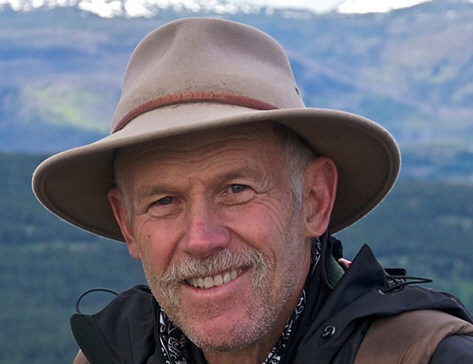 Author and wilderness lover, Howie Wolke will talk about the ongoing loss of wilderness, both in the big outdoors and within the human animal. He will relate the erosion of the wilderness idea to the spreading disease of Wilderness Amnesia.
 When Thoreau wrote the words “in wildness is the preservation of the world” in
 Malcolm's Round Table