“When you engage in a work that taps your talent and fuels your passion — that rises out of a great need in the world that you feel drawn by conscience to meet — therein lies your voice, your calling, your soul’s code.” – Stephen Covey, quoted in Terri Windling’s blog
“Each life is formed by its unique image, an image that is the essence of that life and calls it to a destiny. As the force of fate, this image acts as a personal daimon, an accompanying guide who remembers your calling.” – James Hillman, in “The Soul’s Code: In Search of Character and Calling”
“In short, every secret of a writer’s soul, every experience of his life, every quality of his mind is written large in his works.” – Virginia Woolf, in “Orlando”
 In school, we are taught to emulate the great masters and/or to consider many overlapping recipes for how short stories and novels should be written so that it takes most of us a fair amount of time to discover our “author’s voice,” the mix of style and syntax and word choice that makes our writing “us” and not somebody else.
Editors look for a distinctive author’s voice. Without it, the writing is flat or an imitation of authors the writer likes. Sometimes, an editor can tell who a writer’s favorite author is by reading a page or two out of a submitted manuscript. If an author admires Stephen King or J. K. Rowling, the last thing s/he needs to do is try to write like either of them. At best, we end up with a parody. At worst, we have “false fiction,” that is to say, “Joe Doaks pretending to be Stephen King while writing a novel called ‘Carney Land.'”
The real Joe Doaks and what he might have been gets lost in the shuffle. Perhaps, had he allowed himself time to discover his own true voice and to develop his craft into the art that was possible in the beginning, he might have become a better writer than King. Or just as good as King, but different.
As James Hillman might suggest, Joe Doaks is ignoring his own calling, the themes that are really important to him, and spending his talents on other things.
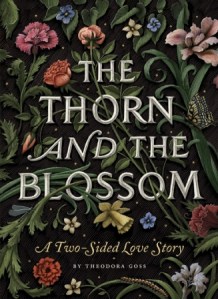
In her post “Craft and Art,” author and college professor Theodora Goss says that in her creative writing classes, she focuses on the craft of writing. When a student with talent applies himself or herself to the writing craft, Goss says that she can then “point the way to art and say, if you wish, that’s where it is, in that general direction . . .” The same is true, I think, of an author’s voice.
Perhaps an author can hide who s/he is from the novels s/he writes, but it’s a lot of trouble. If we hide, we distort our author’s voice and the flow of intuition running through our consciousness as we write. If we’re not hiding, then it’s quite likely that our world view will lurk between the lines of our fiction even if the fiction is about characters that don’t resemble us in any way.
Most of us learned as children that there was a difference between “Dad telling a story,” “Mother telling a story” and “Grandpa telling a story” even when it was the same story. The difference was voice. Dad approached stories like a journalist, Mother like an ever-hopeful teacher, and Grandfather like a farmer who saw life in its most basic form. Their voices turned a potentially flat story into a “story being told by [Dad, Mother, Grandpa].”
We are, I think, drawn back to our favorite authors over and over again because we not only like their plots and characters, but the way they tell their stories. Of course, this factor in the public’s purchase of books makes it hard for young writers to get started. We saw an example of this in the recent revelation that Robert Galbraith (“The Cuckoo’s Calling”) really wasn’t a debut author, but J. K. Rowling writing under a pseudonym. While, reviewers gave “Galbraith” high marks, few people bought the book before they found out Rowling was the author.
To some extent, those purchases are partially celebrity worship. But they also suggest that a fair number of readers like what they’re reading when the book is “Jo Rowling telling a story about ABC or XYZ.” Whether it’s our stories at bedtime, tall tales told around a campfire, or the novels we buy at the local bookstore, we discover that a hard-to-define mix of genre, craft, art and voice draws us to one storyteller more than another.
Starting out, it’s hard to resist the temptation NOT to write like King or Rowling because, after all, the bestseller list is so clearly telling us that is what readers want. We might even sell our first book because we’ve written a book kind of like King’s “Joyland” or kind of like Rowling’s “The Cuckoo’s Calling.” But that kind of “success” really represents a great loss, the loss of our own author’s voice and our own storytelling passions.
When we follow our intuition and allow our stories to develop naturally as we write them, there’s a lot of ourselves in them even though they’re not about us. Our author’s voice develops and becomes stronger when we admit (to ourselves) “this novel is ‘me telling a story.'” I’m not talking about vanity here, but authenticity.
Or, more simply said, in being himself or herself while writing, an author is engaged in honest storytelling.
My world view, that each person has unlimited potential, is clearly visible in “The Sun Singer,” “Sarabande,” “The Seeker,” and “The Sailor.” I knew no other way to tell these stories.



 Malcolm's Round Table