MAJOR WRITERS FOR CHILDREN AND YOUNG ADULTS AMONG OVER 380 AUTHORS CALLING ON SOUTH CAROLINA LAWMAKERS TO REJECT RESTRICTIONS TO EVALUATE BOOKS IN PUBLIC SCHOOLS

Proposal Could Lead to the Banning of Literary Classics and Acclaimed Contemporary Books

FOR IMMEDIATE RELEASE

Updated on June 6 to add additional publishers that signed the letter

(NEW YORK)— More than 380 authors joined major publishing houses and civil rights, anti-censorship, and writers advocacy groups today to raise alarm over new South Carolina education standards for assessing books and other materials for public schools.

In an open letter to state lawmakers urging them to block the new regulations, the groups, publishers, and authors argue the new standards could lead to the removal of literary classics and critically acclaimed contemporary novels, simply for a sexual reference.

Along with publishers Hachette Book Group, MacMillan PublishersPenguin Random House, Simon and Schuster and Sourcebooks, signers include ACLU of South Carolina, Authors Against Book Bans, Every Library, National Coalition Against Censorship, National Women’s Law Center, PEN America, the Woodhull Freedom Foundation, We Need Diverse Books, and notable authors of books for children and young adults, including Laurie Halse Anderson, Jodi Picoult, Katherine Paterson, Nikki Grimes, Daniel Handler, Elizabeth AcevedoPeter ParnellDavid Levithan, and Ellen Hopkins, among hundreds of others. Nearly 20 percent of the authors are South Carolina residents or have ties to the state.

The proposed regulations would impose a two-part test to evaluate if materials are age and developmentally appropriate and align with state instructional programs. The regulations will also create an appeal process to the State Board of Education, whose decisions on some books would affect all school districts. The regulations are slated to take effect on June 25.

The letter argues that the proposed regulations threaten free expression, the freedom to read, and the First Amendment, noting that librarians and educators are already “well placed” to curate library collections with appropriate books and materials.

“Adding government mandated ‘tests’ for age appropriateness will only chill speech and restrict access to literature for students across South Carolina,” the letter said.

“Bills like this allow the government to determine what can and can’t be read — not parents, not educators, not librarians, not the students who need these stories. We authors want to do everything we can to support the freedom to read, and the power that reading has to give context in an overwhelming world,” said David Levithan, bestselling author and one of the leaders of Authors Against Book Bans.

Similar language in Iowa resulted in mass book bans affecting classics, books used in advanced placement courses, and contemporary young adult novels.

The regulations’ explicit prohibition on “sexual conduct” is vague and broad, meaning books with sexual references are likely to be banned without considerations of context, purpose, or educational value. Experts on sexual violence have repeatedly reported that learning about the signs of abuse and what consent means helps young people to speak up in harmful situations, reach out for help, or recognize abuse they have experienced.

Since 2021, more than 100 books have been banned in South Carolina schools; the authors and organizations fear the new regulations will increase that number.

Across the country, book banning has spread at an alarming rate, ignited by local activists and parents. PEN America documented more than 10,000 bans between 2021 and 2023— an assault on the freedom to read, the lifeblood of democracy.

-30-

‘Edge of Edisto’ by C. Hope Clark

I’ve enjoyed the books in the “Edisto Island Series,” set in South Carolina, by the prolific C. Hope Clark, who also writes the compelling “Carolina Slade Mystery Series,” and the “Craven County Mysteries.” Edge of Edisto is book eleven in this police procedural/mystery series released by Bell Bridge Books on May 17th.

From the Publisher

A missing woman.
An unidentified body.
Summer is just getting started…

Police Chief Callie Jean Morgan’s hope for a day of nothing but traffic tickets is shattered when one of five women who regularly vacation together on Edisto Island is reported missing. Hours later, a body washes up on the sand—but not the body of the missing young lady.

Unable to identify the dead woman, leaving her with a possible murder on her hands, Callie worries the clock might be ticking down to yet another tragedy. She has no choice but to dig into the secrets of the women’s group, who now seem unconcerned about their missing member. Tracking down information on the ladies is like chasing air. Even the older residents of Edisto are unwilling to talk about the well-established, yet evasive group known as “The Summer Ladies.”

Edisto is heating up, and so is Callie Jean Morgan.”

About the Author

“C. HOPE CLARK has a fascination with the mystery genre and is author of the Carolina Slade Mystery Series, and the Craven County Mysteries as well as the Edisto Island Mysteries, all set in her home state of South Carolina. In her previous federal life, she performed administrative investigations and married the agent she met on a bribery investigation. She enjoys nothing more than editing her books on the back porch with him, overlooking the lake, with bourbon in hand. She can be found either on the banks of Lake Murray or Edisto Beach with one or two dachshunds in her lap. Hope is also editor of the award-winning FundsforWriters.”

Malcolm

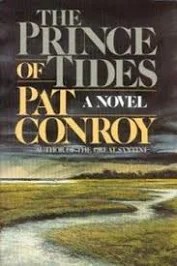
It’s time to re-read Pat Conroy’s ‘Prince of Tides’

Along with Gibbon’s A Scots Quair and Allende’s The House of Spirits, Pat Conroy’s  The Prince of Tides (1986) is one of those “comfort food” books that I return to again and again even though it tells the story of a doomed family with some the worst personal events ever consigned to print.  Most readers, I think, need “comfort food” books not for the comfort they provide but for familiar stories, beautifully told.

I suppose most readers are more familiar with The Great Santini and The Lords of Discipline, in part because their stories are more straightforward and the movies were better made. I like all of Conroy’s work but come back to The Prince of Tides because the story is a poem to the South Carolina low country and the flaws of a Southern upbringing of the era in which the book was set.

I grew up in the South along the Florida coast, and I am familiar with the beauty of marshland, tides, fishing, coastal waters, and what Southern society “did wrong,” so I know the tropes typically found in Southern fiction set in the 1950s and 1960s. When I read The Prince of Tides, I see where I came from without the worst of times that confront the Wingo family.

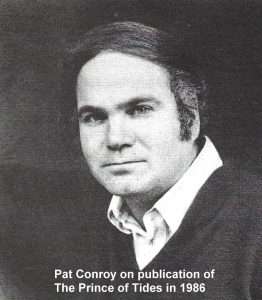
Conroy in 1986

The San Francisco Chronicle wrote, “A big, sprawling saga of a novel this epic family drama is a masterwork by the #1 New York Times bestselling author of The Great Santini.” Some reviewers would say the book is overwritten and/or that most of Conroy’s work is overwritten. Perhaps so, but I don’t care because the settings and circumstances almost demand that his novels should be overwritten.

From the Publisher

“Set in New York City and the low country of South Carolina, The Prince of Tides opens when Tom, a high school football coach whose marriage and career are crumbling, flies from South Carolina to New York after learning of his twin sister’s suicide attempt. Savannah is one of the most gifted poets of her generation, and both the cadenced beauty of her art and the jumbled cries of her illness are clues to the too-long-hidden story of her wounded family. In the paneled offices and luxurious restaurants of New York City, Tom and Susan Lowenstein, Savannah’s psychiatrist, unravel a history of violence, abandonment, commitment, and love. And Tom realizes that trying to save his sister is perhaps his last chance to save himself.

“With passion and a rare gift of language, Pat Conroy moves from present to past, tracing the amazing history of the Wingos from World War II through the final days of the war in Vietnam and into the 1980s, drawing a rich range of characters: the lovable, crazy Mr. Fruit, who for decades has wordlessly directed traffic at the same intersection in the southern town of Colleton; Reese Newbury, the ruthless, patrician land speculator who threatens the Wingos’ only secure worldly possession, Melrose Island; Herbert Woodruff, Susan Lowenstein’s husband, a world-famous violinist; Tolitha Wingo, Savannah’s mentor and eccentric grandmother, the first real feminist in the Wingo family.

“Pat Conroy reveals the lives of his characters with surpassing depth and power, capturing the vanishing beauty of the South Carolina low country and a lost way of life.”

According to Publishers Weekly, the book is, “A seductive narrative, told with bravado, flourishes, portentous foreshadowing, sardonic humor and eloquent turns of phrase. … For sheer storytelling finesse, Conroy will have few rivals.” 

As I re-read this familiar novel, I am sick with an infection of unknown origin that I contracted in June and that still has doctors perplexed. Plenty of tests, but no answers. The story fits my mood as I wonder whether or not at my age I can survive this illness. This is why we need comfort books. They help us remain sane because they present greater insanities than we can endure.

–Malcolm

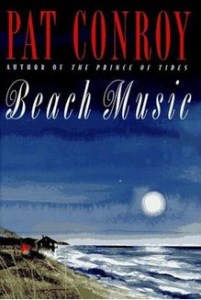
Looking back at Pat Conroy’s ‘Beach Music’

Beach Music (1995), Conroy’s sixth book, is the story of Jack McCall, an American who moves to Rome to escape the trauma and painful memory of his young wife’s suicidal leap off a bridge in South Carolina. The novel is wide-ranging in its historical and geographical scope, and in its treatment of the Holocaust, Russian pogroms, and southern poverty, among other themes; it is generally recognized as Conroy’s ambitious—and perhaps darkest—work.Pat Conroy Web Site

Beach Music began as a 2,100-page manuscript which his publisher’s staff trimmed down. My mass market paperback is 800 pages. By today’s “standards” of shorter and shorter novels, this book is huge.

Like Conroy’s other novels, Beach Music focuses on a broken southern white male who’s the product of a dysfunctional family that grows up in the beautiful–and lyrically presented–South Carolina Lowcountry.

Excerpt: “It enclosed us in its laceries as we watched the moon spill across the Atlantic like wine from an overturned glass. With the light all around us, we felt secret in that moon-infused water like pearls forming in the soft tissues of oysters.”

The novel’s length comes, in part, from the backstories of many of the other characters as well as childhood reminiscences between protagonist Jack McCall and his brothers.

If we were to extract a basic plotline, it would be this. McCall leaves the Lowcountry with his two-year-old daughter Leah and moves to Rome after his wife Shyla commits suicide by jumping off a bridge. McCall is, of course, blamed for this; his wife’s parents claim McCall is unfit to raise Leah, but fail to prove their case in court. He severs his relationships with his family to the point of keeping his address and phone number secret. Slowly, family members work their way back into his life and communications begin to open up.

Part of his understanding of his extended family comes from considering their dark backgrounds, including the Holocaust. His mother’s background is especially bleak and is almost too horrible to comprehend. My belief is that these divergences, while well written and very dark, are too long.

The darkness is balanced out somewhat by the fact that McCall and his brothers take a devil-may-care approach to life. They’re likely to say or do almost anything, proper or not. On McCall’s first trip back to the states, somebody asks him who’s watching his daughter in Rome while he’s gone. His response is that Charles Manson got paroled and needed the work.

While sitting with his brothers in the hospital room where their mother is in a coma, somebody mentions that they should be careful what they say because people in comas can hear what’s being said at one level of the mind or another. Jack responds by saying something like, Mama, this is Jack. I’m the one who loves you. My brothers think you’re trash and don’t care about you at all. When it comes to your children’s love, it’s always Jack.

My favorite Conroy novel remains Prince of Tides, also filled with Lowcountry beauty and a family’s dysfunctions. I’ve read Prince of Tides multiple times. This past week was the first time I re-read Beach Music since it came out. It remains in my view, a stunning book in part because of its flaws.

Malcolm


Review: ‘Newberry Sin’ by C. Hope Clark

Newberry SinNewberry Sin by C. Hope Clark
My rating: 5 of 5 stars

Readers of C. Hope Clark’s Carolina Slade Mystery Series (“Low Country Bribe,” “Tidewater Murder,” and “Palmetto Poison”) didn’t see Ms. Slade for several years while the author was working on her Edisto Island Mysteries. It’s a pleasure meeting Slade again in “Newberry Sin.”

Newberry has a potential murder, a truckload of motives and prospective suspects, and, of course, enough sin to require the use of oven mitts while reading this mystery. Slade and her petty boss are in town for a radio show when a local man dies under suspicious circumstances. Even though USDA investigator Slade befriends a potential confidential informant, her boss–who has a grudge against her–assigns a less-experienced investigator to the case and orders Slade to stay away from Newberry.

Slade is a somewhat less self-assured investigator in this book than in earlier stories. She has good reason to be. Her boss assigns her nothing but administrative assistant duties, there are emotional issues at home and conflicts with her boyfriend, and the looming reality that she will probably be fired if she follows up on her informant’s constant pleas for help. This mix results in a somewhat muddled approach to the case at the outset, and she makes a few mistakes that don’t help.

However, readers of “Newberry Sin” will discover a deeper, more complex Slade in this novel as she wrestles with personal and chain-of-command issues while trying to sort out who might have killed whom and why. The book starts out at a high pitch and never slows down. Every page brings a new revelation or incident that clearly shows Newberry will get worse before it gets better.

Slade doesn’t want to become one of the casualties or let the bad guys get away with whatever they’re trying to do to a nice town (except for its contagious gossip).

I wanted to savor this novel for a week or so, but I couldn’t because the plot made me feel like I was riding a bat out of hell with no brakes. Slade seems to have a similar opinion.

I received a free ARC (advance readers copy) of “Newberry Sin” in exchange for an honest review.

My 2012 review of “Low Country Bribe” is here.

View all my reviews

Malcolm

Review: ‘Murder on Edisto’ by C. Hope Clark

Murder on Edisto (The Edisto Island Mysteries, #1)Murder on Edisto by C. Hope Clark
My rating: 4 of 5 stars

This well-written and highly readable mystery/thriller is marred only by the fact that it begins with a formulaic set-up for novels of its genre: A tough-as nails woman, who went north for her career, experiences a devastating personal loss, escapes from continued threats to herself and her son, and runs home to her parents low country town in South Carolina for recuperation and solace only to find herself caught in the middle of a crime spree.

No sooner has she moved in to her family’s long-time Edisto Island beach house, than her next door neighbor–and old friend from her childhood–is murdered and an odd series of break-ins begins in the tightly knit community. Clark does a good job building the suspense. Almost everyone in the community appears to be a suspect–including the police.

Callie Morgan’s experience as a Boston detective sergeant gives her plenty of reasons to wonder whether or not the local police department is capable of solving such crimes. While the police acknowledge that her experience as an ex-cop might provide them with valuable help, her continued nightmares and jittery nerves make them wonder if she is, as one man says, “damaged goods” and too flighty to be taken seriously. Even her teenage son wonders if her head is on straight. On top of that, some residents suspect her of the break-ins since they began on the day she moved into the beach house.

While there are strong men in the book, ramping up multiple possibilities for romance, suspicion, arguments about police procedures, and “being rescued,” the author allows Callie to slowly find herself. And that makes for a very satisfying conclusion.

Malcolm 
View all my reviews

Review: ‘Lowcountry Bribe’ by C. Hope Clark

Authors often ask “What if” when they have an idea for a plot. When C. Hope Clark first thought about a civil servant at the Department of Agriculture reporting an attempted bribe by a farmer, she must have asked “what’s the worst that can possibly happen?”

Carolina Slade (and you don’t call her “Carolina” unless you’re her mother) is a USDA official who plays by the rules. While others might have overlooked hog farmer Jesse Rawlings’ offer of a bribe in hopes he would never bring up the matter again, Slade tells her superiors. After that, the dust never settles.

C. Hope Clark’s protagonist in the dazzling debut mystery/thriller “Lowcountry Bribe,” is a Charleston County manager who coordinates federal loans and their repayment by farmers. When she leaves her desk, it’s to inspect a farm, not to carry a gun and catch bad guys. Yet, as a Cooperating Individual (CI) she has no choice but to help agents Wayne Largo and Eddie Childress prove Rawlings tried to bribe her.

The case is getting a lot of attention from Atlanta. Slade wonders why. Perhaps there’s more to the bribe than she knows, a greater level of fraud that might implicate her former boss who disappeared last year or a co-worker who shot himself in the office last week. Slade can’t even be sure Largo and Childress aren’t investigating her. A supposedly easy “Get Jesse to repeat what he said Friday” turns into a dangerous crash course in crisis management where the stakes are much higher than missed loan payment or a reprimand from the boss.

Some publishers would have categorized “Lowcountry Bribe” as a mystery/thriller/romance because the novel includes romantic elements as well as Slade’s feelings of approach/avoid, trust/distrust insofar as agent Largo and his motives are concerned. Regardless of the book’s official genre(s), the danger and intrigue Slade is drawn into are industrial strength, requiring a CI who is tough enough to view blood on an office wall as “O-positive primer,” savvy enough to think a like federal agent and experienced enough to apply humor and sarcasm to methods and practices that don’t measure up to her high standards.

Clark knows the territory. She lives in South Carolina, has a degree in agriculture, has worked with the USDA for 25 years, and is married to a former federal agent. This information appears on the novel’s back cover. By the time readers finish the novel and find out the worst that can possibly happen, they will have discovered that Clark also knows the territory of deftly plotted fiction, realistic dialogue and place settings, and how to tell a story that burns like a stiff drink with a touch of sugar.

Clark is now writing the next novel in the Carolina Slade Mystery Series. For readers who like great storytelling, that’s the best that can possibly happen.

Malcolm R. Campbell is the author of contemporary fantasy, magical realism, and paranormal stories and novels, including “Conjure Woman’s Cat” and “Eulalie and Washerwoman.”