Writer and educator, Sharon Hurley Hall (Exploring Shadeism), released this book of essays on October 1, bringing the information and wisdom of her Anti-Racism Newsletter to a wider audience.
From the Publisher
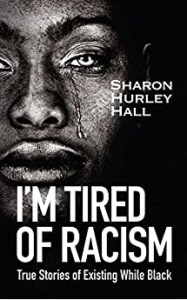 To feel empathy, you need to walk a mile in someone else’s shoes. If the experiences of racism in a white supremacist system seem too far away from your daily reality, I’m Tired of Racism will change that. If you think of racism as something that only happens where you are, I’m Tired of Racism will change that, too. And if you’re wondering how you can be a true ally and avoid performative nonsense, this book is an excellent starting point.
“I’m Tired of Racism” collects many of Sharon Hurley Hall’s anti-racism essays, sharing her global perspective on racism, anti-racism, anti-Blackness, and white supremacy, born out of experiences in the Caribbean, the UK, the US, and elsewhere. Hurley Hall has lived and worked in multiple countries, enabling her to accurately reflect what’s the same and what’s different about experiences of racism in different locations.
The foreword, by Ashanti Maya Martin, says: “Because Sharon’s experience is rooted in the U.S., the Caribbean, and Europe, she’s able to tell us how the U.S. looks from the outside in (not great at the moment), and explain how even being a citizen of a Black-majority country comes with its own layered burdens rooted in colonialism and white supremacy.”
The book is available on Kindle and in hardcover. The audiobook and paperback editions will be available soon. I have known Sharon online for possibly 20 years and look forward to seeing her newsletter in my in-basket.
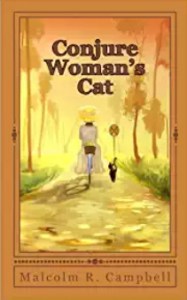 Malcolm R. Campbell is the author of the Florida Folk Magic Series about a conjure woman fighting the KKK in a 1950s-era town in the Florida Panhandle. The series begins with “Conjure Woman’s Cat.”
 Malcolm's Round Table