What do you expect from a book review?

A recent article in The Guardian, YA novel readers clash with publishing establishment, focuses on a recent book review flame war that raged across GoodReads and Twitter about reader reviews and author and agent responses. In the court of public opinion—which can be both a slippery slope and a bumpy ride—authors, publishers and agents risk a great deal by responding directly to negative reviews that have been published by readers on blogs, Amazon, GoodReads and other sites.

Regardless of subject matter, the consensus across the Internet seems to be that all opinions are equal. In one sense, this is true. Under our guarantees of freedom of speech and press, each of us has the right to say what we think about anything. When it comes down to basics, we all matter.

The confusion—and book reviewing is not the only place where this happens—is that when we say all opinions are equal, we then lose the distinction between the viewpoints of professionals and nonprofessionals. When you go to a doctor and get his opinion about your health, you expect his or her viewpoint to have more credibility than the mechanic at the local auto dealership. Same goes for almost any field we can name: except reviewing (as the term is used on GoodReads and Amazon).

Suddenly, many people are maintaining that anyone can say what they want about a book and label it a review, and then equate his or her best-intentioned assessment of a a book with that of a professional book reviewer who knows the genre, the subject matter, and the writing profession.

When my friends tell me they think I’ll like a certain book, they do that because they know the kinds of books I read and the subjects I care about. This counts for a lot. When they make such suggestions, the last thing I worry about is whether they’re an English professor or an expert in the themes and subjects in the novel. But, when it comes to a real review, I expect credentials and facts as well as opinions.

Opinions vs. Reviews

One of the hardest things to get across in an introductory journalism class is the best-practices standard that newspaper and magazine editorials are not only supposed to have verifiable facts in them, but are expected (by readers) to have been written by somebody with the credentials for offering an opinion in a publication.

If I get along with my auto mechanic and if we have similar views, I’ll probably enjoy hearing his impressions about the latest political debates or a book about one of the candidates. While some people claim friends talking to friends are an example of “preaching to the choir,” most of us value sharing our views with those we interact with day to day.

When something is put into writing and called an “editorial,” we expect (or traditionally have expected) something more. Basically, we expect an informed opinion. Perhaps it comes from a veteran journalist whose opinion is based on having covered hundreds of stories; or perhaps it comes from a long-time political analyst, corporate president, or teacher who has studied the field for years. His or her credentials, when coupled with verifiable facts in the editorial or editorial column, give weight to their opinions or analyses.

Book Revews are Journalism

Traditionally, book, movie, theater and other reviews have been considered journalism. As such, they are expected to meet the same standards as any other newspaper, magazine or broadcast media opinion piece. Some of the uproar behind the article in The Telegraph comes from the fact that the Internet now gives all of us a means of publication whether it’s a book we uploaded via Lulu or CreateSpace, a blog such as mine, or a review posted on Amazon or GoodReads. Those expressing their opinions about books have a right, I believe, to say their opinions matter.

I question whether those opinions should really be called reviews. Perhaps we need another terminology here that somehow distinguishes between the honest-to-goodness “man of the street” opinion about a book and the opinion written by somebody with many years of reviewing, journalistic training, or experience and education in the field the book is about. Perhaps Amazon, GoodReads and other sites should stop calling reader opinions “reviews.” While they are valid within the scope of the sites’ invitations to “speak our piece” about a book, a fair number of these “reviews” aren’t real reviews.

Perhaps we should call them Reader Commentaries or Reader Responses or Reader Dialogues. This way, we honor the readers and their opinions without discounting the work of professional reviewers whose work is supported by credentials, long-time experience with the book’s genre or subject matter, and a broad-based knowledge of the art/science/business of writing and publishing.

Most of Us Appreciate Reader Reviews

As a reader and a writer, I appreciate the reader opinions I find on Amazon, GoodReads and blogs. Talking about books on line is a good thing: it shows me that people are reading and that what they read has an impact on them. I do wish some of those opinions could be stated with a bit more care. It’s one thing to tell your best friend in private that author XYZ doesn’t know his head from a hole in the ground. It’s another thing to pick up a book you thought was a page turner, discover it’s literary fiction, and then go on a rant about it because it wasn’t (and wasn’t intended to be) your cup of tea. That’s not a review.

When the opinion is called “a review,” authors as well as readers should be getting something better than either a mean-spirited tantrum or a gushy splash of unwarranted praise.

Malcolm

“Book Bits” provides daily information for writers and readers

Writers like keeping up with contests, tips and techniques, publishers and magazines where they can submit their stories and articles, and advice on how to market their work once it’s published.

Readers like keeping up with their favorite writers, upcoming books in the genres they read the most, and information about authors’ future book signings and other appearances.

Book Bits brings you the links to this kind of information six days a week.  Quite simply, Book Bits is a blog in which every post is a list of links covering the latest reviews, books and author features, contests,  marketing and social networking advice, “writer’s how to” posts, and essays and features about authors, books and publishing.

Book Bits Titles

Book Bits is numbered from the first issue onward toward infinity. The higher the number, the more recent the post.  The titles are designed to attract attention, so they include the names of authors/events most likely to lure people into the post. For example, the title for this morning’s post looked like this:

Book Bits #117 – Hedy Lamarr, Roberto Bolaño, Elmore Leonard and more writing news

So now you know I’ve made 117 posts. This one included a review of Roberto Bolaño’s latest novel, a biography about Hedy Lamarr, and an article about author Elmore Leonard who, says “why not,” when asked why (at age 86) he’s still writing.

This morning’s Book Bits had 24 links.  In addition to those attention-getting names in the title, the other offerings featured a link to a blog hop where you might win a Kindle, a story about the return of the Lit Fest to Haiti, and the names and novels of the ten finalists in Georgia’s Townsend Prize for Fiction.

Naturally, some posts will bore you. My top picks on those days will be authors you’ve never heard of or genres you never read. I try to include a variety, though, in hopes that every time you stop by, you’ll find at least one link you want to click on.

Some posts will take over you’re entire day because, heck, you’ll want to click on every feature, news story and review. The reviews will tempt you to read books. The contest announcements will tempt you to write books, or maybe short stories or poems.

This morning, you might have followed the link to this review:

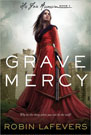
  • Review: Grave Mercy by Robin LaFevers – “With characters that will inspire the imagination, a plot that nods to history while defying accuracy, and a love story that promises more in the second book, this is sure to attract feminist readers and romantics alike.” – Booklist

Or the link to this advice:

  • Lists: 10 Ways to Get Paid for Online Writing, with Lior Levin – “Selling words for dollars is easy, if you are aware of two things: -How to put down the words together. -How to sell your piece in the right market.”

I invite you to surf over to Book Bits, read a few posts and see what you think. That’s sort of like kicking the tires on the car you just might want to buy. Unlike the car, Book Bits is free.

Sure, you’ll see some banners at the ends of the post with links to my author’s site and my novels. Maybe those banners will tempt you. If not, have fun. Goodness knows, I have a lot of fun every day finding the news and rev iews for each post. I tell me wife I’m working, but I think she suspects I’m just surfing the net for the heck of it.

Coming in tomorrow’s Book Bits, a link for a wonderful piece of satire that pokes good-natured fun at the Antiques Road Show (imagine people bringing in crime evidence rather than antiques) and some pithy advice for authors planning to self publish their books. Oh, and reviews, too. There are always reviews.

Malcolm

P.S. When the “Book Bits” title is short enough for me to squeeze in an extra word, I add the #bookbits hashtag to help people find the posts on Twitter. Now, here’s an example of a book banner:

contemporary fantasy for your Kindle

Book Review: ‘In a Flash’

Mark Twain once wrote that “thunder is good, thunder is impressive; but it is lightning that does the work.”

Smoky Trudeau Zeidel’s “In a Flash” describes the kind of work lightning does when the “lightning rod” it selects is the umbrella in a young woman’s hand.

The woman died. That was to be expected. But not for long.

Lightning struck Smoky Trudeau Zeidel twenty two years ago on an overcast day in a Chicago suburb. Life since then has not been easy: the number of trips to the hospital, the number of surgeries and the number of days and nights in pain are sufficient evidence of that.

This is a well-told story about courage, strength and the work lightning does. Surprisingly, it’s also a story about counting one’s blessings. One can only read it and weep, and then experience a lingering euphoria for the challenges a person can endure.

You May Also Like

Other short stories recently released on Kindle by Vanilla Heart Publishing include:

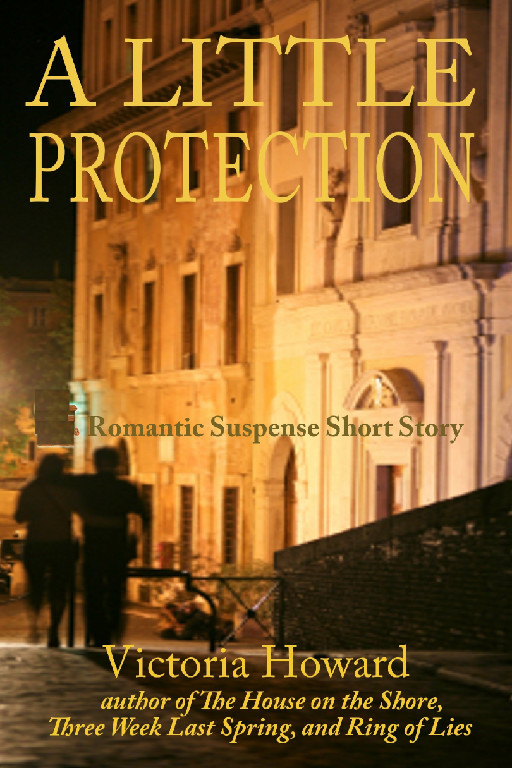
A Little Protection by Victoria Howard – Handsome Matt Hemmings meets scientist Alexa McAllistair at a conference on nuclear energy in Rome…and against his professional judgment, he is smitten. The vulnerable – and beautiful – scientist arouses his protective instincts, and the desire to kiss her senseless. And it’s more than evident that she feels the same way about him.

Paco’s Visions by Robert Hays – Paco has visions, and his most recent vision helps him believe in the power of love. For a twelve year old boy, it is a big revelation. He and his sister, Rosa, live with Mama Jan, in a rich man’s mansion on Sanibel Island. Will his vision become their reality?

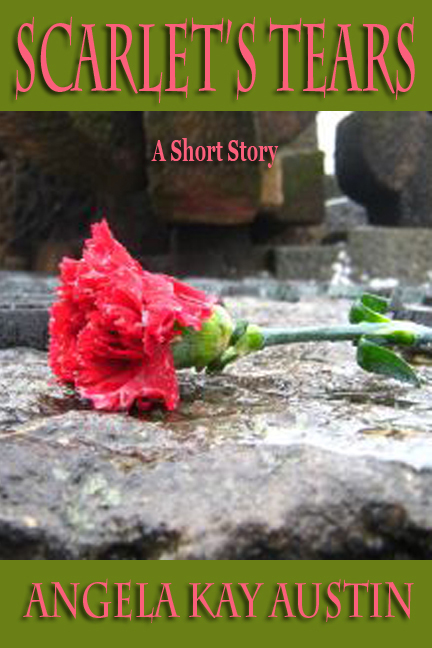
Scarlet’s Tears by Angela Kay Austin – When you lose everything you love, how are you supposed to believe it won’t happen again? The knife at her throat didn’t frighten Scarlet Anderson.  In fact, it was a relief.  Finally, she didn’t have to worry any longer about living another empty day.  She’d be reunited with the ones she loved. Joshua Davis had faced a lot of challenges in his life, his faith and the love of his family had seen him through his latest battles.  But, no person could help him, now.  How had he managed to fall in love with someone who’d stopped loving herself?  And what was he supposed to do?

Kindle Edition

Review: ‘The Seas’ by Samantha Hunt

The Seas: A NovelThe Seas: A Novel by Samantha Hunt
My rating: 4 of 5 stars

“Yet when she comes to earth she comes to seek for that without which her beauty will be forever cold, cold and chill as the surge of the salt, salt sea.” — Mary MacGregor in her telling of “Undine.”

Samantha Hunt’s dark, yet often whimsical, 2004 novel “The Seas” draws on the classic mythology of mermaids and mortals. The alchemist Paracelsus (1493-1521) theorized that Ondines were elemental water nymphs. According to legends, Ondines (or Undines) had no souls unless they married mortal men. Friedrich de la Motte Fouqué drew upon these legends in his highly popular German novel “Undine” (1811) as did Hans Christian Anderson in his classic “The Little Mermaid” (1837).

In “The Seas,” a nineteen-year-old protagonist whose name we never know is convinced to a certainty that she is a mermaid because her father told her so before he disappeared at sea years ago. She falls in love with a shell-shocked veteran almost twice her age who drinks and hides from his war experiences. Jude, however, is the only person in this despairing, northern coastal fishing and tourist town who cares for her. Like everyone else in town, Jude and the prospective mermaid are trapped in a life where alcoholism, boredom and a bit of fishing are the primary pursuits.

As the prologue explains, “If you were to try to leave, people who have known you since the day you were born would recognize your car and see you leaving. They would wonder where you were going and they would wave with two fingers off the steering wheel, a wave that might seem like a stop sign or a warning to someone trying to forget this very small town. It would be much easier to stay.”

She has few social skills, is viewed as deeply disturbed, if not retarded, by everyone else in town including her own mother who waits, and will probably always be waiting, for the return of her husband. Our young protagonist, who narrates her own story and–it appears–believes that we (as readers) are understanding and humane enough to be taken into her confidence, knows the mermaid legends. She fears her love will end up killing Jude.

“The Seas” is awash with water, with bleak satire and bleaker images. The writing is lyrical and precise, blending reality and fable in a way that blurs the littoral zone where the sea and the land meet, where reality and fairytale collide, where sanity and obsession become twisted together. If “The Seas” has failings–other than being darker than we can bear–it’s the occasional overly robust presentation of the author’s and/or the main character’s anti-war and society-without-pity themes.

Our narrator wants to return to the sea. Perhaps she does. Perhaps she dies. Perhaps she loses the last vestiges of her cold and chill sanity in exchange for all that she loves.

View all my reviews

Coming April 22 – “On Writing as Entertainment,” a guest post by Lauren E. Harvey, author of “Imperfect”

Book Review: ‘We Hear the Dead’

Rap twice for “yes.” Rap once for “no.”

If spirits weren’t talking through raps, taps and other assorted sounds in the darkened rooms, how were the girls doing it? Some said Maggie and Kate Fox were frauds when they first claimed to hear the dead in Hydesville, New York in 1848.

Perhaps Maggie, the protagonist, had a gift for counseling and perhaps her more adventurous sister Kate truly had the evolving abilities of a medium, even though the whole thing began as a prank. Their mother believed more than they believed. Their older sister Leah saw that if “spirit circles” were properly presented, there was money to be made.

Welcome to the world presented in living color through the well-focused lens of Dianne K. Salerni’s very readable novel “We Hear the Dead.”

While the dashing military hero and Arctic explorer Elisha Kent Kane, who had his eyes on Maggie, did not believe the rapping came from the spirit world, many of the rich and famous did. The Fox sisters, who were born on the wrong side of the tracks, became sought after by high society. One of the strong points of this novel is the dynamic interplay between historical and fictional characters in believable settings as the sisters travel and attract press attention and large audiences.

Before you begin reading “We Hear the Dead,” you will know that the story is true. As you read, you’ll quickly discover that the Salerni’s wonderful historical novel not only brings the Fox sisters to life, but the dead with whom they spoke as well.

“We Hear the Dead” is real because Salerni knows how to weave solid research and meaningful historical details into a novel that begins with two confessions, moves on to the haunting, and remains strong and vital throughout.

Malcolm R. Campbell is the author of “Garden of Heaven,” “The Sun Singer” and “Jock Stewart and the Missing Sea of Fire.”

Review: ‘Now is the time to do what you love’

Now is the Time to Do What You Love: How to Make the Career Move that Will Change Your Life Now is the Time to Do What You Love: How to Make the Career Move that Will Change Your Life by Nancy Whitney-Reiter

My rating: 5 of 5 stars
Picture this: Joe, a fry cook in Gainesville, Florida, wows his family and friends with his Chesapeake Bay Wild Striped Bass and Braised Short Ribs on evenings and weekends. After dreaming of opening a restaurant “somewhere near the Big Sur,” he sells his house, packs his family into a car and heads for California. Joe will learn the multiple definitions of “nightmare” and “disaster” before year’s end.

Or picture this: Joyce, who lives in Decatur, Illinois, has always loved children. She’s wondered for years whether to become a teacher or open a daycare center once her own children leave the nest. But she keeps waiting for some future moment when her world is more settled, ensuring that “what night have been” will remain “what never was.”

Dreams, some say, will take up as much space as we allow. According to Nancy Whitney-Reiter, most of us spend our careers trying to achieve success as it’s defined by others rather than proactively following our dreams and doing what we love. Yet, “Now is the time to do what you love” makes clear that ill-defined career-change goals may remain pipe dreams if we take no action or may become nightmares when we fail to consider realities and create a comprehensive plan.

After establishing the rationale for changing careers sooner rather than later, Whitney-Reiter leads readers through a frank assessment of exactly how their dream jobs will impact that lives, their emotions, their finances, their physical condition and their families. She includes pros and cons, examples, reality checks and “Is-It-Worth-It?” checklists.

When considering finances, for example, the checklist includes such statements as “I am willing to invest a significant amount of time on understanding and improving my financial picture” and “I understand that my expenses might actually rise during my transition between careers.” If one doesn’t agree with such statements, s/he may face roadblocks to his or her success.

After successfully working through the advice and checklists in part one, part two leads career-change dreamers into “Taking the Plunge.” To avoid the financial and emotional nightmare of becoming trapped in a new career that doesn’t meet expectations, one should make a sound written plan and find various ways for trying on the proposed career to see if it fits.

“Jumping into a new career,” says Whitney-Reiter, “is akin to jumping into an unknown river. It may look beautiful and inviting from a distance, but you really have no idea what it’s like until you become immersed in it. Sticking your big toe in–taking a trial run–allows you the opportunity to test the waters first.”

Part three analyzes the realities and requirements of popular career and second-career choices, including converting hobbies into money-making opportunities, leading travel groups, teaching and care-giving, social work, public speaking, nonprofits, real estate and law enforcement. Those considering these careers will find options, laws, certifications and other vital specifics. Others may discover a career they hadn’t yet thought of and/or sound examples of the kinds of considerations any new career includes.

Immensely well organized and practical, “Now is the time to do what you love” is the perfect companion for anyone who is dissatisfied with their current career and/or who is considering a second career after they retire from the first. To become viable realities, dreams require work. Whitney-Reiter’s experience, research and interviews show those ready to take the journey the important milestones to leaving a job that’s just a job and entering a fulfilling career doing that makes them personally feel successful and happy. The book is a very wise dream catcher.

View all my reviews >>

Book Review: ‘When Memaids Sing’

When Mermaids Sing When Mermaids Sing by Mark Zvonkovic

My rating: 4 of 5 stars
Larry Brown’s musings about life as he observes it are insightful, humorous and often jaded. Outwardly, the protagonist of Mark Zvonkovic’s gently written novel “When Mermaids Sing” is a pleasant, unassuming Medford, PA high school English teacher who tries to get along with everyone and avoid conflicts.

He often feels manipulated by the requirements of his teaching job and the endless expectations of his parents and his girl friend Millie. Brown’s parents, both college teachers, expect him to play a role in their world, while Millie–an actress who might be cheating on him–expects him to make dutiful appearances in her social and family life. At work, where he may not really be happy, he’s hoping to be granted tenure. And, his cousin Bradley has joined a cult and might have lost himself in the addictive peace it provides.

Brown can ponder the humor and the irony of such realities because he has a “cure.” He copes with the chaos of his job and his relationships by retreating into memories of the halcyon summer days of his youth at a Cape Cod vacation house with his siblings and cousins. Those were the best years of his life. The present cannot compete with them. He doesn’t want it to.

Henry David Thoreau once said of Cape Cod’s Outer Beach, “A man may stand there and put all America behind him.” Likewise, Brown retreats to the house of his youth to put all of life’s troubling challenges behind him.

While making an obligatory appearance at his father’s annual party for freshmen college students, Brown meets a personable young woman named Jenny with a strong aversion to cults. Her brother Josh has joined the charismatic Path to God, the same group to which Bradley as sworn allegiance, if not his soul.

Jenny complains that Josh has repudiated their father as Satan and “become a different person.” A psychiatrist at the party remarks that the sudden personality change exhibited by cult members is due to brainwashing, not hypnosis. This, and the lack of fences and armed guards at an ashram, make it difficult for families to intervene.

Brown vacillates about the difference between the freedom to choose a path others don’t agree with and losing one’s freedom through brainwashing and choosing the same path. Jenny’s family is no longer splitting hairs. They’ve engaged the services of a well-known deprogrammer to help them extract Josh from the Cape Cod ashram even though everyone involved might end up being charged with kidnapping.

When Jenny points out that Bradley and Josh are together at the same place and enlists Brown’s help, he can no longer ignore the issue as a mere philosophical topic for debate.

Will Brown help Jenny, Bradley and Josh? He would rather not, because if he does, he will have to admit there’s more involved here than the rescue of two impressionable young people from the brainwashing of a cult. He will finally have to take a stand on something and answer a lingering question. Is escaping life by running away to a cult different than running away to the past?

The title of Zvonkovic’s carefully written novel is suggested by a line from John Donne’s playful “Go and Catch A Falling Star.” Catching falling stars and hearing mermaids singing are, in Donne’s thinking, rather unlikely events. Readers of “When Mermaids Sing” may wonder whether substantive change in Larry Brown is also unlikely. As literary fiction, the story relies heavily on theme, interior monologue and a strong sense of place rather than non-stop action on its introspective journey to a powerful conclusion.

–Malcolm R. Campbell for POD Book Reviews & More

View all my reviews >>

Book Review: Pat Conroy’s ‘South of Broad’

South of Broad South of Broad by Pat Conroy

My rating: 4 of 5 stars
Pat Conroy’s “South of Broad” is a love song to Charleston with blood on the sheet music.

As he walks toward the Cooper River in 1990, six months after Hurricane Hugo tore into his beloved city, narrator Leo King ponders the city’s rebuilding and healing, and the coming spring: “Since the day I was born, I have been worried that heaven would never be half as beautiful as Charleston.”

Like his counterpart Tom Wingo in “The Prince of Tides” (1986), Leopold Bloom King is a psychologically wounded man. While Wingo’s issues focus on a brutal family secret, the death of an older brother, and a suicidal sister, King is haunted by the suicide of his older brother Steve. King worshipped that brother, the golden boy and their mother’s overt favorite. “Looking back,” King tells us, “I think the family suffered a collective nervous breakdown after we buried Steve.”

King drifted between that collective breakdown and 1969 when he found himself fulfilling the role of anchorman in a diverse group of high school seniors: Ike Jefferson, one of the first black students to play on the high school football team; Sheba and Trevor Poe, the dramatic and talented twins who live across the street with an alcoholic mother; the mountain-born orphans Starla and Niles Whitehead, who hope one day to be re-united with their mother; and from the aristocratic world South of Broad Street, Molly Huger and brother and sister Chad and Fraser Rutledge.

That these students appeared in King’s life on June 16—Bloomsday, for those who revere James Joyce—was to some extent orchestrated by his mother with the helping hand of fate. After all, his mother who was both the high school principal and a Joycean scholar named him after Leopold Bloom, Joyce’s protagonist in “Ulysses.” And after all, as King saw it, there are no coincidences; “fate comes at you cat-footed, unavoidable, and bloodthirsty.”

Conroy portrays the meeting and evolving relationships between King and this disparate collection of variously angry, snobbish, haunted and broken souls with humor and realism. Some commentators have panned Conroy’s dialogue as unnatural. Yet, one might ask what “normal” could possibly sound like for people weaned on tragedy and/or destined for it.

“The Prince of Tides” unfolds primarily in flashbacks. Though he’s looking back on his life, Leo King narrates “South of Broad” in a nonlinear sequence. Parts one and four are set in the late 1960s. Parts two, three and five are set in the late 1980s. While frustrating, this structure is not fatal. Yet, details about the characters’ maturation into adults is sketchy and the action screeches to halt before the climatic Part Five when Conroy pulls his readers back to the high school world of race and class tensions and football.

What worked to perfection in “The Prince of Tides” is a little dissonant in “South of Broad.” Conroy’s trademark soaring language develops a cohesive sense of place that wonderfully contrasts with and serves as a stable foundation for the nasty events and broken people. Yet some of the poetry is ponderous. The familiar storyline of dysfunctional people coping with a tragedies is again compelling. Yet it stumbles somewhat on the novel’s structure and melodramatic tendencies.

When Leopold Bloom King is nine years old, he finds a dead god named Stephen Daedalus King in a bathtub of bloody water. While the method behind the madness is a little tired and the music a little too much in a minor key, between Steve’s suicide and the novel’s last moments on a Bloomsday many years in the future, there is a still strong and memorable story.

View all my reviews >>

Copyright (c) 2009 by Malcolm R. Campbell, author of “Jock Stewart and the Missing Sea of Fire”

Book Review: ‘The Lost Symbol’

The Lost Symbol (Robert Langdon, #3) The Lost Symbol by Dan Brown

My rating: 5 of 5 stars
Now boarding on track 33, the Symbolism Express departing for the Freemasons, the Invisible College, the Office of Security, the SMSC, the Institute of Noetic Sciences and multiple points around the cryptic compass.

Your temporal destination, not Paris and London, but Washington, D.C.

Your conductor, Harvard symbiologist Robert Langdon, the Indiana Jones of the new age.

Tied to the tracks in the gathering darkness ahead and facing certain death, if not embarrassment, another keeper of the ancient mysteries including the wisdom of Solomon, not a man of the Louvre, but a man of the Smithsonian.

Traveling alone, an attractive female relative of the man lashed to the tracks, not agent and cryptologist Sophie Neveu, but Noetic scientist Dr Katherine Solomon.

Sitting in the engineer’s seat with a small stone pyramid rather than a chalice holding down the deadman’s pedal, a rogue and tattooed Mason in search of apotheosis replaces Silas, “The Da Vinci Code’s” rogue and scourged momk as our antagonist for the evening.

Hold on. It’s going to be another bumpy ride.

Dreams of déjà vu remind you what the journey will be like: short chapters, multiple points of view, conflicting agendas with something very large (yet unknown) at stake, the thrill of the chase, the almost-sexual tension of near-satisfaction again and again as answers appear and disappear, multiple station stops for arcane wisdom instruction, and a desperate-save-humanity-hunt for secrets you’ve stared at your entire life without comprehending.

By the end of the novel, you won’t be a 33rd Degree Mason and you won’t be like unto a god in any way you can quite wrap your mind around, but you will have experienced a high-adrenaline ride. This thrill is what the journey is all about. Perhaps reality lurks around the edge of the plot and theme and perhaps sacred messages lurk within the vast white spaces between the lines of black type, but that’s not why we’re turning the pages from 1 to 509.

Dan Brown has done it again, and upon reflection at the dawn’s first light, you’ll see that he knows how to pull the right strings and push the right buttons and sprinkle the right esoteric seasonings across his smorgasbord of mysteries from around the world to keep readers addicted for the trip. On the last page, you may well hope, along with Robert Langdon and Katherine Solomon that men and women will follow the ancient maps toward their true potential; but seriously, the novel’s destination really doesn’t matter, does it, because the ride was the peak experience you were seeking when you picked up “The Lost Symbol.”

All aboard.

View all my reviews >>

Copyright (c) 2009 by Malcolm R. Campbell, author of Jock Stewart and the Missing Sea of Fire.

Subscribe to me on FriendFeed

Book Review: ‘Coming Together’

Coming Together Coming Together by Joyce Norman

My rating: 4 of 5 stars
Acclaimed filmmaker Daisy Gardner is hired in chapter two of “Coming Together” to create a documentary about Brazil in the early 1980s that accurately depicts the country in all its moods from Rio to the rainforest and from the playground beaches of the rich to the nearby hillside huts of the pragmatic poor. Recently divorced from a man who was jealous about her success and who resented the fact she wasn’t ready to start a family, the thirty-two-year-old Daisy is more than ready to plunge into another foreign assignment.

Authors Joyce Norman and Joy Collins foreshadow the ultimate theme of this richly detailed novel in chapter one, as “the large wooden double doors fell in with a thunderous noise like a bomb exploding. Startled, Isabella dropped her fork and stood. When the dust cleared, she saw four Brazilian Federal Police, each holding a machine gun.” The police have raided Isabella’s home on Rio’s Corcovado Mountain where she cares for abandoned children while facilitating their adoption. The policemen grab as many children as they can carry and take them away to a state institution.

As Daisy plans her trip at her Washington, D.C. home, the plight of Brazil’s millions of street children some 4,769 miles away is well outside her field of vision. So, too, is a talented Brazilian filmmaker Luis Campos who will join Daisy and her long-time friend, cameraman Charlie Crawford on the project team. Daisy has never heard of Campos, but Charlie has met him and claims he “has the touch” and would be tailor-made for the project.

Once in Rio, Daisy soon discovers Campos’ contagious—yet bluntly honest—passion for Brazil and its history. In addition to his skills with a camera, he’s the perfect guide for a documentary team seeking the best locations for filming. One such location is Isabella’s “A Candeia” orphanage where the team will take dramatic footage of the tall Christ the Redeemer (Cristo Redentor) statue on the mountain’s summit.

Once there, Daisy meets the children and a hundred questions come to mind. Why is orphanage hounded by the federal police? Why are those trying to adopt or otherwise help the abandoned children met with so much government scorn and interference? The children, variously considered a national nuisance and a national, scandal become one of the candid subjects for the film as well as cause Daisy finds she cannot overlook.

Isabella says, “If I could tell you the stories of the man babies we have found in garbage cans, in open fields in the Northeast, in filthy stables and God knows where else, then you would understand why I work day and night to get these babies out of Brazil. These babies are little fighters.”

While the documentary project serves as the novel’s foundation, Joyce Norman and Joy Collins have skillfully blended in Daisy’s on-going issues with her ex-husband and her parents to create a well-developed protagonist. The authors’ familiarity with the chaotic adoption process in Brazil leads to finely rendered scenes that add tension and urgency to the plot while effectively showing the overarching hopelessness of most street children’s future.

As Daisy, Charlie and Luis plan their documentary, the authors’ devote a fair amount of space to the sights, sounds, culture, restaurants, slums and architecture of Brazil, most especially Rio de Janeiro—“River of January” with mixed results. These tours bring the city alive through the eyes of a filmmaker; but at times, they are more travelogues than fictional scenes and slow down the plot.

Readers may be unhappy with the authors’ decision to indirectly resolve one harrowing event late in the novel via a few off-hand comments made during an after-the-fact conversation. Nonetheless, the plot succeeds. Daisy Gardner’s carefully organized business trip to Brazil becomes an unexpected and chaotic personal journey as well as a powerful and heartfelt story.

View all my reviews >>