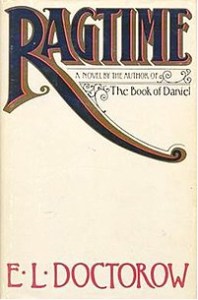
 “Edgar Lawrence Doctorow (January 6, 1931 – July 21, 2015) was an American novelist, editor, and professor, best known for his works of historical fiction.
“He wrote twelve novels, three volumes of short fiction and a stage drama, including the award-winning novels Ragtime (1975), Billy Bathgate (1989), and The March (2005). These, like many of his other works, placed fictional characters in recognizable historical contexts, with known historical figures, and often used different narrative styles. His stories were recognized for their originality and versatility, and Doctorow was praised for his audacity and imagination.” – Wikipedia
Doctorow’s novels, especially Ragtime and The March rank high on my list of great storytelling and great writing. Those who aren’t among his fans dislike his mix of historical and fictional characters, calling it “audacity.” The movie version of Ragtime, Cagney’s last role after a twenty-year hiatus from films, is well worth seeing for the ambiance and the actors (many new) who had difficult parts to play. Among these was Howard E. Rollins, Jr. as Coalhouse Walker, Jr. (“I read music so good, white folks think I’m fakin’ it.”)

As historical fiction, Ragtime captures the flavor of the world of ragtime that basically ran from the 1890s to the 1910s along with now-iconic events such as the murder of architect Stanford White in 1906 by Harry Thaw for White’s rape of fashion model Evelyn Nesbit (and ultimately Thaw’s wife). Thaw was acquitted for the reason of insanity.
The primary story is about the character Coalhouse Walker a professional musician who plays ragtime music on the piano. As Wikipedia puts it, “Things go well until he is humiliated by a racist fire crew, led by Will Conklin, who vandalize his Model T Ford. He begins a pursuit of redress by legal action but discovers he cannot hope to win because of the inherent prejudice of the system. Sarah is killed in an attempt to aid him, and Coalhouse uses the money he was saving for their wedding to pay for an extravagant funeral.”
The mix of historical that figures into the sad story of Coalhouse Walker is one of the novel’s triumphs, I think, and may obscure (for some readers) what is fact and what is fiction. Some critics hate this sort of mix while I applaud it.
One comes away from both the novel and the movie with an appreciation for the times and the times’ abuses and systemic injustice.
–Malcolm





 Malcolm's Round Table