N. Scott Momaday: Obituary

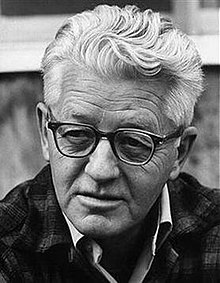
Navarre Scott Momaday (né Mammedaty) (February 27, 1934 – January 24, 2024) was an American and Kiowa novelist, short story writer, essayist, and poet from Oklahoma and New Mexico. His novel House Made of Dawn was awarded the Pulitzer Prize for Fiction in 1969, and is considered the first major work of the Native American Renaissance. His follow-up work The Way to Rainy Mountain blends folklore with memoir. Momaday received the National Medal of Arts in 2007 for his work’s celebration and preservation of Indigenous oral and art tradition. He held 20 honorary degrees from colleges and universities, the last of which was from the California Institute of the Arts in 2023, and was a fellow of the American Academy of Arts and Sciences. Wikipedia

Pulitzer Prize

“A special 50th anniversary edition of the magnificent Pulitzer Prize-winning novel from renowned Kiowa writer and poet N. Scott Momaday, with a new preface by the author

“A young Native American,  Abel has come home from war to find himself caught between two worlds. The first is the world of his grandfather’s, wedding him to the rhythm of the seasons, the harsh beauty of the land, and the ancient rites and traditions of his people. But the other world—modern, industrial America—pulls at Abel, demanding his loyalty, trying to claim his soul, and goading him into a destructive, compulsive cycle of depravity and despair.

“An American classic, House Made of Dawn is at once a tragic tale about the disabling effects of war and cultural separation, and a hopeful story of a stranger in his native land, finding his way back to all that is familiar and sacred.”

Review
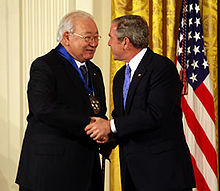
“Beautifully rendered and deeply affecting, House Made of Dawn has moved and inspired readers and writers for the last fifty years. It remains, in the words of The Paris Review, both a masterpiece about the universal human condition and a masterpiece of Native American literature.” Birchbark Books. Momaday receiving the National Medal of Arts from George W. Bush in 2007

–Malcolm
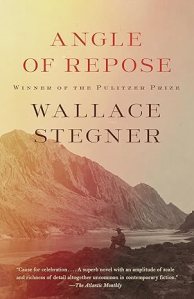
‘Angle of Repose’ by Wallace Stegner

I read this novel soon after it came out in 1971 (and won the Pulitzer Prize in 1972) and, if I bothered to organize my books, it would definitely belong on my shelf of favorites. The novel is about a real historian Lyman Ward and Stegner (1909-1993) based it on the letters of author Mary Hallock Foote. Some say he shouldn’t have used actual passages from her work. He says he had permission to do so. The controversy remains amongst scholars.

Wikipedia notes that “The title, seemingly taken from Foote’s writings, is an engineering term for the angle at which soil finally settles after, for example, being dumped from a mine as tailings.”

From the Publisher

Stegner in 1969

An American masterpiece and iconic novel of the West by National Book Award and Pulitzer Prize winner Wallace Stegner—a deeply moving narrative of one family and the traditions of our national past.

Lyman Ward is a retired professor of history, recently confined to a wheelchair by a crippling bone disease and dependent on others for his every need.  Amid the chaos of 1970s counterculture, he retreats to his ancestral home of Grass Valley, California, to write the biography of his grandmother: an elegant and headstrong artist and pioneer who, together with her engineer husband, made her own journey through the hardscrabble West nearly a hundred years before. In discovering her story he excavates his own, probing the shadows of his experience and the America that has come of age around him.

The Atlantic Monthly called the novel a  “Cause for celebration…A superb novel with an amplitude of scale and richness of detail altogether uncommon in contemporary fiction.”

About the Author

“Wallace Stegner (1909-1993) was the author of, among other novels, Remembering Laughter, 1937; The Big Rock Candy Mountain, 1943; Joe Hill, 1950; All the Little Live Things, 1967 (Commonwealth Club Gold Medal); A Shooting Star, 1961; Angle of Repose, 1971 (Pulitzer Prize); The Spectator Bird, 1976 (National Book Award, 1977); Recapitulation, 1979; and Crossing to Safety, 1987. His nonfiction includes Beyond the Hundredth Meridian, 1954; Wolf Willow, 1963; The Sound of Mountain Water (essays), 1969; The Uneasy Chair: A Biography of Bernard DeVoto, 1974; and Where the Bluebird Sings to the Lemonade Springs: Living and Writing in the West (1992). Three of his short stories have won O. Henry Prizes, and in 1980 he received the Robert Kirsch Award from the Los Angeles Times for his lifetime literary achievements. His Collected Stories was published in 1990.” – Amazon Listing

Malcolm

Re-reading ‘All the Light We Cannot See’ by Anthony Doerr

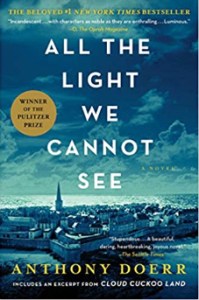
Okay, I finished reading Micky Spillane’s Kiss Me, Deadly–which ended with a lot of people getting killed–and am now re-reading Anthony Doerr’s book while waiting for my Cormac McCarthy book to arrive. Quite a change of pace moving from rough and tumble private eye stuff to this beautifully written Pulitzer Prize-winning novel.

While I enjoy re-reading books, I would prefer reading factory-fresh new books, though neither my budget nor the space in our small house will support the arrival of two or three new books per week. So, like a lot of you (perhaps), I spend more time re-reading than first-time reading.

As an author, I spend time writing, though oddly enough, I write better when the little grey cells (as detective Poirot always said of his brain) are engaged in an interesting book. The books I read are nothing like the books I write; that means I never have to worry about inadvertent plagiarism. As far as I know, nobody writes like me, so I can’t even accidentally borrow another author’s plots or dialogue.

Doerr has a few blurbs about this book on his website including the comment by “Vanity Fair” that ““Anthony Doerr again takes language beyond mortal limits.” We would all like reviews like that. Sadly, books written by small press authors are never seen by reviewers who write comments like that. We are more or less anonymous and invisible, the upside being that few writers are likely to “borrow” plots and dialogue from our books.

Like most authors, I read better than I write. All The Light We Cannot See is a gem, the kind of work I feel fortunate to have on my shelf to I have something to do at an age when, as some bad writer once said, my get up and go as got up and went.

How about you? Do you find yourself reading cereal boxes or re-reading old stuff on your bookshelf more often than reading something new?

–Malcolm

Malcolm R. Campbell is the author of magical realism, paranormal, and contemporary fantasy novels and short stories. 

A readers’ advisory for this collection of nine stories forecasts widely scattered ghosts with a chance of rain. Caution is urged at the following uncertain places: an abandoned mental hospital, the woods behind a pleasant subdivision, a small fishing village, a mountain lake, a long-closed theater undergoing restoration, a feared bridge over a swampy river, a historic district street at dusk, the bedroom of a girl who waited until the last minute to write her book report from an allegedly dead author, and the woods near a conjure woman’s house.

In effect from the words “light of the harvest moon was brilliant” until the last phrase “forever rest in peace,” this advisory includes—but may not be limited to—the Florida Panhandle, northwest Montana, central Illinois, and eastern Missouri.

the gods conspire

Many writers speak of the joy of writing, how the day is not complete unless they can sit down and work on their latest story, how they would write if nobody knew they wrote, how writing completes them like icing on a cake. Most writers also know that even on the best of days, the gods conspire to defeat their best efforts, or cause mischief, or add a few roadblocks where logic says there should be none.

The writer’s first duty is, perhaps, not getting so frustrated when the gods conspire that s/he comes to a point where s/he can no longer write. At the same time, it’s considered bad form for a writer to complain in public, so other than having a sympathetic and patient spouse, writers seldom have anyone willing to listen to their frustrations.

When I think of my own frustrations about major publishers and reviewers, I remember my college writing instructor Michael Shaara’s frustrations. He won the Pulitzer Prize for his 1974 novel The Killer Angels. Even so, most people never heard of it until after the movie based on the novel was released in 1993 five years after Shaara died of a heart attack at 59. Then reviewers started saying The Killer Angels was the best civil war book ever written. I can’t help but think how the gods conspire when he never heard that or saw that readers finally discovered his work.

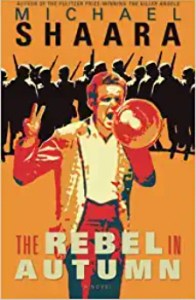
But that’s not the half of it. His best novel The Rebel in Autumn, written prior to The Killer Angels, never found a publisher in his lifetime. Written about the protests of the 1960s, it was (perhaps) too current for publishers to accept. Like his baseball novel For The Love of the Game, which became a Kevin Costner film in 1999, Rebel was published through the influence of his children Jeff and Lila (both are authors) posthumously in 2013.

I doubt it does an author any good to have some close friend say, “You feel unappreciated now, but after you’re dead, people will love your work.” When the gods conspire, they love this scenario. Loners at Florida State University in the 1960s–myself included–were drawn to Shaara as a kindred spirit. We all felt out of place and we talked about this between classes at a spot that served decent coffee and didn’t mess with while you used to booth without paying rent. We all knew what the gods did and we all felt that one day our numbers would be up.

So, The Rebel in Autumn doesn’t surprise me as a novel (other than how good it is and how wrong the rejecting publishers were) because we talked about protest, the war, the establishment government, most people over 30, the political vicissitudes of a university, and the survival of the nation. The novel was and is about our shared experience, our common worries, and our frustrations with the absurdities of our daily lives.

I do not feel comfortable reviewing my mentor’s novel, but I can say that I share his frustrations about the lack of good sense of major agents and publishers. 

–Malcolm

Glacier Park Novel – Audiobook Edition

Malcolm R. Campbell

Publisher: Thomas-Jacob Publishing

Website

Facebook Author’s Page

Amazon Author’s Page