Relief of National Park Seasonal Hiring Overshadowed by Reckless Staff Cuts

National Parks and Conservation Association

News Release – February 2025

WASHINGTON – The National Parks Conservation Association (NPCA) and park advocates across the country are demanding the Trump administration put an end to devastating staffing cuts that will wreak havoc on the National Park System. The Department of the Interior will exempt 5,000 seasonal positions under the current hiring freeze, while simultaneously terminating 1,000 National Park Service employees, just as visitors are planning their spring break and summer vacations to national parks.

Unfortunately, today’s cuts will leave parks understaffed, facing tough decisions about operating hours, public safety and resource protection.

Statement by Theresa Pierno, President and CEO for the National Parks Conservation Association (NPCA):

“Allowing parks to hire seasonal staff is essential, but staffing cuts of this magnitude will have devastating consequences for parks and communities. We are concerned about smaller parks closing visitor center doors and larger parks losing key staff including wastewater treatment operators.

“Exempting National Park Service seasonal staff from the federal hiring freeze means parks can fill some visitor services positions. But with peak season just weeks away, the decision to slash 1,000 permanent, full-time jobs from national parks is reckless and could have serious public safety and health consequences.“

“Years of budget cuts are already weakening the agency’s ability to protect and preserve these incredible places.

“National parks fuel local economies across the country, generating billions of dollars for area businesses and supporting hundreds of thousands of jobs. Slashing staff could have a ripple effect on gateway businesses and communities that depend on parks for survival.

“Park staff work tirelessly to protect our nation’s most treasured places, from Yosemite to Gettysburg. They educate visitors, safeguard history and preserve what makes our country special. This isn’t how we treat the places we cherish or those who protect them. We’re calling on our leaders to prioritize our parks and the staff who keep them safe and running.”

Unfortunately, today’s cuts will leave parks understaffed, facing tough decisions about operating hours, public safety and resource protection.

Malcolm


On getting older

When I was young,  nobody told me what getting older was like.

My grandparents had the usual complaints. Lumbago. Failing eyesight. Being ignored. Awake all night.

Some said our elders were all-wise and all-knowing.

I never thought I would feel l wise like Dumbledore or that, instead, age brings as many regrets as it does. But I look back and see what I shouldn’t have done or could have done–and that I should have learned to forgive.

FDR was President when I was born. Did you suspect that? Most people don’t because they’ve forgotten FDR and history in general. At the time, I didn’t know he was President or that Truman dropped the bombs. I never forgave Truman. My first knowledge of world events came during the Korean War. I never forgave anybody for that mess–or Vietnam, either.

Looking back takes time because it’s a long trip. I do remember reading All Quiet on the Western Front and knowing–even as I read it–I would carry the scars of that story forever. That book is one reason I became a pacifist. I’m not sure about everything I think I see while looking back because I’ve used so many of my personal stories in my fiction. So I wonder, did that really happen or did I make it up. Most of the people who could answer that question are gone or, perhaps, fictional. In my youth, the KKK was real and my first real fear. They were everywhere. They burnt a cross on my minister’s lawn. All that was too evil to make up so it made its way into my books. I changed the names of the people I knew who were members of the very visible invisible empire. The same goes for the real people in my Navy experience.

My writing output has slowed down with age. I didn’t see that coming. In some ways, I’m just too tired to slog through the real and imagined memories anymore. I think that happens to a lot of people who were born when FDR was President. Hmm, I might be making that up.

–Malcolm

Blog for Peace

Yesterday, bloggers around the country were blogging for peace. I should have done it, but I wasn’t feeling very peaceful as I watched the election returns and felt that the country wasn’t going to seem very peaceful no matter who was elected President.

I appreciated Marianne Williamson’s all-to-brief run for the Presidency, not because I thought she had a chance of winning, but because she was disseminating a different message, one of hope and the ever-available possibility of transformation. Her candidacy reminded me somewhat of that of Eugene McCarthy years ago in which he said his goal was more in getting a message out than expecting to win.

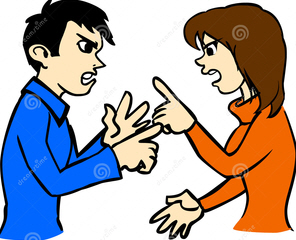
I feel these days that Americans are a huge dysfunctional family that can’t quite stop the squabbling long enough to work together. If I had some magic words that would convince everyone to pull back from their most antagonistic stances, I would have blogged for peace. 

Seems to me, no one is listening. Half of the memes I see on Facebook are wrong because those who posted them only care about one side of the story. I’m more of a moderate than those screaming on Facebook, so after finding no common ground with the most volatile posters and groups, I’m at a loss to find anything to say that matters.

Today’s political reality seems forever on the verge of a mog waiting to happen. Yesterday people were squabbling about the Fox News’ call that Biden won Arizona. The mob didn’t seem to realize that Fox News’ decision desk isn’t running the election. I have to idea how to talk to people who have no clue how stuff works.

I should have blogged for peace, but sometimes it just doesn’t seem worth the effort when everyone seems geared up for a fight.

Malcolm

Malcolm R. Campbell is the author of two contemporary fantasies, “The Sun Singer” and “Sarabande.”

At best, we don’t want to be misunderstood

People are often wary about being understood because they think being understood begins with them having to share too much private information with others. However, being misunderstood is another can of worms because it begins with others thinking you are something you aren’t or that you did something you didn’t do.

In marriages, hurt feelings–and perhaps, separations and divorces–come from an unintentional cross word or something said in a fit of anger or the wrong impression given by saying something that isn’t clear.

The same thing can happen between good friends, business or club colleagues, or neighbors

In employer/employee relationships all kinds of things can happen when the employee doesn’t understand where the boss is coming from and vice versa.

What amazes me is how little it often takes for communications between people to get into a mess and how hard it is to get things out of that mess.

I suppose pride is part of it, feeling hurt is part of it, and the surprise of feeling misunderstood is part of it.  Sometimes a friend can see the problem quicker than those involved, noticing that the obvious question that should be asked isn’t getting asked and/or that the best thing either person can say isn’t being said.

This reminds me of novels and TV shows where the shit hits the fan and things never get cleared up. Readers and viewers, of course, can say, “Well, if s/he had just asked XYZ, everything would have been cleared up in a second.” When an author omits the most obvious question any sane person would ask, they’re screwing with their readers by keeping the story going long after it should have been over.

“Real life” is a bit more complex. As I say this, I think of Eric Berne (Games People Play) and his rather cynical reasoning why relationship problems that look easy (to an outsider) to fix never get fixed. Basically, people enjoy/need the uproar more than they need the serenity of a good marriage, a good friendship, or a good work environment.

In the chaos of today’s world, I’m saddened by the issues that people would rather argue about than fix/solve. Of course, the media isn’t helping. Both CNN and FOX often refuse to cover stories that don’t match their corporate agendas. This keeps a lot of people ignorant. And, it builds misunderstandings where none would exist if everyone were given the facts as news instead of opinions as news.

I wish more people would go to multiple news sites before forming an opinion about the issues of the day.  Then they would get the answers to the questions some sources never ask (but should).

Many people are being misunderstood these days because one party or the other likes it that way. I think we need a psychologist who treats political parties, PACS, think tanks, and social service groups. Then maybe we’ll find the unity people say they want while sabotaging every realistic approach to achieving it.

Maybe they can save a few marriages in the process.

–Malcolm


Writing about current issues

During the 1960s, folk songs, poems, and books focused on the stormy issues of the day. They seemed to have a large audience, primarily among high school and college audiences. One primary focus was, of course, the war, followed by such things as the military-industrial complex, credibility gap, conscription, ROTC on campuses, and civil rights.

Protest songs and literature seemed to subside for a while; or maybe not. If they did, they have certainly returned now. Sites like Literary Hub, Arts & Letters Daily, and Poets & Writers that post articles and links claim there are more writers speaking out today than ever. The liberal writers, of course, focus their wrath on Trump; the conservative and moderate writers focus their wrath on the Democrats’ move toward the far left.
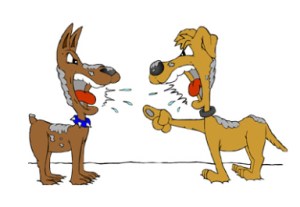
I think the anti-war movement during the 1960s did finally influence more people to look at what we were doing in Vietnam and whether or not it was worth it. Maybe I’ve just gotten older, but it seems to me that a lot of today’s protests are preaching to the choir; it’s as though the writers have given up on influencing the opposition.

I try to stay away from most of that. For one thing, I seldom write poetry, so I can’t suddenly come out with a new poem that speaks to an issue. While my Florida Folk Magic series targets Jim Crow attitudes and the KKK in the 1950s, I’m not writing present-day fiction that gives me an opportunity to make snarky or wise comments about today’s issues.

I do have hot-button issues such as China’s brutal and illegal occupation of Tibet, so-called honor killings, and the environment, and from time to time, I say something about one or more of these on Facebook. Most people who see my news feed tend to ignore Tibet and honor killing posts while agreeing that we don’t need to be rolling back conservation gains made in previous years. Sometimes I wish I were a badass poet who could write quickly, for then I could speak more about the issues I care about.

So, for the most part, I am silent. Those who champion many issues say that our silence is the same thing as consent. Perhaps so. I feel bad about that at times. However, I’m a long-time introvert, so I’m not going to be out there like AOC with a daily barrage of complaints and finger-pointing. President Nixon popularized the phrase “silent majority,” implying that outside all the shrill protests, a large number of people (presumably) agreed with him. I didn’t like that phrase then and I don’t like it now because it’s just too darned easy to say that the so-called silent majority supports whatever you want.

I do have a volatile Scots temper, so I’m likely to get into serious trouble online if I say what I really think. Plus, I have a general distrust of political parties, so my views are all over the spectrum rather than dictated by the top brass of one group or another. This means that when I do speak out on Facebook, I tend to get bashed by both Republicans and Democrats. General Chesty Puller once said, “We’re surrounded. That simplifies things.” Yes it does, but it’s not a comfortable place to be online.

So, when anybody asks me what I think about the issues, the Fifth Amendment is my friend. That sounds gutless, I know, but at my age, I can’t beat anyone up or run fast enough to get away from them.

Malcolm


I worry about all the shouting these days

Politics has become very confrontational these days, so much so that the Congress would rather provoke the opposition with tirades rather than work together to actually accomplish something. Even a watered-down improvement in a major issue is likely to be better than inaction.

Most of us know that when a business meeting, city council meeting, or family discussion turns into exaggerations and shouting matches, nothing good will come out of it. Protestors and members of Congress seem to have forgotten this.

In a Facebook discussion yesterday, I got into a debate with somebody who said we are duty-bound as citizens to become counter-protesters whenever a group we despise holds a rally or a “parade.” I disagreed. When certain groups, and their opposites, meet on a city street, the result is shouting. By itself, that accomplishes nothing. Sometimes it leads to violence and property destruction. The news media has a field day and the group that scheduled the march gets a lot of publicity.

I would rather ignore them. Let them have a march that’s met with absolute silence. That hardly makes the news. I grew up in a county where the KKK had a march about once every month or so. Those who supported the KKK stood and watched them go by on the street. Those who didn’t support them stayed away. The result: the news media had nothing to report and nobody got killed or arrested.

Then, as now, anyone yelling verbal threats at the marchers (or getting in their faces) is committing a crime (assault). Is it worth getting arrested to tell members of a group one doesn’t like that they’re really full of it? That’s what they want you to do. That gives them news coverage and lends some of their opposition in jail. Who’s the winner here?

When this kind of thing happens, we all lose. Instead of dialogue that might lead somewhere, we maintain the angry status quo where nothing gets fixed.

–Malcolm

How much politics do you want in the novels you read?

Poets, fiction writers, essayists, and other artists have long been at the forefront of protests against unfair regimes, laws, and negative cultural practices. They still are being censored, imprisoned, and killed. So, I find it hard to protest against the increased amount of political discussion on writers’ sites these days. I suppose if a reader stays within a specific genre or group of authors and mostly reads their material, this increase in politics might be less noticeable. I see it because I’m always searching for writing news sites for information for my author’s page on Facebook.

On that page, I provide four-to-five links a day about recent book news. But my sources are becoming more and more political and making that harder for me to do without politizing the page. That is, I’m finding less information about new releases and author interviews and writing tips, and more information about authors’ views about present-day politics. If I link to such articles very often, I’ve become a political site rather than a books and authors site.

I applaud writers who speak out even if I don’t agree with them. But speaking out is good! Let’s face it, my Florida Folk Magic Series of three novels speaks out against the KKK and the Jim Crow laws of the 1950s.

Let’s face it, politics in the United States at the present moment is–for want of a better analysis–a fractured, polarized mess. It’s natural for writers to speak out about it. Even so, many readers turn to fiction and poetry for entertainment, the discovery of new ideas, and to experience their love of words. I really think some, perhaps many, of those readers do not want the worst of the daily news embedded in every novel and poem they read.

I tend to avoid political books that focus on the current moment because I don’t want to pay $25.00 for a book that contains the same stuff I see on the daily news and that will be out of date in a few years. Even my favorite writers have to wait for the Kindle or mass market paperback versions of their novels to come out before I buy them. As a writer, I think that “too much” current politics dates a novel and makes it unlikely to be read five years from now. So, I’m not going to write a novel about a bunch of people who want to impeach Trump or who want to keep him from being impeached. Stephen King might be able to carry it off, but it’s beyond me, and once Trump is gone, who’s going to read the book?

What about you. Do you look for novels that explore or exploit the current political debates of the day? Or, do you read what you usually read and hope it doesn’t sound like either CNN or FOX news?

Malcolm


Does everyone in the U.S. need an anger management class?

“How dare you don’t agree with me, you ignorant bastard.”

I’ve seen responses like that so often on Facebook that I seldom get involved in political “discussions.” Looking at this, and many of the protests, some commentators are asking why “everyone” is so angry.

Maybe we’re just flat tired of the ultra-polarized world we’ve suddenly found ourselves in. There seem to be few shares of grey: you either support a candidate or belief system 100% or you’re scum. There’s seldom an alternative. If you’re a moderate, in years gone by, you might have been a peacemaker, one who’s trying to bring together extreme views into a consensus. Now, moderates get beat up online by the extremists on both sides of the political aisle.

We’re told that our silence is consent in so far as nasty issues are concerned. Yet when we speak out, we’re lambasted by a lot of angry people when we don’t buy into one extreme or the other hook, line, and sinker. I see more shades of grey than either/or, but there’s little I can say online to combat those who are 100% for XYZ and those who are 0% against XYZ because all of those people sound like they’re getting their talking points from the same kinds of places. That is, they aren’t speaking for themselves but for a point of view, that’s (apparently) beamed into their minds by a BORG mothership or a PAC or a political party.

It appears to me that a lot of people feel very uncomfortable when the views they’ve had for a lifetime are questioned by others. Quite often, those views were considered mainstream, the kinds of things that “everybody” in the country believed in. Now, people are finding out that the kind of views that might have seemed reasonable in the 1950s aren’t reasonable today. So, they don’t know how to respond other than with anger and profanity.

Some people wonder if all this anger will send the country into another civil war. I don’t think so, though I can see why many people might think that our differences cannot be healed peacefully. In general, I have a live and let live viewpoint. If another person or group is not a real and present danger to you and others, why get upset about it? Yet a fair number of people apparently think that their religion and their value system and their yardstick of right and wrong should be applied to everybody else. I don’t get it.

I have always believed that the tenets of one’s religion apply only to those who subscribe to that religion rather than the public at large. A lot of the anger seems to come from the belief that “whatever my god tells me to do applies to those with other religious beliefs.” I think that’s an arrogant stance. Why do any of us need to control another person based on our own religious beliefs? Why do people fight like hell to impose their religious beliefs on others via state and federal law? Anger often seems to be a result of this kind of thinking.

We seem to have gone past the point where civilized debate is possible. Personally, I think that if a protester or a politician or an activist cannot listen to the opposition, their cause is suspect. That is, they are not sure of their enough of their stance to be civil. Or even human.

If you look at the political speeches of the day, the commentaries about those speeches, and the fallout on social media, you’ll see–I think–that more people want to be aggrieved than want to find unity.

–Malcolm


The OSCARS risk becoming irrelevant

Once upon a time, I watched the Academy Awards on TV without fail. I loved the movies and everything about them. But not anymore.

What’s changed?

On a practical note, I’m too hard of hearing to go to movies. I don’t see them until months after their release dates when they finally appear on TV with closed captions. So, as of OSCAR night, I have seen none of the nominated films and, other than a few news stories and trailers, have no clue what they’re about. That pretty much kills my interest in the broadcast.

But even if my hearing were fine and I had seen a fair number of the nominated films, I wouldn’t watch. Yes, I might care about the winners, but I’d learn about that the following day on the news.

I am tired of actors and actresses using the OSCAR broadcast as a political pulpit. Like most viewers (I hope), I see the broadcast as being about the movies, not poltical statements in opening monologues, sketches, and acceptance speeches. I get more than enough of this from the news and social media day in and day out and think it’s out of place on an awards program.

Hollywood stars have just as much right as anyone else to express their opinions. Nonetheless, the Academy Awards broadcast is not the forum for that.

When they speak of politics during the broadcast, they appear to be stumbling over each other to prove that they are the most liberal, the most intelligent, and the most politically correct person in the theater. Do they not realize that everyday people see them as members of the so-called filthy rich? I want to shout, how dare you lecture me on politics when you earn more in a year than I do in a lifetime and own multiple homes, each of which is worth more than my entire neighborhood.

You, dear actors and actresses, who can afford the taxes that you might be forced to pay if your left-leaning social programs were implemented, fail to realize that the rest of us cannot afford a government that looks like an unlimited charity. Sure, we support many of the same ideas, but you go too far because you can afford to go too far. You stand on that stage in clothes worth more than my annual income and–with a knowing wink and nod to the audience–advocate programs that will raise my taxes to the point where I cannot afford to live in this country.

Of course you believe you can do this because believe you are America’s royalty, right? We wish we were you, right? We wish we could sit for a few moments in your presence, right? We go to your movies because we love you and know that you care about all of us, right?

Frankly, I would be embarrassed to be you.

So you are turning the OSCARS into a PAC, so to speak, that’s out of sync with most of the country. That’s why, one day soon, we’ll stop caring about you and your awards program. You want us to think OSCAR night is about the movies. But that’s not true, is it?

–Malcolm


All of you political PR flaks need to quit bugging me

God forbid you should ever donate to a cause because once you do, your in-basket will be filled with dire warnings such as DONATE NOW TO STOP WORLD FROM BLOWING UP.

Does this almost-SPAM really work?

I associate it with the kinds of pitches I see aired with late-night TV shows where actors who look as reputable as Hannibal Lector try to push “miracle” products that I can get delivered immediately at 99% off if I call now. “Operators are standing by.”

So now, it’s politics. The bogus theme I hate most is, “Hey, Malcolm, we need 100,000 signatures by midnight to stop [whoever] from doing [whatever].” Are you serious?  What’s with the deadline? This crap has been going on for years and suddenly I have to sign some silly petition with no legal standing by midnight?

And, “Malcolm, are you with us? A mysterious donor will triple match all contributions made in the next 15 minutes.”

I wonder how long it will be before this shrill rhetoric turns into outright threats. “DONATE OR DIE. Killers are standing by to rub out everyone who fails to support our nonviolent loving kindness campaign by high noon.”

When I see a lot of this schlock from the same place, I unsubscribe, assuming I can figure out how and can get through the barrage of questions I have to answer: “Don’t you love us anymore?” “Did we do something wrong?” “Do you think we’re just a bunch of assholes?”

Then, after I unsubscribe to something I never signed up for in the first place, guess how much good it does? Nada. Zip. The dire messages and pleas for money keep coming.

I figure e-mail SPAM and blog comment SPAM must work because they aren’t going away. I’m starting to think that I should use this technique to sell my books: “Hello, buy a copy of Conjure Woman’s Cat by midnight or I’ll put a hex on your ass.”

Okay, it was just a thought.

But seriously, you political bastards asking for money and signatures before midnight need to shut the hell up. Let’s see, if given the choice between donating to your petition drive or buying a bottle of Scotch, what should I do? I’m buying the Scotch because it tastes good while the petition drive probably isn’t going to do squat.

I saw an article today that said most cell phone calls will soon be from spammers. I can believe that. Most of the e-mail in my in-basket is SPAM. Thank goodness WordPress weeds out most of the SPAM comments on my blog. Everybody’s talking and nobody’s listening.

The reason is simple: those doing the talking are selling snake oil.

Malcolm