The Rainbow (2021) brings readers one of the many “smaller” and more personal stories of bravery and loss and old secrets behind the larger headlines from Germany’s World War II invasion and brutal occupation of Poland. In the process, we learn some history we never knew and are all the better for it.
From the Publisher:
 “Nazi-occupied Poland, 1940. When soldiers drag Tomasz back to his family’s farm, they put a gun to his head and tell him he must join the German army, or see his loved ones forced into the camps. Staring into the wide blue eyes of his childhood sweetheart Zofia, Tomasz does the only thing he can. Over the course of the war, he will risk his life, love and the respect of his own people, to secretly fight for good against evil. All the while, he longs to be reunited with Zofia… but will his brave choices tear them apart forever?
“London, present day. Isla has grown up wearing her grandfather’s rainbow scarf, a beloved memento from the Second World War, and hearing his stories about his time as a young soldier bravely fighting the Germans to protect his people. But as she is collecting photos for his 95th birthday celebration, she finds an old photograph of two men standing in Nazi uniforms, next to a folded piece of paper… a newspaper article, written in German. She knows that name.
“Her grandfather is too weak to answer questions, so Isla begins her hunt for the truth.
“There is so much she doesn’t know. And what she learns about a love story and a secret from seventy years ago will change her own life forever.”
From the Author:
“The inspiration for The Rainbow was one born from my own familial history – it portrays a little-known historical wartime experience of Polish men and boys who were forcibly conscripted into the Wehrmacht. Little has been written about the fate of Polish soldiers in the Wehrmacht, either in historical fiction, or in German or Polish academic works or biographies, while in the UK, the part played by Poland in the war more generally has often been side-lined. Whether through trauma or shame, it is not known why their stories were not recounted.
“As a child, my grandfather would tell me the story of his journey to England from his home country of Poland; his memory, to me, seemed sharp and yet the facts were bland – he was a soldier in the Second World War and he came to England and trained with the Polish army in exile. When the war ended, he stayed and married my grandmother.
“It was only years later that my grandmother revealed he had first been a soldier for the Wehrmacht, and only subsequently joined the Polish army upon arriving in the UK.”
While a little slow in places, Isla’s quest to uncover the secrets of her grandfather’s life during the war years is a strong story about strong people faced with decisions they did not want to make. Words well worth reading, I believe. Afterwards, those words will haunt you for a while, perhaps longer.
 Malcolm R. Campbell is the author of the Vietnam War novel At Sea.
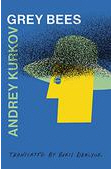 There isn’t a huge amount available in English, but if you can wait until March 29, Deep Vellum will be publishing Andrey Kurkov’s Grey Bees, written in 2018, in a new translation by Boris Dralyuk. Set in the “Grey Zone,” the no-man’s-land between Ukrainian soldiers and pro-Russian separatists in the Donbas region, it tells the story of beekeeper Sergey Sergeyich, who finds himself one of the last two inhabitants of his forsaken village. Our review says, “Kurkov transforms the abstractions of geopolitics into an intensely human account of compassion and persistence.”
 Ruta Sepetys’ superb young adult novel traces the flight of Joana (Lithuanian), Florian (Prussian), Emilia (Polish) and Alfred (German) from the advancing Soviet army. Alfred is a sailor sent to the port of Gotenhafen for duty on board the Wilhelm Gustloff to help evacuate those escaping from the Soviet advance. Joana, Florian, and Emilia have a more difficult trek to Gotenhafen because they are also running from the German army.
 Malcolm's Round Table