Sunday’s Gumbo

  • Some people make what they call “gumbo” with filé powder and no okra. I cry foul. “Gumbo” is a synonym for “okra,” so if you’re using that powder and no okra, what you have ain’t real gumbo. My 2¢.
  • While waiting for two Kristin Hannah books to arrive, I’m enjoying re-reading Magic Bitter, Magic Sweet. I first read it in 2016 so by now I’ve forgotten so many details, it’s almost like reading a factory-fresh new book. From the publisher: Maire is a baker with an extraordinary gift: she can infuse her treats with emotions and abilities, which are then passed on to those who eat them. She doesn’t know why she can do this and remembers nothing of who she is or where she came from. When marauders raid her town, Maire is captured and sold to the eccentric Allemas, who enslaves her and demands that she produce sinister confections, including a witch’s gingerbread cottage, a living cookie boy, and size-altering cakes. During her captivity, Maire is visited by Fyel, a ghostly being who is reluctant to reveal his connection to her. The more often they meet, the more her memories return, and she begins to piece together who and what she really is―as well as past mistakes that yield cosmic consequences. From the author of The Paper Magician series comes a haunting and otherworldly tale of folly and consequence, forgiveness and redemption.
  • According to a Facebook meme, we’ve left spy balloon season and entered train derailment season.
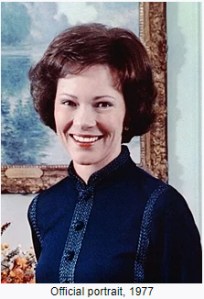
  • It’s sad to see former President Jimmy Carter going into hospice care. My wife and I met Rosalynn Carter when she gave a wonderful mental health-related speech at the Atlanta History Center. After the talk, she walked through the audience row by row and thanked each of us for coming. Her hand was so fragile I felt like I might inadvertently crush it. Her smile though and her focus on each of us when we shook hands–those were indestructible. I’ve been impressed by the Carters’ long-time support of Habitat for Humanity, including going on-site and hammering nails.
  • Note Number Two: It really irks me that they (whoever they are) took the ¢ sign off the computer keyboard. It seems more useful than the + sign which is still there. In the 1950s, we would have said that commies were responsible for this conspiracy. Now, I’m guessing it’s some neo-whatever group.
  • Dear Ingram: Every time you raise printing prices, we have to redo covers and update the price of the books in the bar codes and on the site. This is a real hassle. Think of the price you first charged us as similar to rent control and engrave it in stone for all time.
  • Aw shucks, none of my books made it onto PEN America’s literary awards list of finalists. With a share of PEN’s $350,000 in total prize money, my publisher wouldn’t have to worry about the costs of updating our Ingram covers.
  • I was all set to drive a $70,000 Plus Six Morgan off the lot when my wife steered us to the Honda dealership where we bought a 2019 HRV at a fraction of the cost. My realities don’t match my dreams. Of course, if we’d bought the Morgan, we would have needed to clean out the garage so that at least one car fits in there. So, there is that.

–Malcolm

Malcolm R. Campbell is the author of the comedy/satire novel “Special Investigative Reporter.

FL GOVERNOR DESANTIS’ PROPOSALS ON HIGHER EDUCATION POSE A GRAVE THREAT TO ACADEMIC FREEDOM AND FREE SPEECH AT PUBLIC COLLEGES AND UNIVERSITIES

FOR IMMEDIATE RELEASE

NEW YORK — PEN America today called Florida Governor Ron DeSantis’s announcement of a broad outline of legislation to restrict the historic autonomy of higher education “a grave threat to free speech and academic freedom” at Florida’s public colleges and universities.

Among other changes, the governor’s proposals announced Tuesday would ban critical race theory (CRT) and diversity, equity, and inclusion initiatives (DEI) at universities; effectively end tenure protections by giving boards of trustees hiring and firing power over faculty; rewrite university mission statements; compel colleges and universities to deprioritize certain fields that are deemed to further a “political agenda”; and “overhaul and restructure” New College of Florida, whose new board of trustees, made up largely of conservative pundits, on Tuesday fired the college president and replaced her with a political ally of the governor.

In response to the proposals, Jeremy C. Young, senior manager of free expression and education at PEN America, released the following statement:

“These proposals represent nothing less than an effort to substitute the dictates of elected officials for the historic autonomy of higher education institutions. If enacted, they would unquestionably pose a grave threat to free speech on Florida campuses. The core freedom that is a vital prerequisite of academic research and teaching is the ability of scholars and students to pursue lines of inquiry, and this in turn depends on a university remaining free from political interference.

“Further,” Young continued, “the recent actions at New College — where a board selected to further an ideological agenda fired the president at its first meeting — reflects the inclinations of a government that wants to exert greater and narrower ideological control over higher education; not one that respects open inquiry or academic freedom. This proposal and these actions deserve vehement and vigorous opposition from all who hold free speech on campus dear.”

I went to public school and college in Florida. If I were a student in that system now, I’d be worried about the governor’s dictatorial approach to a system that should be immune from DeSantis’ political beliefs and agenda. Sooner or later, the universities will face accreditation problems.

–Malcolm

Weak, unintelligent people are trying to control the books you and your children read

  • From July 2021 to June 2022, PEN America’s Index of School Book Bans lists 2,532 instances of individual books being banned, affecting 1,648 unique book titles.
  • The 1,648 titles are by 1,261 different authors, 290 illustrators, and 18 translators, impacting the literary, scholarly, and creative work of 1,553 people altogether. —Banned in the USA

PEN America’s “Banned in America” summarizes what many of us have seen more and more often in the news: book bans.
They are a weapon used by weak people and weak groups who have so little confidence in their beliefs, they are fearful of what might happen if people are free to read about alternatives. The German government, controlled by the Nazi party, burnt the books in town squares, a more uncouth version of the book bans.

Book bans in government schools and government libraries are, of course, unconstitutional since they run counter to the Bill of Rights. And yet, how easily people flock to this method of stifling the free flow of ideas when a particular book bothers them.

In a September 22 news release, PEN said, “With free expression and the freedom to read being undermined in America’s schools, Congressman Jamie Raskin today introduced a resolution in the U.S. House of Representatives condemning the spread of book bans in schools nationwide, as Senator Brian Schatz leads a companion resolution in the U.S. Senate. PEN America commends the lawmakers’ efforts, which reaffirm Congress’ commitment to upholding free expression in the classroom and beyond.”

While I think this is good, I doubt that most people will even know that it happened, much less change their gutless, book-banning behavior if they did hear about it. I would like to hear more protests from those who abhor the book bans. Let’s put the banners under a microscope and embarrass the hell out of them for being too weak to admit they are weak.

–Malcolm

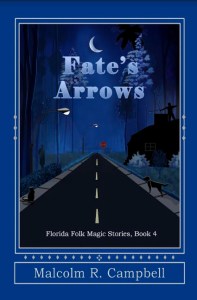
Malcolm R. Campbell is the author of the Florida Fok Magic Series.

New ‘Freedom to Learn’ op-ed series to appear in Washington Post’s ‘Made in History’ Section

Pen America – FOR IMMEDIATE RELEASE

Amid an unparalleled wave of attacks on academic freedom and public education nationwide – including the introduction of nearly 200 educational gag orders and the adoption of gag order policies in 19 states – PEN America, in partnership with the Washington Post’s Made by History section, is launching a new Freedom to Learn op-ed series.

Made by History is an independent editorial section of the Post featuring content from academic historians on current events. Edited and published by the Made by History editorial team and sponsored by PEN America, the Freedom to Learn series will provide historical context for the current assault on public education in the United States and elsewhere.

The Freedom to Learn series will consist of ten articles to be published in the summer and fall of 2022, beginning on August 15. The series will culminate with a public virtual event, sponsored by Lumina Foundation, featuring several contributors to the series.

“We’re excited to partner with the Washington Post’s Made by History to support high-quality, well-researched analysis by professional historians on the unprecedented threats to our education system,” said Jeremy C. Young, senior manager of free expression and education at PEN America. “Over the past five years, the Made By History team has developed a consistent track record of excellence in publishing insightful historical analysis of current trends. PEN America is thrilled to support their work and to help educate readers about the extraordinary challenges teachers are confronting today.”

“Made By History is dedicated to publishing rigorous historical analysis of U.S. current events and public debates to help the public understand the current events,” said Diana D’Amico Pawlewicz, a historian of education and an editor at Made By History. “Recent attacks on the classroom curriculum have historical roots, and we are excited to work with PEN America to bring rigorous scholarship by professional historians to shed light on the origins, implications, and consequences of the hyper-politicization of education.”

I support this action and hope it helps end attacks on learning my misguided citizens and groups. Perhaps the series should become a permanent part of the newspaper.

–Malcolm

Malcolm R. Campbell’s contemporary fantasy e-book is free on Amazon between 8/4 and 8/8.

FAILED BILL BROUGHT BY ARIZONA DEMOCRATS WOULD HAVE RESTRICTED WHAT TEACHERS CAN TEACH

Imposing Content-Based Restrictions on Teachers Through Law Violates Free Expression

FOR IMMEDIATE RELEASE: Pen America, July 5, 2022

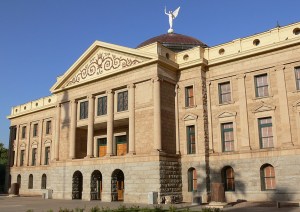
AZ Capitol Building – Wikipedia Photo

(NEW YORK)– Since Republican state legislators began proposing educational gag orders in January 2021, votes on these legislative restrictions on the freedom to read, learn, and teach have generally broken down along partisan lines.

Last week, however, 11 Democrats in the Arizona House of Representatives introduced HB 2634, an unsuccessful bill that would have banned from school curricula “any textbook or other instructional material…that contains any matter reflecting adversely on persons on the basis of race, ethnicity, sex, religion, disability, nationality, sexual orientation or gender identity.”

In response, Jeremy C. Young, senior manager of free expression and education at PEN America. said: “Government-imposed censorship of students and teachers is always the wrong approach, no matter the motivation, and no matter which side of the political aisle it comes from. Educational gag orders have no place in our schools, period.

Had HB 2634 become law, Arizona teachers might have been unable to assign materials that depict historical or literary instances of discrimination to educate students about why discrimination is wrong — such as the Supreme Court’s Plessy v. Ferguson decision or the works of Pulitzer Prizewinning author Toni Morrison. We should never seek to impose content-based restrictions on teachers through the force of law. Doing so violates the principle of free expression and impoverishes student learning in the classroom.”

Malcolm

PEN AMERICA OPENS SUBMISSIONS FOR 2023 LITERARY AWARDS

Over 20 Distinct Awards and Grants are Conferred Each Year: $380,000 to be Awarded to Writers & Translators in 2023.

FOR IMMEDIATE RELEASE

(NEW YORK)– The literary and free expression organization PEN America today announced the opening of submissions and nominations for the 2023 PEN America Literary Awards. Submissions for book awards will be accepted in 10 categories, from fiction, poetry, biography, essays, and science writing to debut novel, short story, translation and multi-genre. Publishers and literary agents are invited to submit books published in the 2022 calendar year.

Since 1963, the PEN America Literary Awards have honored outstanding voices in literature across fiction, poetry, science writing, essays, biography, children’s literature, and drama. With the help of their partners, the PEN America Literary Awards confer over 20 distinct awards and grants each year, and will be awarding some $380,000 to writers and translators in 2023.

PEN America also opens submissions to the PEN/Robert J. Dau Short Story Prize for Emerging Writers, and the PEN/Bellwether Prize for Socially Engaged Fiction, offered every two years. Nominations are now open for the PEN/Nora Magid Award for Magazine Editing and the PEN/Laura Pels International Foundation for Theater Award

Clarisse Rosaz Shariyf, Senior Director of Literary Programs, said: “It was a special honor for all of us at PEN to celebrate the extraordinary writing among this year’s winners of our literary awards, as we returned to the Town Hall stage for the first time in two years. We can’t wait to do it all over again next spring to honor a new group of literary stars whose novels, biographies, memoirs, poems and translations will define the meaning of excellence for readers everywhere.”

Award and prize winners will be celebrated live during the Literary Awards Ceremony, which will take place in-person in the spring of 2023.

Detailed submission guidelines and instructions for the 2023 PEN America Literary Awards are available here. For more information on the Literary Awards, visit our website.

The 2022 PEN America literary awards were celebrated in New York City’s Town Hall on Feb. 28 the first in-person awards ceremony since March 2020. Emmy Award-winning late night host Seth Meyers hosted the event, with writers and translators receiving 11 juried awards, grants and prizes. PEN America conferred its annual career achievement awards to Elaine May and Ngũgĩ wa Thiong’o, two visionaries whose influence has resonated across generations, and Jackie Sibblies Drury, the Pulitzer Prize-winning playwright.

Kentucky library bill potentially jeopardizes our freedom to read

from PEN America

Bill Allows County Executives to Reject Appointees Recommended by Library Boards and Appoint Whomever They Want

FOR IMMEDIATE RELEASE

(New York)– PEN America has issued the following statement in response to a new bill passed by the Kentucky Legislature, Senate Bill 167, which would, in effect, politicize county library boards, allowing county executives to reject recommended appointees and take control of the boards through political appointees. The bill becomes law in January 2023.

In response, Summer Lopez, Senior Director of Free Expression programs at PEN America, stated: “Though often unheralded as such, public libraries are the beating heart of democracy, making access to the universe of knowledge and information open and equitable for all. At a moment when book bans are sweeping the nation, this effort to hand power to politicians to wield vast control over libraries in Kentucky should be viewed as a massive alarm bell. These attempts to politicize decisions about what information the public can access and what books they can or can’t read, pose a direct threat to the freedom to read.”

Under the bill, county library boards would make initial recommendations of appointees for the boards. Previously, the county judge or executive was required to choose from among the library boards’ recommendations. Under the new law, the county judge/executive can reject all the recommended names and reject the next set of recommendations from the state Department of Libraries and Archives, and then appoint whomever they want.

Senate Bill 167 appeared dead last week following a veto from Governor Andy Beshear and not enough votes from the state House of Representatives. But it was revived by supporters through an override vote and passed on Tuesday.

About PEN America

PEN America stands at the intersection of literature and human rights to protect open expression in the United States and worldwide. We champion the freedom to write, recognizing the power of the word to transform the world. Our mission is to unite writers and their allies to celebrate creative expression and defend the liberties that make it possible. Learn more at pen.org.

PEN AMERICA REOPENS US WRITERS AID INITIATIVE

Pen America News Release

PEN AMERICA REOPENS US WRITERS AID INITIATIVE
One-time grant program to support writers in financial need

FOR IMMEDIATE RELEASE: August 4, 2021

(New York, NY) — PEN America today announced the reopening of its U.S. Writers Aid Initiative, a direct grant program for writers facing acute financial need. Part of the broader PEN America Writers Emergency Fund, the initiative extends one-time emergency grants to U.S.-based fiction and non-fiction authors, poets, playwrights, screenwriters, translators, and journalists.

“Amid the pandemic, writers struggled, losing teaching jobs, bookstore gigs, adjunct roles, and the other financial lifelines that help many writers stay afloat,” said Dru Menaker, COO of PEN America. “While the U.S. Writers Aid Initiative isn’t a panacea, it can provide crucial economic assistance that some writers, even with an economic recovery, still require. PEN America is a community of writers and their allies, and we believe in solidarity with those in need.”

Writers can learn more at PEN.org. Applicants will be asked to outline their professional history and indicate how a one-time grant will help them to cope with a financial crisis. During the first year of the pandemic, PEN America disbursed some $655,000 in funds to some 700 individuals, with grants ranging from $500 to $1,000. This cycle, PEN America will increase the amount of the grants available, up to $3,500 per applicant depending on need. Earlier this spring, the NYC Literary Action Coalition—of which PEN America is a convening member—found that some 27 percent of writers based in New York City reported losing more than $10,000 in income over the past year, and one-third had to cancel at least 10 income-generating opportunities.

PEN America’s U.S. Writers Aid Initiative, part of the PEN America Writers Emergency Fund, is made possible by generous support from the Lannan Foundation, The Haven Foundation, MacKenzie Scott, PEN America Members, and other donors. Questions may be addressed to writersfund@pen.org.

News: PEN AMERICA PUBLISHES FIRST-EVER GUIDE FOR ARTISTS AT RISK

January 26, 2021 News Release from PEN America

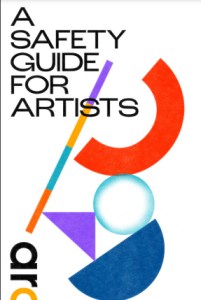
(New York, NY) — Today PEN America’s Artists at Risk Connection is releasing its Safety Guide for Artists, a comprehensive, first-of-its-kind guide available in English, French, and Spanish to help artists navigate, counter, and overcome threats and persecution from those seeking to silence their voices. In 2019, ARC—a project that connects imperiled artists worldwide with resources— had its highest number of caseload referrals since its founding in 2017 and has already broken that record in 2020, indicating the dire situation globally for artists and advocates.

The recommendations in the guide were informed by ARC’s experience connecting artists at risk to assistance as well as the vast knowledge of its global network of partners working to defend artistic freedom, whose research, campaigns, and collaborations provided instrumental information.

“This year, we’ve seen an explosion of protest movements worldwide, but also the desperate attempts by governments to unjustly and at times violently muzzle artistic freedom and dissent,” said Julie Trebault, director of ARC and one of the guide’s lead authors. “Artists have been leaders in the global movement for rights and justice, and are often targeted for arrest, detention, kidnapping and even murder. The potency of creative expression in kindling passions and changing minds is what makes regimes view artists as threatening. We hope that our guide will be a go-to resource for those facing danger and for the organizations worldwide doing their utmost to protect artistic freedom expression.”

“Facing risk can be an incredibly isolating and confusing experience,” says Mai Khoi, a dissident Vietnamese musician who had to flee her country after experiencing persecution related to her pro-democracy activism in 2018. “A resource like this guide, which can help artists understand their vulnerabilities, learn how to overcome them, and hear from artists who have been in similar situations, will surely help future artists at risk feel less alone and better-equipped to withstand pressures.”

In the past year, artists have helped lead protest movements in the U.S. following George Floyd’s murder, as well as in Chile, Hong Kong, Nigeria, Belarus, and elsewhere around the world. The rise in global activism has led to a simultaneous rise in the risks of speaking out. Freemuse’s State of Artistic Freedom report earlier this year counted over 700 incidents in which artists’ rights were violated in some 93 countries, including censorship, assault and harassment, arrest and imprisonment, kidnapping, torture, and even murder.

These realities have only been exacerbated by the COVID-19 pandemic, as many governments have exploited the health crisis to crack down on dissent through national security and disinformation laws, while other governments fail to take proper steps to protect the health and livelihood of cultural workers. As part of the manual, ARC interviewed 13 leading artists to help inform the guide, surfacing the strategies they’ve used to counter repression, what resources exist, and what guidance or help others might need.

The guide offers robust recommendations to help protect artists and creative professionals who are being silenced for their work. Topics covered include:

  • Tactics governments and non-state agents use to attack artists
  • Methods of identifying and assessing risks
  • Digital security threats and best preventative practices
  • Strategies for developing a personal safety plan
  • Actions artists can take to gather evidence and ensure accountability
  • Overview of the field of support available to artists at risk, as well as a list of resources

“Over the past four years, we’ve seen that artists are at the forefront of the growing global movement to speak out: singing songs, penning slogans, painting murals, staging exhibitions and performances,” said PEN America’s Trebault. “The costs of such artistic freedom have risen dramatically. And while there are thousands of courageous artists who speak out despite the dangers, there are untold creative minds who live in fear, self-censored into silence.”

The guide breaks down how to manage threats from governments, but also from political groups, the police, and military, as well as the threats posed by extremist groups, fundamentalist communities, and even one’s neighbors or family. It comes as ARC itself has seen a skyrocketing caseload, with the vast majority of those accessing ARC’s network of supporters seeking help with relocation and emergency grants. 

The full guide is available here and a downloadable PDF is available here.


Losing the News – Local News in Peril

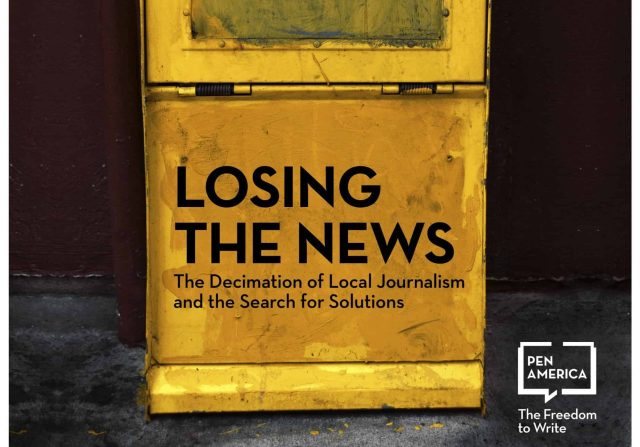
As local news outlets are gutted and shuttered, reporters laid off, publication schedules cut, and resources tightened across the country, Losing the News: The Decimation of Local News and the Search for Solutions sounds the alarm about the existential threat facing local watchdog journalism and proposes big-picture solutions for its revitalization.

Source: Losing the News – PEN America

This important report shows how news coverage of local issues in local newspapers is being lost: “Most Americans do not yet realize that their local news sources are on the brink of collapse and only a small minority pay for local news.”

“Local” is–obviously–where we live, and as we lose local watch-dog reporting and coverage of on-going issues, we are entering a paradoxical situation where we know more about what’s going in Washington, D. C., and other major cities than we do in the towns where we live.

Why does local journalism matter and what must we do to save it? If this subject resonates with you, click on the link above to see the report and its conclusions. As a former college journalism instructor, you have my gratitude if you read and share this report.

–Malcolm