“You get a little moody sometimes but I think that’s because you like to read. People that like to read are always a little fucked up.” ― The Prince of Tides
 I believe this because I read and I am f_cked up. If you read, you probably are, too.
Or perhaps, Pat Conroy said that in a novel because he wrote novels about people who were f_cked up, and/or he had to be f_cked up to write such novels. It’s a chicken and egg thing, whether reading f_cks you up or attaches itself to people who are already f_cked up.
The readers and writers who irritate me are the ones who don’t know they’re f_cked up or, worse yet, act like everyone on the planet except them is a jerk one way or another.
It comes down to this: being a writer does not make one a god and being a reader does not make one an angel. Those who think so, love calling attention to themselves as the pretentious arbiters of high-quality knowledge, taste, “proper” political agendas, and tantric orgasms. If they are writers, they have–or want to have–an MFA degree even though an MFA kills more writers than it nurtures. If they are readers, they think it’s important to argue about how many angels can dance on the head of a pin.
If there were a collective noun that suited the worst of readers, it would be a pretension of readers. The same noun might apply to the worst of our writers.
There’s nothing wrong with becoming an avid reader or a prolific writer if you don’t brag about it or openly proclaim that it puts you at the head of the line when the rapture comes. Those of us who write and/or read need to understand in spades that we’re not special, nor better than anyone who drives a garbage truck or labors as a longshoreman.
Readers who are f_cked up think they are God’s gift to the unwashed and that the rest of us need to treat them as such. You know the kind of people I’m talking about, right?
–Malcolm
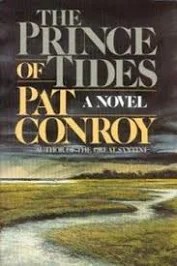
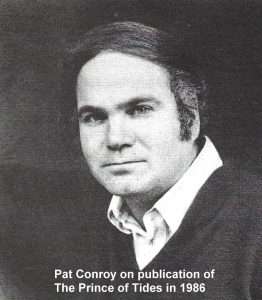
 The Prince of Tides is my living Bible of how to write well from well-formed characters to well-formed locations. I keep the book close at hand on my desk next to my copy of Donald Maass’ Writing the Breakout Novel which–if read carefully– teaches prospective writers how to write on the edge or, perhaps, over it.
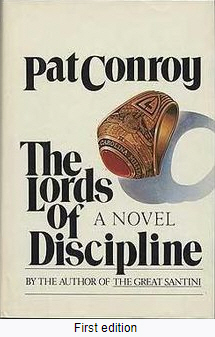 All in all, I don’t think homemade sin is as popular as it used to be. In part, it takes more time than factory fresh sin. And, like those clothes people used to make from patterns or the cakes some people still make from scratch, homemade now seems to cost more than storebought.
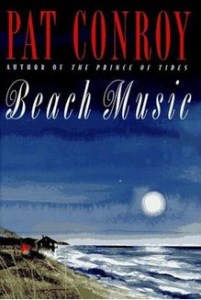 Beach Music began as a 2,100-page manuscript which his publisher’s staff trimmed down. My mass market paperback is 800 pages. By today’s “standards” of shorter and shorter novels, this book is huge.






 Malcolm's Round Table