PEN AMERICA MOURNS THE DEATH OF ‘WRITER’S WRITER’ PAUL AUSTER

FOR IMMEDIATE RELEASE
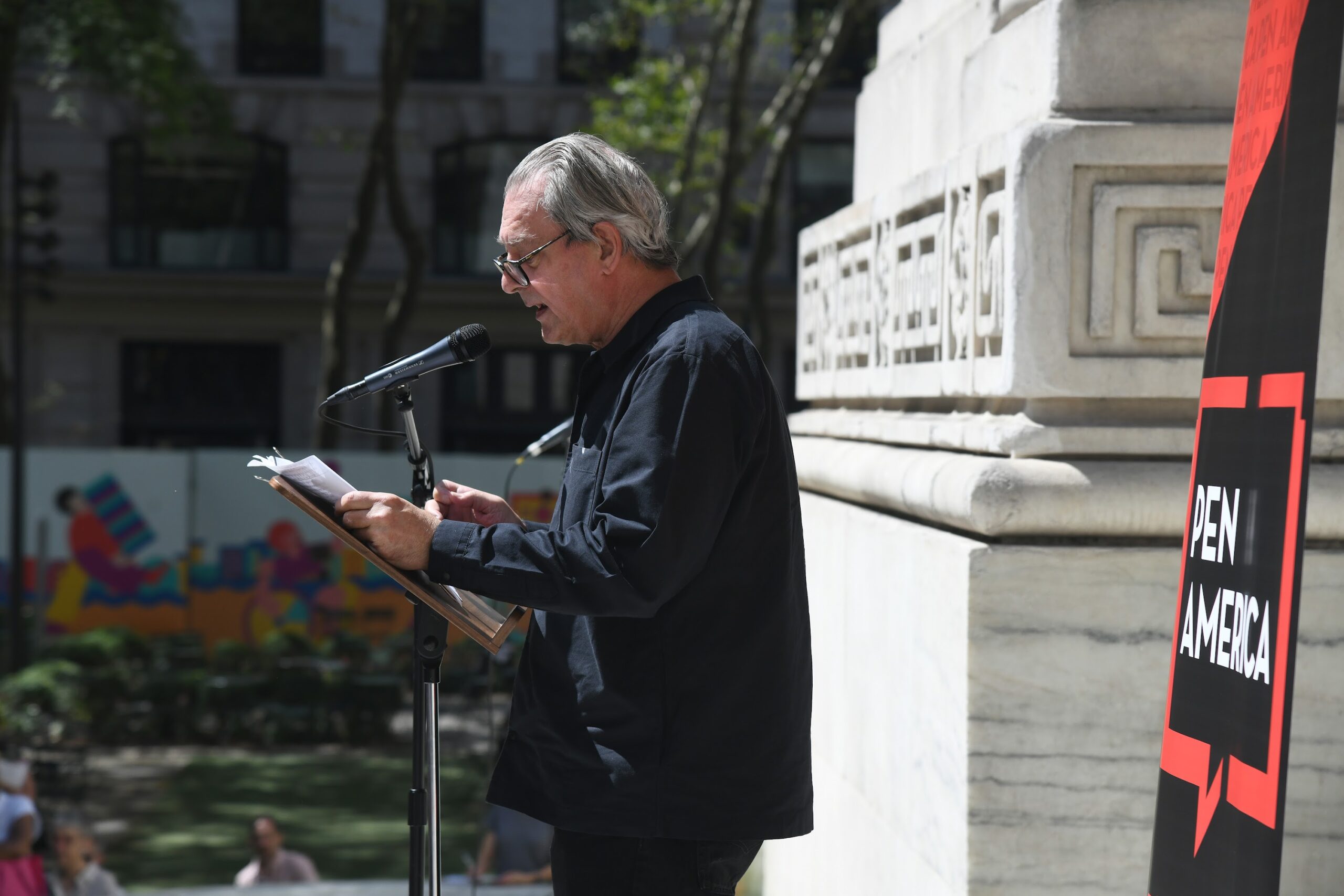
MANHATTAN, NY, AUGUST 19, 2022 Paul Auster reads a passage from Salman Rushdie’s book at a PEN America rally at the New York Public Library in Manhattan, NY. Photo by ©Jennifer S. Altman All Rights Reserved

(NEW YORK) — PEN America mourns the death of prolific author and longtime friend of PEN Paul Auster, who died on Tuesday at age 77. Suzanne Nossel, CEO of PEN America, said the following:

“In addition to shaping the worldviews of generations of Americans through his bracing and beloved novels, Paul Auster was a writer’s writer, consistently standing in solidarity with authors in China, Iran, Russia and around the world who were persecuted for what he was able to do freely: exercise his imagination and tell stories.  A dean of New York City’s literary community, he was a friend and mentor to many and a treasured colleague and stalwart supporter of PEN America and writers in need everywhere.”

Auster, who once served as the Vice President and Secretary of PEN America, and his wife Siri Hustvedt have been active supporters of PEN America’s efforts on behalf of jailed writers worldwide. They joined other members of the literary community in PEN America’s event in support of Salman Rushdie after the horrific attempt on his life in 2022.

Auster participated in the PEN World Voices Festival and numerous other PEN events, including a 2009 event where he read a series of autopsy and death reports of detainees held in U.S. custody in Iraq and Afghanistan, and another where he read new poems from Liu Xiaobo, who received the 2009 PEN/ Barbara Goldsmith Freedom to Write Award.

Jimmy, I’m sure there’s a woman to blame

I tell you what, people younger than me are dropping like flies, and I wonder if it’s time to worry.

Buffett

Today the mayor of Margaritaville has left the beach, flying high and away up into the clouds in his wonderful HU-16 Albatross (a plane I knew well from my time in the Navy), the “Hemisphere Dancer.” I want to say thank you for all the songs and that  “drunken Caribbean rock ‘n’ roll” flavor that fueled them. But he knows we liked the music and would have moved to Margaritaville if we could.

I’m not sure whether I should mourn his passing with a pitcher of margaritas or a six-pack of LandShark Lager. He’s left behind a legacy of songs, books, and business ventures. So he leaves us with a lot of what he knew and loved.  He was part of the “Silent Generation,” though that term doesn’t describe him! And yet, I think of the knowledge lost as members of this generation fly away–as useful as albatrosses, the younger generations believe–that will never be known again.

The manatees say, “So long, and thanks for all the sea grasses, mollusks, worms, crustaceans, bivalves, and fish.

What we know, some say, is out of date and irrelevant. I doubt that. But that’s life. Rest in peace, Jimmy.

Malcolm

Peter Straub (1943-2022) – Locus Online

“Author Peter Straub, 79, died September 4, 2022 after a long illness. Straub was a celebrated, influential, and bestselling author of literary horror, dark fantasy, and psychological thrillers. Peter Francis Straub was born March 2, 1943 in Milwaukee WI. He earned a BA in English from the University of Wisconsin in 1965, an MA from Columbia University in 1966, then returned to Wisconsin to teach English at his former prep school for three years. In 1969 he moved to Ireland and began work on a PhD at University College in Dublin, but did not finish. He published two books of poetry in 1972, Ishmael and Open Air, and his first mainstream novel, Marriages, in 1973.”

Source: Peter Straub (1943-2022) – Locus Online

Sad news for fans of Straub’s gothic and other dark fiction. Here are his novels, compliments of Wikipeia:

Novels[

We will miss his dark words.

–Malcolm

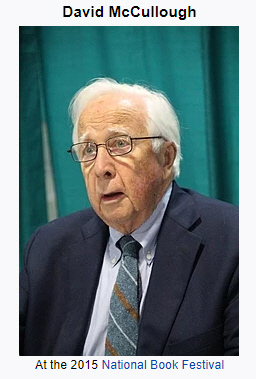
So long, David McCullough, and thanks for all the books

“David McCullough, a towering force in American literature and biography, winner of the President’s Medal of Freedom, two Pulitzer Prizes and two National Book Awards, died on August 7. He was 89 years old.

“He died of natural causes at home in Hingham, the family confirmed, where he had lived for the past few years, with all five children by his side.

“Mr. McCullough devoted his writing life to telling the American story, beginning with his first book about the Johnstown Flood, published in 1968, and continuing to chronicle events, politicians and structures that made up the American experience. He followed up his debut with a book about building the Brooklyn Bridge, then headed to the creation of the Panama Canal (his first National Book Award). A book about Teddy Roosevelt followed (his second National Book Award) and then books on Harry S. Truman and John Adams, both of which won the Pulitzer Prize.” – Bill Eville in The Vineyard Gazette

In his story, Eville notes that everything McCullough wrote began on a 1940 Royal Typewriter that he bought second-hand in 1965 for $25. It works fine after all those words. In a 2011 interview, McCullough said that sometimes he thought that Royal was writing the books.

The subhead in the New York Times story said, “His research — on Adams, Truman and so much more — was deep, his writing was lively, and his narrator’s voice in documentary films was familiar to millions.”

The books found large audiences and spent weeks on the bestseller lists in part because readers who seldom read history read what McCullough and/or that old Royal typewriter wrote. My wife and I have most of his books, not because they look good on our shelves, but because we like them and respect his approach.

It’s hard to pick a favorite, but my long-time fascination with Teddy Roosevelt prompts me to say I like Mornings on Horseback, the 1981 biography of Roosevelt, the best. Kirkus began its review, “The biographer of the Brooklyn Bridge and the Panama Canal has written a marvelous book, now, about the making of an exceptional being—and nothing that has appeared before, including Edmund Morris’ recent The Rise of Theodore Roosevelt, diminishes its interest or freshness or emotional force.”

The New York Times wrote, “Mr. McCullough tells his busy, interlocking story without ever losing track of his hero. Always at the center of things is T.R., evolving from a shrill semi-invalid into the robust warrior who would become the dominant figure of turn-of-the-century America. But though he writes with a novelist’s skill, Mr. McCullough never resorts to the novelist’s license to invent, never draws a conclusion not backed by hard facts. The result brings us as close as anyone will ever get to understanding the unique alchemy of the Roosevelt family – and its power to help and hinder Theodore in his rise.”

McCullough’s books on the Johnstown flood, the Brooklyn Bridge, Presidents Truman and Adams, and 1776 (among others) drew similar praise. McCullough’s narrations include the 2003 film “Seabiscuit” and multiple films by Ken Burns including “The Civil War” (1990).

I think it’s fair to say that McCullough’s words will be with us forever, if not longer.

Malcolm

‘What a pity she’s quoted more than she’s read’

The headline writer for the 2015 article “From literary heavyweight to lifestyle brand: exploring the cult of Joan Didion” added the following subhead: “The pioneer of New Journalism is used to sell biker jackets and clutch bags. What a pity she’s quoted more than she’s read.”

The White Album: Essays by [Joan Didion]I  hope the subhead for her December 23rd obituary in The Guardian more accurately describes how she will be remembered: “Detached observer of American society and political life through her collections of journalism, novels and screenwriting.”

Yet, the fact that the proponent of the New Jounalism wrote more “I-was-there” nonfiction than fiction may be the reason I seldom saw any gushing statements on the social media from her fans about reading her latest article or book, or breathlessly waiting for her next one.

Even those who simply scanned her work and then quoted from it thought her prose–and the no-nonsence focus behind it–was the best in the business.

If you have neither read her nor quoted her, I hardly know where to start in recommending a place to start learning who she was. Perhaps, the novel A Book of Common Prayer and perhaps the collection of essays Slouching Towards Bethlehem.

If you truly get this quote from A Book of Common Prayer, then you understand (a fraction, perhaps) of herself and her focus: “You have to pick the places you don’t walk away from.”

But then I’m biased. I’ve followed her work from the day she started. If a cult surrounds her, I’m a member. And when I think of prose and want to show others examples of what prose can do, I turn to her books before all others.

Malcolm

Florida Folk Magic Stories: Novels 1-4 by [Malcolm R. Campbell]Malcolm R. Campbell is the author of the four-book Florida Folk Magic Series, available in one Kindle, money-saving volume. It’s about the place I don’t walk away from.