
“When she was a teenager, [Joan] Didion taught herself to type and to write by pecking out stories by Ernest Hemingway and Joseph Conrad on an Olivetti Lettera 22. Her goal: ‘To learn how the sentences worked,’ she told the Paris Review. Thus began her immersion in the physical act as well as the craft of writing. Call it a form of machine learning. ‘I’m only myself in front of my typewriter,’ Didion once told an editor at Ms. magazine.” –from “’To Be A Writer, You Must Write:’ How Joan Didion Became Joan Didion” by Evelyn McDonnell.
“I’m only myself in front of my typewriter,” updated to include “computer keyboard” explains a lot about those of us who write. That might include hints about why many of us are awkward when we have to talk to people–or think.
 I like Didion (1934-2021) because she came on the scene during the exciting and controversial days of “new journalism” in which reporters in many ways became part of the story they were reporting. Tom Wolfe, Gay Talese, and Norman Mailer were leaders in this genre. The style purportedly communicated what the “just the facts” of standard reporting couldn’t address.
While Didion was, in large part, an essayist who could be found in major publications, it’s likely that those who remember her are probably more familiar with her fiction, including Play It as it Lays and A Book of Common Prayer. Others remember her from her nonfiction book The Year of Magical Thinking about her daughter’s illness and the death of her husband, author John Gregory Dunne (Crooning, Playland) in 2003.
If you want to know more about Joan Didion, McDonnell’s book is a worthy starting point that, according to Booklist is “Shaped by intellectual rigor and artistic grace … McDonnell’s portrait is vibrant, fluent, sensitive, and clarifying.”
![The White Album: Essays by [Joan Didion]](https://m.media-amazon.com/images/I/51aZNMCWG9L.jpg) I hope the subhead for her
I hope the subhead for her ![Florida Folk Magic Stories: Novels 1-4 by [Malcolm R. Campbell]](https://m.media-amazon.com/images/I/51JM4A8GQFL._SY346_.jpg)
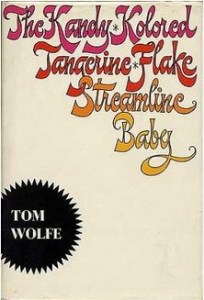 Those of us steeped in traditional journalism looked askance at the so-called “new journalism” of the 1960s. It was perpetrated (or lovingly brought into the world–depending on your feelings about it) by Tom Wolfe, Gay Talese and others who–while they had newspaper reporting experience–wrote their new stuff primarily for magazines like “Esquire” and “Atlantic”?
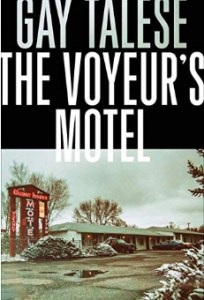 At any rate, the new journalism reporters thought that’s what they were doing and, I think, when they wrote longer, quasi-commentary, creative nonfiction magazine pieces, they succeeded. The technique works less well for front-page news.
 Malcolm's Round Table