The value of parks

While serving as the chairman of my town’s Historic Preservation Commission (HPC), I heard more than my share of gripes about the taxpayer costs of city budget items that were often labeled as “fluff” during difficult economic times. City parks, historic districts, entry-road signs, green space and related tree canopy programs,  and National Register of Historic Places districts were on most people’s hit lists.

The City Parks Alliance, for example, says on its home page that “Urban parks are dynamic institutions that play a vital, but not fully appreciated or understood role in the social, economic and physical well-being of America’s urban areas and its residents.” This is a good place to start. But, when taxes, city/federal budgets and the not-so-deep pockets of residents come together, it helps to have some dollar values to assign to the catch phrases.

Even though my love of parks includes environmental concerns, habitat protection, fresh air and recreation, such “fuzzy aesthetics” as these don’t wash during a confrontational city council budget meeting. Looking at the skimpy budgetary support of our National Parks system coming out of Washington, things that are good to do for their own sake don’t get much attention in Congress either.

Economic Value  – real estate, jobs, tourism

Locally, the HPC tried to stress the economic value of city parks, a value that typically exceeded the cost of maintaining the parks when viewed separately from recreational programs. In promoting economic returns, we were on the same page as the Chamber of Commerce, a group that knows the importance of such things as parks, green space, and historic preservation to corporations and individuals contemplating a move to a new city.

Historic districts, like museums and other cultural tourism attractions not only attract people (who make purchases throughout a city), but also create a level of interest that—according to studies—is higher than other vacation/business travel. While national parks and other wilderness areas with a lot to see tend to draw people who stay longer, the same is true for sites and attractions focusing on culture and history. Visitors to such sites stay longer and spend more than the average tourist.

Likewise, many studies have shown that the value of houses near city parks tends to be higher than the value of similar homes in other neighborhoods. While it’s easy to point fingers at the costs of maintaining a city park, their impact on real estate values is often overlooked when budgets and taxes are under scrutiny.

While city parks rated as excellent can increase the property values of nearby homes as much as 15%, the Trust for Public Land, in “Measuring the Economic Value of a City Park System” (PDF link) takes a more conservative approach to account for those parks rated as problematic: “Once determined, the total assessed value of properties near parks is multiplied by 5 percent and then by the tax rate, yielding the increase in tax dollars attributable to park proximity.”

Regional Impact of a National Park

Last month, Glacier National Park released information that demonstrates the economic importance of a major tourist attraction. According to an NPS report for 2010, two million visitors came to the park, spending $10 million and supporting 1,695 local jobs.

“Glacier National Park has historically been an economic driver in the state,” said Glacier National Park Superintendent Chas Cartwright. “This report shows the value that the many goods and services provided by local businesses are to the park visitor, as well as employment opportunities for the area.” Click on economic benefits here to download the report itself.

Personally, the value of parks to me cannot be expressed in economic terms. Yet I’m realistic enough to know that people coping with stretched-to-the-limit household budgets need to see some real dollar values attached to local and national governmental expenses before they “buy in” to the value of parks.

The Trust of Public Land, City Parks Alliance, National Park Service, and your state’s Department of Natural Resources are good places to track down information that may help win over the homeowner next door who sees nothing  but red in city, state and national green spaces.

This free 48-page PDF about Glacier’s history, personalities, facilities, plants and animals can be downloaded from the Vanilla Heart Publishing page at Payloadz.
Summit Sets Course for Protecting America’s National Parks, Connecting to People

from the National Parks and Conservation Association

Historic gathering of leading national park champions shapes outline for supporting National Park Service’s mission for 2016 centennial and the century to follow

Recognizing a growing need to unite the advocates, partners and supporters of national parks in advance of the upcoming 2016 National Park Service (NPS) centennial and beyond, the most diverse group of national park leaders ever convened gathered last week in Washington, D.C. to attend America’s Summit on National Parks. The Summit was a first of its kind event established in coordination with the NPS through a partnership of the National Park Foundation (NPF), the National Parks Conservation Association (NPCA), and the National Park Hospitality Association (NPHA).

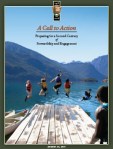
The two-day Summit, which took place January 24-26, was inspired by NPS’ recent Call to Action report [PDF download] and was designed to create unifying, clear objectives that will ensure the protection, enhancement, and support America’s iconic landmarks for centuries to come. The Summit inspired thought-provoking dialogue on some of the greatest challenges and opportunities facing national parks currently. The Summit produced a working document outlining the participants’ shared “Statement of Principles” and “Action Items” to ensure that the seeds of progress begun from the passionate and inspired conversations will take root, leading to growth, change, increased accessibility and ultimate strengthening of the national park system and national park programs. The Summit drew prominent members of Congress, Interior Secretary Ken Salazar, major political advisors and top conservation, tourism and communication leaders.

In a joint statement regarding the Summit, Tom Kiernan, president of NPCA; Neil Mulholland, president of NPF; and Derrick Crandall, counselor of NPHA said:

“Our parks need to evolve with us. The passionate leaders and advocates who attended this Summit are committed to a united vision for the national parks to thrive in the next century. We understand that appropriate funding, diverse outreach, natural resource protection and conservation, updated facilities, and adequate staff are necessary to make sure our national parks remain attractive, healthy places for people to visit and enjoy. And, though there are many challenges, we are confident that this newly unified focus, support and dedication by the park community will make these goals obtainable.”

Yosemite - Call to Action Report

Among the most notable directives coming out of the Summit were to increase outreach to youth and other diverse populations; to make units within the NPS system more representative of the diverse makeup of the nation; to use technology, such as social media, smart phone applications, video games and other electronic technologies to attract visitors and improve park experiences; to highlight healthy food and opportunities for safe, active fun during park visits; to increase public awareness of the 2016 centennial; to create an endowment to provide the NPS with secure funding for the future; to encourage supporters and lovers of national parks to become more engaged with their members of Congress and other decision makers, and to grow the base of support for national parks, particularly among the health, education and tourism communities.

Leading up to the 2016 centennial, the current stewards of our national parks will take up the gauntlet thrown by this Summit. Through their work, these original goals will be enhanced and the shared vision will become action.

For more information about the Call to Action, click here.

Malcolm

Malcolm R. Campbell is the author of three novels set in Glacier National Park, “Sarabande,” “Garden of Heaven: an Odyssey,” and “The Sun Singer.”

105,000 Americans tell Congress to stop cutting critical funding for national parks

from NPCA

Washington, DC – Today, the nonpartisan National Parks Conservation Association (NPCA) announced that more than 105,000 Americans have signed their petition calling on Congress to stop cutting critical funding for national parks. The signatures were gathered through NPCA’s National Parks Protection Project.

“As we approach the Centennial of the National Park Service, we must ensure our national parks receive adequate funding for our children and grandchildren to enjoy,” said NPCA President Tom Kiernan. “This is by far the most successful petition drive we’ve ever had – in nearly 100 years of operations – and it’s time for Congress to take notice of how many people have joined this effort.”

NPCA founded the National Parks Protection Project as an effort to show both Congress and the American people why it is important to adequately fund the national parks for our children and grandchildren.

Our national parks not only protect America’s heritage, they are important to local economies nationwide. Research shows that every federal dollar invested in national parks generates at least four dollars of economic value for the American people. National parks support more than $13 billion of local private-sector economic activity and nearly 270,000 private-sector jobs.

“The federal government has a responsibility to keep our national parks adequately funded,” said Kiernan. “The National Parks Protection Project is our effort to explain why and I am grateful to the more than 105,000 people across the country who joined our effort.”

Click here for more information.

Glacier National Parki, where my three fantasy novels are set, has been plagued with these cutbacks. Even normal maintenance on trails, signs, structures and other parts of the infrastructure has been postponed again and again. When I first went to Glacier in 1963, the park advertised 1000 miles of trails. Now it advertises 700 miles of trails. If we are going to protect the wilderness, we need to spend what it takes to do it.

Malcolm

Kindle edition

What the hell is Florida Power Thinking?

While the heading of this post is mine, the story comes from the National Parks and Conservation Association:

Everglades National Park…home to the largest wilderness area east of the Rockies; home to the largest protected mangrove ecosystem in the western hemisphere; and home to 68 federally threatened and endangered species. 
Does this sound like a place for giant towers puncturing the landscape with multiple power lines stretching as far as the eye can see? We don’t think so either.

The National Park Service is currently accepting public comment on a proposal that would allow Florida Power and Light (FPL) to build massive transmission lines through Everglades National Park. The use is completely incompatible with the designated purpose of the Everglades, and it is therefore necessary that FPL find an alternative route. Taxpayers are the rightful owners of America’s national parks, like the Everglades. Conveying a track of Everglades National Park–also a U.S. World Heritage Site–to a for-profit utility for a transmission lines corridor poses a threat to the Everglades ecosystem and conflicts with long-term restoration efforts. This is definitely not the way to treat a World Heritage Site.

Take Action: Submit your comments to Everglades Superintendent Dan Kimball and tell him that Everglades and all national parks are owned by the American people and are not for power lines.

Growing up in Florida, I learned that “swamps” were often simply tolerated as junk land that needed to be fixed in some way. In the panhandle, Tate’s Hell swamp was logged to death while the natural flow of the water was dammed up with the logging roads. In south Florida, the Everglades is constantly under threat due to water and air quality issues, invasive species and the sprawl of nearby cities. Power lines through the swamp are another one of the many insults.

Let’s try to stop them from being built.

See also, a new threat to the Grand Canyon in House Funding Bill Reverses Policy to Protect Grand Canyon

Malcolm

Learn more about the historic milestones of Glacier National Park’s Swiftcurrent Valley, site of Many Glacier Hotel and Swiftcurrent Campground, for only 99 cents on Kindle. The e-book is also available for 99 cents in multiple formats on Smashwords.

This short introduction to Glacier National Park’s Swiftcurrent Valley will delight, entertain, and offer a glimpse into the dramatic history of the most beautiful place on Earth… or so many visitors claim!

Reflections on Good News for Our National Parks

More often than not, the daily news brings us more bad news about threats to the environment and Congress’ continued threats to reduce National Parks funding even more than they have already. Next week, Congress will decide whether to vote for a “Dirty Water Bill” that would undo much of the rivers, lakes and watersheds progress implemented with the 1972 Clean Water Act.

I have been a member of the National Parks and Conservation Association (NPCA) ever since the days when George Hartzog was the high-impact director of the National Park Service between 1964 and 1972. There’s an indepth feature about Hartzog in the current issue of National Parks.

The greatest threat to the environment, is much larger than the issue of a Dirty Water Bill or an oil spill in the Gulf of Mexico: it is, quite simply, the fact we have to keep fighting to save and protect something that ought to be a top priority for everyone.

While it’s almost criminal that we–as a society–should have to fight so long and at such great expense to create good news for our environment and our National Parks, such news brings hope and a chance to reflect upon what kind of world we would have if the good news occurred so often, it was no longer newsworthy.

Reading the first 14 pages of the Summer 2011 issue of National Parks was a true pleasure:

  • Once again, the Gettysburg National Military Park has been spared from the disruption and sprawl of a casino on its doorstep. According to the NPCA, opposition to the casino by prominent historians, NPCA members and supporters, and a 30,000-signature peition helped persuade the Pennsylvania Gaming Control Board to do the right thing.
  • Kaiser Ventures has been trying since 1988 to create the largest landfill in the United States on land adjactent to Joshua Tree National Park. Had the company been allowed to do so, 20,000 tons of trash per day would have been dumped next to a fragile ecosystem. In 2009, the U.S. 9th Circuit Court of Appeals said “no,” and the U.S. Supreme Court has refused to hear an appeal from Kaiser. Until Kaiser finds a new way to build the dump, Joshua Tree has much to celebrate on its 75th anniversary.
  • It has taken eleven years for the NPCA, its allies and its lawyers to force the Tennesee Valley Authority to stop polluting the Great Smoky Mountains National Park. On days when the pollution is at its worst, vistors to the park can see only 17 miles. On a clear day, visitors can see 77 miles. With the settlemen agreement, there will be many more clear days. The TVA will  reduce nitrogen oxide emissions by 69% and sulfur dioxide emissions by 67% by phasing out 18 coal-fired units and by installing modern pollution controls on 36 other units by 2018.

I look forward to the time when clear victories will bring us the kind of clear days that allow us to see forever-–insofar as clean air and clean water are concerned. Until then, every success brings infinite relfections on what is possible.

You May Also Like: Beauty and Heartbreak in Arroyo Pescadero – The Whittier, California city council wants to drill for oil in this environmentally sensitive arroyo east of Los Angeles.

Malcolm

99 cents

Malcolm R. Campbell is the author of the recently released Bears; Where they Fought: Life in Glacier Park’s Swiftcurrent Valley, a glimpse at the dramatic history of the most beautiful place on Earth. A Natural Wonderland… Amazing Animals… Early Pioneers…Native Peoples… A Great Flood… Kinnickinnick… Adventures… The Great Northern Railway.

“Give a month at least to this precious reserve. The time will not be taken from the sum of your life. Instead of shortening, it will indefinitely lengthen it and will make you truly immortal. — John Muir, “Our National Parks,” 1901

Glacier Park Volunteer Opportunities

Glacier National Park relies on 50,000 hours of of volunteer help from over 500 individuals every year. You can find information about programs and requirements here. And, you can find an application form here.  There is a limited amount of no-cost housing for volunteers working 32 or more hours per week.

Volunteers, primarily for work between June and September, are needed in the following programs:

  • Nurturing Native Plants
  • Transit Center
  • Visitor Center
  • Interpretation
  • Campground Host
  • Citizen Science
  • Back Country Patrol
  • Aquatic Invasive Species
  • Headquarters Phone Volunteers
  • Group Projects

The Glacier Institute

The private nonprofit Glacier Institute offers educational programs and adventures within the park and the Flathead National Forest. Offerings include outdoor education courses, youth camps and the discovery school. According to the institute, “Volunteers are always appreciated at our field sites and include various duties such as assisting with educational programs and facility maintenance and cleaning.” Volunteer and staff position information can be found here.

Glacier National Park Fund

The Glacier National Park Fund was established in 1999 to conduct fund raising activities on behalf of the park. Their efforts support NPS and volunteer group projects such as the planned restoration of the Heaven’s Peak Fire Lookout.

For a list of events requiring Glacier Park Fund volunteers, click here. For a list of current projects for which the fund is raising money, click here.

Boy Scouts of America

Scouts volunteering in Glacier National Park dates back to the 1920s when Eagle Scounts helped create some of the park’s first trails. In 2010, both Glacier and the BSA celebrated their 100th birthdays; appropriately, the Scouts were volunteering again. Scouts, scout leaders, and parents who are interested in Glacier volunteer projects should contact the Nu-Ooh-Sa District for programs and information.

For information and volunteer needs throughout the nation’s 400 National Parks, click here. On the western site of the park, check with the North Fork Preservation Association for trail clearing and other opportunities.

Malcolm

Set partially in Glacier National Park

Glacier Artist-in-Residence Applications Due by February 15

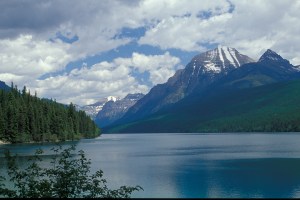
Bowman Lake - NPS photo

Glacier National Park’s artist-in-residence program is open to artists and writers who want to experience the wonder of the park for four weeks this coming summer and, while there, donate their time, inspiration and creative work in support of the park’s environmental education program.

Applicants for the summer of 2011 will be reviewed based on their ability to “produce children’s educational art and materials including scientific illustrations, drawings and graphics; poetry, prose and stories; puppet shows, plays, and song lyrics (for existing or original music); music; and educational lesson plans and resource information guides. These products must be about Glacier and its plants, animals, habitats, geology, natural processes, history and beauty and suitable for use with elementary and middle school children. Thus, the 2011 Artist-in-Residence Program is open to children’s artists, writers, poets, composers, song writers, musicians and academics with relevant experience and backgrounds.”

Applications must be postmarked by February 15, 2011. Click here for information and the address for submissions. The National Park Service will make its selection of one or two individuals for the program in March for residencies to be conducted between mid-June and Labor Day.

Malcolm

A Glacier Park Adventure Available on Kindle

Glacier Centennial: Nature is YOU

“That was the moment that defined my place in the natural world. The moment I understood that I, a human being, was not above the other creatures of Creation. Not better than the bees and the birds and the bears. Not superior to the snakes and the snails and the swallows. I was Nature. Nature was me.” –Smoky Trudeau, writing of an early childhood experience in Observations of an Earth Mage

Glacier
Like many visitors to Montana’s Glacier National Park, I enjoy the historic hotels, the ancient red tour buses, the launch trips on the lakes, and a fine meal in the dining room with a wide-windowed vista such as Waterton and Swiftcurrent Lakes.

The highlighted sites and activities in park service and hotel brochures hardly scratch the surface of what a park is–and what it could be.

There has always been a fight over what the parks are for. Are they wildlife habitats and protected ecosystems or are they recreation areas that must continue to be “developed” for use by visitors at the expense of that which is preserved?

Montana’s Glacier National Park and Alberta’s Waterton Lakes National Park form the world’s first International Peace Park, a designation they received in 1932. Since 1976, the parks have also been designated by the U.N. as Biosphere Reserves; and, since 1995, also has World Heritage Sites.

Biosphere Reserves focus, to great extent, on the relationship between man and nature. I like the idea, but see in that outlook the fiction that nature and man are opposing forces with different agendas. True, it often looks that way, and we have a lot of damage to show for it. Nonetheless, the biosphere approach and designation take us deeper into the heart of what wilderness is, deeper than the red buses and the old hotels, and the sightseeing approach to the natural world.

The National Parks Second Century Commission wrote in its recent “Advancing the National Park Idea” report that “In 1916, Congress created the National Park Service to manage a growing collection of special places ‘unimpaired for the enjoyment of future generations.’ The world has changed profoundly since that time, and so has the national park idea, adapting to the needs of a changing society. But at the core of the idea abides an ethic that embraces the preservation of nature and our shared heritage, and promotes regard for their significance inside the parks and throughout our country.”

I hope this report will help generate the positive discussions we need for ensuring that continuation of Glacier National Park as a safe haven for wildlife and a continuation of the natural world of the Crown of the Continent. What, indeed, will we have in here in this mountain fastness to celebrate 100 years from now. While public access and enjoyment is part of the picture, I see no entitlement there that allows access at the expense of what we are trying to preserve. Perhaps this means limits to daily visitor counts, the elimination of park overflights, the reduction of vehicle traffic, and other facilities and features that lend themselves more to crowds and theme parks than wilderness.

Not everyone wants to step off the historic red bus and get out on a trail. That’s fine, but it’s also a pity. For, as Robert Pirsig said in “Zen and the Art of Motorcycle Maintenance,” seeing the world from a car window is just like watching TV. I agree. One only experiences a fraction of his own heritage–as opposed to a separate nature heritage–by riding on launches and buses. And, attempts to sanitize and make nature overly accessible simply put the world of which we are a part at a further remove while creating unnatural eyesores where the mountains, lakes and forests are all that we need.

Copyright (c) 2010 by Malcolm R. Campbell