My uncle, Frank M. Campbell, was murdered in Fort Collins, Colorado in November 1919 while he was walking to church. The murder was never solved. Some said it was probably a holdup attempt. Some said it was a case of mistaken identity. He was twenty years old, and the loss would haunt my father all his life and, from time to time, it haunts me even now long after the fact.
Some years ago, I tried to find out if the police department had any information. They didn’t. The case was open but too far back in time to be relevant. I even asked a psychic. He told me it was an ether-related crime, this at a time when ether was a drug problem like heroin and cocaine are today. My assumption was that Frank was approached by somebody who needed money to support his habit.
My grandparents and their three other children left Fort Collins and moved to California (the Los Gatos area) where they still were when I was born many years later in Berkeley. I don’t think this kind of crime ever leaves a family unscathed. My father and his two siblings, and of course their parents, carried this moment with them forever. Even now, over a century later, I find myself angered and perplexed by it.
I wonder as I read the daily news about crimes across the country, when (if ever) the horrific memories of violent crimes ever fade away. I think the survivors never forget even though the news stories are gone with the wind.
“Stay away from the ones you love too much. Those are the ones who will kill you.” – Donna Tartt, The Goldfinch
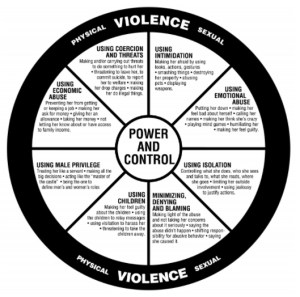
“You’re more likely to be hurt or killed by someone you know or love. And you’ll probably be at home when it happens.” – Mother Jones Magazine
“Over half of the killings of American women are related to intimate partner violence, with the vast majority of the victims dying at the hands of a current or former romantic partner” – The Atlantic
“Over the past 10 years, more than 20,000 American children are believed to have been killed in their own homes by family members. That is nearly four times the number of US soldiers killed in Iraq and Afghanistan.” – SPCC
As I look at articles written for and about writers and their work these days, the focus of late seems to be mirroring the political issues debated in the press, in Congress, in churches, and in social media. I am seeing more essays, poems, and short stories by writers who–like everyone else–are trying to make sense of environmental problems, personal rights, racial issues, economic imbalances, health care priorities, terrorism, immigration, and religion as it impacts governmental policies.
Some writers write to figure stuff out: the resulting poem or short story might help readers figure stuff out. And if the writer is good, this can be done without making the poem or story sound like a political tract or a news release from a social service organization. It’s been said that many people learn more history from well-written historical novels than they do from the basic history courses they were required to take in high school and college? Why? The drama of the story catches their attention. The same can be said about fiction that focuses on the issues of the day.
For those of us who haven’t yet become immune to the horrors reported in the daily news, the quotes at the beginning of this post are shocking. The thing is, most news stories about family-related abuse and murder focus on one family or one person. So, while the numbers of the dead, dying, and traumatized continue to add up through the calendar year, nothing focuses our attention on them with high amount of impact of terrorist shootings such as 58 people killed and 546 injured at the Las Vegas Harvest music festival on October 1.
We lost our innocence a long time ago, those of us who–as children–believed that the world would be better off by the time we grew up than it has turned out to be. We believed in Superman and other heroes who would find ways to prevent every potential Las Vegas horror without infringing on our liberties. And we believed in the power of churches, laws, social service institutions, education, and the general evolution of society to end the abuse and murder of family members, especially women and children.
So here we are today, focused on terrorism–which we seriously do need to sanely address–while deaths and injuries of family members stack up like cord wood with fewer headlines to remind us that those we love are more likely to hurt us or kill us than a terrorist or some other thug on the streets. I’ve seen novels and poems about this, but not enough. It’s easier to find novels about fighting terrorism than fighting child and spousal abuse. I’m not surprised: after all, a government security contractor that isn’t bound by the rules governing police/FBI fighting a group that wants to blow up Washington, D. C. is more likely to be a bestseller than a novel about a woman who keeps calling the local police department with fears about what her husband might do.
We can do better, I think. We can look at family-oriented abuse and murder and–perhaps, first–join nonprofit groups that are fighting it and educating the public about it. But writers can take another step. They can experiment with themes and plots and characters and find compelling ways to tell stories about individuals who are–so to speak–living in hell next door while we focus on people caught up in the national news miles away. We need writers creating short stories, essays, memoirs, and poetry about this as a means of figuring out why it’s happening, and of reminding readers that it’s happening closer than they think.
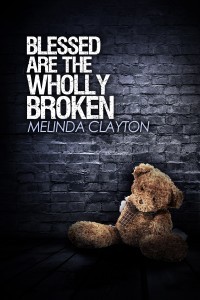
Today’s guest is author Melinda Clayton (“The Cedar Hollow Series”). Her new novel, a stunning tale about a family in the midst of self-destruction Blessed Are the Wholly Broken, was released October 16. Clayton, who has published numerous articles and short stories in print and online magazines, is a licensed psychotherapist in the states of Florida and Colorado. She holds an Ed.D. in Special Education Administration. She recently founded Thomas-Jacob Publishing described as a “unique family-owned publishing company.”
Clayton previously visited Malcolm’s Round Table in July of 2012 when her novel Entangled Thorns was released as the third book in “The Cedar Hollow Series.”
Malcolm: Welcome back! In your new novel Blessed Are the Wholly Broken, you move away from the Appalachian Mountain families in “The Cedar Hollow Series” to Phillip and Anna Lewinsky, a modern-day urban couple, living in Memphis. As an author, how difficult was it to shift away from the prospective “comfort zone” of an on-going series with known characters and established settings to a new environment featuring students graduating from college who are ready for careers and family life?
Melinda: Thanks for having me back, Malcolm. It was difficult, but I also felt it was time. There may be other Cedar Hollow stories, but the story of Phillip and Anna Lewinsky had been rattling around in my head for some time. I had also wanted to write a story set in the area of Tennessee in which I grew up, so that was fun. It was also fun to revisit the University of Memphis on Memphis’ rainiest day of 1989. I remember that day well. I was really tired of the rain, of being cold, and of getting soaked on my walks to both class and work.
Malcolm: At the beginning of the book, you quote a line from “In Place of a Curse,” a signature poem by John Ciardi: “They who are wholly broken, and they in whom mercy is understanding, I shall embrace at once and lead to pillows in heaven.” In addition to suggesting a unique title for your novel, how does this sentiment set the stage for the story to come?
Melinda: I think of Phillip as being “wholly broken.” This is a man who in his early twenties felt he had everything he needed to be happy. In his words, “I felt like the luckiest guy in the world. First job, first apartment, first girlfriend, best friend. What more could I have possibly wanted?” But by his mid-forties, when we first meet him in the Prologue, he feels he has nothing at all. “Life imprisonment or death; that is the question. And while the outcome matters immensely to the other players in this drama of my life, it matters not at all to me. I am dead either way.”
I wanted to explore that dynamic, the path one might travel that could lead from euphoria to despair, from hopeful to hopeless.
Malcolm: Asking a therapist why s/he writes about characters with deeply rooted psychological problems probably makes as much sense as asking a composer why s/he writes about characters who are struggling with a symphony. Yet, as I think about both “The Cedar Hollow Series” and Blessed Are the Wholly Broken, I can’t help but see the books’ characters as almost being—as we say in the South—“too broke to fix.” In addition to the page-turning read we all look for, do you think these novels will also help provide closure for readers who know people who seem wholly broken and/or who often feel they might be wholly broken?
Melinda: Wow, I might have to think about that for a minute! I think the “broken” characters in the Cedar Hollow Series have within them some spark of hope, enough, at least, to compel them to continue moving forward. One reviewer remarked that she loved it that those books all ended on a hopeful note, a type of new beginning for the characters. If there’s a message to those books, it might be something along the lines of each cloud having a silver lining, or there being a light at the end of the tunnel. Never give up; this too shall pass, etc.
I think Blessed Are the Wholly Broken is different in that within the first page, we know Phillip Lewinsky has been found guilty of the murder of his wife. One of the beta-readers called me midway through reading and said, “But he’s going to get out, right?” She found him to be a sympathetic, likable character and wanted a happy ending for him. I suppose a philosophical argument could be made that in a paradoxical sort of way, he was happy with the ending and he did find the closure he was looking for, but the writing of Wholly Broken was more about an examination of the unraveling of a life than it was about reaching closure.
Malcolm: How do prospective wholly broken people/characters impact the therapist/novelist?
Melinda: In some ways, the impact is the same for both the therapist and the novelist, in that I’ve always been fascinated by trying to discover what makes us all tick. Behavioral theory would say we don’t engage in a behavior unless we’re getting something out of that behavior. Maybe we’re being positively reinforced in some way, or maybe we’re trying to avoid something uncomfortable. That’s overly simplistic, but I think for the most part, it’s true.
As a therapist, part of finding the solution lies in finding the why of the behavior. Once a person recognizes and understands the purpose behind their behavior, they can choose whether or not they want to change it.
As a novelist, it’s fun to work to tie together a character’s motivations, choices, and decisions with their ultimate outcome.
Malcolm: After readers learn on the first page of Blessed Are the Wholly Broken that a crime has been committed, the novel moves about quickly from one time to another and from one place to another rather like a “whodunit.” I felt like I was reading a detective story. How did you approach your research for this, especially that involving medical, police, prison and courtroom procedures?
The dorms at Memphis State University (now U of M) where Phillip and Anna meet.
Melinda: This novel, by far, required more research than all three of my previous novels put together. I spent time both talking with and emailing medical and legal experts as well as making several phone calls to the Lauderdale County Jail to make sure I accurately portrayed not only procedures, but physical components of the building.
I sent hardcopies of the chapters dealing with medical issues to an expert in the field of microbiology, and chapters dealing with legal and courtroom procedures to the founder of a law firm in New York.
I wanted the book to be as true to the regions as possible, so I also researched weather patterns in that area during that time to make sure if it was raining in the novel, it really had rained on that particular day. I pulled up calendars from that time to make sure if court was held on a specific day in the novel, it would have really been held on that day in Ripley, Tennessee.
I think I probably spent more time on research than I did on writing. Everyone was incredibly helpful; if there are mistakes, they’re completely my own.
Malcolm: While Blessed Are the Wholly Broken was still a work in progress, you formed your own publishing company. How did the becoming a publisher change your perspective about what it takes to prepare and format manuscripts, and to publish and market a book? How did it change your viewpoint as a writer? Did becoming a publisher change your writing habits or approach or were you able to keep your publisher’s hat in the closet until the manuscript was done?
Melinda: Becoming a publisher in the middle of the writing process taught me that publishing is a lot of work! In some ways it stifled me as a writer because as I typed, I couldn’t help thinking, “Ugh, once I get done with this manuscript, I have to reformat it three different ways….” On the flip side, I loved having the ability to review and proof the finalized manuscripts before hitting “publish.” It was nice to have one last chance to check for any typos or formatting errors before going “live.”
Malcolm: Best of luck with Thomas-Jacob Publishing and Blessed Are the Wholly Broken. Where can prospective readers find you your novels on the Internet?
Melinda: Thanks, Malcolm! And thanks for the wonderful interview.
All of my books can be found through major retailers such as Amazon and Barnes & Noble. They’re also available through Smashwords, Apple, Sony, and Kobo.





 Malcolm's Round Table